
With school back in session and summer 2020 coming to an end, now is the perfect time to refresh your wardrobe for fall. Picking out some sweet new threads always seems to bring an extra little burst of motivation and pep in your step. We scoured fashion mags and trend forecasts to find out what styles are on the horizon for fall, and then carefully curated an amazing collection for the Sassyfras Boutique. Start the season off right with some of these trend-savvy looks from our Ontario fall 2020 wardrobe collection.
The Latest In Denim
Denim will always be a timeless staple for any fall wardrobe, but the key to rocking it is making sure your style is modern and fresh! This year, we’re all about the straight leg and skinny leg styles, and we’re ditching the bootcut and baggy jeans. Straight cut jeans make your gams look long and lean, which is always a bonus! Plus, they’re easy to dress up or down, depending on what kind of footwear you go for. Skinny jeans and ballet flats or heels are a surprisingly chic combo! We just got a brand new shipment from Jag Jeans, so if you want some great quality denim that lasts, hurry over and try some on before stock runs out!

We’ve got some fabulous denim coats in store as well, and lately we’ve been seeing a lot of dresses and skirts paired up with denim coats to dress them down a bit. Lately, with fewer events and fancy occasions to attend, we don’t have as many excuses to wear our fluttery dresses and skirts, but sometimes it’s kinda fun to wear them for everyday wear! By layering a denim jacket over top, you can keep things casual, but still a little flirty and fun.
Jewel Toned Florals
It shouldn’t come as a shock that we’re all about the floral prints—we are attached to a garden centre, after all! While we usually associate florals with spring and summer, you can still totally rock them in the fall if you choose the right colour palette. Rich, deeper colours feel more of-the-season, so instead of the typical spring pastels and vibrant summer neons, transition to jewel-toned patterns. Our A-line midi skirt by Tribal has a stunning rose print with splashes of rich plum, amber, spruce, and burgundy, overlaid on charcoal chiffon, resulting in a super versatile piece that can easily transition from day to night.

Breezy Printed Kimonos And Overcoats
Ditch the old hoodies and worn out cardigans and try something a little more daring! Statement kimonos and patterned overcoats with geometric prints are an easy way to add some attitude and artistic flair to an otherwise casual outfit. Put on a simple pair of jeans and a black tank top, layer on our new Tribal kimono, and you’ve got yourself an effortlessly cool outfit. They pair especially well with a long, dangly necklace and a couple of stacked bracelets.
Utility Jackets in Statement Colours
Tailored coats with an androgynous vibe are blowing up the runways right now, and we really love when those pieces feature rich, warm tones that complement your autumn wardrobe. It’ll be golden hour all day long in our new mustard jacket that practically glows in the sunlight. Though the colour is quite vibrant, it’s surprisingly versatile, and pairs well with plenty of other cute fall colours like burgundy, navy, plum, charcoal, and the two hottest colours of the season: cafe au lait and chocolate brown.

There are so many more incredible styles coming into the store, so follow us on Instagram to catch updates on our latest looks. We’ve got fabulous designs from b.Young, Fransa, Dex Plus, Parsley & Sage, and LNBF—a comfy, casual collection featuring luxurious bamboo fabrics. Visit us in-store to see all our new stuff, plus some summer clearance items at incredible discounts! We look forward to helping you give your closet a much-deserved update.
Planting new trees into the landscape is always a worthwhile investment! Not only are they pretty to look at and provide cool shade on hot days, but they add a pretty significant increase in property value. Watching trees transition through each season is always a delight, but trees in autumn are especially beautiful. But did you know that autumn is actuaslly the perfect time to plant many of our favourite trees?
The root ball of a tree is quite sensitive. After all, it acts like their “brain” or central nervous system, so if you stress those roots out too much, you’re going to have a very tired looking tree on your hands. Here in Southern Ontario, if you plant in late spring or in the middle of summer, those high temperatures may be a bit too much for the roots to handle. The cool, mild temperatures of autumn are just right for transplanting.
6 Trees You Can Plant In Fall
Want to liven up your landscape with some colourful foliage? These ornamental trees for fall are so distinctly beautiful in their own different ways—it’s hard to pick just one!
Tulip Tree
This tree has so much style, and it grows surprisingly quickly, so if you’re a bit of an impatient gardener, you’ll love watching the tulip tree develop over the years. It gets its name from its gorgeous spring flowers, which you probably have guessed, look quite similar to the classic tulip! While it puts on quite a show in spring, it has a reputation for being especially beautiful in fall, when its sunny golden foliage turns a fiery orange shade.
Because the tulip tree grows so quickly, its branches tend to be a bit thin, so you may want to put it in a spot that gets some protection from the wind. Just make sure it gets at least some partial sun and isn’t too shaded, or else its leaves may turn brown. Regular pruning of your tulip tree and cleanup of any damaged branches will help keep things neat and help prevent pests from showing up.

Autumn Blaze Maple
There’s something so charming about a giant maple, and the blazing red leaves of this maple tree in autumn look so classically Canadian! It’s a perennial favourite, because it’s actually a cross between the red maple and the silver maple, and it seems to have taken on the best traits of both. Overall, it has stunning colours, a nice, balanced branching habit, and pretty sturdy limbs despite being a very fast grower.
Autumn blaze maples need full sun to grow to their best potential, but the condition of the soil is much less critical. This variety is actually quite drought tolerant and doesn’t mind poorer soils—just be sure you water it very regularly for those first couple of months after planting to help the roots establish.
Eastern Redbud
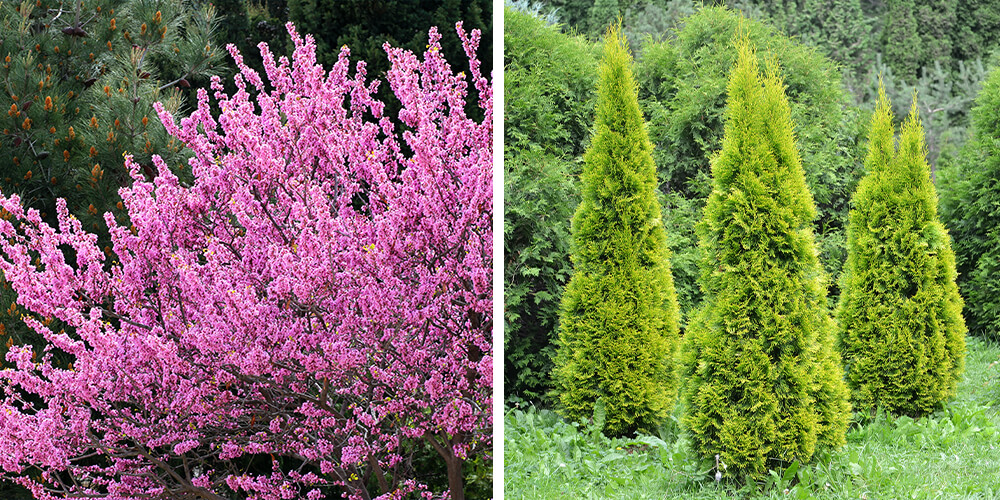
You’ll always look forward to spring in your yard with this show-stopping beauty around! It bursts into bright magenta blossoms and looks like it’s straight off the pages of a fairytale book. They don’t grow especially big—about 30 feet tall and wide at its largest—so if you’re looking for something a little smaller scale, the eastern redbud will suit the landscape nicely.
Ideally, you’ll want to plant your tree in a spot that gets direct sunlight in the morning, but a bit of shade in the afternoon, so a North or East-facing spot in the yard would work best. Plant it at least 8 feet away from any buildings to give it adequate room to spread, and try to put it in a spot that isn’t at the bottom of any slopes. This could cause too much moisture to collect near its roots, and this tree doesn’t like to sit in soggy soil. So long as the soil is quick-draining and isn’t piled up around the trunk of the tree, you aren’t likely to encounter any problems.
Emerald Cedar
We had to add a nice evergreen into the mix! Having vibrant foliage to admire year-round is always such a treat. This narrow variety is upright and handsome, reaching around 12 feet at maturity, so it’s super easy to integrate into the landscape and works particularly well as a hedge border. Its emerald green foliage is finely textured and lush all year long; it’s so classically refined!
This evergreen prefers full to partial sun. It likes well-drained soils, but isn’t very drought-tolerant and prefers moderate moisture, so if we go through a long stretch without rain, you’ll definitely want to water the roots with the hose to keep conditions comfortable. You aren’t likely to have too many pests issues with the emerald cedar, but in December, you may want to wrap it up with burlap to prevent the foliage from getting winter burn.
Heritage Birch
The bark of the birch tree is so uniquely beautiful and textured—we love the way it naturally peels off like paper, revealing fresh new bark underneath. The mature bark of the heritage birch almost has a pinkish tint to it, revealing creamy white new growth underneath. Growing up to around 70 feet tall and wide, it’s quite a sight to behold when grown with multiple trunks, instead of being trained into a single-trunked tree.
The heritage birch actually prefers its soil to be a bit more on the moist side and is more tolerant of clay soils compared to many other common landscape trees. It’s also quite heat tolerant, so as long as it gets some extra water, it shouldn’t be too fazed by a summer heatwave. If you’re going to prune your heritage birch, wait until fall to do so—in spring, the sap is a lot runnier and will make quite a mess!

Autumn Brilliance Serviceberry
This compact tree loves to show off its personality, covered with pretty white flowers every spring, and outdoing itself with orangey-red fall foliage. It produces berries from late spring and into summer, and it has smooth grayish-silver bark. It’s a nice small tree at just 25 feet maximum height. This is a great shade choice for small-scale landscapes. This serviceberry is suitable for planting under power lines.
Serviceberries grow best in full to part sun, and should not be allowed to dry out. This serviceberry is relatively low maintenance, and a beautiful addition to any yard.
Ready to plant some new trees at home? We’ve still got plenty in stock at Eising, and if you aren’t feeling super confident in your own tree-planting abilities, our experts are happy to provide landscaping services. Visit us in-store, or shop online to see our selection of trees that are ready for fall planting, and if you’d like to arrange for home delivery or curbside pickup, we can make that happen!
We’ve been seeing so many creative ideas for garden and landscape design lately, and we’re particularly interested in one element of backyard design that doesn’t get as much attention: garden paths and stepping stones. After all, it’s hard to truly appreciate your garden without a good path to help you navigate through it!
On top of giving you a better view of all the hard work you’ve put into your garden, you can also use pathway design as a tool for separating your yard into different areas, creating the illusion of more space and providing a framework for your design layout. A simple, straight path isn’t all that exciting, but a winding path that curves around trees and surrounding terrain adds a bit of whimsy, inviting you to explore the space.
We always love getting creative and thinking outside the box when it comes to landscaping projects. These stone pathway ideas are a perfect first step to transforming your space.

Recycled Mosaic Flower Stepping Stone
Lots of folks have been interested in recycled garden path ideas, because fancy stones aren’t always the most budget-friendly material. Plus, reusing our available resources and reducing landfill waste is always a big win! One of our favourite walkway ideas on a budget is the classic mosaic stepping stone, but with a fun twist that us garden geeks can really get behind: floral motifs!
Instead of placing your mosaic materials into a random pattern, arrange them in a swirling, geometric pattern that resembles a blooming flower! Use one round piece in the very centre, and then place the “petals” all around it. Suitable recyclable materials for your mosaic stones include:
- Broken china
- Bottles and glassware
- Crystals
- Colourful rocks
- Shells
A general-purpose sand-mix concrete will be the best material for walking path stones full of mosaic pieces, because it’s nice and smooth and won’t take away from the colorful accents, whereas a gravel mix would be too pebbly and uneven. Remember to use a generous layer of grout on top of your stones to fill in all the cracks and cover up any sharp edges.
Stone Pathways With Phlox And Other Groundcovers
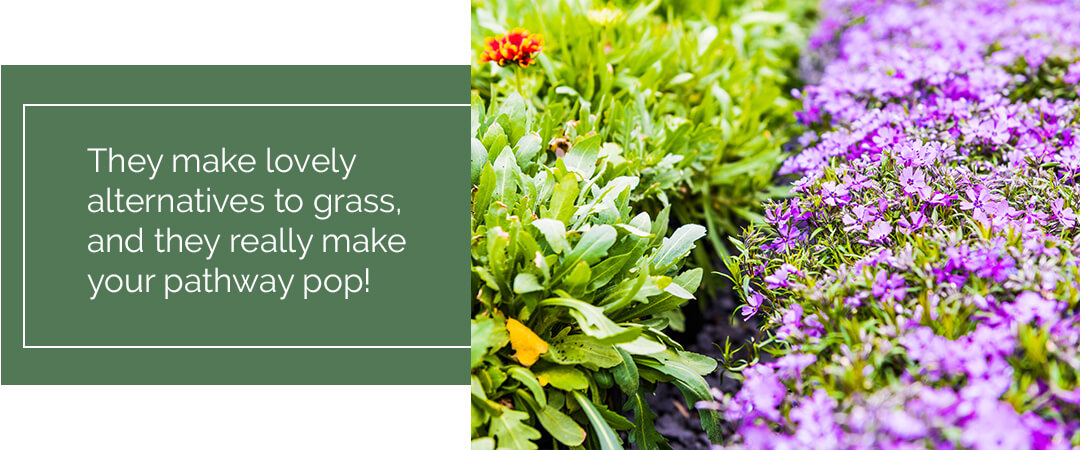
Instead of plopping some paver stones on the lawn and calling it a day, why not jazz things up a bit with some colourful flowering groundcover plants? There are many low-growing plants that form dense mats of foliage and can handle a little bit of trampling without sustaining any damage, so they make lovely alternatives to grass, and they really make your pathway pop!
Creeping phlox is one of our favourite flowering groundcovers, because its candy-coloured shades of purple, pink and blue look like something out of a fantasy novel. Imagine, instead of the same old green lawn grass, your garden path was surrounded by a cotton candy meadow! Here are a few other eye-catching groundcovers we highly recommend:
- Creeping thyme
- Deadnettle
- Sedum
- Candytuft
- Bugleweed
- Clover
To see more flowering plants and groundcovers for the yard, check out our brand new webstore that’s loaded with images of our available plants!
Container Garden Pathway Design
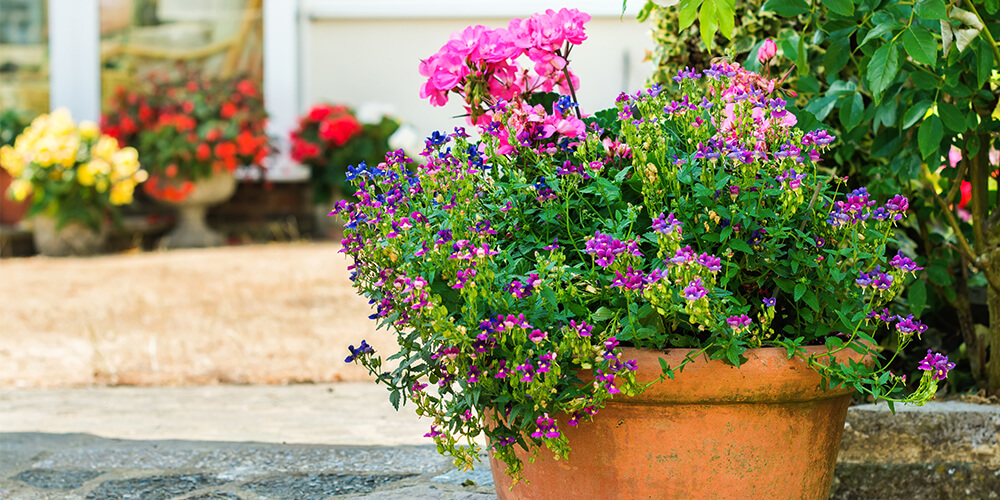
A clever way to add a border along your pathway without digging anything up is by lining the walkway with container gardens! This is an opportunity to really get creative, as you’ve got limitless options for your layout. You can go streamlined and buy a bunch of terracotta pots all in the same size, or you can mix and match different sizes and colours with a few funky accent containers thrown in for extra impact.
You can also play around with the different heights of the plants you put in your containers. Taller flowering plants like salvia and cardinal flowers, potted conifers, or even creeping plants on small trellises can act as a great divider between the yard and the walkway. Smaller flowering plants have more of an understated look, but are great if you don’t want to block the view of your surrounding garden plants.
Got any wild landscaping ideas of your own that you’d like to try to take on? We’d love to help! Our team of expert landscape consultants are happy to answer any questions you may have about DIY backyard makeovers. Visit us in-store or shop online to see our selection of plants and patio decor that are ready to make a new home in your backyard.
Hydrangeas are some of the most beloved flowering shrubs around the world—you only need one look at their big, voluminous flowerheads to see why they’re so easy to love. There are hundreds of hydrangea varieties, each belonging to one of six main types. One type, in particular, known as mophead hydrangeas, is famous for a very peculiar and whimsical trait: the flowers can change colours!
The Colour-Changing Shrub
The flowers of the mophead hydrangea change as a reaction to their soil chemistry, resulting in flowers from bright pink to neon blue and every shade in between. However, the shift in shade doesn’t happen overnight—it requires some planning, and a fair bit of patience, to change your hydrangea’s colour.
The good news is that anyone can encourage their mopheads to change colours with the right supplies and a few tips! Here’s how to do it in your yard.
From Pink to Blue
When planted in alkaline soil, mophead flowers bloom in brilliant shades of pink. By increasing the acidity of the soil over time, the flowers will gradually shift to a lovely shade of lilac, and eventually, turn vivid blue with a low enough (more acidic) pH. It’s a true delight to behold this colour change taking place throughout the summer. Some crafty gardeners have even managed to create an “ombré” effect by keeping a row of soil more alkaline on one end and more acidic on the other!

There’s one caveat to the fun; however: while pink hydrangeas will readily fade to blue, it’s nearly impossible to reverse back to pink. Those who have attempted this tend to end up with a rosy purple, which is pretty enough, but never quite the same. With that said, blue mopheads are so gorgeous; there’s a good chance you’ll be happy to keep them around as-is!
How to Turn Your Hydrangeas Blue
Changing your soil pH requires the use of soil amendments, which can gradually alter the soil chemistry. If your hydrangeas are blooming pale pink to lilac, you can intensify the pink colour by adding garden lime to the soil. Follow the package directions to ensure you’re using the right amount at once, and over time, those hydrangeas will start blushing!
However, most mophead growers are in it for the blue blooms. Blue is a relatively uncommon colour in the gardening world, so those gorgeous blue blooms are highly coveted! Mopheads start blooming blue flowers once the soil pH reaches 5.5 or lower. The best way to increase the acidity of the soil is with the use of aluminum sulfate, a common soil amendment that we carry here at Eising. You’ll need to mix a quarter-ounce of aluminum sulfate into a gallon of water and soak the soil around your mopheads. You’ll get the best results by starting in spring, but you can start at any point during the season. However, once you start treating the soil, you’ll need to reapply the amendment every month until you reach the desired result, and then maintain it with an application every other month during the growing season.
To maintain the acidity of your soil, you can also fertilize with acidic compost like orange peels, coffee grounds, eggshells, or peat. While you won’t see results right away, these will help increase soil acidity in the long term, so that you eventually won’t have any need for the aluminum sulfate.

Considerations
Before you start modifying your soil acidity, keep your other plants in mind, as well. Each plant has a different tolerance to acidity—some love it, some can’t tolerate it. As your soil acidity changes, so will your soil’s suitability for your other favourite plants, so make sure to plan around that. Keep an eye on the nursery tag when you shop for plants to grow around your mopheads to ensure you’re leaving with a good fit. We recommend using soil tests regularly to monitor soil acidity throughout your garden. These tests are quick and easy to use, and lots of fun to do with kids!
A garden full of pink, purple, and blue hydrangeas is a truly magical place—and the pride of many Southern Ontario gardeners. Chat with us in-store for plant and product recommendations as you embark on this ultra-popular gardening project. Then, prepare to be spellbound by these enchanting shrubs!
We tend to get a lot of questions about rose care, and while roses do require more maintenance than other common shrubs, they’re by no means difficult to look after. A little bit of regular upkeep leads to some pretty impressive results, so if you’re a gardening novice, it’s definitely a worthwhile project. Here’s how you can grow and care for roses in Simcoe, Ontario.
Planting Roses In Southern Ontario
Depending on the variety you choose, you can use roses for border plants, garden bed accents, climbing plants to train over arbours and patio lattice, or as container plants. Whatever location or growing medium you select, just ensure it’s suited to the size and growth habit of your chosen rose variety, since there are so many different kinds to choose from. That being said, almost all roses will need at least 6 hours of direct sun every day, so make sure your chosen location has plenty of light.

The best soil for roses has excellent drainage and high nutrients, to set your rose bushes off to a good start, you’ll want to loosen up the soil thoroughly. Ideally, you’ll want sandier, loamy soil with a lot of compost mixed in.
If you’ve purchased a rose bush with bare roots, you’ll want to soak the root ball in water for up to 24 hours before planting. If it’s a potted rose, you won’t have to worry about that step. Plant your roses about 1.5–2 feet deep to fit their large root system, then fill the hole back up with the soil, compost and bone meal mix. Mound it up slightly around the base of the plant.

How Often Should I Water Roses?
Generally, roses need about 1-3 inches of water per week. The thing is, roses are pretty susceptible to mildew and other fungal diseases if they get soggy and don’t receive much air circulation. That means you’ll want to avoid getting the leaves wet whenever possible and stick to watering the soil directly. The easiest way to do this is with a trickle hose set up near the base of the plant. Just turn it on and leave it for a while, so it thoroughly saturates the ground.
If we experience a lot of rain in a short period, you can skip on watering, and should check your roses regularly for any signs of bacteria or fungal growth. Remove any damaged pieces with sanitized shears, wiping the blades clean between every cut, and disposing of the damaged parts safely in the garbage, not the compost bin.
Rose Care: Mulch, Fertilizer, And More
Applying a layer of mulch on top of the soil around your roses will help to retain moisture and control weeds. Some gardeners insist that cocoa bean shells are the best mulch for roses, but we’ve found that classic bark mulch still works perfectly fine.

In spring, feed your roses with a fertilizer formulated specifically for roses. For best performance and blooms, apply the fertilizer every 2-3 weeks during the growing season. There are also special fertilizers made for transplanting, easing the transition when planting your rose. Be sure to water your rose before and after applying fertilizer as their roots are susceptible to being burnt.
Since there are so many types of roses, this means there are different times of the seasons and different styles of pruning. Use a pruning saw or hand pruners to remove any damaged branches or awkward pieces that jut out too far. If there are some densely packed areas with branches, it may help to thin them out a bit to help prevent fungal growth.
We have so many spectacular colours and varieties of roses to grow in Southern Ontario. Visit Eising to see our full collection, or check out our online store! We have citywide delivery and curbside pickup available all summer long.
Shrubs that flower in summer and fall make gorgeous accent plants for the landscape. We're so accustomed to seeing trees and shrubs blossom during spring, so it's a real treat to have all that vibrant colour and texture to enjoy throughout the later months of our growing season in Southern Ontario.
While many gardeners will insist that summer is too hot to plant shrubs, that simply isn't the case! It can still be done successfully if you follow the correct steps to prevent your plant from getting heat stress. If you wait until later in the evening on a cloudy day to transplant a shrub, then water it thoroughly after planting, it will have all night to adjust to its new habitat and will be hydrated—ready to soak up the summer sun the following morning.
Want to enhance the design and layout of your yard with some large, flowering shrubs? These late-season bloomers will bring a burst of colour and energy to the landscape, creating a fantastic setting for summer entertaining, hangouts on the patio, and picture-perfect photo ops.
Bluebeard
True blue is certainly the rarest colour to encounter in the plant world, so we can't help but get excited when we see flowering plants sporting this deep, cool hue. Our Beyond Midnight Bluebeard is totally on-trend—after all, Pantone named 'Classic Blue' as the 2020 Colour of the Year!
Bluebeard is a gorgeous flowering shrub that blooms from late summer to early fall, and its dark, glossy green foliage catches the sunlight beautifully. Plant it in full sun for best results, and prune it yearly in early spring, right at the first sign of new growth. Make sure its soil is well-draining because this shrub does not take kindly to soggy earth or stagnant water hanging around its roots.

Butterfly Bush
These pollinator-friendly shrubs have incredibly vivid flowers that attract butterflies, bees, and hummingbirds alike. Our Crown Jewels variety has some of the brightest purple petals we've ever seen, nestled in a mass of golden lime green foliage. Talk about a high-impact colour palette!
Butterfly bush is an incredibly hardy plant that's resistant to drought and tolerant of rocky soils. You'll have to water it regularly for the first few months after planting, but by year two, you'll be able to just leave it be, and the regular rainfall will be plenty enough to keep it hydrated.
Hydrangea Macrophylla
There's something so dreamy and beautiful about the lush clusters of flowers boasted by the hydrangea macrophylla—there's a reason why they're so popular for wedding bouquets! With so many different varieties and colours to choose from, you're bound to find a variety that suits your fancy.

We really love our Bloomstruck hydrangeas because their colour can shift from blue to pink, depending on the soil's pH levels. The blossoms last all summer long, but even after they fade, this shrub adds so much visual interest through the fall, because of its emerald green foliage transitions into a rich, warm burgundy colour.
Rose of Sharon
Rose of Sharon actually comes from the hibiscus family, and it grows in an upright form that can be trained into a tree shape. Like most hibiscus plants, Rose of Sharon's flowers are quite large and showy. Our Woodbridge variety has stunning blossoms in a rosy blush shade, with a ruby red centre. It loves the sun and can grow up to ten feet tall and six feet wide, so it makes an excellent option for privacy borders around the perimeter of your yard.

Smoke Tree
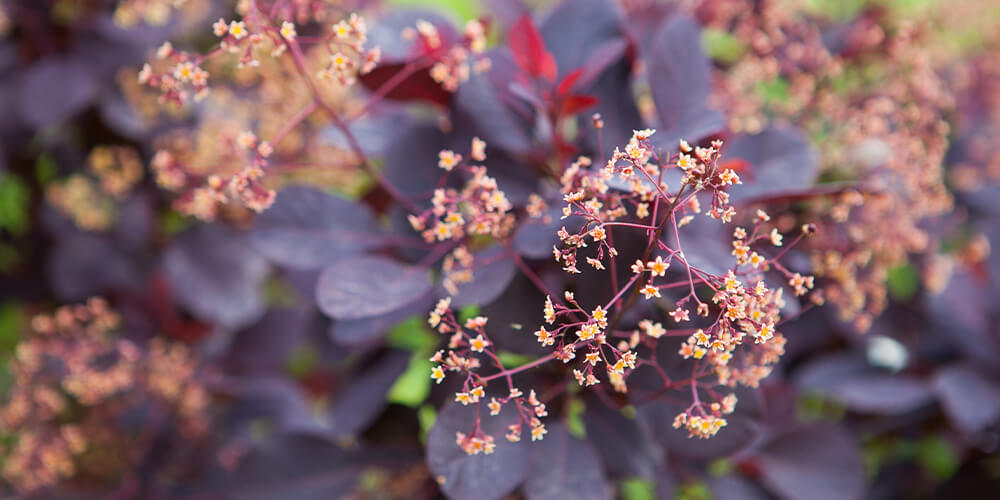
The smoke tree gets its name from it's wispy, fluffy blossoms that look like plumes of smoke. If you love rich purples and warm fall colour palettes, you'll go absolutely gaga over our Royal Purple smoke tree, which has reddish-purple blossoms and foliage to match! Once autumn rolls around, the leaves will actually turn a brighter cranberry red shade.
Make sure you leave plenty of space around your smoke tree when planting because they can reach up to 15 feet high and 12 feet wide! Regular pruning should help keep it a manageable size if you don't want it to get too large. Once it's established, it will appreciate it if you occasionally give it a thorough watering, especially in summer, during hot, dry spells.
Need some help getting your new shrubs in the ground? We're happy to offer planting services for those of you who are new to landscaping! To see more of our incredible selection of flowering shrubs you can grow here in Simcoe, take a look through our newly launched webstore, so you can order all the plants and supplies you need, right from the comfort of your own home.
We love decorating for Canada Day, but lately we’ve been compelled to avoid buying disposable plastic decorations, and instead look for eco-friendly alternatives. We figured, what better way to show your Canadian pride than through your garden? A red and white décor colour palette is so timeless and beautiful, and it’s all the more festive once July 1st rolls around!
Want some intel on the best new annuals to plant in your Canada Day themed garden? Here are some of our favourites for summer 2020 here in Simcoe. Our online store is now up and running, so if you don’t feel like swinging by the garden centre, you can order these beauties for citywide delivery!
Red Annual Plants And Flowers For Canada Day
Red is such a powerful, vibrant colour that makes a strong impact, yet it’s so versatile and classic. Plant these fire ultra-red flowers and plants in your yard, for a gorgeous pop of colour that brings to mind that big, bright red maple leaf we all know and love.

Whopper Begonia: Bronze Red
This shade-tolerant flower never fails to brighten up the darker corners of our yards, bursting with red blossoms reaching up to 3 inches wide. The bronze leaves kind of have a warmer, reddish cast to them too, so they’ll really help to create a streamlined, consistent colour scheme. Grow them with ease in garden beds or containers, and they’ll treat you with blossoms from spring until fall.
Coleus: Red Wizard
This high-impact foliage plant is perfect for Canada Day—candy apple red with a skinny white trim! Ideally, some morning sun and dappled afternoon shade will help your coleus to grow lush and bright, and you’ll need to water them extra often if they’re in a container. Coleus are fun to grow, because you can propagate them by simply placing cuttings in a cup of water, so you can easily turn one plant into several to give away to friends and family.

Crimson Mandevilla
These romantic vining plants grow so rapidly, by the end of the summer their volume and size is colossal. They’re often grown in containers or hanging baskets, but if you want a really impressive display that boasts Canada’s colours, grow them on a tall, white trellis so they can climb right up. We recommend growing them in full sun, near a wall to give them some protection from the wind.
Red Impatiens
Shade-tolerant, low-maintenance, and self-cleaning—there’s just so many reasons why these annuals remain to be some of the most popular flowers year after year. Impatiens grown in containers will probably need daily watering, but if you have a shaded garden bed with a layer of mulch, you can get away with watering them about twice per week. For ultimate blooming action, add water soluble fertilizer every two weeks until the end of summer.
White Annual Plants And Flowers For Canada Day
White flowers and icy, frosted foliage are so incomparably elegant and lovely in the garden, and they always match your home’s outdoor colour palette, whether it’s cool or warm. Try some of these creamy white flowers and foliage plants in your Canada Day garden!

Helichrysum: Silver Spike
The silvery white, slender, spiky leaves of this plant look like a burst of fireworks—extra appropriate for this national holiday! They’re especially beautiful in mixed container arrangements, bringing contrasting colour and texture that really stands out among ruffly flowers in ultra-rich hues. Plant in full sun!
White Heliotrope
These clusters of little white blossoms look just like scoops of vanilla ice cream, and the best part is, they smell like it too! You can enjoy the flowers of this continuous bloomer all the way until the first frost of winter. It gets its name from the Greek words “helios” (sun) and “tropos” (turn) because the flower heads turn to face the sunlight!

Hypoestes: White Splash
Also known as the Polka Dot Plant, this variety of hypoestes is totally covered in white speckles and splotches. It likes full sun, lots of water, weekly fertilizer in the summer, and fast-draining soil. They look especially cute as potted plants, and since it’s rare for one plant to survive more than a year, we recommend propagating a cutting so you can enjoy it as a houseplant at the end of the growing season.
Nonstop Begonia: White/Bronze
The massive double flower heads on this gorgeous annual flower are just like big, fluffy clouds. Through summer until mid-autumn, you can enjoy these long lasting blooms that sit in a bed of dramatic, dark foliage—deep greenish-bronze with hints of red. Partial shade is totally comfortable for this variety, but try to avoid complete shade if possible.
Have a happy and safe Canada Day, from all of us at Eising Greenhouse and Garden Centre! If there are any tools or supplies you need in time for your backyard barbecue party, we’ve got you covered. Visit us in-store or shop online for all your backyard entertaining needs.
Knowing how to stake plants properly is a valuable skill for any gardener, especially when you're growing vegetables. Some grow pretty tall and need a little extra help to stay off the ground so their fruits won't sit in a pile in the dirt and get funky. It can get pretty windy here as well, so providing some extra support will help prevent damage from heavy winds and rain.
Staking may look pretty straightforward, but there are some best practices you should follow to ensure good results. If you're planning on growing some tall, or vining garden plants, or if your mature plant keeps falling over, follow these tips on proper staking in the garden.
5 Tips For How To Stake Tomatoes And Other Garden Plants
Tomatoes, cucumbers, peppers, beans—there are so many garden greens that benefit from extra support. It keeps them from bunching up on the ground, allows full sunlight exposure, and prevents the wind and rain from totally pummeling them. Now that summer is approaching, many of your garden veggies are getting taller, and you'll need to step in before they flop right over. Here's how to do it correctly, so your vegetables grow big, bright, and delicious, according to plan.
Pick The Right Kind Of Stake
If you've got a plant with one stem, you can get away with using a simple wooden stick or pole. If there are multiple stems, then a cage might work a bit better, because you'll have more spots to tie on to. The cage must be at least one foot taller than the plant. If you're using a wood stake, make sure it's made with untreated wood so chemicals won't leach into the soil and contaminate your veggies. Bamboo stakes are also another great option. If you've got a vining plant, you may want to use a trellis. These can be quite beautiful with so many sizes and shapes to choose from; now, it's time to get out and find a creative way to integrate it into your backyard decor!
Drive The Stake Down 14 Inches And Facing North
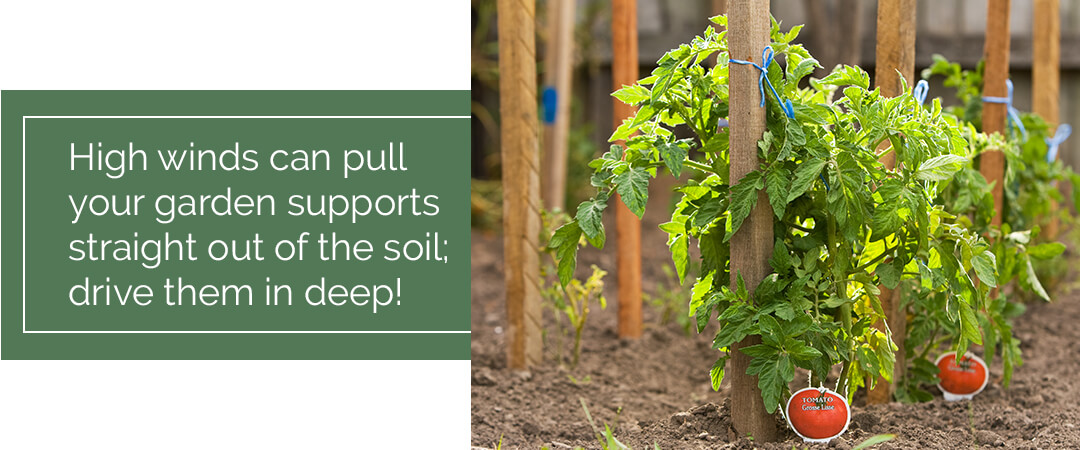
High winds can pull your garden supports straight out of the soil, and that can do some serious damage to your veggies. If you drive your stakes down into the dirt deeply, you won't have to worry about that happening. Making sure they're on the Northern side of the stem will be helpful too, especially if your supports are thicker, then they won't block any of the sunshine!
Tie Stems As They Grow Every 6 Inches
As your plants continue to grow, you need to keep securing them along the way so they don't flop. Monitor the development, and every time there's at least 6 inches of new growth, tie the stem to the support. Use material like gardeners tape, thick twine, velcro ties, or even strips of old pantyhose for securing.
Don't Tie Stems Too Tight
Leave a little bit of wiggle room—about one inch around the stem. If the ties are too tight, they could cut into the stems and hinder proper development. Try to avoid spots where leaf shoots are likely to emerge, so they don't get all bunched up. Instead, try to stick them a bit above the leaf shoots, so they'll stay in place and won't slide down the stem.

Replace Stakes When Needed
If your supports become too small, you need to replace them to accommodate for more growth. Some fast-growing plants may need to be re-staked every couple of months, or even sooner. Drive your new supports into the same hole as before, to avoid disturbing the roots. It helps if you use a mallet to drive it in deeply.
Are you in need of some supports and equipment to help your veggie garden along? Visit Eising, or place an order over the phone for curbside pickup or delivery. If you have any questions, don't hesitate to ask—we love to help our fellow gardeners!
Father's Day is conveniently held right at the start of summer, so that gives you all sorts of options for a creative gift that he can enjoy right away. This year, treat Dad by giving him a chance to relax in a gorgeous yard—instead of toiling away at it himself!—by hiring our pro landscapers to do the work for him.
Our many different landscaping services are varied and customizable, so you can call up our team to help you find the best plan for backyard landscaping that Dad will absolutely love. Or, if Dad likes to have some creative control over projects, we can collaborate with him to develop a design plan that suits his ideal vision. This will certainly be a Father's Day to remember, with a gorgeous new yard that Papa Bear can enjoy for many years to come. Here are some of the services we can provide to make it all happen:
Trees and Shrubs
At Eising, our landscaping pros know a thing or two about planting new trees and shrubs. Instead of fumbling through planting them yourself, which might not guarantee the best results, hire our experts to do it for you!
There are so many awesome benefits to planting trees and shrubs in the yard—Dad will definitely be on board! Sure, they're beautiful to look at, and they provide some nice shade to lounge around in, but they also increase your home's value significantly! You could even opt for some trees or shrubs to grow Dad's favourite fruit, like peaches or raspberries, so he'll have a steady supply of summer snacks year after year. Plant two trees spaced eight feet apart, and in a few years, you can get him a Father's Day hammock! There, now you've got two Father's Day gift ideas covered!
Perennials and Grasses
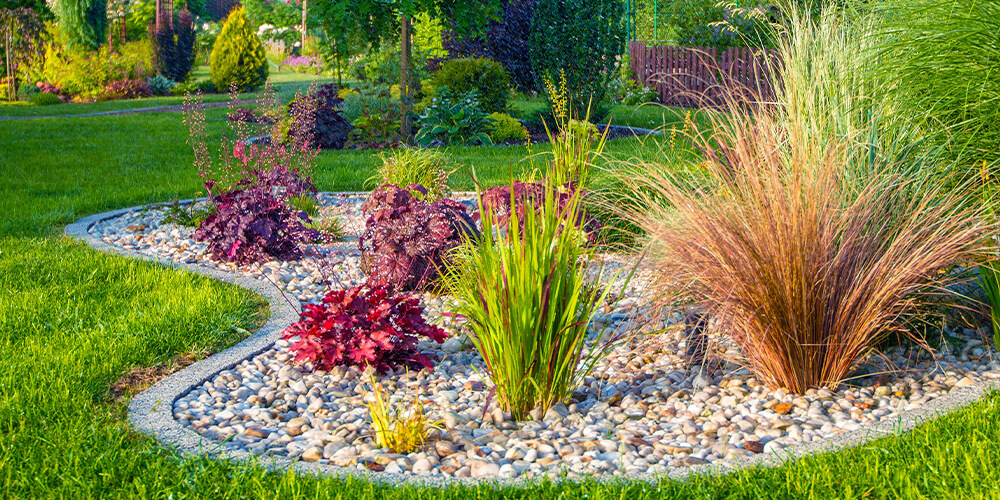
If you want some consistent, reliable plants and flowers to add some beauty to the yard, and you aren't too concerned with switching up the scenery every year, then consider planting some perennials and ornamental grasses. Talk to our experts, and we can help pick an assortment of spring, summer, and fall-blooming perennial plants, so there's never a shortage of colour throughout the season.
Ornamental grasses are such an underrated landscaping staple, adding height, texture and movement to the garden. Plus, Dad will appreciate having some grass in the yard that he doesn't have to cut! We can help you pick out the best varieties for your landscape style and colour palette, and help you find the best places to plant them to create a balanced, aesthetically-pleasing design.
Tropicals and Annuals
Spice things up with some exotic plants, vibrant colours, and tons of variety by opting for sun-loving tropicals and annual plants to enjoy for the summer. Dad will be totally floored when he sees that his old yard has been transformed into a lush, tropical oasis. Who needs a vacation when you've got the perfect getaway right at home?
Whether you think hanging baskets and container arrangements will do the trick, or you'd prefer a fully-loaded garden bed, we can help you choose stunning assortments of flowers that can thrive throughout our Southern Ontario summers. Even if your yard doesn't get much sunshine, we can still make some magic happen! Plenty of rainforest-dwelling tropical plants prefer the shade and will be right at home in your yard underneath a canopy of tree foliage.

Small Space Design
Don't have a ton of space? No problemo! Our creative team is great at making the most out of small spaces. We strategically place plants throughout the yard in a stylish and functional way, so Dad will have plenty of room to stretch out on his favourite lounger. A smaller space can feel much bigger with a layout that sections the yard into different living areas and draws the eye to unique focal points throughout the space. A small patio set is always inviting and will get plenty of use, so it's a pretty smart use for the space you have!
Develop Design Ideas With On-Site Consultation
If Dad's a take-charge guy who likes to take the lead, let him have some input on the landscape design by setting up an on-site consultation with our landscaping pros! We can work together to create the best possible design by combining Dad's big ideas and the most practical, cost-efficient ways to make them happen. That way, you'll be sure that he absolutely loves the final product.
The cost of a professional landscaping consultation with our team is $150 plus taxes, which we’re happy to apply to a gift card—perfect for surprising him on Father’s Day! To purchase a gift card or get more information about our landscaping services, give us a call and we'll be happy to help. Or, you can gift Dad some gorgeous new perennials with our brand new online store! We have delivery and curbside pick-up options available, so getting everything you need for the garden is easier than ever before.
Once summer hits and the sun is shining high, it's time to ditch the extra layers and keep our outfits simple, breezy and light—but of course, with some bright pops of colour and fun, summery prints! Now, a lot of us have been really stretching the limits of our pyjamas (er, I mean, "loungewear") lately, and while it can be nice to keep things cozy and casual, sometimes dressing up a bit can give you that extra boost to conquer the day.
For our latest collection at Sassyfras, we wanted to curate pieces that combine the best of both worlds: comfy, easy pieces you can slip on without any fuss, but in bright colours and styles that bring a sense of energy and vibrance to your wardrobe. Here are some of our standout pieces for summer 2020!
Cotton Tank Dresses
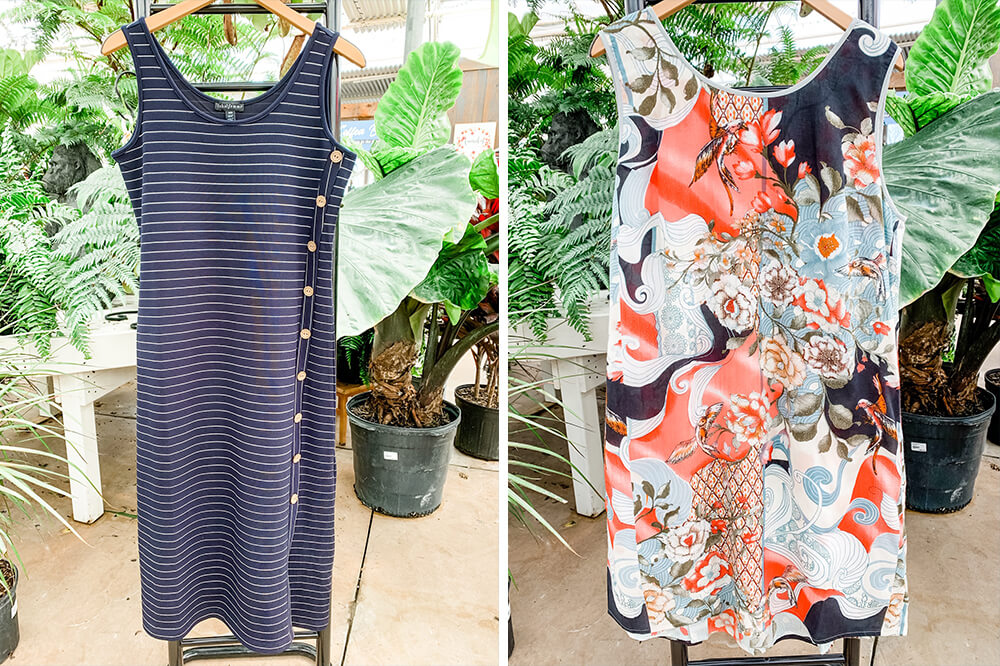
This piece is our secret wardrobe weapon for summer 2020! You'll never want to take it off. We love the simplicity of a cotton tank dress—these ones have subtle detailing to give them some flair, yet are still just as comfortable as a pair of sweats. On top of that, they're super versatile! Throw one on for a backyard barbecue, running errands in town, or overtop of a bathing suit for a beach day.
Our nautical striped tank dress by tribalfemme, in a universally flattering shade of navy, has asymmetric button detailing and a not-too-tight, not-too-loose fit that flatters every figure. It lightly hugs your curves without looking too snug, for a cute and carefree look that won't feel restrictive!
Leafy Motifs
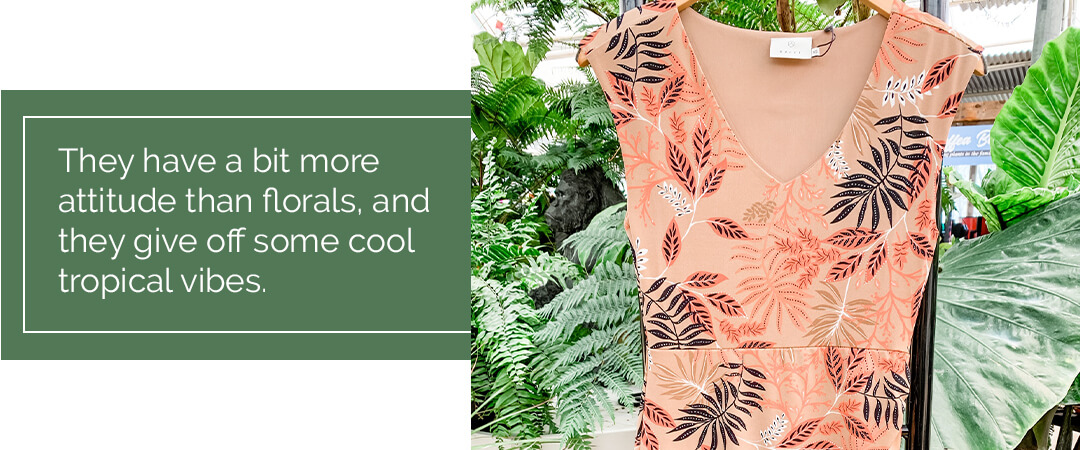
Spring is all about the floral prints, and now that summer is approaching, we're switching it up with some fun, leafy motifs. Not everyone loves florals, so if they feel a bit too frou-frou for you, you'll love the style of palm leaf prints. They have a bit more attitude than florals, and they give off some cool tropical vibes.
Our coral palm leaf dress is perfect for hot summer nights on the patio. The material is light, and the skirt is super stretchy with some asymmetric side ruching—a super flattering feature that magically hides the tummy while still cinching the waist. Layer on some turquoise and gold jewelry for maximum impact!
Fashion For The 50+ Crowd
Navigating the summer clothing department can sometimes be tricky when you're over 50. We took extra time to pull some looks you'll love this season: modern, art-inspired pieces that are light enough for summer, so you can feel confident and comfortable without compromising your sense of style.
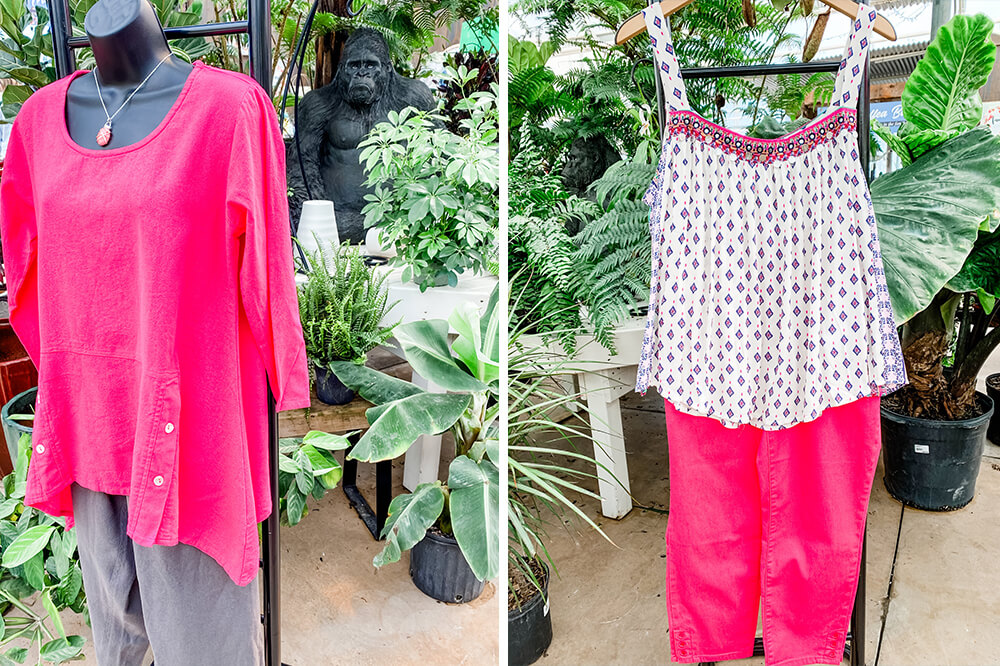
For gals who are a bit wary of showing off their upper arms, we picked up some super lightweight, breathable blouses, like this fun pink tunic with wooden button details. If you prefer sleeveless, we have some gorgeous tops in colorful prints that perfectly complement a pair of solid-coloured shorts or capris. You can add your favourite accessories and pair with bright or neutral bottoms to dress the look up or down.
Bermuda shorts are always a must-have for the summer. Having a few go-to pairs in solid neutral colours like navy, black, camel and white will make it so much easier to pull outfits together because they can be paired easily with so many different printed tops. You can even dress them up to make them look semi-formal! We love the look of our cowl neck, sleeveless printed blouse over top of the slim-cut black shorts. The striking abstract art motif has kind of a 1960’s mod vibe, so if you pair it up with some silver hoops and a bit of black winged eyeliner, the look is very Twiggy-esque!
If you're eager to get some new summer pieces to fill out your wardrobe, give us a call at the boutique! We're now open from 10–5 daily, but we’re also happy to offer private shopping appointments to ensure you the most comfortable shopping experience. We also have curbside pickup available, so if you'd like to place an order over the phone, we'd be happy to help.