
Identifying Hydrangea Diseases & Choosing the Best Treatment
Hydrangeas are gorgeous flowering shrubs, but they don’t look so great when their leaves are splotchy, wilting, or curling! If you spot any signs of disease and fungal damage in your hydrangeas, this guide will help you identify the problem and select the proper treatment method.
The Key to Successful Hydrangea Disease Treatment is Catching Them Early
A quick inspection of your hydrangeas every few days will help you identify diseases early, making treatment much easier! Here are some common signs of hydrangea diseases, what those signs indicate, and the best treatment you should use.
Remember: sanitizing your tools thoroughly before and after working with diseased plants is extremely important. If you don’t wipe your blades with a disinfectant in between cuts, you can transfer disease spores to other plants. These spores can live for months or even years, so excellent tool hygiene is essential if you want to stop the spread of hydrangea diseases.
Botrytis Blight
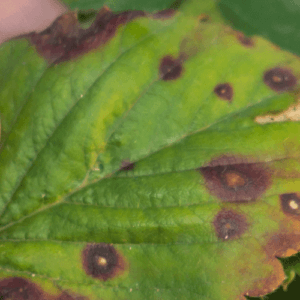
Symptoms: Flower petals turn brown and fall, and leaf spots develop—particularly around the areas where petals have dropped. Flower buds die before they open.
Prevention: Space your plants out so air can circulate through them. Try to water early in the morning instead of late in the day.
Treatment: Remove all diseased plant material and destroy it or dispose of it in the garbage, not the compost bin. Apply a copper-based fungicide.
Cercospora Leaf Spot
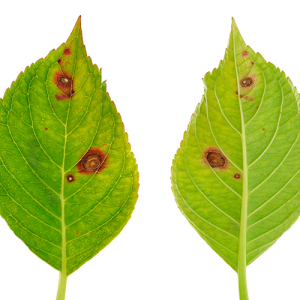
Symptoms: Leaves develop light brown spots with rusty brown halos, sometimes with a purplish tint.
Prevention: Avoid getting moisture on the leaves and water the soil directly instead of watering plants overhead.
Treatment: Remove all diseased plant material and destroy it or dispose of it in the garbage, not the compost bin. Apply a copper-based fungicide.
Bacterial Leaf Spot

Symptoms: Beginning as small wet spots, dark reddish-purple lesions with angular edges appear. When left untreated, they spread and begin to connect, creating larger patches of discoloration.
Prevention: Don't water plants overhead and space them out well. Keep a close watch during periods of high heat and humidity following heavy rain.
Treatment: Remove and destroy affected leaves and apply a copper-based fungicide.
Powdery Mildew

Symptoms: A whitish-grey powdery coating across the foliage. Leaves may develop yellow patches, which transition to a purplish colour if left untreated. White, cottony fungal growth often develops on the undersides of leaves.
Prevention: Space out your plants to encourage air circulation, and avoid watering your hydrangeas overhead.
Treatment: Use a copper-based fungicide. If only some of the leaves are affected, you can remove them, but if your entire shrub is coated in powdery mildew, just remove the severely damaged leaves.
Ringspot Viruses
Symptoms: Several different ringspot viruses can affect your hydrangeas, including hydrangea ringspot, tomato ringspot, and tobacco ringspot. Their symptoms are often the same—pale yellow, ring-shaped splotches, fewer florets, stunted growth, and rolling or curling leaves. Lab testing is the only way to determine which virus you’re dealing with.
Prevention: The best way to prevent viral hydrangea diseases is through good tool hygiene! This is especially important when deadheading your plants or cutting flowers for bouquets. Wipe down the blades with a cloth soaked in isopropyl alcohol between each cut, and the likelihood of viruses popping up will lessen significantly.
Treatment: Unfortunately, there is no cure for viral infections in plants. The best you can do is follow proper prevention protocol and safely dispose of your affected plants to prevent further spread. Be sure to remove any lingering root pieces in the soil, as these can harbour viruses that can pop up and reinfect the next shrub you plant. Waiting one year before replanting can help prevent the virus from reappearing, but it also helps to remove and replace the surrounding soil with a fresh batch.
Remember: sanitizing your tools thoroughly before and after working with diseased plants is extremely important!
If you need any help identifying diseases or selecting proper treatment for hydrangeas in Ontario, visit Eising Greenhouse and speak with our experts! Bring in a cutting from your ailing plant in a clean Ziploc bag, and we can help you identify the problem and create a plan of attack.


