
If you’ve got a newly planted tree, or perhaps some more delicate trees and shrubs that are sensitive to frost and winter burn, it’s a good idea to provide them with some protection from the elements during the coldest months. Cold damage can lead to some pretty unsightly results, and it can potentially limit growth the following spring. Here’s everything you need to know about protecting trees and shrubs from the harshest conditions we often face during a cold January in Ontario.
Why Is It Important to Provide Protection for Trees and Shrubs?
Cold temperatures paired with harsh winds aren’t fun to experience without a warm jacket, so you can imagine how it must feel for those poor trees on the coldest days of the year! Evergreen trees and shrubs can get “burnt” from cold winds combined with direct sun, resulting in browned needles and foliage. This is because they’re still releasing moisture from their leaves, but they aren’t getting much moisture back in return since the ground is frozen, so they’re quite susceptible to drying up. So, if you want the evergreens to stay evergreen, you’re gonna need to call in some backup!

Here in Southern Ontario, we love our fruit trees, but these cultivars can be especially sensitive to the cold. Fluctuations between cold and warm can also confuse the tree and cause it to fall out of sync with its natural acclimatization, which can weaken its defences against cold.
If you have any evergreen trees or shrubs that are close to the road, it’s especially important to wrap them up to protect them from salt spray.
Cold damage on trees, such as cracking bark, root injury, or trunk splitting, often isn’t apparent until temperatures rise again, so you may not even realize your trees are injured until it’s well into the growing season. Projections show that we’re in for a pretty cold January this year, so if we want to ensure good fruit production for 2021, it’s a good idea to take the time to protect your fruit trees.
How to Protect Trees from Cold Weather
The simplest way to protect trees and shrubs from the cold is through wrapping. Simple burlap secured with twine is a common solution, but you can also purchase special thermal tree wraps that are made to hold up all through the season, through rain, snow, and blustery winds. Putting up a windbreak can also help to ease the harshness of the wind, especially if you have a sprawling property with no fence or few trees.
Young trees are also at risk for having their bark gnawed off by hungry mice and rabbits from December onward, when available food sources are scarce. Purchase tree guards to wrap around the trunks, as this will help to protect the bark and provide a little extra insulation. Opt for a solid wrap, not a netted one, as small rodents can pass through the holes easily. Wrapping shrubs with fabric or “shrub jackets” can also help to prevent hungry deer from chowing down.

Applying a layer of mulch across the soil surface around the bases of your trees and shrubs will help to further insulate the roots and regulate temperature, which is especially helpful when the weather is fluctuating between warm and cold. We recommend using a natural mulch, like shredded pine bark that’s free from artificial dyes. Be sure you don’t pile the mulch up in a mound around the base of the plant, as this can encourage bacterial growth. Just spread an even layer of a few inches, and you’ll be good to go.
If you have any evergreen trees or shrubs that are close to the road, it’s especially important to wrap them up to protect them from salt spray. Salt is often sprinkled across the road to help melt snow and improve traction, but it can severely burn our plants.
When Should I Wrap My Trees for Winter?
While cold tolerance tends to vary quite a bit between plant species, generally, it’s a good idea to start bringing in some protective measures once temperatures are hovering around 0–4°C. Wrap your trees up before they get covered in ice and snow, and apply some mulch before the ground freezes up.
For your trees that aren’t wrapped and remain exposed, you don’t necessarily have to remove the piled up snow from their branches, unless it’s a huge amount of snow or the branches are newer and more delicate. Don’t try to remove frozen ice from branches, as this can often lead to more harm than good.
If you have any questions or concerns about protecting newly planted trees and shrubs, or if you have landscape plants that have endured previous cold damage, don’t hesitate to get in touch with our experts here at Eising! We’re always happy to help.
As always, we have home delivery and curbside pickup options available for any tools, supplies, or new plants you may need over the holidays, so feel free to pick up the phone and place an order!
So many of the best small shrubs for autumn colour in Southern Ontario are available here at Eising! Folks are quick to assume that spring is the ideal time for planting, but autumn conditions are great for new landscape transplants because the soil is warm, the sunshine is mild, and the rainfall is steady. Savour those last few months of outdoor entertaining, and plant some fall bushes to add spectacular colour to the landscape! Bundling up with an extra sweater is so worth it when you get to enjoy scenery this beautiful.
7 Fall Shrubs to Plant Now
There are fewer sights lovelier than a yard full of gold, orange and red bushes in fall. Toss in some blue and purple berries that attract local wild birds, and even a few late-season blooms to draw in butterflies and bees, and you’ve got a perfectly picturesque landscape to end off the year. Plant these bushes in the fall for an instant pop of bold landscape colour, followed by some gorgeous flowers in spring or summer!
"The clusters of berries that it produces in fall are such a bright shade of purple, they almost don’t even look real!"
Oakleaf Hydrangea
This hardy hydrangea has lobed leaves just like an oak tree, and in October, their jade-green leaves turn fiery shades of orange, red, gold, and purple. Their blossoms, which grow in panicles similar to lilacs, actually appear in late summer, and in early fall, they begin to turn pink, so this hydrangea really doubles down on the fall colour! Plant them in full sun to partial shade, and keep their soil consistently moist but not soggy.

Spirea
There are many different spirea varieties—some are spring-blooming, while others are summer-blooming—but they always have incredible foliage in fall. Depending on your chosen cultivar, the leaves may turn bright gold or ruby red, and sometimes mid-transition, when some of the leaves have still kept their green, it looks like a rainbow tie-dye explosion! Full sun or partial shade is ideal, and well-draining soil is a must.
Viburnum
While they’re known for their sweet and spicy fragrance and voluminous clusters of blossoms, viburnums put on an incredible show in fall! Their leaves change colour and produce bright clusters of berries in contrasting colours that make for quite the spectacle. Some have burgundy leaves and electric blue berries; others have golden orange leaves and bright red berries. Full sun is best, but some viburnums may tolerate partial shade.

Beautyberry
It’s no surprise why this colourful bush got its name. The clusters of berries that it produces in fall are such a bright shade of purple, they almost don’t even look real! You’d think only Crayola could produce a colour like that, but Mother Nature is pretty amazing. Full sun and partial shade both suit this shrub fine, and moist, rich soil full of compost or organic matter will help it grow. Applying a layer of bark mulch will help to conserve soil moisture.
Chokecherry
Chokecherries can either be grown as shrubs or small trees, with leaves that transition into one of many fall colours, like yellow, orange, red, or a particularly stunning dark purple. Their berries shift in tones from orange to red, purple, and nearly black, attracting plenty of hungry birds preparing for winter. The berries are edible to us, as well—however, you must take care to remove the stems and seeds without crushing them, as they contain toxic compounds. The fleshy fruit is safe to eat and is commonly used for tasty fall jams and homemade wine.

Highbush Blueberry
Blueberries are some of the healthiest foods in existence, as they’re jam-packed with antioxidants, polyphenols, and vitamins to keep us looking and feeling our best. Though, we gotta say, the highbush blueberry looks the best in fall, with some of the most vibrant leaves you could ever imagine! This extremely cold-hardy plant does best in full sun and partial shade and requires a moderate amount of water.
Fragrant Sumac
Not to be confused with poison sumac, this ornamental (and completely safe) autumn shrubbery begins the season with bright yellow-green leaves, which transition to blazing tones of orange and red. When you crush their leaves, they give off a really lovely citrus scent. Rub it on the inside of your wrists for a little natural perfume! It can handle pretty much any sunlight level, from full sun to full shade. In springtime, it will greet you with cute yellow flowers.
Ready to give your yard an autumn makeover? Visit Eising to see the fabulous fall plants that are ready to go home. We’ve got curbside pickup and home delivery options available if needed, so feel free to give us a call at the store to make special arrangements. If you need any help transplanting your new plants into the ground, contact our landscaping services department. We’re happy to help!
We love choosing what bulbs to plant in autumn—there’s something exciting about designing your spring garden and waiting for all those colourful flowers to emerge at the first signs of warmer weather. But have you ever wondered why bulbs need to be planted so many months in advance?
Planting flower bulbs at the wrong time can stunt their growth or inhibit blooming altogether, so understanding the science behind it can help to ensure your spring garden is successful. Here’s a breakdown of why spring-flowering bulbs need to stay in the ground over the winter, and how to get the best results from planting.

When Should I Plant Spring-Blooming Bulbs?
Flower bulbs that bloom in spring are naturally accustomed to staying in the ground over the winter. This cold period is essential to kickstarting their bloom cycle—the cold is like a period of hibernation, and once the temperature begins to rise, this signals to the bulb that it’s time to start growing! Without the transition from cold to warm, your flower bulbs will get confused and won’t develop properly.
While the bulb is hanging out in the soil for several months, this also gives them an opportunity to soak up tons of nutrients from the soil, so they’re ready to spring into action as soon as it’s warm out. This is why it’s always a good idea to mix in lots of compost and remove any weeds from the soil, so your bulbs take in all that extra good stuff, and the weeds won’t end up hogging all the resources.
Ideally, you’ll want to plant your bulbs about 6 weeks before the ground is about to freeze up. Since our weather can be a bit unpredictable in autumn, wait until the temperatures consistently hover around 5-10°C. These are comfortable conditions for your flower bulbs to go in the ground.

Tips for Planting Flower Bulbs
There’s a bit more to planting flower bulbs than simply digging a hole and tossing them in, so follow these basic guidelines to make sure they’re planted properly:
- Choose a spot that gets at least 6 hours of direct sunlight every day. This will help your flowers bloom brightly.
- Plant them with the pointy side facing upward.
- Check the directions on the packaging to see the correct planting depth. Planting them too deeply can result in lots of leaves, but no flowers. Smaller bulbs usually only need to be planted about 4 inches deep, but larger bulbs like daffodils may need closer to 6–8 inches.
- Consider applying a layer of mulch to help block out weeds and regulate the soil temperature.
- Don’t add any fertilizer to the soil until spring, when you see the first signs of sprouting. Fertilizer just confuses plants in the fall and winter while they’re supposed to be resting, so hold off on using any and just stick with compost for building up soil nutrients.

What Bulbs are Planted in Fall?
For instant spring colour as soon as the snow melts and the temperature rises, grab some of these spring-blooming bulbs to plant in fall in Ontario that we carry here at Eising:
- Tulip
- Daffodil
- Crocus
- Iris
- Allium
- Hyacinth
- Snowdrops
- Garlic
Ready to start designing your spring garden? We’d love to help! Visit Eising, and we’ll show you our incredible collection of the best spring bulbs to plant now, in every beautiful colour imaginable!
With school back in session and summer 2020 coming to an end, now is the perfect time to refresh your wardrobe for fall. Picking out some sweet new threads always seems to bring an extra little burst of motivation and pep in your step. We scoured fashion mags and trend forecasts to find out what styles are on the horizon for fall, and then carefully curated an amazing collection for the Sassyfras Boutique. Start the season off right with some of these trend-savvy looks from our Ontario fall 2020 wardrobe collection.
The Latest In Denim
Denim will always be a timeless staple for any fall wardrobe, but the key to rocking it is making sure your style is modern and fresh! This year, we’re all about the straight leg and skinny leg styles, and we’re ditching the bootcut and baggy jeans. Straight cut jeans make your gams look long and lean, which is always a bonus! Plus, they’re easy to dress up or down, depending on what kind of footwear you go for. Skinny jeans and ballet flats or heels are a surprisingly chic combo! We just got a brand new shipment from Jag Jeans, so if you want some great quality denim that lasts, hurry over and try some on before stock runs out!

We’ve got some fabulous denim coats in store as well, and lately we’ve been seeing a lot of dresses and skirts paired up with denim coats to dress them down a bit. Lately, with fewer events and fancy occasions to attend, we don’t have as many excuses to wear our fluttery dresses and skirts, but sometimes it’s kinda fun to wear them for everyday wear! By layering a denim jacket over top, you can keep things casual, but still a little flirty and fun.
Jewel Toned Florals
It shouldn’t come as a shock that we’re all about the floral prints—we are attached to a garden centre, after all! While we usually associate florals with spring and summer, you can still totally rock them in the fall if you choose the right colour palette. Rich, deeper colours feel more of-the-season, so instead of the typical spring pastels and vibrant summer neons, transition to jewel-toned patterns. Our A-line midi skirt by Tribal has a stunning rose print with splashes of rich plum, amber, spruce, and burgundy, overlaid on charcoal chiffon, resulting in a super versatile piece that can easily transition from day to night.

Breezy Printed Kimonos And Overcoats
Ditch the old hoodies and worn out cardigans and try something a little more daring! Statement kimonos and patterned overcoats with geometric prints are an easy way to add some attitude and artistic flair to an otherwise casual outfit. Put on a simple pair of jeans and a black tank top, layer on our new Tribal kimono, and you’ve got yourself an effortlessly cool outfit. They pair especially well with a long, dangly necklace and a couple of stacked bracelets.
Utility Jackets in Statement Colours
Tailored coats with an androgynous vibe are blowing up the runways right now, and we really love when those pieces feature rich, warm tones that complement your autumn wardrobe. It’ll be golden hour all day long in our new mustard jacket that practically glows in the sunlight. Though the colour is quite vibrant, it’s surprisingly versatile, and pairs well with plenty of other cute fall colours like burgundy, navy, plum, charcoal, and the two hottest colours of the season: cafe au lait and chocolate brown.

There are so many more incredible styles coming into the store, so follow us on Instagram to catch updates on our latest looks. We’ve got fabulous designs from b.Young, Fransa, Dex Plus, Parsley & Sage, and LNBF—a comfy, casual collection featuring luxurious bamboo fabrics. Visit us in-store to see all our new stuff, plus some summer clearance items at incredible discounts! We look forward to helping you give your closet a much-deserved update.
Planting new trees into the landscape is always a worthwhile investment! Not only are they pretty to look at and provide cool shade on hot days, but they add a pretty significant increase in property value. Watching trees transition through each season is always a delight, but trees in autumn are especially beautiful. But did you know that autumn is actuaslly the perfect time to plant many of our favourite trees?
The root ball of a tree is quite sensitive. After all, it acts like their “brain” or central nervous system, so if you stress those roots out too much, you’re going to have a very tired looking tree on your hands. Here in Southern Ontario, if you plant in late spring or in the middle of summer, those high temperatures may be a bit too much for the roots to handle. The cool, mild temperatures of autumn are just right for transplanting.
6 Trees You Can Plant In Fall
Want to liven up your landscape with some colourful foliage? These ornamental trees for fall are so distinctly beautiful in their own different ways—it’s hard to pick just one!
Tulip Tree
This tree has so much style, and it grows surprisingly quickly, so if you’re a bit of an impatient gardener, you’ll love watching the tulip tree develop over the years. It gets its name from its gorgeous spring flowers, which you probably have guessed, look quite similar to the classic tulip! While it puts on quite a show in spring, it has a reputation for being especially beautiful in fall, when its sunny golden foliage turns a fiery orange shade.
Because the tulip tree grows so quickly, its branches tend to be a bit thin, so you may want to put it in a spot that gets some protection from the wind. Just make sure it gets at least some partial sun and isn’t too shaded, or else its leaves may turn brown. Regular pruning of your tulip tree and cleanup of any damaged branches will help keep things neat and help prevent pests from showing up.

Autumn Blaze Maple
There’s something so charming about a giant maple, and the blazing red leaves of this maple tree in autumn look so classically Canadian! It’s a perennial favourite, because it’s actually a cross between the red maple and the silver maple, and it seems to have taken on the best traits of both. Overall, it has stunning colours, a nice, balanced branching habit, and pretty sturdy limbs despite being a very fast grower.
Autumn blaze maples need full sun to grow to their best potential, but the condition of the soil is much less critical. This variety is actually quite drought tolerant and doesn’t mind poorer soils—just be sure you water it very regularly for those first couple of months after planting to help the roots establish.
Eastern Redbud
You’ll always look forward to spring in your yard with this show-stopping beauty around! It bursts into bright magenta blossoms and looks like it’s straight off the pages of a fairytale book. They don’t grow especially big—about 30 feet tall and wide at its largest—so if you’re looking for something a little smaller scale, the eastern redbud will suit the landscape nicely.
Ideally, you’ll want to plant your tree in a spot that gets direct sunlight in the morning, but a bit of shade in the afternoon, so a North or East-facing spot in the yard would work best. Plant it at least 8 feet away from any buildings to give it adequate room to spread, and try to put it in a spot that isn’t at the bottom of any slopes. This could cause too much moisture to collect near its roots, and this tree doesn’t like to sit in soggy soil. So long as the soil is quick-draining and isn’t piled up around the trunk of the tree, you aren’t likely to encounter any problems.
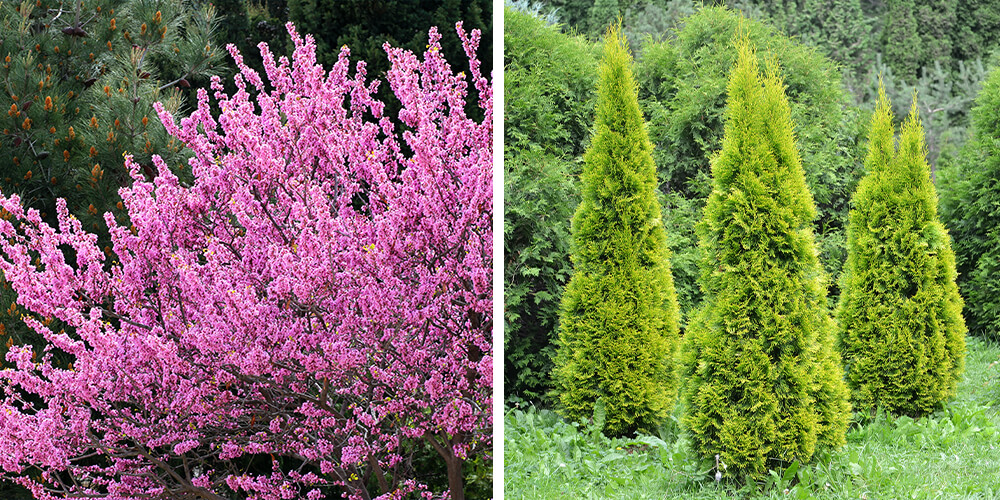
Emerald Cedar
We had to add a nice evergreen into the mix! Having vibrant foliage to admire year-round is always such a treat. This narrow variety is upright and handsome, reaching around 12 feet at maturity, so it’s super easy to integrate into the landscape and works particularly well as a hedge border. Its emerald green foliage is finely textured and lush all year long; it’s so classically refined!
This evergreen prefers full to partial sun. It likes well-drained soils, but isn’t very drought-tolerant and prefers moderate moisture, so if we go through a long stretch without rain, you’ll definitely want to water the roots with the hose to keep conditions comfortable. You aren’t likely to have too many pests issues with the emerald cedar, but in December, you may want to wrap it up with burlap to prevent the foliage from getting winter burn.
Heritage Birch
The bark of the birch tree is so uniquely beautiful and textured—we love the way it naturally peels off like paper, revealing fresh new bark underneath. The mature bark of the heritage birch almost has a pinkish tint to it, revealing creamy white new growth underneath. Growing up to around 70 feet tall and wide, it’s quite a sight to behold when grown with multiple trunks, instead of being trained into a single-trunked tree.
The heritage birch actually prefers its soil to be a bit more on the moist side and is more tolerant of clay soils compared to many other common landscape trees. It’s also quite heat tolerant, so as long as it gets some extra water, it shouldn’t be too fazed by a summer heatwave. If you’re going to prune your heritage birch, wait until fall to do so—in spring, the sap is a lot runnier and will make quite a mess!

Autumn Brilliance Serviceberry
This compact tree loves to show off its personality, covered with pretty white flowers every spring, and outdoing itself with orangey-red fall foliage. It produces berries from late spring and into summer, and it has smooth grayish-silver bark. It’s a nice small tree at just 25 feet maximum height. This is a great shade choice for small-scale landscapes. This serviceberry is suitable for planting under power lines.
Serviceberries grow best in full to part sun, and should not be allowed to dry out. This serviceberry is relatively low maintenance, and a beautiful addition to any yard.
Ready to plant some new trees at home? We’ve still got plenty in stock at Eising, and if you aren’t feeling super confident in your own tree-planting abilities, our experts are happy to provide landscaping services. Visit us in-store, or shop online to see our selection of trees that are ready for fall planting, and if you’d like to arrange for home delivery or curbside pickup, we can make that happen!
We tend to get a lot of questions about rose care, and while roses do require more maintenance than other common shrubs, they’re by no means difficult to look after. A little bit of regular upkeep leads to some pretty impressive results, so if you’re a gardening novice, it’s definitely a worthwhile project. Here’s how you can grow and care for roses in Simcoe, Ontario.
Planting Roses In Southern Ontario
Depending on the variety you choose, you can use roses for border plants, garden bed accents, climbing plants to train over arbours and patio lattice, or as container plants. Whatever location or growing medium you select, just ensure it’s suited to the size and growth habit of your chosen rose variety, since there are so many different kinds to choose from. That being said, almost all roses will need at least 6 hours of direct sun every day, so make sure your chosen location has plenty of light.

The best soil for roses has excellent drainage and high nutrients, to set your rose bushes off to a good start, you’ll want to loosen up the soil thoroughly. Ideally, you’ll want sandier, loamy soil with a lot of compost mixed in.
If you’ve purchased a rose bush with bare roots, you’ll want to soak the root ball in water for up to 24 hours before planting. If it’s a potted rose, you won’t have to worry about that step. Plant your roses about 1.5–2 feet deep to fit their large root system, then fill the hole back up with the soil, compost and bone meal mix. Mound it up slightly around the base of the plant.

How Often Should I Water Roses?
Generally, roses need about 1-3 inches of water per week. The thing is, roses are pretty susceptible to mildew and other fungal diseases if they get soggy and don’t receive much air circulation. That means you’ll want to avoid getting the leaves wet whenever possible and stick to watering the soil directly. The easiest way to do this is with a trickle hose set up near the base of the plant. Just turn it on and leave it for a while, so it thoroughly saturates the ground.
If we experience a lot of rain in a short period, you can skip on watering, and should check your roses regularly for any signs of bacteria or fungal growth. Remove any damaged pieces with sanitized shears, wiping the blades clean between every cut, and disposing of the damaged parts safely in the garbage, not the compost bin.
Rose Care: Mulch, Fertilizer, And More
Applying a layer of mulch on top of the soil around your roses will help to retain moisture and control weeds. Some gardeners insist that cocoa bean shells are the best mulch for roses, but we’ve found that classic bark mulch still works perfectly fine.

In spring, feed your roses with a fertilizer formulated specifically for roses. For best performance and blooms, apply the fertilizer every 2-3 weeks during the growing season. There are also special fertilizers made for transplanting, easing the transition when planting your rose. Be sure to water your rose before and after applying fertilizer as their roots are susceptible to being burnt.
Since there are so many types of roses, this means there are different times of the seasons and different styles of pruning. Use a pruning saw or hand pruners to remove any damaged branches or awkward pieces that jut out too far. If there are some densely packed areas with branches, it may help to thin them out a bit to help prevent fungal growth.
We have so many spectacular colours and varieties of roses to grow in Southern Ontario. Visit Eising to see our full collection, or check out our online store! We have citywide delivery and curbside pickup available all summer long.
We love decorating for Canada Day, but lately we’ve been compelled to avoid buying disposable plastic decorations, and instead look for eco-friendly alternatives. We figured, what better way to show your Canadian pride than through your garden? A red and white décor colour palette is so timeless and beautiful, and it’s all the more festive once July 1st rolls around!
Want some intel on the best new annuals to plant in your Canada Day themed garden? Here are some of our favourites for summer 2020 here in Simcoe. Our online store is now up and running, so if you don’t feel like swinging by the garden centre, you can order these beauties for citywide delivery!
Red Annual Plants And Flowers For Canada Day
Red is such a powerful, vibrant colour that makes a strong impact, yet it’s so versatile and classic. Plant these fire ultra-red flowers and plants in your yard, for a gorgeous pop of colour that brings to mind that big, bright red maple leaf we all know and love.

Whopper Begonia: Bronze Red
This shade-tolerant flower never fails to brighten up the darker corners of our yards, bursting with red blossoms reaching up to 3 inches wide. The bronze leaves kind of have a warmer, reddish cast to them too, so they’ll really help to create a streamlined, consistent colour scheme. Grow them with ease in garden beds or containers, and they’ll treat you with blossoms from spring until fall.
Coleus: Red Wizard
This high-impact foliage plant is perfect for Canada Day—candy apple red with a skinny white trim! Ideally, some morning sun and dappled afternoon shade will help your coleus to grow lush and bright, and you’ll need to water them extra often if they’re in a container. Coleus are fun to grow, because you can propagate them by simply placing cuttings in a cup of water, so you can easily turn one plant into several to give away to friends and family.

Crimson Mandevilla
These romantic vining plants grow so rapidly, by the end of the summer their volume and size is colossal. They’re often grown in containers or hanging baskets, but if you want a really impressive display that boasts Canada’s colours, grow them on a tall, white trellis so they can climb right up. We recommend growing them in full sun, near a wall to give them some protection from the wind.
Red Impatiens
Shade-tolerant, low-maintenance, and self-cleaning—there’s just so many reasons why these annuals remain to be some of the most popular flowers year after year. Impatiens grown in containers will probably need daily watering, but if you have a shaded garden bed with a layer of mulch, you can get away with watering them about twice per week. For ultimate blooming action, add water soluble fertilizer every two weeks until the end of summer.
White Annual Plants And Flowers For Canada Day
White flowers and icy, frosted foliage are so incomparably elegant and lovely in the garden, and they always match your home’s outdoor colour palette, whether it’s cool or warm. Try some of these creamy white flowers and foliage plants in your Canada Day garden!

Helichrysum: Silver Spike
The silvery white, slender, spiky leaves of this plant look like a burst of fireworks—extra appropriate for this national holiday! They’re especially beautiful in mixed container arrangements, bringing contrasting colour and texture that really stands out among ruffly flowers in ultra-rich hues. Plant in full sun!
White Heliotrope
These clusters of little white blossoms look just like scoops of vanilla ice cream, and the best part is, they smell like it too! You can enjoy the flowers of this continuous bloomer all the way until the first frost of winter. It gets its name from the Greek words “helios” (sun) and “tropos” (turn) because the flower heads turn to face the sunlight!

Hypoestes: White Splash
Also known as the Polka Dot Plant, this variety of hypoestes is totally covered in white speckles and splotches. It likes full sun, lots of water, weekly fertilizer in the summer, and fast-draining soil. They look especially cute as potted plants, and since it’s rare for one plant to survive more than a year, we recommend propagating a cutting so you can enjoy it as a houseplant at the end of the growing season.
Nonstop Begonia: White/Bronze
The massive double flower heads on this gorgeous annual flower are just like big, fluffy clouds. Through summer until mid-autumn, you can enjoy these long lasting blooms that sit in a bed of dramatic, dark foliage—deep greenish-bronze with hints of red. Partial shade is totally comfortable for this variety, but try to avoid complete shade if possible.
Have a happy and safe Canada Day, from all of us at Eising Greenhouse and Garden Centre! If there are any tools or supplies you need in time for your backyard barbecue party, we’ve got you covered. Visit us in-store or shop online for all your backyard entertaining needs.
The flavour of homegrown tomatoes is like nothing else, and tomatoes are pretty easy to grow in Southern Ontario. With all that classic, juicy flavour, it's so satisfying to serve your family beautiful and tasty tomatoes that you grew yourself. Some of the more unique varieties are surprisingly beautiful plants as well—especially when they're loaded with brightly-coloured fruit!
Here are some of our favourite tomato varieties for 2020!
Little Sicily is the perfect patio tomato, delivering lots of tomatoes with excellent flavour on a plant that stays under 2 feet tall!
Candyland Red is a currant tomato—slightly smaller than the cherry size. The sweet flavour of these dark red fruits can be enjoyed all season long.
Glamour is an early producing tomato, with large crack-resistant fruits. These are a delicious all-around tomato, great for sandwiches, salads, slicing, and canning.
Great White is a large, yellow-white tomato with a delicate tropical flavour and low acidity. These are the best when eaten immediately after harvesting! Great White is pleasant and mild, and perfect for folks who are sensitive to acidic foods.

Green Zebra is a green and yellow striped tomato with a tart and rich flavour. It's a little smaller than your average grocery store tomato. Let them ripen fully on the vine before picking to enjoy their full, balanced flavour.
Pineapple is a sizeable bright-yellow tomato known for its refreshing citrusy flavour. These are super sweet with lower acid levels than other yellow tomatoes. Pineapple tomatoes can weigh up to 1 pound each and are perfect for sandwiches!
Better Boy is the perfect classic red tomato. Its the perfect balance of tart and sweet, and it produces an amazing amount of fruit in one season. This excellent slicing tomato grows well almost anywhere.
Bush Beefsteak is the perfect beefsteak variety for patios. It delivers large and flavourful fruit early in the season, maturing in just 62 days. The plant stays much more compact than other beefsteak varieties.
Whatever variety of tomatoes you choose to grow, you can be sure they'll taste amazing. You'll be able to show off your delicious homegrown fruit in all sorts of meals—from salads to kebabs, soups to sauces, and burgers to sandwiches. All of these varieties are disease resistant and will grow well in Simcoe!

Tomatoes are pretty simple to care for, but there are a few basics to keep in mind. These garden favourites are heavy feeders, and they're also very thirsty. Because they grow so fast, they use up nutrients in the soil fast. Fertilize your tomatoes once a week to ensure they have the nutrients they need to produce the best possible flavour. During the summer, you may need to water your tomatoes daily, especially if they are in pots. Growing as fast and as large as they do, tomatoes use up water very quickly. Make sure they're watered consistently, without getting too dry in between, to prevent blossom end rot.
Ready to start growing tomatoes for your summer BBQs, picnics, and block parties? Stop by our Garden Centre; we've got many more delicious and beautiful varieties to choose from!
We’re fortunate here in Simcoe—our weather is mild enough that we can grow a pretty impressive variety of delicious fruit trees. There are loads of benefits to growing fruit trees, the most obvious one being the large amount of fruit you can harvest every year. On top of that, they’re seriously beautiful, especially when they’re in bloom, and they can help increase your property value significantly! Want to try and grow your own? Here are the best fruit tree varieties for our neck of the woods.
5 Fruit Trees For Southern Ontario Gardens
Having your own backyard orchard is totally possible, so long as you pick the right kinds of fruit trees to grow. There are many different varieties of each kind of fruit tree, and it’s important to keep in mind that some are self-pollinating, while some others aren’t. The ones that don’t self-pollinate will need to be grown in groups of two or more, so check with one of the experts at our garden centre to make sure you’ve got everything you’ll need to successfully grow fruit.
There’s nothing quite like freshly picked fruit right off the tree, and it’s definitely a nice bonus to get it for free instead of shelling out money for imported fruits from the supermarket. Here are some of our favourites fruit trees for Southern Ontario:

Cherry: The gorgeous blossoms of the cherry tree are truly in a league of their own—the colour and the fragrance are so breathtaking! And, of course, all that tasty fruit definitely sweetens the deal. When choosing your cherry tree variety, always check to see if it’s a sour cherry or sweet cherry tree. The sour fruits are usually used for baking or cooking, but you can snack on the sweet ones with no problem. Black cherry trees are the most popular, and their fruits are usually ripe by late June or early July. Harvest them by nipping them off with pruning shears, because the branches are a little too delicate for you to pull them.
Peach: Fuzzy golden peaches are so tangy and perfect—having your own peach tree is really quite the luxury! Luckily, they’re pretty easy to maintain. Peach trees are technically self-pollinating, but as with all fruit trees, you’ll get the best yields if you keep two peach trees of different varieties on the same property. Make sure you plant your tree, or trees, in a spot that gets plenty of sunshine, with healthy soil that drains well. Plant them in the spring when the weather is mild, and once they’re mature, you can harvest your peaches in July or August. Regularly pruning your peach tree will help to increase your crop yield, but that little extra effort will definitely be worth the payoff of buckets full of fresh, juicy peaches.

Pear: These are definitely one of the most low-maintenance fruit trees to grow, but none of them are self-pollinating, so you’ll definitely want to plant at least two of different varieties. Thankfully, they aren’t very large, so you shouldn’t have too much trouble making space for them. Plant them in the spring, in an area with full sun and plenty of air circulation, which will help to prevent the buildup of mildew or other fungi. Depending on your chosen variety, it can take anywhere from three to 10 years for your pear trees to start bearing fruit, so you’ll need to be patient, but we think it’s definitely worth the wait! Pears usually begin to ripen by the end of the summer through until October, so you can enjoy a nice late-season harvest.

Plum: Few things are as refreshing on a hot day than a frosty, cold plum straight out of the cooler. If you’re a fan of these juicy purple fruits, then you absolutely should grow your own plum trees because the amount of fruit they produce is incredible! Some trees will continue producing fruit from May all the way until October, so there will be plenty to go around. Plums are the perfect fruit tree for beginners because they’re super hardy and low-maintenance. One thorough pruning in the spring will help a lot, though, because thinning out the weaker branches will prevent major breakage later on when the fruits grow and get all plumped up.
Apple: Ah yes, the classic apple tree, how could we ever forget? This much-loved fruit tree has so many different delicious varieties, and the fruits are so versatile. Dinner guests will be fawning over your pies and dessert crumbles made with garden grown, organic apples from your own backyard! Apple trees can be planted in the spring or fall, and they like lots of water for those first few months after planting. You won’t have to prune them much, but you may notice they’re a bit more prone to pests, so you’ll want to regularly inspect your tree and spray with natural pesticides when needed.
Need any guidance on how to plant your own trees successfully? We’d be happy to help walk you through the process! Don’t hesitate to contact us at Eising; we’ll help you on your way to creating your very own home orchard. Don’t forget, we just launched our online store, and we have curbside pickup and delivery options available, so getting your garden plants and supplies is now easier than ever!