
Making a Lot ... A Lot More
By Ely Schweyer
This spring, Mary – you may know her as the Perennials Gal at Eising Greenhouses and Garden Centre – invited me over for a garden tour. I knew to expect a good collection of perennials, but this garden also shines with personality and character. Having brought my big camera, I wanted to help Mary show off all her efforts, as this property has undergone some serious changes. If you wish to make your garden unique to you, whilst eco and budget friendly, may this garden tour inspire you!
A Clean Slate
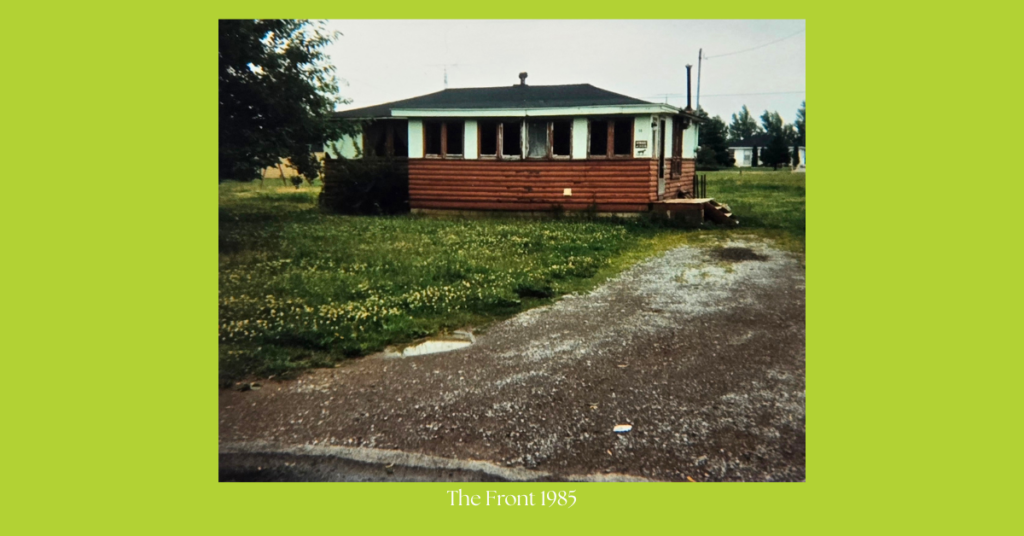
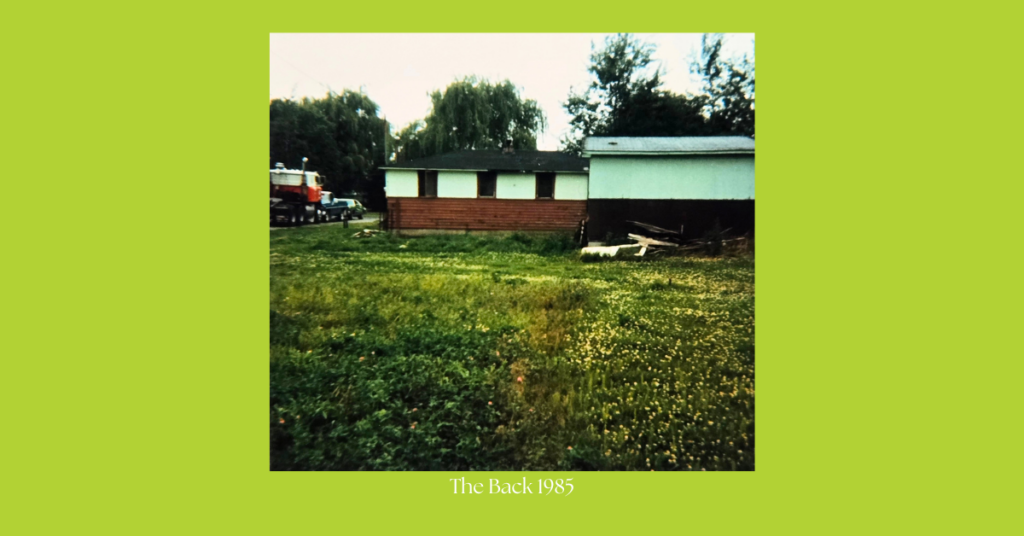
Mary and her husband, Chris, brought their 60’ x 120’ property in July of 1985, which was then “no trees, no lawn, just weeds.”
The lack of trees and the overabundance of Norfolk County clay resulted in drainage issues, which led to the first planted tree drowning, and quickly made mowing a strenuous chore.
The Fix
With her husband driving truck for a construction business, Mary and Chris had access to hauling 17 dump truck loads of sand home to raise the property. Mary says the blue-grey clumps of clay still make their way to the surface – but the drainage issues have subsided!
🖱️ Visit this blog to learn more about soil amendments!
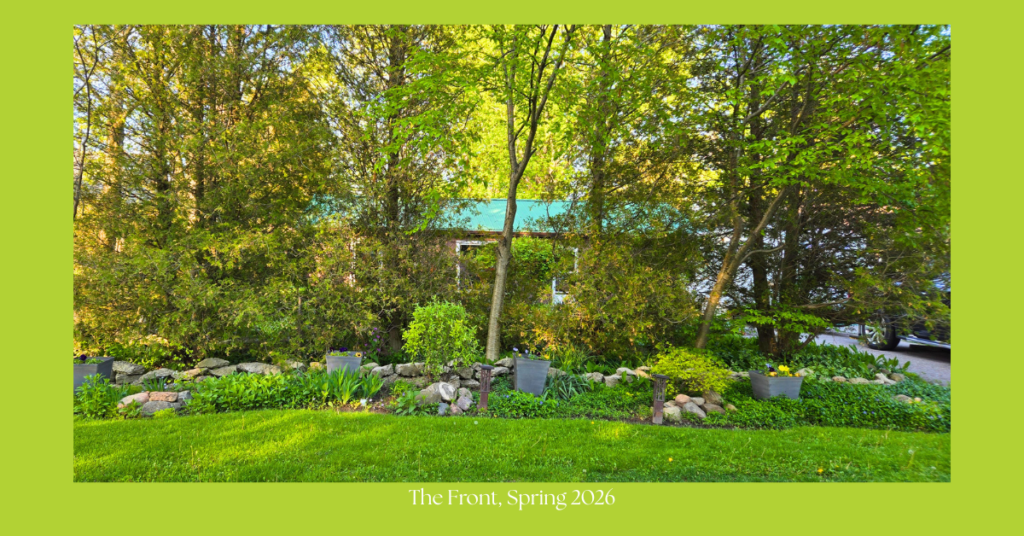
Mary then focused on establishing some native trees on a small budget, and that’s when the community began to grow in her garden. “We have had the best neighbors ever, for 46 years, watched their kids grow, and leave, and come back, and leave - pets come and go - quite the legacy!” With the leaves she collected from her neighbours, Maple Trees volunteered sporadically over the property. Then, after buying a native Carolinian forest seed package at a Toronto garden show, Mary carefully seeded Yellow Birch, White Birch, Wild Crab Apple, and three Sycamores, which now stand tall and proud in her garden. One of my favourites in the little forest was a variegated lilac!
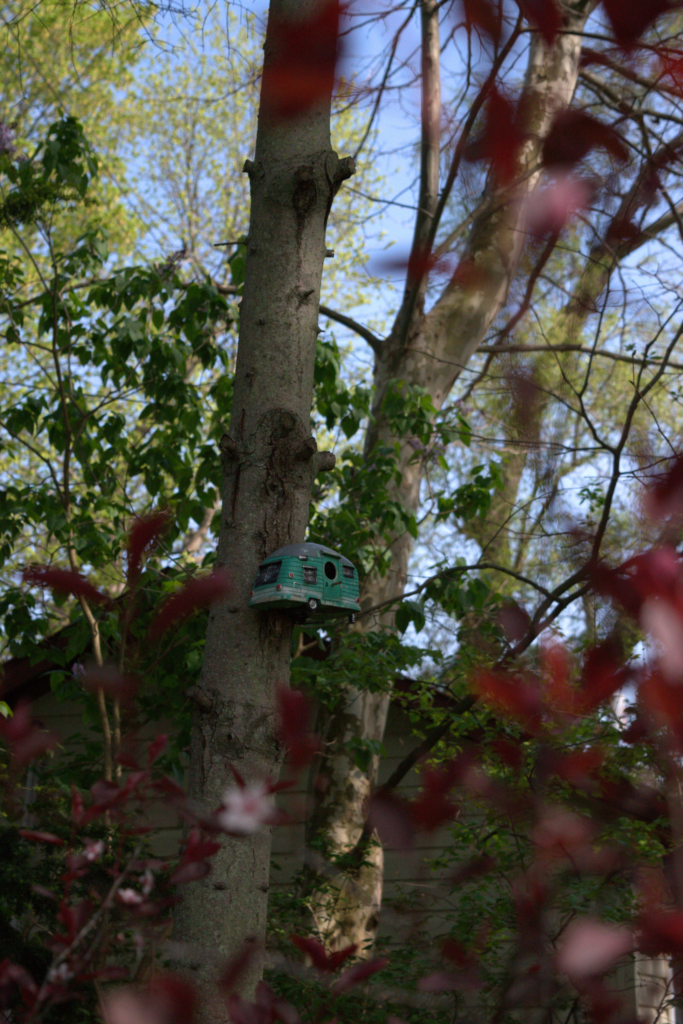
These trees not only provide protection for the house and the many birds but also offer enough shade to maintain a moss-like lawn that requires minimal mowing. The shady canopy offers a coziness adding to the overall quaintness of the garden.
The Perennials Gal’s Perennials
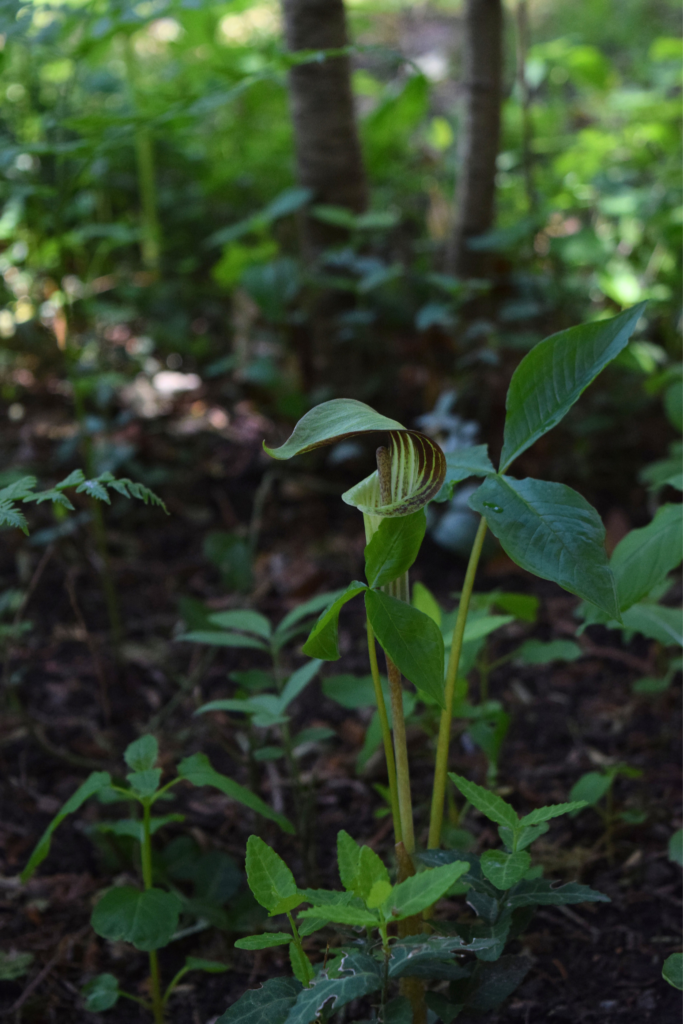
In 1985, the property was surrounded by woodlots; however, all is subject to change. “When we learned of a housing development planned for the forest across the highway from us, I lead crusades to save the native plants that were so abundant there.” The forest may now be gone, but the Trilliums, Mayapples, Violets, Solomon’s Seal, and Ferns are still growing happily and abundantly in Mary’s – and her neighbours’ – gardens. “Over the years I have shared many trunk loads of perennials, many of which were given to me!” Other notable perennials in Mary’s garden are an abundance of Crocus and Forget-Me-Nots, a Jack-in-the-Pulpit, and a Prickly Pear Cactus.

Hardscaping
One of my favourite things in any garden is creative ways to recycle and repurpose, and Mary’s garden does not disappoint!
Immediately, one will notice the unique pathways that intertwine throughout the spaces. Mary collects broken terracotta and ceramic pottery pieces to create footpaths akin to mosaics. The addition of colour is not only visual but provides an audio sensory experience as one moves throughout the garden, “we can always tell when a little animal is coming to visit us sitting out here,” as the pieces gently clink underfoot.

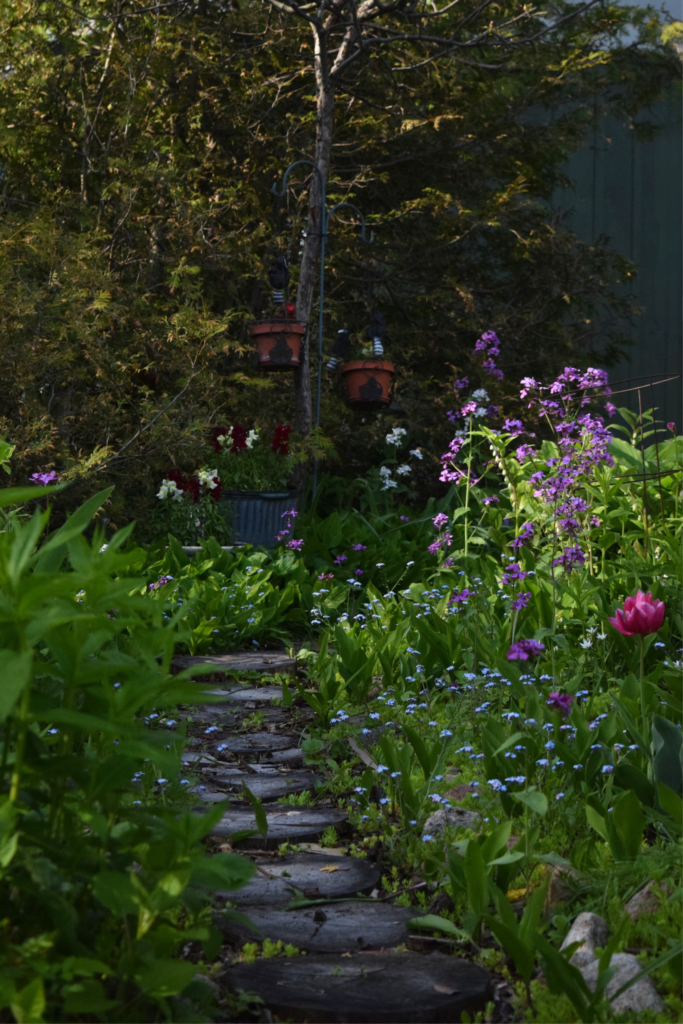
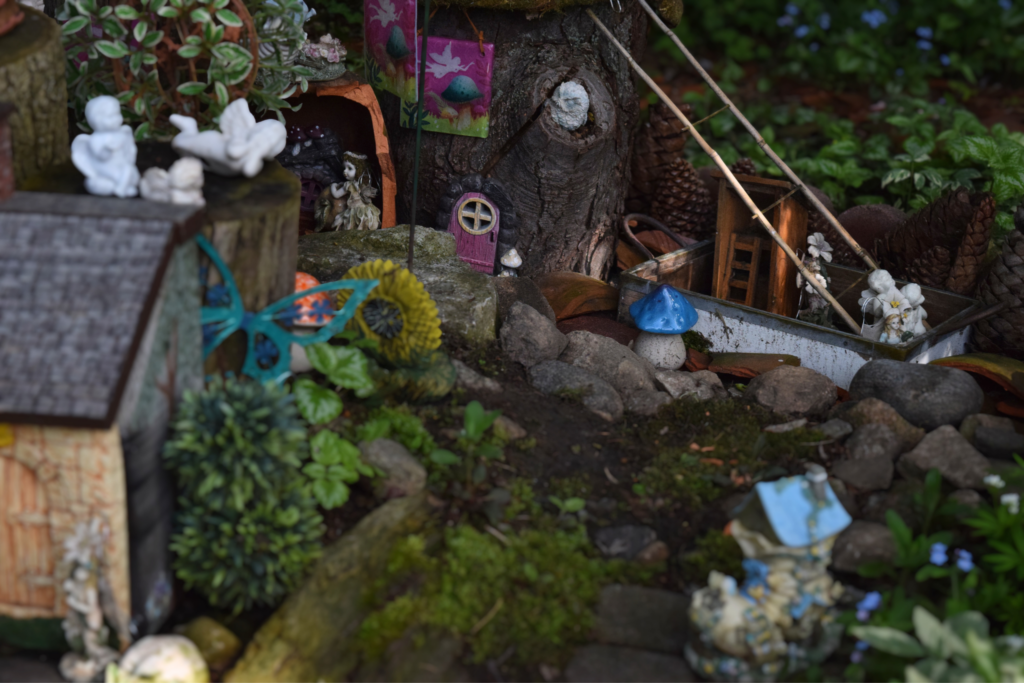
I also must make note of the wine cork pathway to the fairy garden!
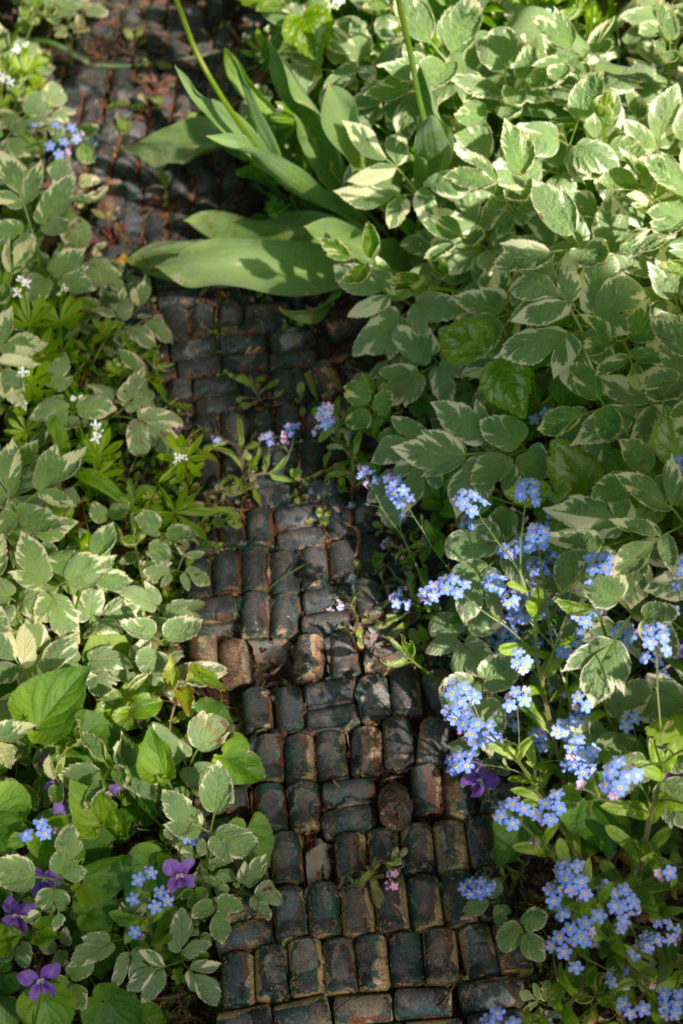
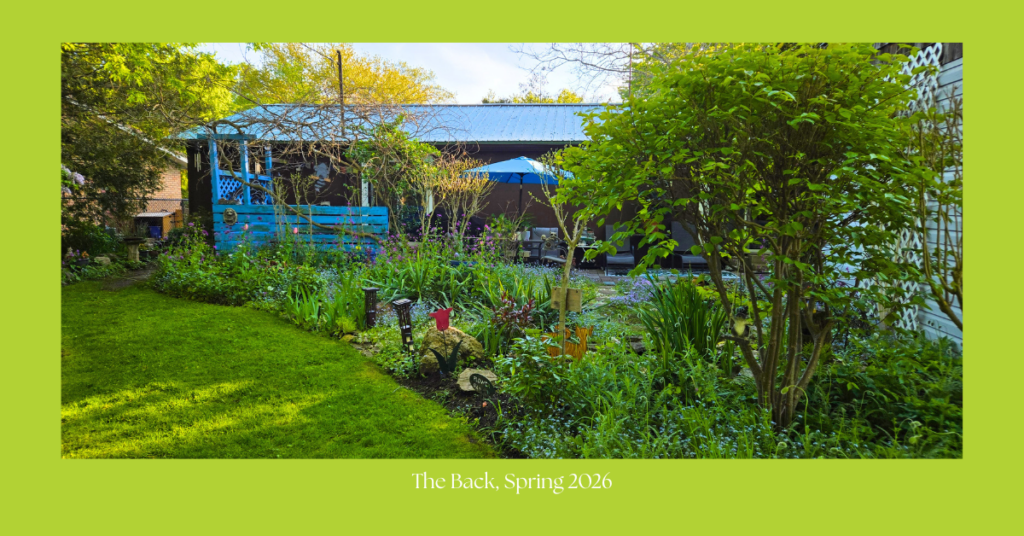
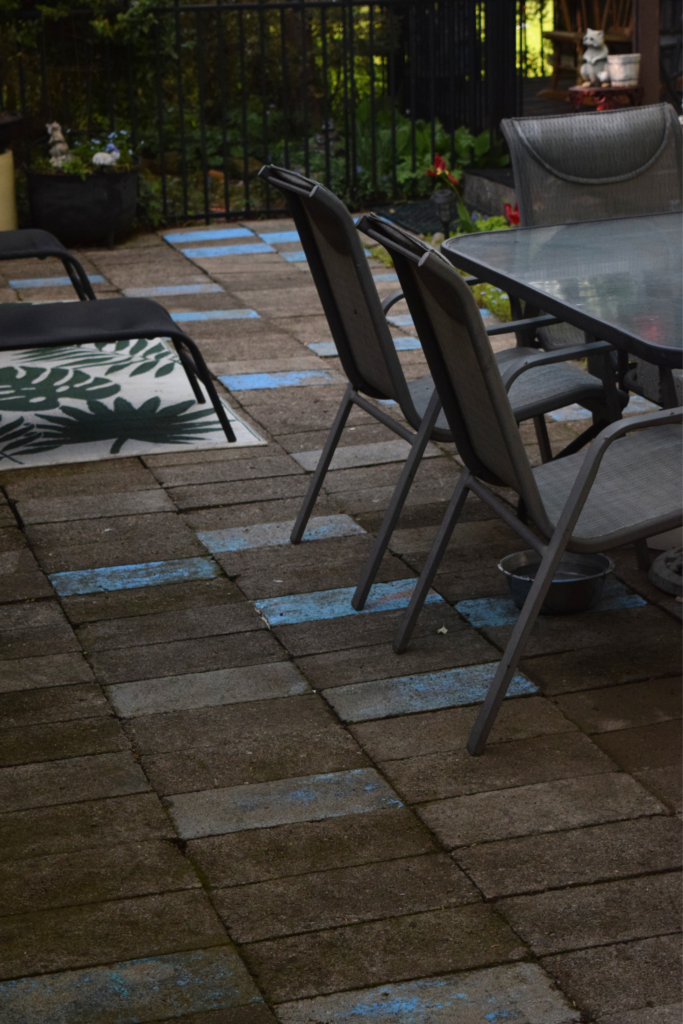
The back patio too is tasteful and playful visually, with blue blocks laid interspersed. You’ll be pleased to know that the Dover Arena lives on in Mary’s garden – the repurposed blocks lie on their sides – and the blue? Those came from the men’s washroom!
The Ponds
Two little ponds provide popular watering holes for birds, raccoons, skunks, opossums, and the neighbours' cats, all of which are welcome.
The pond nearest the patio is a fish tote off the Dover Fish Tugs. Mary dug into the clay to set the 4’ x 4’ x 3’ deep tote, knowing she had one chance or she’d never be able to pull the heavy tote out. “We figure that whoever inherits this property will have to dynamite the pond out, it is set in Norfolk County Clay!” The tote pond is home to a family of goldfish, who don’t mind wintering in it with its little waterfall that keeps the water moving. The goldfish weave through Irises, Waterlilies, and Dwarf Hyacinth.
Another small pond sits in the very back of the yard between the trees, visited by many birds and critters.
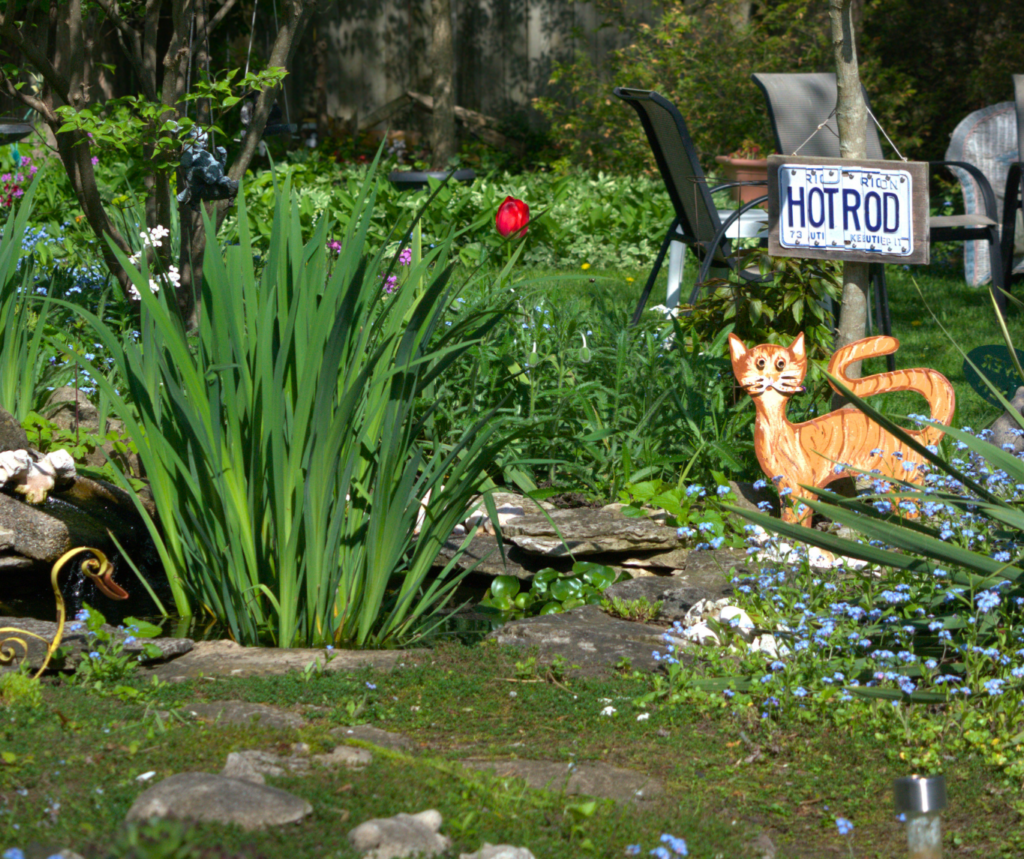
Mary's love for felines knows no bounds. During her time at Purrfect Companions, she treated 'Hot Rod,' a special-needs orange tabby, as her very own. Hot Rod had likely been injured in a vehicle accident, and would spend his remaining days in the shelter - brightened by Mary's big heart. Hot Rod is now buried and truly at home by Mary's pond. At Eising Garden Centre, Mary spoils Peat, the resident rodent controller. Peat makes sure to keep Mary company when she makes her many, many Christmas Urns.

The Fairy Garden
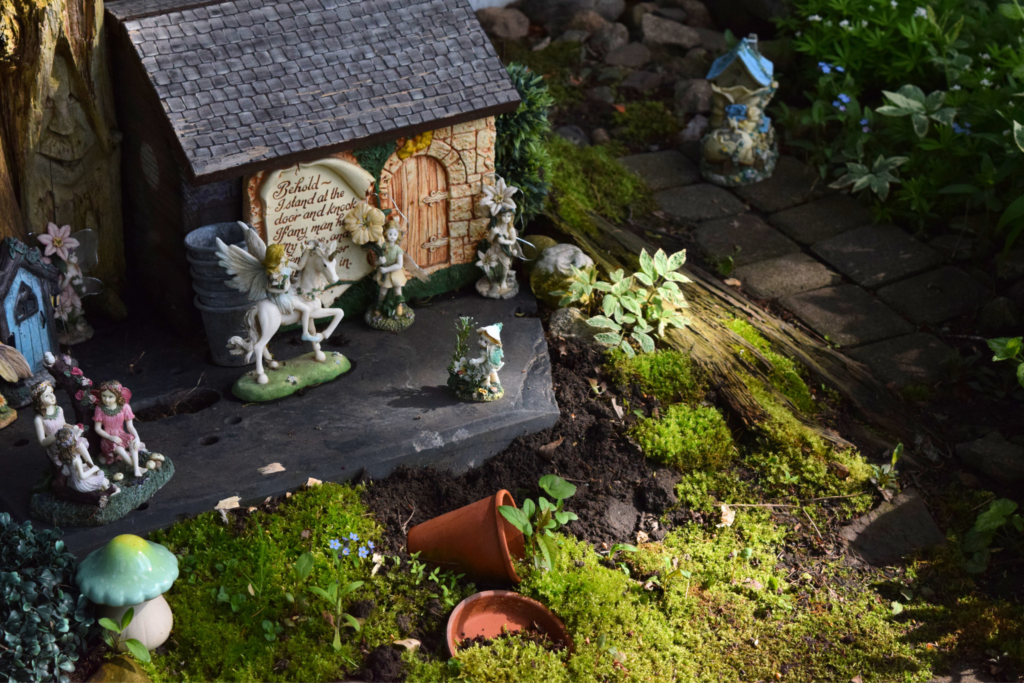
As a fun ongoing project, Mary recently began a fairy garden – and is it ever quaint! Central to a tree and skirted by a pathway, many of the pieces are thrifted or gifted!
Pots as More Than Just Containers
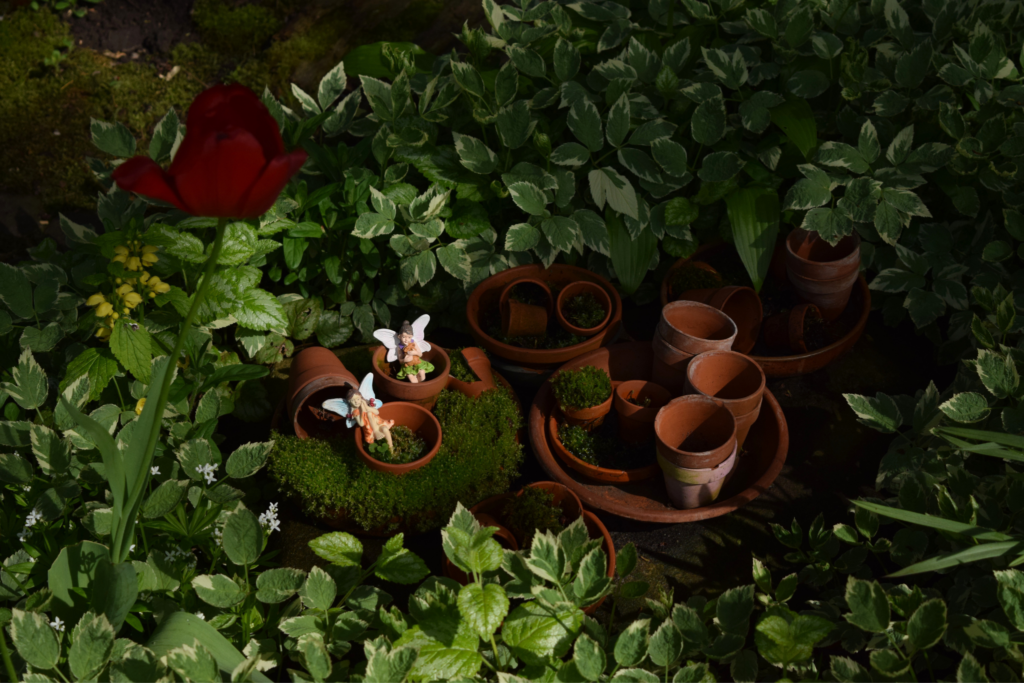
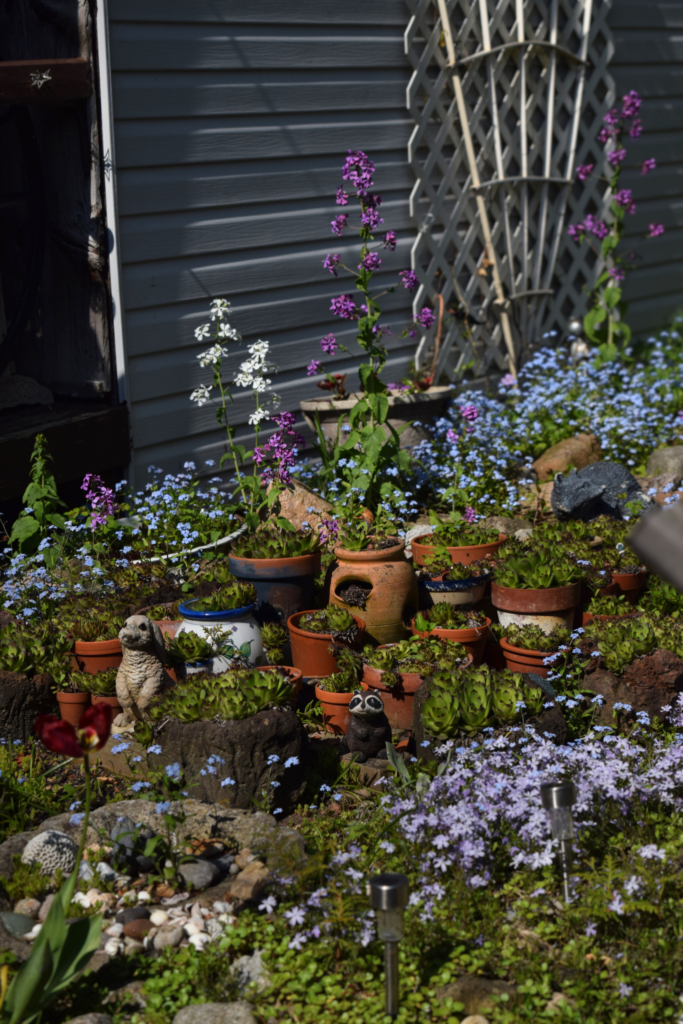
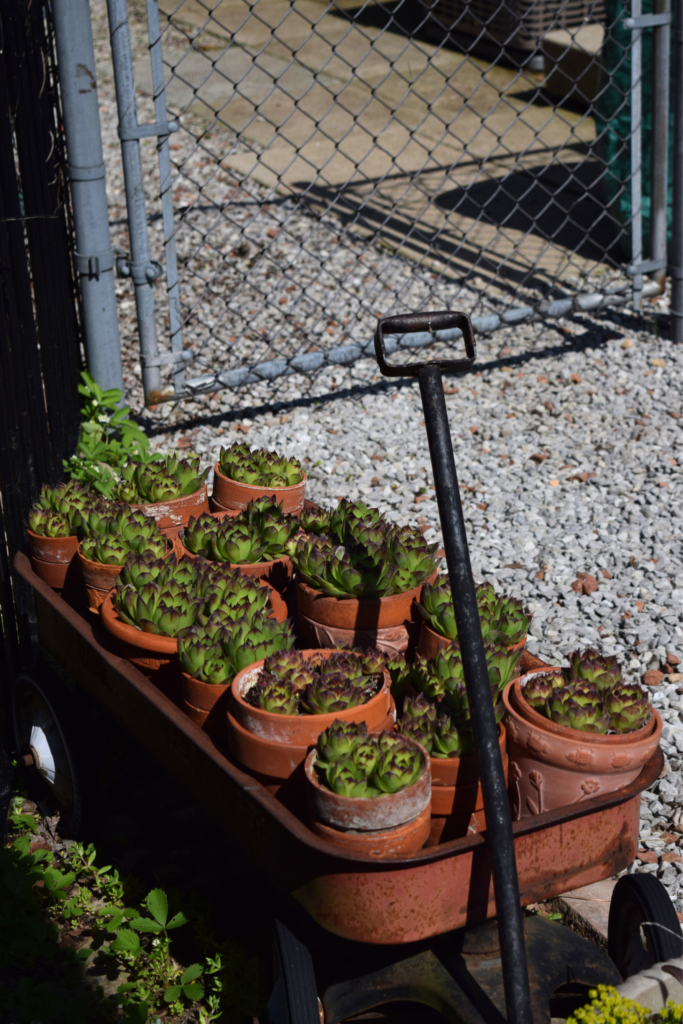
Mary uses pots to extend where she can grow her favourites; this is an excellent way to create varying heights, breaking up horizon lines and adding interest. The terracotta orange also contrasts beautifully with Mary’s frequent use of blue.
Things that Make it Just Mary and Chris
Vintage and found objects help to ground any space. Mary and Chris have collected rocks, driftwood, shells, “anything that makes a statement, big or small,” bringing unique natural elements into their garden that sync with their interests.
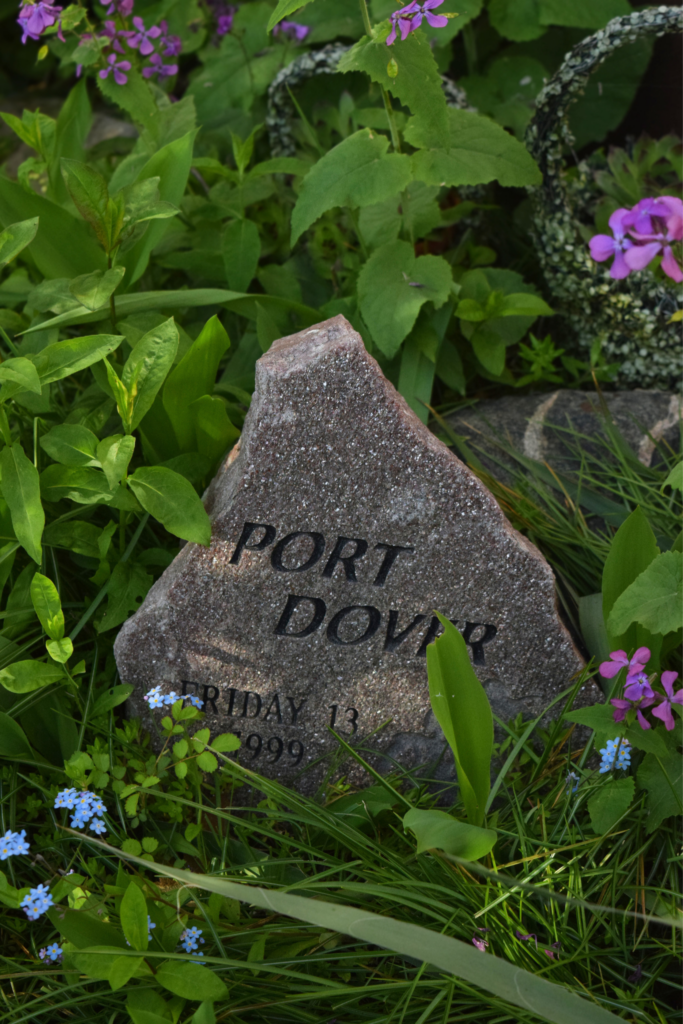
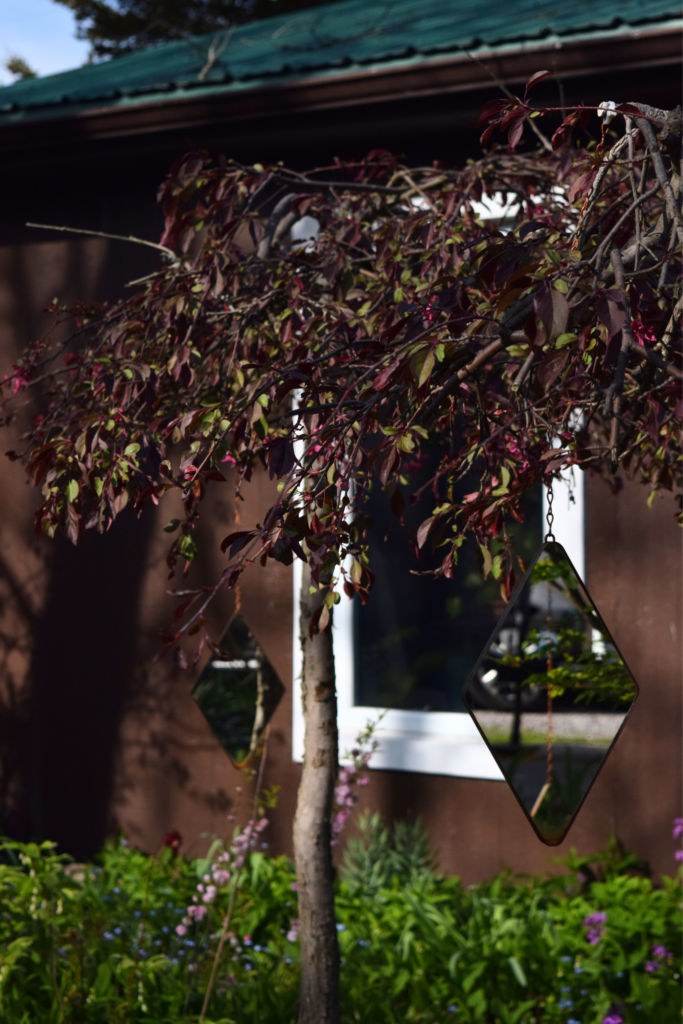
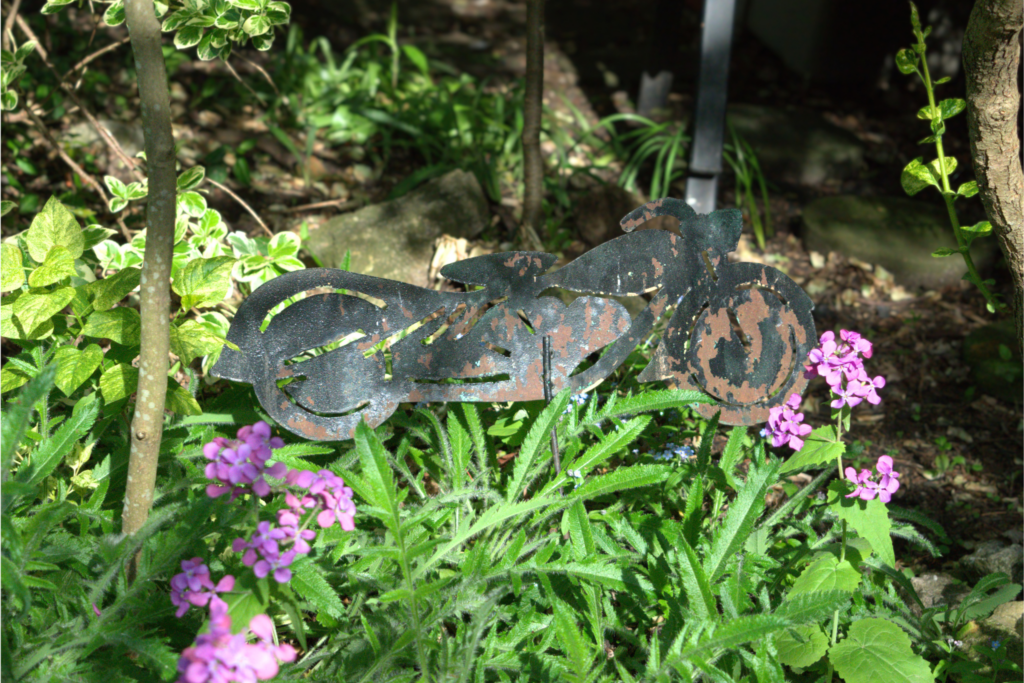
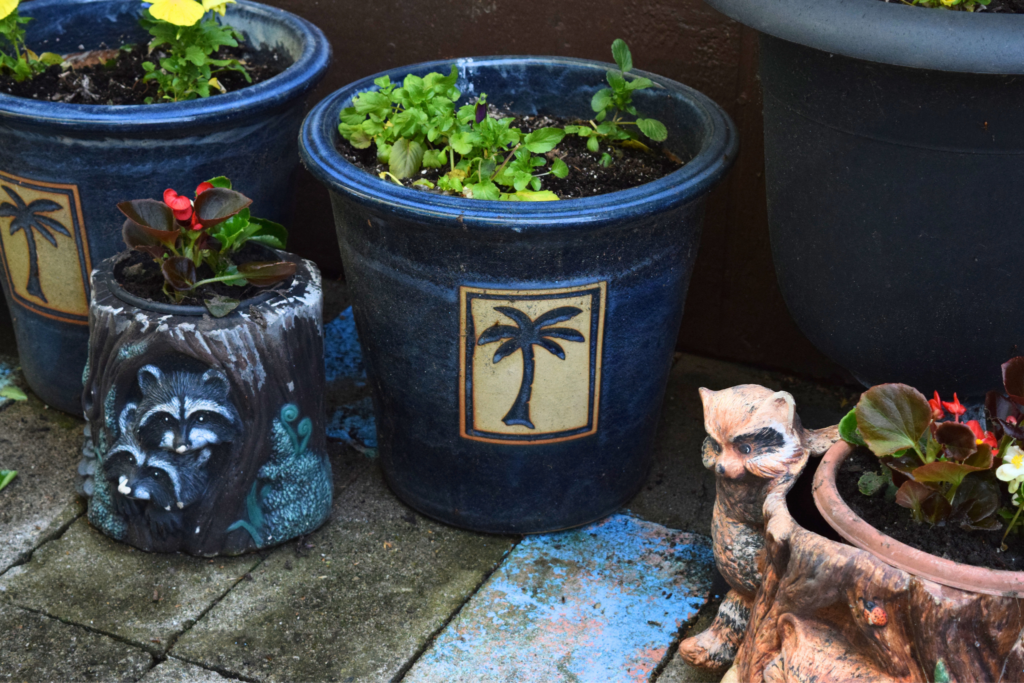
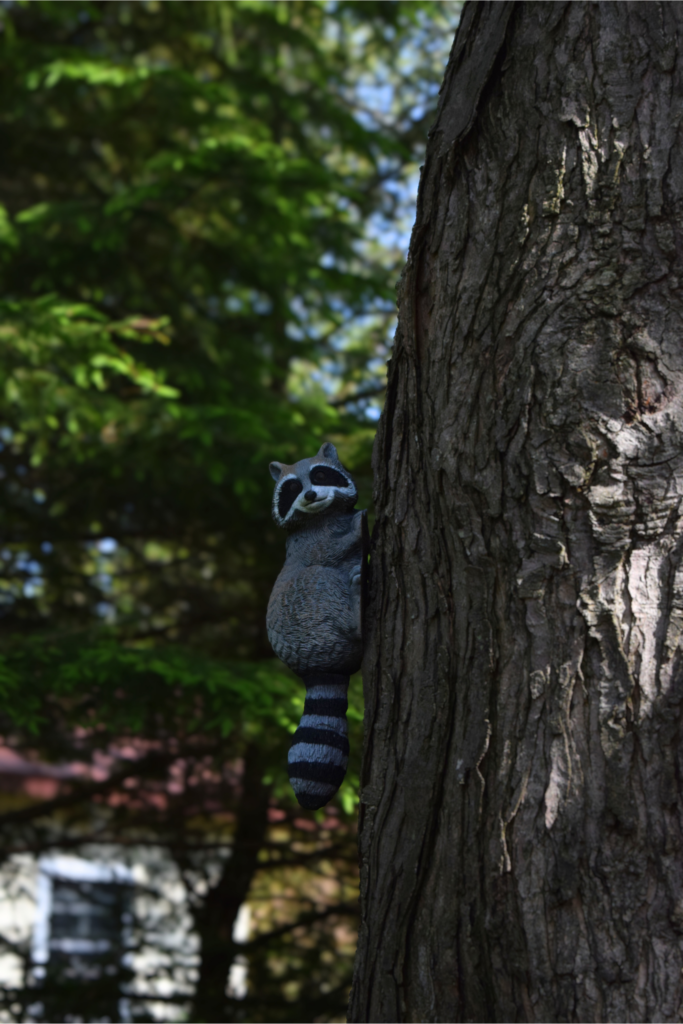
Mary and Chris, founders of Port Dover’s famed Friday the 13th, undoubtedly have a longtime love of motorcycles. In March of 1978, they travelled south to Daytona, Florida, for Bike Week, the largest motorcycle event in the world. There, Mary would earn a ‘raccoon’ nickname from wearing wide-brimmed shades all day in the sun. “Of all the stuffed toys Chris could possibly have owned at that time, he had a little raccoon at his bed side table, I still have it, it would be Number 1 of 3920! Yes, the collection is cataloged, every piece is given a number and recorded. I still collect to this day, but am very selective as to what I buy, as I have so many.” Mary’s raccoon collection is playfully hidden throughout her garden, with little mischievous eyes watching you as you move about. The ornaments help to draw the eye up into the trees and into the shrubs. Mary makes an effort to carefully pack them all up in the fall and bring them out again each spring.
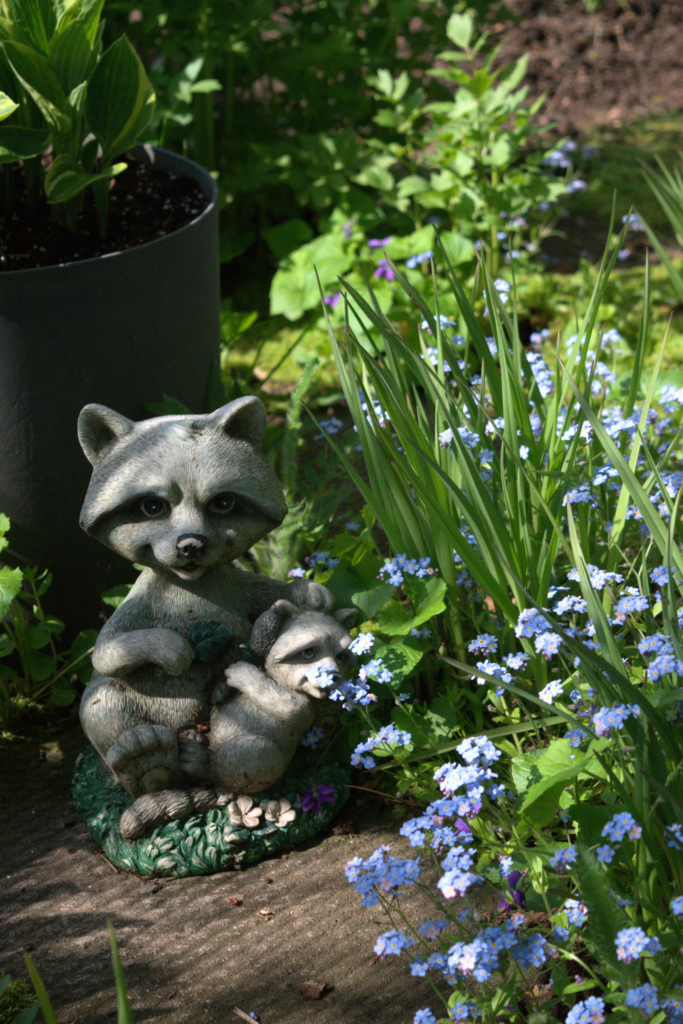
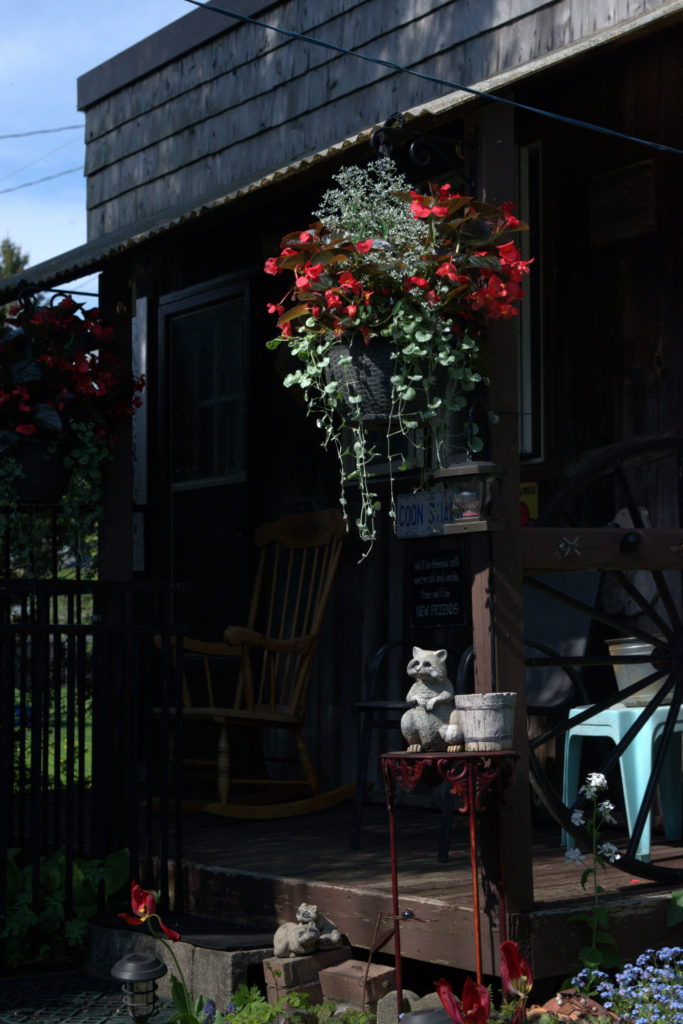
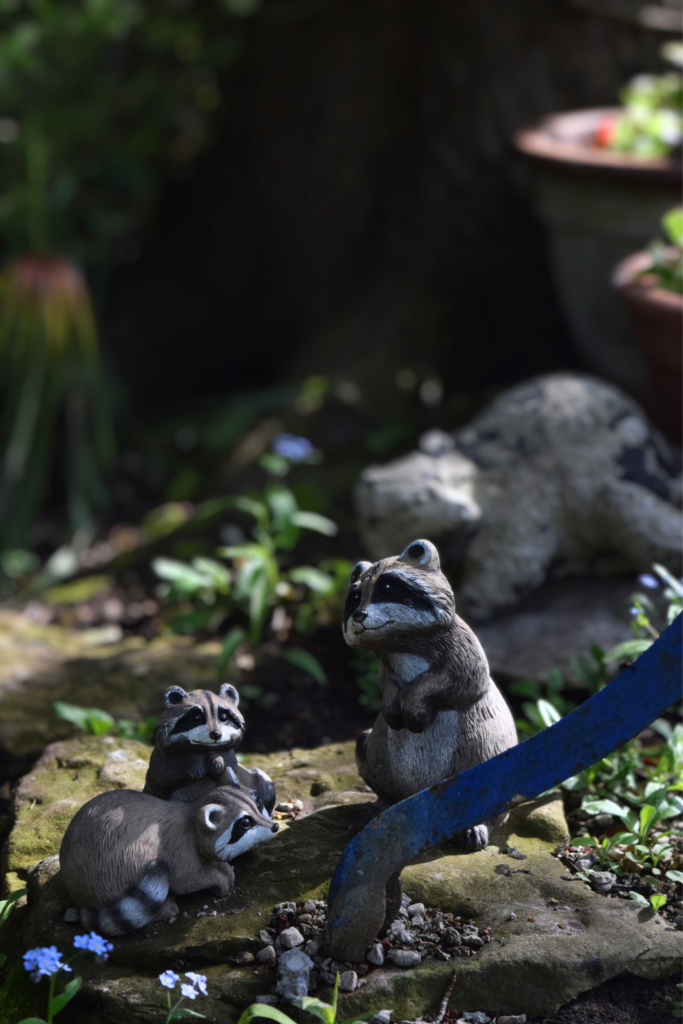
Speaking of spring, this blog will be updated with summer and fall pictures as the garden moves through time!
Mary’s garden is a little ode to a life well cherished; no one thing in it is without purpose or a memory. It is also a great example of reusing and repurposing – gardening does not have to cost an arm and a leg to be great. When you enter the space, you know whose energy is channeled into it, and that is, in my opinion, exactly how to garden!
A Full List of Plants that Grow in Mary’s Garden
Plants that Enjoy Zone 5a and 6b - Provided by Mary
TREES and SHRUBS
- Norway Maple
- Sugar Maple
- Sycamore
- White Birch
- Yellow Birch
- Cedars
- Forsythia
- Burning Bush
- Butterfly Bush
- Kousa Dogwood
- Weeping Cherry
- Sand Cherry
- Pine
- American Oak
- Ginkgo
- Red Bud
- Annabelle Hydrangia
- Variegated Lilac
- Wisteria
- Rose of Sharon
- Variegated Euonymus
- Juniper
- Holly Bush
- Wild Crabapple
SPRING BULB PERENNIALS
- Tulips, Daffodil, Hyacinth, Narcissus, Windflower, Snowdrops, Cilia, Crocus, Frittalaria, Grape Hyacinth
FREE SEEDERS
- Forget Me Nots
- Lunaria (Money Tree)
- Columbine
- Sun drops
GARDEN PERENNIALS
- Hostas (approx 10 species)
- Irises (approx 4 species)
- Tall Phlox: pink, purple, white, coral
- Creeping Phlox
- Candytuft
- Periwinkle
- Lily of the Valley
- Oriental Poppies
- Cranesbill Geranium
- Jacobs Ladder
- Lamnium
- Goutweed
- Lungwort
- Sweet Woodruff
- Clematis
- Ivy ground cover
- Sedum, creeping 2 Species
- Sedum tall
- Ajuga
- Blue Grass
- Hens and Chickens - 100’s!
- Variegated Solomon’s Seal
- Allium
- Beard Tongue
- Brunaria
- Goats Beard
- Bergenia
- Creeping Thyme
NATIVE PERENNIALS
- Red and white Trillium
- Jack in the Pulpit
- Wild Geranium
- Mayapple
- Wild Violet
- Ferns (approx 6 kinds)
- Solomon’s Seal
- Euphorbia
- Prickly Pear Cactus
POND PLANTS
- Yellow Iris
- Dwarf Hyacinth
- Water Lily
Be sure to visit Mary in the perennials section at Eising Greenhouse & Garden Centre this summer for many of the mentioned plants – and be sure to make your garden yours! 🪴
By Dave Zeldon and Ely Schweyer
This is a question we hear daily during the spring, summer and, especially, the fall. Unfortunately, many homeowners do not see any adverse changes occurring in their trees until they look dead, or nearly so.
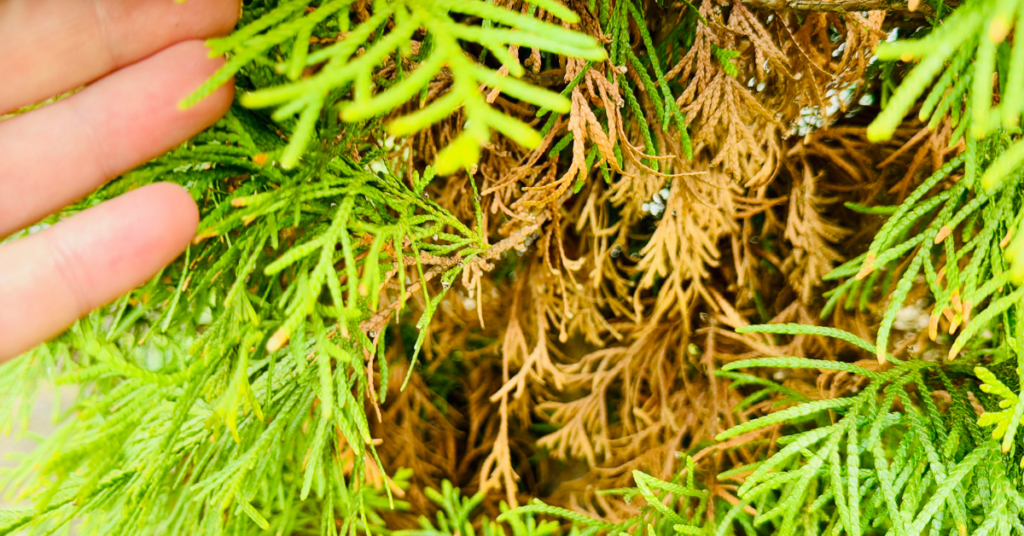
You Might Not Need to Panic Yet
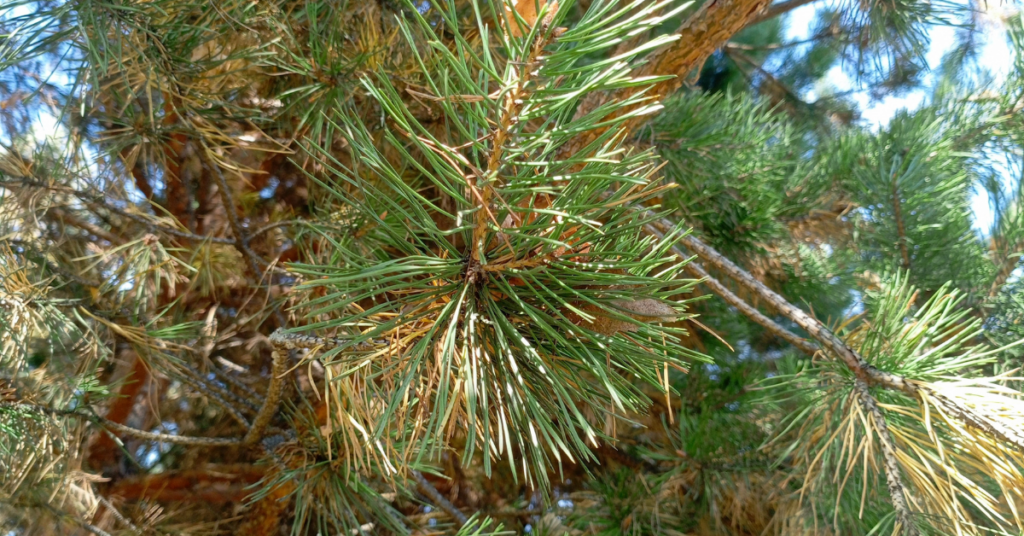
The discolouration and dropping of evergreen needles are a natural phenomenon and the main cause of needle loss in the wild. Evergreen needles, as the name implies, survive for a lengthy period, and in fact usually have a life span of five to seven years on healthy trees, however, they must be shed. The needles first start to die in the central and lower part of the tree, and this change progresses upward over time. You will see spruce trees naturally lose needles as they get older.
Age is an important factor here in causing needle loss and branch death, however, in landscape plantings of coniferous evergreen trees, pests and disease are likely the major cause of needle loss and dying branches. If there is a sudden fall of a very large number of brown needles and leaves, this signals to us that there is something drastically wrong!
This can happen as early as a year or two after a tree is planted. This is especially true in Haldimand and Eastern Norfolk County where heavy clay soils predominate. Spruce trees, for example, do not grow well on clay soils.
When You DO Need to Worry
Here are some of the more common problems, apart from natural aging that afflict spruce trees, the probable causes and ways of treating the problem.
☝️Unfortunately, these majestic trees, the most popular evergreen planted on our residential properties, incur many other pest and disease problems not dealt with here.
Symptom: Rusty brown needles that eventually fall.
Likely causes:
1. Internal fungus disease (called Cytospora or white blister canker). This creates cracks in the bark causing resin to drip and leave grey-white dripping streaks on the bark. The fungus also causes open wounds or blisters on tops of branches. These wounds can be greyish white or greyish blue in colour, eventually turning brown and black.
2. Feeding by spider mites which leave fine, poorly formed webs in the needles, especially near the ends of the twigs.
Best treatments:
1. Properly aerate and fertilize tree out to a distance of half its height in all directions, where possible.
2. Pressure wash thoroughly once a month with water only, all needles and branches as high as possible on the tree. Water pressure dislodges spider mites.
Symptom: Chewed up ends of twigs in June.
Likely cause:
Spruce bud worms which develop in the needle cluster that arises from a bud.
Best treatment:
Spray the biological pesticide, BTK (eg. Dipel), onto the entire tree when feeding is first noticed in early spring, to kill the young caterpillars.
Symptom: Black sooty mold covering twigs and needles.
Likely causes:
1. Spruce bud scales, ball-shaped insects, initially light brown in colour but eventually turning black. Often two to five scale balls cluster in one location on the twig; honey dew excretions from scales become infected with sooty mold.
2. An overhanging shade tree such as oak, maple or elm may have heavily infested leaves with aphids whose honey dew secretions become infected with sooty mold.
Best treatment:
1. Pressure wash tree using water only to dislodge young scales (called nymphs) in May and early June while they are in the crawling stage. Scale nymphs fall to the ground where they cease to be a threat to the tree.
2. Spray shade tree in early spring with insecticidal soap to control aphids. The problems of other coniferous evergreens such as pines, firs, cedars and junipers can usually be treated with correct diagnosis, though some diseases are lethal.
We hope these help you troubleshoot common issues often found in evergreen trees! For more information - and evergreens – visit Eising Greenhouse and Garden Centre! 🌲
A well-chosen hedge can do a lot more than just look great—it can give you privacy, act as a windbreak, define garden spaces, reduce noise, or add year-round greenery. Whether you're looking to block out a view, frame your garden, or just create a lush backdrop, hedges are incredibly versatile.
One of the most underappreciated roles of a hedge? It makes everything in front of it—flowers, trees, garden art—look even better. Think of it as a green stage curtain that lets your garden stars shine.
Pretty much any shrub planted in a row can create a hedge, but the right plant depends on what you want it to do. Here are some of our top picks.
Evergreen Hedges - The Classic Green Wall
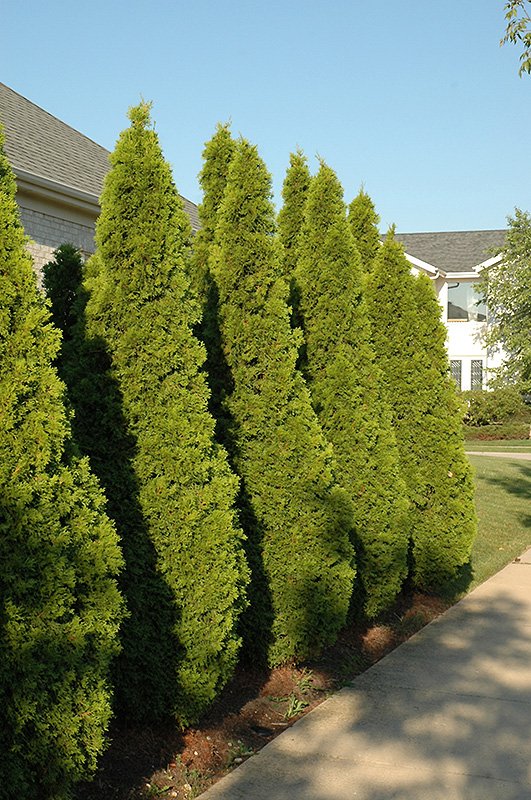
Botanical Name: Thuja occidentalis 'Smaragd'
Cedar is a favourite for a reason. With its dense, year-round green foliage and low-maintenance nature, it's ideal for privacy. Depending on the type, cedars can grow between 9–14 feet tall, forming a living wall that blocks wind, noise, and prying eyes. It also makes a lovely backdrop for all your other plants.
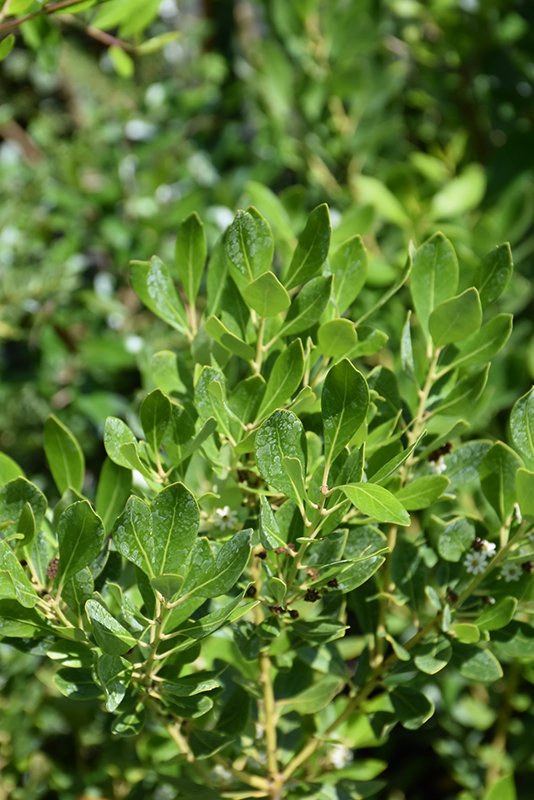
Botanical Name: Ilex glabra
Looking for a Boxwood alternative? Inkberry Holly is a great choice—especially if you're concerned about Boxwood Blight. This broadleaf evergreen keeps its dark, glossy green leaves all year and can grow up to 8 feet tall if left unpruned. It loves full sun, wet soil, and even acidic conditions. You can trim it to keep it neat or let it grow naturally—either way, it makes a fantastic border or garden divider.
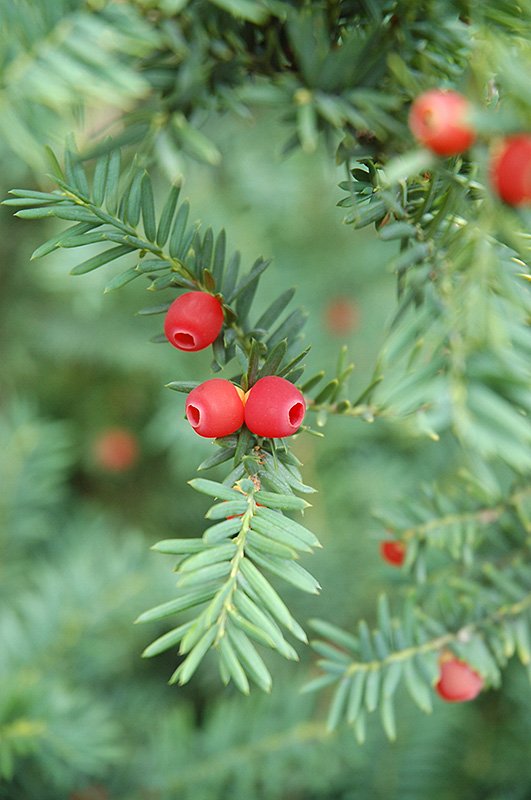
Botanical Name: Taxus cuspidata
With dense, dark green foliage that stays lush all year-round, Yews make excellent hedges for privacy, property lines, and garden backdrops. They’re incredibly versatile—leave them to grow naturally for a softer look or trim regularly for a crisp, formal shape. Yews respond beautifully to pruning, creating a smooth, tailored finish. Just be sure to wear gloves when handling them, and plant them away from children, pets and livestock, as all parts of this striking plant are toxic.
Deciduous Hedges with Drama and Colour
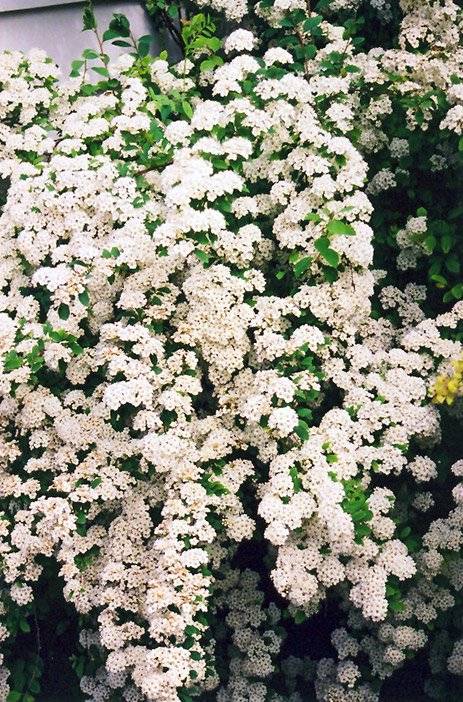
Botanical Name: Spiraea x vanhouttei
Graceful, arching branches that are completely covered in double-white blooms in the Spring make Bridalwreath Spirea a truly stunning hedge plant in the spring. After its spring show, small, glossy green leaves cover this plant until the fall, when its leaves take on beautiful autumn colours.
Bridalwreath Spirea grows to a mature height of 4-9 feet, can tolerate light shade as well as a variety of soil conditions and can be lightly pruned to shape. They are also deer-resistant.
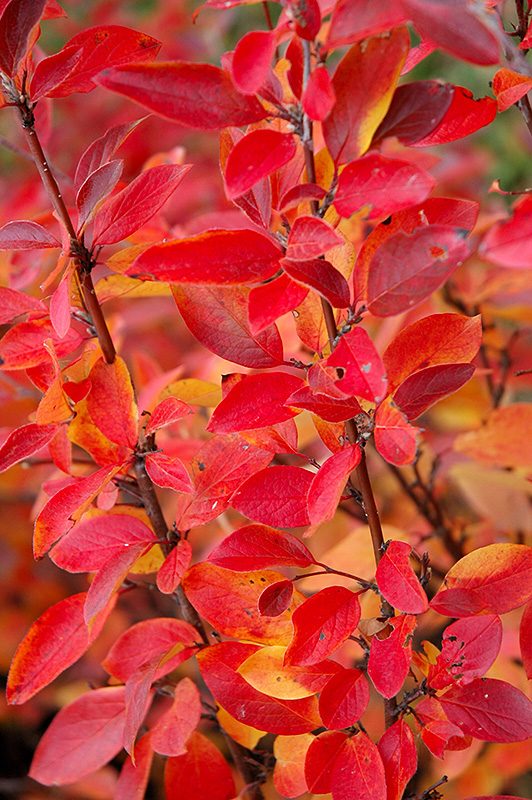
Botanical Name: Cotoneaster lucidus
Peking Cotoneaster may not be flashy, but there are lots of reasons to love this shrub. Its smooth, dark green leaves create a clean, structured look that works beautifully behind flowering plants or along fences. In fall, the leaves turn a fiery red, and black berries appear, which birds snack on through the winter. Growing 5–7 feet tall, this shrub is also a great choice for wind protection and bird habitat.
Still not sure which plants to choose for your hedge? Stop in to see us at Eising Garden Centre and talk to one of our tree and shrub specialists - Zach, Sandy and Donna, or contact one of our landscape design specialists, Emily or Lucas. We’re here to help!
November. It’s not quite winter, but pumpkin season is officially over. After you’ve put away the Fall decorations and cooked your pumpkin, it’s time to head outdoors to green up your decor again!
This is the perfect time to drop by Eisings to gather fresh greenery and decorations that are weather-resistant and hardy for your outdoor urns. Perfect because it’s that in-between time of year when autumn’s splendour starts to fade and temperatures begin to drop.
You can purchase urns that are already artistically filled with beautiful greenery and decorations, or you can find the supplies you need to fill an urn or pot you already have. Whether embellishing a premade urn or creating your own, here are some handy tips to help create a dramatic display.

“Planting” Medium
If you have had annuals or perennials in outdoor planters, don’t empty the soil - reuse it for your winter greenery! You may need a bag of soil to top it up, or ideally, you can use blocks of floral foam which can be purchased from our shop. These foam blocks can be nestled into the top of the soil and secured by crisscrossing a few pieces of tape across the top of the pot. If you’re starting with a fresh urn, find a pot that fits inside it and fill it with your planting medium. Soil and floral foam retain moisture for your fresh greens, and they also hold the plant material in place.
A Little Inspiration
Find some pictures online, or draw inspiration from the decorated planters at Eisings. Having a picture to work from will help you determine the supplies that you’ll need and how to arrange the items in your urn.
Gather Greens
Evergreen boughs will keep your planter looking fresh and green. Spruce, fir, pine and cedar branches will hold up well and retain their shape and colour throughout the holiday season.
Focal Points and Accents
Birch branches, curly willow, grapevine decorations, and dogwood branches all provide upright focal points with height in your planter.
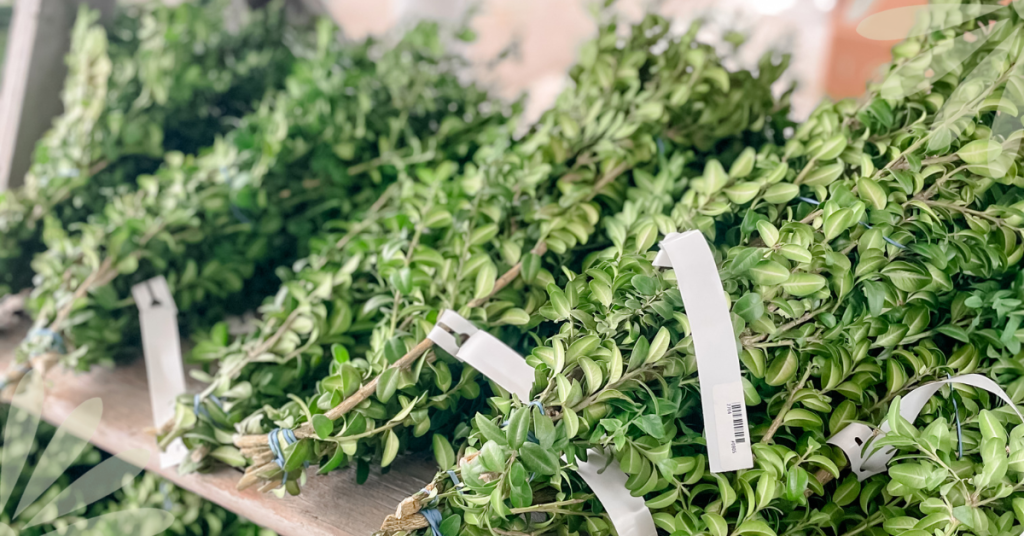
Magnolia leaves, boxwood, inkberry and holly branches add texture and interest. Use pine cones, rose hips, faux berries, moss balls, seed pods, ornaments, and bows for some great final touches.
Adding lights will make the planter stand out and give it an ambiance that’s warm and inviting.
Build It!
1. Start by placing the item that you’ve chosen as the focal point in the middle of the planter. Pick a side that will become the front of the planter, and add everything else while you’re facing that side.
This is a good time to add battery-operated LED lights to upright posts and branches or insert a solar lantern.
2. Surround your focal point with evergreens by layering different boughs like cedar and pine, which are soft and hang down with more firm fir and spruce on top. This becomes the base or background for everything else in your planter.

3. Add accent pieces like dogwood, willow, holly and inkberry branches.
4. Embellish with decorations. This is a great way to fill in any blank spaces and draw your eyes in to focus on the details.

Begin by decorating with a cluster of pine cones, a bow or any decoration grouping in a lower section of the planter, then space out other decorations around the planter. Later, as the holidays draw near, you may want to add some Christmas decorations as well.

Helpful Tips:
- Find a good sturdy “poker” (a screwdriver or a strong bamboo stake) to make holes in the soil or foam blocks, allowing you to insert smaller branches and delicate seed pods or ornaments easily. You may need to secure smaller items onto sticks or some of the stronger branches in the planter by wrapping wire around them.
- Don’t forget to water your arrangement to help your greens stay fresh longer!
In winter, the blanket of snow and grey winter skies can create a somewhat monotonous landscape. That’s when greenery urns make a big difference. Blending evergreen boughs with rustic and seasonal accents and some lights creates a welcoming outdoor display for November and beyond. Just be sure to use materials that can hold up to the frost, wind and snow that will be coming!
Other Resources
https://eising.ca/how-to-decorate-with-fresh-greenery-for-christmas/
https://eising.ca/holiday-home-decor-ideas-you-can-make-yourself/
https://eising.ca/holiday-decorating-tips/
Ah, the smell of fresh greenery! There’s something extra special about decorating for Christmas with fresh evergreen branches.
The holidays are the best time to bring the outdoors in. After all, what better time is there than when we’re longing for some green in a winter world that’s predominantly brown, or snowy white? Or, you may simply be searching for the nostalgic smell and sight of fresh holiday decorations.
In southern Ontario, evergreens last the longest outdoors during our winters. But how do you keep your pine, cedar, fir and spruce branches looking fresh and lovely all season long? Give these tips a try.
Start Fresh
Whether you are making decorations, or buying them, start with freshly harvested branches.
Cut each stem on an angle to increase the water absorption rate, and place the stems in a bucket of water for several hours before using them. As you’re cutting each branch, be sure to check for any pests first.
At this point, your greens are ready to arrange into wreaths, swags, garlands, containers or whatever you’re making.
For indoor arrangements, oasis or floral foam that has been soaked in water, and secured in your container creates a solid base to work with. Fill outdoor urns or containers with moist soil, or a combination of oasis and damp soil to insert the branches into and hold them in place. Both methods will help to keep your plant material hydrated.

Prevent Dehydration
Before adding decorative elements, lightly mist your evergreen arrangements, wreaths, swags and garlands with an anti-dessicant spray. Doing this provides a protective barrier and reduces moisture loss.
Placement and Care
Keep outdoor arrangements sheltered from direct sunlight and strong winds if possible. Likewise, keep indoor arrangements away from sunlight, and heat sources like vents and radiators.
Evergreens can dry out very quickly. Keep arrangements watered (for outdoor arrangements, water when the soil is not frozen), and mist garlands, swags, and wreaths with water frequently. Avoid overwatering though! It’s a good idea to water or mist in the morning so that any excess moisture evaporates or can be drained if not absorbed after about an hour.

Following these steps should keep your decorations looking fresh through the holiday season and beyond!
If you would like more help with homemade decorating ideas, check out our DIY Fresh Evergreen Decor guide and our Holiday Home Decor Ideas.
Or, stop by and see us at Eising Greenhouses and Garden Centre in Simcoe for inspiration and choose from our selection of:
- fresh greenery branches
- undecorated arrangements
- decorated arrangements
- Poinsettias
- Christmas Cactus
- Kalanchoe
- Amaryllis
- Paperwhites and more!
If you’re heading to a holiday party, we have lots to choose from as gifts, or items to add to your arrangements, or to fill a spot in your home that needs a little extra holiday cheer!

Planting new trees into the landscape is always a worthwhile investment! Not only are they pretty to look at and provide cool shade on hot days, but they add a pretty significant increase in property value. Watching trees transition through each season is always a delight, but trees in autumn are especially beautiful. But did you know that autumn is actuaslly the perfect time to plant many of our favourite trees?
The root ball of a tree is quite sensitive. After all, it acts like their “brain” or central nervous system, so if you stress those roots out too much, you’re going to have a very tired looking tree on your hands. Here in Southern Ontario, if you plant in late spring or in the middle of summer, those high temperatures may be a bit too much for the roots to handle. The cool, mild temperatures of autumn are just right for transplanting.
6 Trees You Can Plant In Fall
Want to liven up your landscape with some colourful foliage? These ornamental trees for fall are so distinctly beautiful in their own different ways—it’s hard to pick just one!
Tulip Tree
This tree has so much style, and it grows surprisingly quickly, so if you’re a bit of an impatient gardener, you’ll love watching the tulip tree develop over the years. It gets its name from its gorgeous spring flowers, which you probably have guessed, look quite similar to the classic tulip! While it puts on quite a show in spring, it has a reputation for being especially beautiful in fall, when its sunny golden foliage turns a fiery orange shade.
Because the tulip tree grows so quickly, its branches tend to be a bit thin, so you may want to put it in a spot that gets some protection from the wind. Just make sure it gets at least some partial sun and isn’t too shaded, or else its leaves may turn brown. Regular pruning of your tulip tree and cleanup of any damaged branches will help keep things neat and help prevent pests from showing up.

Autumn Blaze Maple
There’s something so charming about a giant maple, and the blazing red leaves of this maple tree in autumn look so classically Canadian! It’s a perennial favourite, because it’s actually a cross between the red maple and the silver maple, and it seems to have taken on the best traits of both. Overall, it has stunning colours, a nice, balanced branching habit, and pretty sturdy limbs despite being a very fast grower.
Autumn blaze maples need full sun to grow to their best potential, but the condition of the soil is much less critical. This variety is actually quite drought tolerant and doesn’t mind poorer soils—just be sure you water it very regularly for those first couple of months after planting to help the roots establish.
Eastern Redbud
You’ll always look forward to spring in your yard with this show-stopping beauty around! It bursts into bright magenta blossoms and looks like it’s straight off the pages of a fairytale book. They don’t grow especially big—about 30 feet tall and wide at its largest—so if you’re looking for something a little smaller scale, the eastern redbud will suit the landscape nicely.
Ideally, you’ll want to plant your tree in a spot that gets direct sunlight in the morning, but a bit of shade in the afternoon, so a North or East-facing spot in the yard would work best. Plant it at least 8 feet away from any buildings to give it adequate room to spread, and try to put it in a spot that isn’t at the bottom of any slopes. This could cause too much moisture to collect near its roots, and this tree doesn’t like to sit in soggy soil. So long as the soil is quick-draining and isn’t piled up around the trunk of the tree, you aren’t likely to encounter any problems.
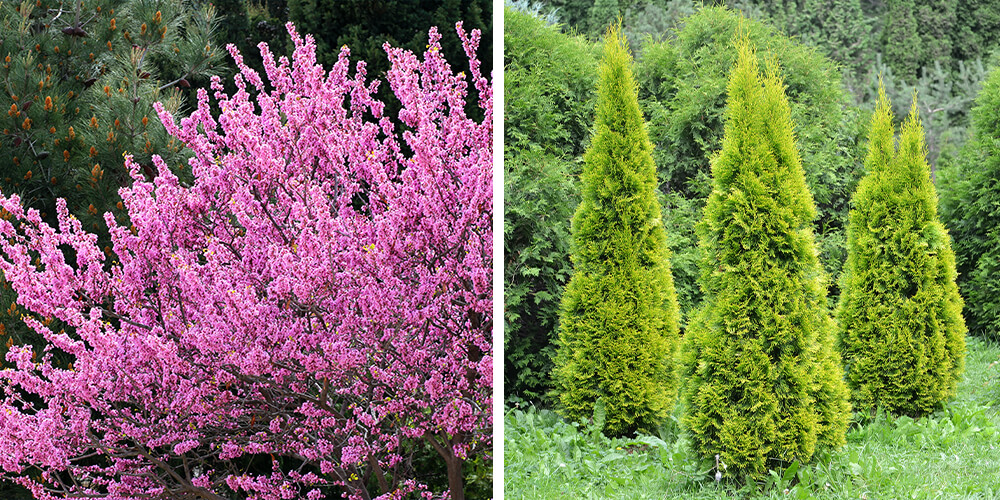
Emerald Cedar
We had to add a nice evergreen into the mix! Having vibrant foliage to admire year-round is always such a treat. This narrow variety is upright and handsome, reaching around 12 feet at maturity, so it’s super easy to integrate into the landscape and works particularly well as a hedge border. Its emerald green foliage is finely textured and lush all year long; it’s so classically refined!
This evergreen prefers full to partial sun. It likes well-drained soils, but isn’t very drought-tolerant and prefers moderate moisture, so if we go through a long stretch without rain, you’ll definitely want to water the roots with the hose to keep conditions comfortable. You aren’t likely to have too many pests issues with the emerald cedar, but in December, you may want to wrap it up with burlap to prevent the foliage from getting winter burn.
Heritage Birch
The bark of the birch tree is so uniquely beautiful and textured—we love the way it naturally peels off like paper, revealing fresh new bark underneath. The mature bark of the heritage birch almost has a pinkish tint to it, revealing creamy white new growth underneath. Growing up to around 70 feet tall and wide, it’s quite a sight to behold when grown with multiple trunks, instead of being trained into a single-trunked tree.
The heritage birch actually prefers its soil to be a bit more on the moist side and is more tolerant of clay soils compared to many other common landscape trees. It’s also quite heat tolerant, so as long as it gets some extra water, it shouldn’t be too fazed by a summer heatwave. If you’re going to prune your heritage birch, wait until fall to do so—in spring, the sap is a lot runnier and will make quite a mess!

Autumn Brilliance Serviceberry
This compact tree loves to show off its personality, covered with pretty white flowers every spring, and outdoing itself with orangey-red fall foliage. It produces berries from late spring and into summer, and it has smooth grayish-silver bark. It’s a nice small tree at just 25 feet maximum height. This is a great shade choice for small-scale landscapes. This serviceberry is suitable for planting under power lines.
Serviceberries grow best in full to part sun, and should not be allowed to dry out. This serviceberry is relatively low maintenance, and a beautiful addition to any yard.
Ready to plant some new trees at home? We’ve still got plenty in stock at Eising, and if you aren’t feeling super confident in your own tree-planting abilities, our experts are happy to provide landscaping services. Visit us in-store, or shop online to see our selection of trees that are ready for fall planting, and if you’d like to arrange for home delivery or curbside pickup, we can make that happen!