
What’s not to love about fresh flowers? They look good, they smell good, and as it turns out, a lot of them taste good too! Adding edible flowers to your food is an easy way to take a simple dish and turn it into a work of art— a guaranteed way to impress friends and family at your next dinner party. While not all flowers are edible, many that grow here in Simcoe are totally safe to eat and are packed with loads of vitamins, so why not add some of these to your garden this summer? Who knows, maybe you already have a few in some of your planters outside!
How to Cook with Edible Flowers
Before you start popping off flower heads and eating them like candy, there are a few things you should keep in mind to ensure the best possible harvest that’s not only delicious, but also safe to eat:
Don’t eat edible flowers that have been sprayed with chemicals. Pesticides and herbicides are full of harsh chemicals that could potentially cause illness, so keep things organic and chemical-free if your flowers are going to end up on your family’s plates.
Not all flowers are edible, and some are poisonous. It’s definitely not a good idea to eat any flower before checking if it’s safe to consume. Just do a quick Google search before chowing down, and you’re good to go.
Edible flowers taste the best when they look their best. Harvest flowers when they’re at their peak, preferably in the morning so they maintain higher moisture levels, as this is when they taste the best. Plus, the sight of tired, wilted flowers isn’t exactly an appetizing addition to your plate.
Keep them fresh with proper storage. If you want to save your edible flowers for later in the day, you can cut them at the stem and place them in a cup of water until you’re ready to use them. If you’d like to store them for longer, fill a Tupperware container with a moist paper towel, place the flowers inside and refrigerate them for up to one week.

Try to use them in cold dishes. While some flowers like lavender can be pressed and baked into sugar cookies, generally you’ll find that flowers lose their colour and volume when exposed to heat.
The Best Types of Edible Flowers for Gorgeous Dishes
Here are some of our favourite edible flowers you can grow in Simcoe, and the types of dishes that they taste great in:
Cooking with edible flowers is a delight for the senses— the sight, the scents, and the flavours are incomparable. At your next dinner party, if you present an assortment of beautiful dishes featuring fresh blossoms from your garden, don’t be surprised if your guests whip out their phones and flood Instagram with pictures of your latest creations!
Nasturtiums: The bright blossoms of these common edible flowers have a hint of spice, making them a great ingredient for salads, or even fresh summer pasta tossed in garlic and oil. The buds of nasturtiums, called capers, pack a ton of flavour and are especially prevalent in Italian cooking. The leaves of these edible plants are pretty tasty too, so feel free to pluck off a few and toss them in for a little extra green stuff!
Chives: It’s not just the green parts of the chive that have that delicious garlicky onion flavour— the purple blossoms have it too! Tear up their spiky petals and sprinkle them into all sorts of dishes for a deliciously savoury kick.

Lavender: Often lauded for its calming fragrance and frequent use in aromatherapy, this lovely purple blossom has a pretty potent flavour that pairs beautifully with lemon and can be used in loads of desserts. Press tiny lavender sprigs into cookies and cakes for that extra special touch. You can even take it a step further and boil them into a simple syrup for pouring on top of ice cream or mixing into some fabulous summer cocktails.
Pansies and Violas: These are some of the prettiest edible flowers around, and they’re versatile too! They have a nice mild flavour that complements both savoury and sweet dishes, so try sprinkling them on top of salads, or press them into some vanilla frosted cupcakes.
Dandelions: That’s right, all this time you’ve been begrudgingly plucking out these weeds from your lawn, you could have been tossing them into salads or brewing them into soothing herbal teas! The flower, the stems and leaves, and even the roots are safe to eat. Plus, there’s certainly no shortage of them in Simcoe.
Begonias: Turns out these ever-popular container garden flowers are pretty yummy! Their strong citrus taste adds a lemony zip to both salads and desserts. Wax begonias and tuberous begonias are both edible flowers, but you should take some caution with the latter— tuberous begonias contain oxalic acid, which should be avoided by folks with rheumatism, kidney stones, or gout.

Calendula: These bright orange edible flowers are often used in place of saffron, the most expensive spice in the world. They have a delightful tang that really stands out in rice dishes, so save yourself a little dough and opt for this budget-friendly alternative.
Roses: A rose by any other name still tastes as sweet! These fragrant edible flowers can be used fresh or dry as a garnish for many desserts. Similar to lavender, edible roses make a great base for aromatic simple syrups. For an exotic twist on a classic dessert, mix up some rose syrup and crumbled pistachios into vanilla ice cream— it’s a popular treat in the Middle East!
Here in Simcoe, we’re far enough South to enjoy a wide variety of flowers and plants in our garden, including many that hail from tropical rainforests and other exotic locations. However, not all tropicals can withstand our unpredictable Canadian weather, and providing a plant with similar conditions to a rainforest can prove to be tricky. To save the guesswork of whether or not your new, exotic plants will thrive, as well as a ton of time and effort in the long run, we recommend filling your garden with Ontario native plants.
Ontario native plants are so well adapted to our climate, they’re basically able to care for themselves, which is why they grow naturally in the wild. Many are perennials, so you can continue to enjoy them year after year if you plant them in your garden. A little maintenance here and there to keep things neat and trim, and some occasional watering during dry periods is pretty much the bulk of the effort you’ll have to put in with Ontario native plants.
On top of being easy to care for, Ontario native plants are favoured among pollinators like bees, butterflies and hummingbirds. Simcoe wildlife is attracted to the familiarity of Ontario wildflowers, and they usually have much more pollen than specialty hybrid plant varieties.
The Best Ontario Native Plants for Simcoe Gardeners
There seems to be an assumption that your garden needs plenty of exotic tropicals in order to really impress, but that couldn’t be further from the truth! We’ve compiled a list of some of the most beautiful Ontario native plants to add to your landscape, so you can have a picturesque yard (with extra butterflies!) for way less effort:
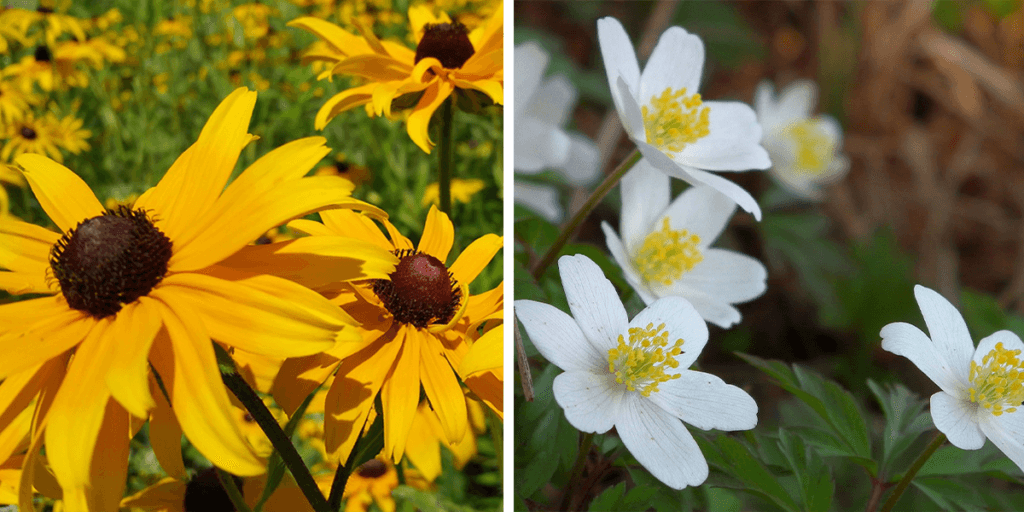
Black Eyed Susan: The sunny golden petals or this Ontario native wildflower will instantly brighten up your garden and fill it with butterflies and birds who love to sip its nectar. Black Eyed Susans flower from June to September, so they’re great to mix in with spring-blooming Ontario native plants to ensure your garden is colorful for the entire patio season.
Canada Anemone: Little, white, cup-shaped flowers with butter yellow centres sit atop vivid emerald foliage on this popular Ontario native plant. It spreads easily, is highly drought-tolerant, and grows well in either sun or shade, making it a fabulous filler plant for those hard-to-reach spots in the garden.

Bee Balm: These Ontario native shrubs are covered in the wackiest looking blossoms that kind of look like a haircut Cyndi Lauper had in the ‘80s. It isn’t just bees that love them— butterflies and hummingbirds are big fans too. When planting bee balm in your garden, it’s best not to crowd it too much and give it a little room to breathe so it doesn’t develop mildew on its leaves.
Butterfly Weed: As you can probably guess by the name, these native shrubs of Ontario are covered in flowers that butterflies just can’t resist. The vibrant orange petals attract a certain butterfly of similar styling: the elusive Monarch, whose orange, white and black markings are always a delight to behold.
Purple Coneflower: Also known as Echinacea, these gorgeous daisy-like blooms are a favourite among bees because their bulbous pollen-filled centres are very easy to perch on. If the soil quality in your yard isn’t fantastic, this flower is a great option, because it actually thrives in not-so-great soil conditions. You’ll get way more blooms this way because soil filled with amendments and fertilizers will cause it to develop more foliage than flowers.
Blue False Indigo: These Ontario native plants are part of the pea family, so their blossoms look like those you’d see on your typical pea shoot, but instead are a stunning purple-blue jewel tone. If you don’t deadhead the spent blossoms, they’ll start to develop little peapods. Some gardeners like the appearance and rattling sound the peapods make in the wind, so you can choose whether you want to leave them on or off.

Wild Strawberry: Who doesn’t love a low-maintenance garden plant that provides you with tasty snacks? One cup of these tiny fruits is packed with more vitamin C than an orange, and they develop from the centres of cute five-petaled white blossoms.
Cardinal Flower: This bold blossom is an all-time favourite among hummingbirds. They’re particularly attracted to the candy apple red colour of the petals that cover tall, upright stems that stand out from the surrounding dark green foliage. They can grow up to 4 feet tall, so they make quite a statement as a border plant or an eye-catching focal point for the centre of your garden.
If you long for a vibrant garden full of all sorts of different plants, but don’t have a ton of spare time to devote to regular maintenance, consider planting a garden full of Ontario native plants! You’ll love the color and fragrance they bring to your garden—and the local wildlife will enjoy it too!
If you’ve been keeping up with the news, you’re probably well aware that bees have been falling on hard times lately. As their populations decline, our gardens suffer too, as we rely on pollinators to help our plants produce food. The good news is that we can make things easier on the bees by adding bee-friendly plants to our yards and gardens. Some flowers are like bee magnets, luring them in from far and wide with their bright colours, fragrant aromas and delicious nectar.
Bees aren’t the only pollinators you want to attract, however. As it turns out, butterflies and hummingbirds aren’t just lovely to look at— they can help out the pollination process as well! Check out our list of flowers that attract bees and other pollinators, for a lush garden full of beautiful winged wildlife here in Simcoe.
Flowers for Bees
Just like we have our own favourite go-to snacks we can’t say no to, bees have favourite flowers that they love to feast on. Adding these plants to your landscape will definitely generate some buzz… pun intended!

Monarda: The vibrant magenta flowerheads with peculiar spiky petals are wildly popular among bees, earning it the very appropriate nickname, “Bee Balm.” Not only does it look fabulous, but monarda smells pretty incredible too. The foliage has a strong orange-bergamot scent that attracts pollinators of all sorts.
Thyme: This fragrant, edible plant produces tiny flowers that bees seem to race for. Plus, you’re left with tons of delicious, savoury herbs to spice up poultry dishes, soups, roast veggies, and more!
Echinacea: Single-headed flowers in bright sunny colours tend to have much more pollen than double-headed flowers, like geraniums, so echinacea is one of the best flowers for attracting bees. Plus, their large size makes them easy to perch on.
Snapdragons: On a sunny afternoon, when bees are on the hunt for something to eat, snapdragons release 4X more fragrance. Not only does this bring in nearby bees, but the scent clings to them after they’ve left, so when they get back to the hive, all their bee hive-mates will start to crave some of that good stuff.
Flowers for Hummingbirds:
There’s something so thrilling about spotting a beautifully iridescent hummingbird flitting around your garden. These tiny busybodies help spread around pollen, but they’re particular about the kinds of flowers they like. Generally, they prefer tubular flowers that produce nectar, so they can insert their skinny beaks and take a sip. While there are many different varieties that they enjoy, their all-time favourite flowers are bright red. Foxglove, Columbine, Delphinium, and Salvia are a few nectar-producing flowers that are available in red, and are sure to bring all the birds to the yard.
You can also attract hummingbirds by hanging a hummingbird feeder full of pre-mixed sugary nectar. Try to avoid purchasing red-dyed nectar, and instead opt for a red-coloured feeder. The chemical dyes aren’t great for their system, and the red container should be just as appealing to them.

Best Plants for a Butterfly Garden:
Is there anything more picturesque than butterflies dancing around from flower to flower? A lovely bonus is that they also carry pollen on their wings, but at the very least, they’re a delight to look at. Here are a few sure-fire faves for butterflies:
Zinnia: Puffy, spherical blossoms add a little whimsy to your garden, and they bloom well into fall, so you can enjoy their rich colours well into the end of the gardening season. They’re particularly popular among Monarch butterflies, so you’ll likely be visited by some of these beauties if you add some zinnias to the garden.
Milkweed: This is another one that the monarchs can’t get enough of. Their caterpillar babies love it too, so planting a milkweed garden could end up creating the perfect breeding ground for these stunning orange butterflies.
Butterfly Bush: With a name like that, is it any surprise that butterflies love it so much? The cone-shaped clusters of petals come in all sorts of beautiful shades of purple, pink and red. Planting a mix of different colours together will result in a spectacular arrangement that looks like an explosion of colourful fireworks, sure to attract pollinators!
Extra Tips for a Pollinator Friendly Garden:
To attract pollinators to your yard with even greater success, keep these tips in mind:
- Avoid chemicals and pesticides. The common chemical treatment RoundUp is directly linked to the decimation of the bee population. Keep things safe and non-toxic by opting for more organic solutions to control pests and weeds.
- Don’t plant too many hybrid flowers. Hybrids tend to produce fewer seeds and less pollen, so they don’t have as much nourishment to provide for hungry pollinators.
- Plant native species. Familiar flowers that grow naturally in Simcoe are a trusted food source for birds and bees, and the best part is, they’re super low-maintenance and easy to care for.
- Keep your dandelions around. People often treat them like weeds, but the truth is, these sunny yellow flowers are a favourite food source for bees. Skip the hassle of pulling these fast-growing plants from the ground, and the bees will be very grateful!
Selecting the best colourful, aromatic, nectar-producing or pollen-heavy plants will attract pollinators like an ice cream truck attracts neighbourhood kids! They’re fun to watch, and they help maintain the natural processes of plant life, so it’s a win-win for everyone.
They say all you need to grow a garden is some sunshine, water, and a little bit of love, but what if the sunshine isn’t in high supply? Luckily, there’s an exception to the rule— you can still have a fabulous garden full of lush, healthy plants, even if your yard is heavily shaded from the sun. It’s simply a matter of choosing the right shade-tolerant plants that thrive in dimmer areas. Whether your property is surrounded by a canopy of growing trees, or if you’ve got a smaller patio shaded by an awning, you can still garden like a pro with these shade-loving plants.
Shade Tolerant Perennials
Plants that don’t require loads of sun, and they come back year after year? Sounds like a pretty sweet deal. These popular perennials are sure to brighten up a shady landscape:
Hostas: These large and leafy foliage plants, also known as plantain lilies, make a fabulous groundcover and are great for filling in gaps in the shady corners of your garden. Their variegated green leaves with cream coloured streaks are quite eye-catching, and when conditions are right, they may often surprise you with a blossom or two emerging from a long upright stem.
Hydrangeas: Something about the big colourful clusters of hydrangea blossoms remains to be timeless yet trendy. These shade-loving shrubs produce showy flowers in all different shades of pink, purple, blue, white, and green. A fun fact you may not know about hydrangeas is their colour can actually be changed from pink to blue! By adjusting your soil’s pH and raising the acidity with the addition of some limestone, your hydrangea’s bubblegum pink petals will gradually change to a cool robin’s egg blue tone.
Christmas Fern: Textured, voluminous fern leaves are a striking addition to any garden, adding a little interest and drama without competing with some of your showier blooms. While not necessarily an invasive plant, they do tend to spread and expand, so every once in a while, you may need to trim it back or divide it at the root.
Bleeding Hearts: This colourful flowering shrub has quite an exotic, tropical feel, but is still able to withstand our cold Canadian winters. Its elongated, curved stems sport rows of dangling heart-shaped blossoms in vibrant shades of pink and red.

Shade Loving Annuals
If you’re a fan of container gardening and want to add some pops of colour throughout your space, these annual flowers are spectacular options. While they need to be re-planted each year, they’re vigorous growers during the summer months, so they’re sure to turn heads and grab people’s attention when put on display.
Begonias: With their large, dramatic blossoms available in so many fabulous colours, begonias continue to be a staple in shade gardens. For a totally on-trend flower that’s bright and exciting, opt for a vivid coral variety! Pantone’s 2019 Colour of the Year is “Living Coral,” a bold pinkish-orange shade that pairs beautifully with shades or green, gold, pink, and turquoise.
Impatiens: These low-maintenance blooms don’t just tolerate the shade, they prefer it! New Guinea impatiens are a highly sought-after variety, as they’re much more resistant to mildew than traditional impatiens.
Lobelia: Partial, dappled shade with tiny pockets of sunlight is the ideal location for this pastel petaled groundcover plant, so if you’ve got some overhanging tree branches in your yard that tend to sway in the wind, you’ve got a perfect spot for some lobelia.
Sweet Alyssum: This plant has so much to offer a shady garden! Its fragrance is simply intoxicating, it continually blooms well into the fall, and its crisp white blossoms add a lovely, ethereal glow to your landscape.

Bulbs to Plant in Shade
Flowering bulbs are particularly popular in Ontario gardens, as they’re often the first flowers to pop up and greet us with vibrant blossoms in the early spring after a long cold winter. These spring-blooming bulbs are sure to impress in sun or in shade:
Crocus: The bright blooms of this quintessential Canadian flower are often some of the first to appear in spring, sometimes peeking up from the soil while there’s still a bit of snow on the ground. The indigo-purple shade is definitely the most common variety, but you can also find crocuses in yellow or white.
Tulips: Tall, sturdy stems and long, sleek leaves add elegance and sophistication to any garden. You can find tulips in a whole spectrum of beautiful different colours, but the bi-coloured hybrid varieties can really make a statement.
Daffodils: These sunny yellow blossoms resembling teacups and saucers really bring on the traditional English garden vibes. For a lush and lovely garden fit for a queen, you can opt for this classic spring bulb— just take caution in planting these feisty flowers next to other plants, as they tend to be aggressive growers and may kill surrounding plants.
A shady yard won’t stop you from having a swoon-worthy garden that never fails to impress. Plant some of these shady ladies in your garden beds or containers, and you’ll still get to enjoy colourful blossoms all season long, even if Mr. Sun isn’t shining down.
There might not be a better flavour of summer than the perfectly ripe garden tomato. Picked straight from the garden, a fresh tomato lets you taste summer’s sunshine with each bite.
Tomatoes are incredibly popular garden plants, thanks in part to the staggering difference between homegrown and supermarket varieties. As much as the flavour and nutritional content of garden-grown produce have a clear advantage, we also think that the sheer variety of options is part of the tomato’s success. With so many choices, there’s something to fit everyone’s lifestyle, taste, and garden style, and with such a simple growing formula it’s easy to come out with a great harvest. Here are our tips on how to take your homegrown tomatoes to the next level.
Planting Tomatoes Made Simple
Tomatoes are easy-to-grow plants, but a bit of knowledge makes the difference between a mediocre harvest and an amazing one. The first task in planting your tomatoes is to choose your type. Tomatoes are normally categorized as determinate (bushy types that don’t require much pruning, stalking, or maintenance) and indeterminate (unruly plants that require a little more care but produce more fruit). You also have choices in size from small and sweet snacking cherry tomatoes to large, beefy tomatoes for slicing onto sandwiches and burgers.
Choose plants that are robust and stocky, not ones that have grown lanky. This is true whether you grow your own from seed or buy from the store; you’ll want to start your garden with only the best plants.
Choose a spot in the garden with full sun exposure. Tomatoes thrive on heat and will give you tastier fruits the warmer they are all season, so full exposure to sunlight (without too much exposure to winds) is perfect. Plant in well-draining soil to prevent root rot, but consider layering some mulch on top once you plant to lock moisture and heat in.
When you plant, you can plant part of the stem in the ground to grow roots, too. This is a great way to save any plants that might have stretched and gotten lanky while you waited to plant. Any part of the stem planted underground will grow roots, so take off the leaves and plant about a third of the stem in the ground.

Some Garden Classics
Choosing a type from all of the different and new tomato varieties can be daunting, but we’ve narrowed it down with a few of our favourites to grow in our own gardens.
For great determinate varieties that taste great with little intervention from you. We love the Tumbler and Roma varieties. These produce great flavour and lots of harvest without too much intervention from you, making them an ideal low-stress option.
If you like to put a bit more of a personal touch and love and care into your garden, though, indeterminates are a good choice. For most tomatoes, the flavour, quality, and quantity of tomatoes in indeterminate varieties can’t be matched. For those craving big, delicious, plump tomatoes, Beefmaster is a great choice. Early Girl offers the best of everything in a medium size, reaching maturity early in the season. For those looking for a sweet snacking tomato, though, look no further than Sweet Million.
Heirloom tomatoes are the choice for the traditionalist that wants something unique in their garden. There are many delicious and creatively-coloured tomatoes, like Green Zebra and Black Krim, that will have your dinner plate dressed up with natural beauty.
Growing top tomatoes in your garden isn’t difficult, and the rewards are so delicious that it’s hard to see why you wouldn’t want to grow your own. With so many tasty choices, there’s a tomato that’s suited for anyone and everyone’s space. The only challenge will be getting the tomatoes to the kitchen before eating them all off the vine!
As devoted gardeners, we start developing a kinship with our plants early on. Especially if you’ve started from seed, most of us become a little emotionally invested in our plants as they develop and mature. So, when suddenly the plants you’ve painstakingly cared for fall under attack, it’s immediately personal.
Insects are some of the most frustrating pests of all. They can be hiding anywhere, there seems to be a limitless supply, and they cause so much damage so quickly. Among the worst offenders is the Japanese beetle, a pest that folks in Simcoe have been trying to eradicate — unsuccessfully — since the 1930s.
Why are Japanese Beetles a Problem?
Japanese beetles managed to hitchhike into Canada by stowing away in travellers’ luggage from East Asia. The first one found in Canada was in the vehicle of a car travelling by ferry to Nova Scotia from Maine in 1939, and since then, the population has erupted. Upon arriving here, the insect had no natural predators and quickly became such an issue for Canadian agriculture, the government soon began a public trapping program to control the spread of the beetles. Clearly, they never did catch them all.
Japanese beetles devour fruit, berries, and plant foliage at an alarming rate. The eat between the veins of plant leaves, leaving them looking like lace doilies. However, they also cause a lot of indirect damage. Their grubs are delicious to burrowing rodents. These rodents will stop at nothing to find and eat them, destroying your lawn and garden as they hunt.
Worst of all, they’re tough. Their shells keep them so well-shielded, any pesticide strong enough to kill them can do much worse damage to friendly organisms—including people!
Identifying Japanese Beetles
An important part of Japanese beetle control is knowing what you’re looking for. Japanese beetles are a species of scarab. The adults are easily identified by their metallic green shells and scarab-like oval shape. The grubs look like C-shaped worms with legs, and can be identified by their bottom sections which are shaped like a V. The adolescents look similar to the adults, but with cream-to-brown coloured bodies and more pronounced wings.

How to Control Japanese Beetles
As horrid as they are, you have to give Japanese beetles credit for being tough to beat. There are a few ways to keep them under control that have proven to be effective.
Japanese Beetle Traps
Japanese beetles do have one weakness: love. The only thing Japanese beetles are attracted to, other than food, are the sex pheromones of a prospective mate. Japanese beetle traps mimic these pheromones, attracting the beetles into an enclosure they cannot escape. These traps can be very effective at persuading the beetles to take a detour away from your garden and keep them there so they’re unable to reproduce. Some traps are also reusable.
An important thing to keep in mind about Japanese beetle traps is that they may end up attracting more beetles than before. To make sure they aren’t doing more harm than good, try to set up the traps farther away from your prized plants, near the edge of your property. Since they only hold around 10-15 bugs at a time, emptying the traps daily is necessary.
Nematodes for Japanese Beetle Control
If the word ‘nematode’ makes you uneasy, don’t fear. There are some species of nematodes that can be parasitic to humans, but the ones you can purchase at garden centres have a different target: garden pests. These microscopic heroes sneak-attack your garden’s natural enemies — like grubs, gnats, rootworms, and beetles — from the inside. Once the nematode infects a host, like a Japanese beetle, the host normally dies within 24-48 hours. These beneficial nematodes are an effective and organic Japanese beetle control method and are much safer than pesticides. There are many different varieties of nematode available on the market, so make sure you purchase the heterorhabditis bacteriophora nematode, as this one is the best for beetle control.
Soapy Water
There are two ways to use soapy water as a method for killing Japanese beetles. First, you can fill a bucket with soap and water early in the morning, and shake the beetles into the bucket to drown them out. The earlier it is, the better, because like many of us, Japanese beetles are not morning people, and they tend to be extra sluggish. Giving your plants a quick shake should be enough for most of those beetles to fall off. Putting on some gardening gloves, hand-picking the remaining beetles, then tossing them into the bucket should also help the cause.
Another method that helps prevent beetle damage is filling a spray bottle with a mixture of soapy water, cayenne pepper, and garlic powder. Spritz your plants all over with this unappetizing concoction, and not only will it deter Japanese beetles from munching on your plants, but it should also keep away the rabbits, squirrels and deer.

Plants that Japanese Beetles Can’t Stand
By including plants and flowers that are natural beetle repellents, you can double up on beetle defense without having to resort to much extra effort. These are some of the most effective beetle-repelling plants you can grow in Simcoe:
- Catnip
- Chives/Onions/Leeks
- Chrysanthemums
- White Geraniums
- Marigolds
- Tansy
- Rue
- Larkspur
Worst Case Scenario: Chemical Solutions
While we always recommend proceeding with caution before using harsh chemical solutions in your garden or landscape, sometimes you gotta pull out the bug guns when the beetle damage is out of control. Malathion, which returned to the Ontario market once the beetle problem became severe, can be quite effective in killing those tough-as-nails bugs. However, it’s very important to read the safety directions carefully to prevent injury to yourself or to your garden plants.
While it may be many years, if ever, before we can completely eradicate Japanese beetles, there are a few things we can do to naturally control their spread and the damage they do to the beautiful plants and trees of Simcoe. If you start noticing those lace-doily leaves on your plants, try one of these methods to save your precious plants!
Soil doesn’t always get the credit it deserves. It may not be the prettiest part of your garden, but soil has the most important job. Without it, it wouldn’t be possible to grow beautiful beds of flowers and vegetables.
Soil is like our planet’s skin, serving to protect the plant life that grows beneath. It’s vitally important that your soil has everything it needs to nurture life. As a gardener, here’s what you should know about what makes up your soil and how you can improve its quality.
What is Soil?
Soil is more than the dirt your shoes track into your home. Soil is full of living matter. It provides a home and habitat for plants, insects, and small rodents, and it processes and filters recycled nutrients to feed life on earth.
Soil is made up of five major elements:
- water
- minerals
- gas
- organic material
- and living organisms.
Each one of these elements serves an important role in keeping your plants strong and healthy. Without a proper balance, your plants will suffer.
One of the most important qualities of garden soil is proper drainage. Good soil should retain enough water to help plant roots absorb soil nutrients, but not so much that you run the risk of drowning or rotting your plants’ root systems. Soil drainage, combined with its composition of major elements, dictates the soil type. There are six main soil types, which are:

Loamy
This is the term we use to describe the ideal soil type. Loamy soil has a high nutrient density and drains well without drying out too quickly.
Clay
Clay retains moisture well, but it can weight itself down, pack in too tightly, and suffocate many plant species’ root systems.
Chalky
This is soil with poor water retention. It often contains a lot of stones, and tends to need more than its fair share of fertilizer.
Peaty
Peaty soil drains well but has a higher acid content, so organic matter breaks down slowly.
Sandy
Large mineral particles means moisture (and nutrients) pass right through. Not a great quality for garden soil.
Silty
Silt is more nutrient-dense than sandy soil and with similar water retention to clay soils.
As you dig deeper into the ground, soil is made of up different layers containing different ratios of these soil types, from your topsoil, to subsoil, to bedrock.
Just because your soil is a little too chalky or sandy doesn’t mean it can’t be improved. When you’re gardening, you can always correct soil quality with a soil amendment. Soil amendments can fix nutrient, density, and acidity issues, counteracting them to improve soil quality over time.

Types of Soil Amendment
Your soil is likely not naturally loamy. If it is, you’re lucky. If not, there are plenty of soil amendments you can use to balance it out. Here are the most common garden soil amendments:
- Organic Matter - From fertilizer, to manure, to kitchen compost, organic matter makes your soil richer in nutrients to feed your plants. Add organic matter to clay, chalky, and sandy soils.
- Gypsum - Gypsum is a soft calcium sulfate mineral. When added to soil, it improves structure and slowly releases nutrients. Add this to bring balance to clay soils.
- Lime - Unlike the small green fruit, this mineral lowers acidity in your peatier soils.
- Clay and Shredded Bark - These amendments help your soil retain water. Add them to sandy and chalky soils to prevent water and nutrients from passing right through.
Using the Best Soil in Your Garden
If you aren’t sure what type of soil you have in your yard, you can test it with a soil testing kit to find out for sure. Then it’s just a matter of adding the right soil amendment to it. Otherwise, you can purchase soil with the right balance of nutrients, drainage, and moisture retention. The more you reuse soil in your planters and pots, the more it depletes its nutrient stores, so be sure to add more organic matter to your soil every season.
Great soil is the backbone of every garden. While it may not get as much love as your prized perennials or crisp vegetables, without great soil those showy blooms and juicy tomatoes just wouldn’t be possible. Think of your soil as the ingredients for your favourite recipes—using the best quality available always pays off with phenomenal results!
Every day our understanding and awareness of the products and chemicals in our lives grows. From lotion to moisturize your skin, to chemicals to clean our homes, and to the fertilizers and pesticides applied to our lawns, chemicals are starting to be less and less invisible in our daily lives. There seem to be hidden chemicals and risks everywhere around us, and learning more about them can be important to living a healthy life and taking care of our vulnerable pets. Collectively, we’re starting to want to really understand the products we use and just how risky they actually are.
Pesticides, Herbicides, and Fertilizers
If you’ve ever had your lawn treated for weeds or have fertilized in hopes of a golf-green carpet of grass, you know just how unpleasant some of the chemicals that we use in our garden can be. Some of them have foul smells, others require precautions to keep us safe from touching them… it’s no mystery that what we use in our gardens and yards can be potent. On the other hand, most of us don’t want to have a struggling and ragged lawn and garden while our neighbours’ flourish.
There’s a middle ground between taking care of your lawn and garden to help it thrive and using harsh and scary chemicals that might be questionably unsafe for your family. There are tons of organic solutions for a thriving lawn that simply take a little work and some patience, but you can rest easy knowing you’re keeping your home safe to enjoy. Here’s how to get started:

Dethatch
This is as simple as dragging a hard rake across your lawn to clear out some of the dead old growth. These accumulated old layers can stifle your lawn and get in the way of new spring sprouts. A little elbow grease to rake the lawn will show you just how much old growth is in the way and will be the perfect way to get your lawn ready for spring.
Aerate
Your grass is a living thing and has basic needs for survival! Aerating is a great way to boost how much air, space, water, and nutrients can make their way through compacted soil to their roots.
Dethatching and aerating go hand in hand as a once-a-year chore to rejuvenate your lawn in the late fall or early spring. Your lawn might look rough after you dethatch and aerate, but it’s all a necessary to have a natural, thriving lawn when it fills in.
Seed With Good Seed
If you try to start your lawn off with poor seed, you’re setting a poor foundation for your lawn. Choose something that meets your needs, like something that is drought-resistant or perfectly suited for the conditions of your lawn. Even if your lawn was originally seeded with grass seed that is a poor match to your lawn needs, you can always interseed or overseed after you’ve thatched and aerated to re-establish your turf.
Watch Your Watering
Many lawns these days are totally dependent on regular watering to look lush. For many people, their fresh sod needs some extra pampering, and then it’s never weaned off. Ultimately, if you can try to wean your lawn off of constant watering it’ll be encouraged to develop deeper roots that will make it hardier and better able to tolerate dry conditions. A bit of thought into your watering schedule can make the difference between a nice lawn, and a gorgeous one that has the depth to be tough, too.
Working By Hand to Treat Weeds
The dream of a beautiful lawn that is thriving is always compromised by weeds. Thankfully, the healthier your turf is, the more it’ll take up room that opportunistic weeds might have sprouted in the past. All of this work to make a gorgeous lawn isn’t just about getting your greens greener, but about getting rid of opportunities for weeds to take over.

Of course, weeds are stubborn enough that even the healthiest lawns are bound to have a few. If you’re trying to stay away from chemical solutions so your space is always safe for everyone to use, a bit of elbow grease is the solution. Grab a trowel and some gloves and pick away at whatever weeds make it through your defences. It’s actually therapeutic once you aren’t fighting overwhelming numbers of them. The more consistent you are with your weeding, the easier it gets.
Saying goodbye to chemicals in your yard doesn’t mean that you have to say goodbye to a beautiful lawn! A little bit of strategically timed work is exactly what you need to encourage your grass to thrive while keeping your landscape accessible to everyone — you, your kids, your pets, your guests, and your local beneficial critters — to enjoy.
Starting an edible garden is like building your own private produce aisle right there in your yard. You’ll reap all of the benefits of healthier and fresher food just outside your door, and you’ll be able to grow the best of your favourite garden flavours; nothing beats fresh-picked taste.
The key to a great edible garden is having some variety. The mix of lots of fruits and vegetables gives you lots of options to experiment with in the kitchen so you’ll never get bored with the same flavours. We have lots of tips to make growing your own food easy and fun.
Our Tips for How To Grow Fruits and Vegetables
These simple tips are a huge help in making your fruit & veggie garden hassle-free:
Try using a raised garden bed. They’re easy to make and they help with better soil quality, better temperature control, with far fewer weeds to pull due to their controlled environment. If you’re growing straight from the ground, you’ll be at the mercy of your property’s soil quality—but in a raised bed, you’re in control! Fill the raised planter with bags of sterile soil and add in lots of organic matter to give your veggies a great start. The elevated container also makes the garden easier to work in, as you don’t have to bend over as much while tending your plants.

If space is a concern or you simply want to start small before you take the plunge, try container gardening. Most edible plants—except the biggest and most unruly specimens—grow well in containers, so you can make the most of a small space with as many containers as you like. Choose a location with a lot of sun and watch your miniature garden grow.
Try out companion planting and let your plants do some of the work for you. Some fruits and vegetables do so well together that we’d recommend planting them as buddies so they can give each other a boost. For example, green beans and corn work great together as the beans nurture the soil and the corn support the bean vines while they’re growing. We also love growing tomatoes and basil together. Not only do they often end up in dishes next to each other, but the basil improves tomato flavour and wards off pests.
Use natural weed and pest control methods. If you’re growing food with the intention to eat it, there’s a strong case for keeping chemicals off of them while they grow. There are lots of natural pest control methods to try for almost any type of pest while keeping your food safe.
The Best Fruits and Vegetables for Home Growing
Some garden edibles have reputations for being more picky and difficult to grow than others, while others give you impressive yields for much less effort! This is our list of foolproof garden options to start fuelling your kitchen from your yard:

- Raspberries: These fall-bearing fruit bushes are as low-maintenance as they come, only requiring a bit of pruning in the winter to make room for more fruit-bearing shoots. Starting in the late summer you’ll always have lots of raspberries to bring inside, even if half of your picking time is actually spent munching on them right off the branch. Enjoy these sweet treats all the way until the first frosts!
- Strawberries: There are lots of varieties to choose from that produce fruit in different quantities at different times of the year, so you can tailor your strawberry growth to what you want - whether that’s a steady harvest of some fruit all year, or a big bounty perfect for jams and pies all at once. You get to pick if you want spring, summer, or fall berries, and how many. We love how well these do in containers as well as in a garden bed.
- Tomatoes: We might think about them like vegetables but these plants are actually fruits! Savoury and versatile, this fruit is perfect for beginners. You might choose to grow little cherry tomatoes for the perfect summer salads or maybe beefier slicing tomatoes for burgers and sandwiches. With impressive yields, you’re likely to end up with enough tomatoes at the height of the season that you’ll be giving them away! Luckily they freeze well to be put into sauces later in the year.
- Currants: These bushes produce oodles of their tiny sweet fruits in shades of red, pink, white, and black. While white currants are certainly the sweetest, black ones are the easiest to take care of and require almost no care.
- Radishes: These root vegetables have a little spicy kick that is welcome in so many summer dishes. Low-maintenance and quick-growing, you can start them in the spring but even do a second crop in the late summer, too.
- Lettuce and Leafy Greens: These are the perfect vegetables for growing in containers or a bed! The greens sprout and grow at lightning speed, so you’ll enjoy harvests more often. Their shallow roots also make them the perfect versatile candidate for growing anywhere.
- Cucumbers: The trick to crisp and tasty cucumbers is to keep them well-watered. Generous helpings of moisture on a regular basis (as long as your soil has good drainage) will set your cukes apart from the rest.
- Carrots: This root vegetable is a classic for good reason. All they need is some loose and loamy soil to grow perfectly straight. Other than starting off with the right foundation, they mostly take care of themselves! You can plant them densely and munch on baby carrots as your thin them out through the growing season.
Your garden is all about you and which fresh flavours you want to eat more of during the summer. This is just a starting point, but your garden is yours to customize and perfect. Plant what you love to eat and you’ll get tastier food at a better price all summer.
Gardening goes with your kitchen like peanut butter pairs with jelly. They just seem to make each other that much better! You’ll love growing useful plants and flavors, and your kitchen will love all of the garden-fresh ingredients to elevate your dishes to the next level. But you don’t need a bit garden plot to get the best of both worlds — in fact, you can grow everything you need to step up your dinner table experience right in your kitchen!
Herbs in the Kitchen
Most of your kitchen’s favourite herb flavors are hardy growers that are happy to sprout anywhere - including the windowsill in your kitchen. All you need is a spot with a little bit of sunlight and you’ll have freshest herbs on-hand to take bits of for everyday dishes.
There’s tonnes of benefits to having your herbs grow in your kitchen, and only a few of them are all of the awesome fresh flavors that you’ll get — though we promise that once you try fresh you’ll never want to go back to dried. Think about all of these other perks that go further than what you eat:
A little bit of something green and thriving is a perfect indoor pick-me-up. There’s nothing like something that you’ve nurtured and grown sitting right there in your living space to be enjoyed - especially when the weather is cold.
These herbs pack quite the flavor, but they are also fragrant aromatics. If you want your kitchen to feel a bit homier, and to have that faint fresh scent all the time, growing aromatic herbs is a great place to start!
The rest of your garden is pretty bound by the seasons, but indoor plants can thrive all year long! You don’t quit looking for the best flavor when the weather outside is frozen, so why should your cooking suffer? Fresh herbs are welcome in your food all days of the year, and growing indoors is the perfect way to step up your kitchen, every day and every season.

The Perfect Herbs for Kitchen Gardens
Realistically, the best herbs to grow in your kitchen are the ones that you already use a lot of in your cooking, because you’ll make the most of them. Most herbs are aggressive growers and will thrive the more you tear off branches to use in your cooking, so your most common flavors are sure to do the best in your kitchen!
Here are some of our favourite herbs that grow great in a little pot indoors, and how we love to see their flavors show up on our kitchen table:
Rosemary: This Mediterranean herb is a foolproof way to start your kitchen garden. Given a spot with some light and some well-draining soil, you’ll be thrilled to see how well it grows. Supremely aromatic and flavorful, this is a great choice for Mediterranean cooking or pairing with steaks and poultry. The flavor releases with more heat, so add it early in the cooking stages to get the best taste.
Thyme: Another dry-condition grower, this herb is a great partner to grow with rosemary. With finer leaves and a bushy habit, thyme is ideal for pairing with poultry dishes. You’ll really appreciate the fresh herbs in colder weather, especially around Thanksgiving and Christmas, which is when this herb shines most.
Basil: With a bit of a reputation as a tougher plant to grow, basil can thrive in your kitchen if you find that “just right” middle ground for growing conditions. A Goldilocks plant, it doesn’t like things too moist or too dry, and prefers just the right amount of light. Once you’ve found that sweet spot, though, you’ll have more bountiful basil than you know what to do with! Try mixing these fragrant leaves into summer salads or on the barbeque. The complex flavors of this plant are sensitive to heat, so add it at the very end of cooking for the best effect.
Mint: For a taste of something different from the rest of your more “earthy” herbs, grow some mint! This herb is from a more moist homeland, so keep their container well-watered (but not soggy!) for the best results. Mint is a surprise addition to any dish and is also the perfect ingredient to take your cocktails and beverages to the next level.

Sage: For a bold taste that tastes so much better fresh than dried, try sage. These plants are easy to please with some good drainage and a consistent care schedule, you won’t be stressed keeping them alive. Not only tasting great, they also smell amazing, which you’ll notice every time you walk past or touch them. Try sage in your poultry dishes by including it in your marinade.
Growing herbs in the kitchen is the perfect way to pick up your mood and elevate your cooking every day! Feel free to tear into your herbs as they only grow back more enthusiastically — as long as you don’t take away more than 1/3 of the plant at once. If you grow your own fresh herbs right there in the kitchen, you’ll have an oh-so convenient way to rake in the compliments for your cooking.