
Expert Picks You Can Plant Right Now
By Ava Green
Looking for a flowering shrub that delivers season after season? We asked our experts at Eising Garden Centre to share their top picks, the ones that customers and staff love most, and they delivered. Whether you’re looking for spring blooms, fall colour, wildlife and pollinator value, or a shrub to suit your space, there’s something on this list for every garden.
Fuji Cherry ‘Little Twist’, Prunus incisa ‘CarltonLT’
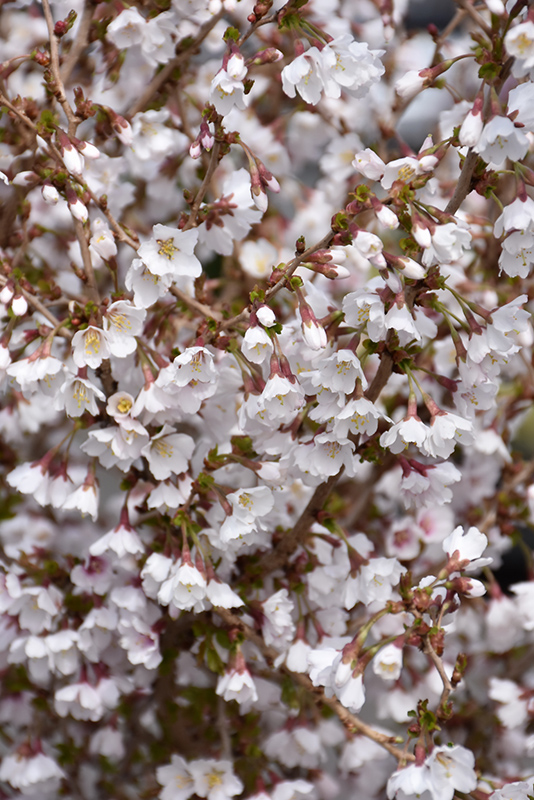
As an accent in a small garden, or planted in a grouping in a larger garden, this multi-stemmed shrub is a gem!
In early spring, crimson buds emerge before the leaves appear. Little Twist then produces clusters of lightly scented white, bell-shaped flowers with soft pink centres that grow along its stems, a stunning early-season display. It is a deciduous shrub, and leaves begin as green before shifting to coppery-bronze, then deepen to a rich burgundy in fall. Smooth, dark red bark adds interest in the winter once the leaves are gone.
This slow-growing, multi-stemmed shrub makes a striking feature in your garden.
Best for: Small gardens, accent planting, four-season interest. | Sun: Full sun | Mature size: 6 ft. tall × 6 ft. wide
Downy Serviceberry, Amelanchier canadensis
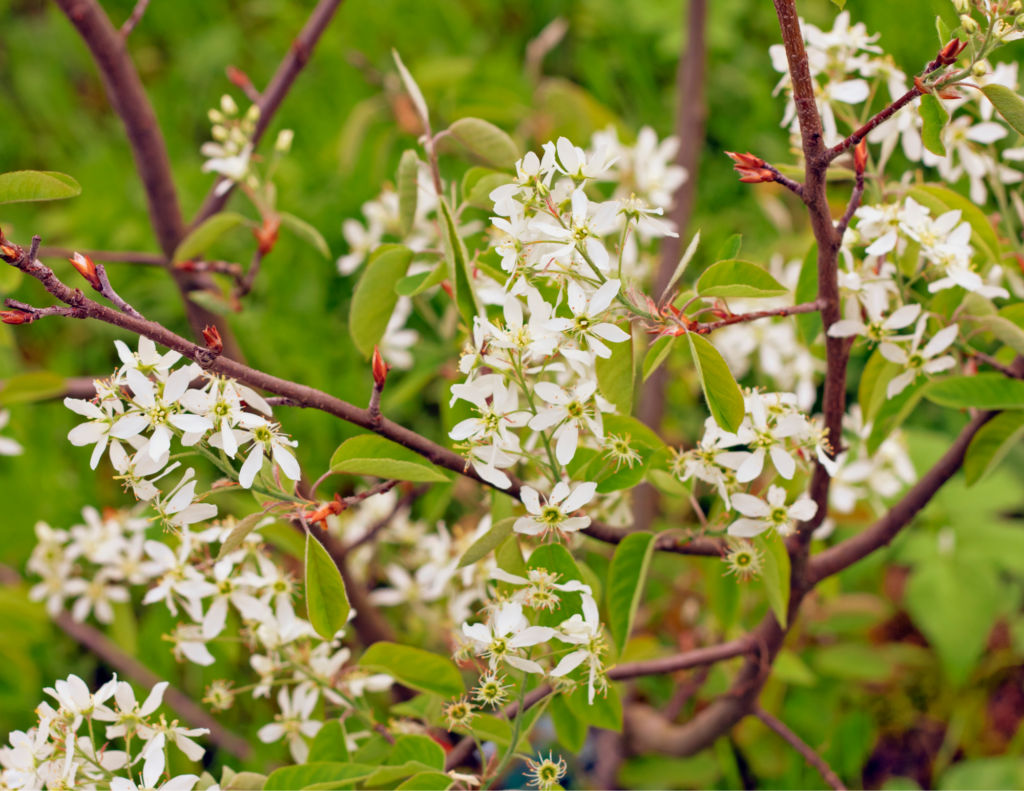
One of the most rewarding native shrubs you can plant, Downy Serviceberry earns its place in the garden from spring right through to fall. Showy clusters of fragrant white flowers in early spring, followed by small, sweet, edible purple-blue berries in early summer that are wonderful for making jam and an absolute favourite for birds. Come fall, the foliage puts on a spectacular show in shades of yellow, red, and orange.
As a bonus, choosing a native plant like Serviceberry supports local pollinators and wildlife, making it as ecologically valuable as it is beautiful. It works well as a specimen plant on it’s own, in a grouping or hedge, or naturalized in a larger landscape.
Best for: Wildlife gardens, naturalized areas, multi-season interest | Sun: Full sun to part shade | Mature size: 20 ft. tall × 10 ft. wide
Amur Privet, Ligustrum Amurense
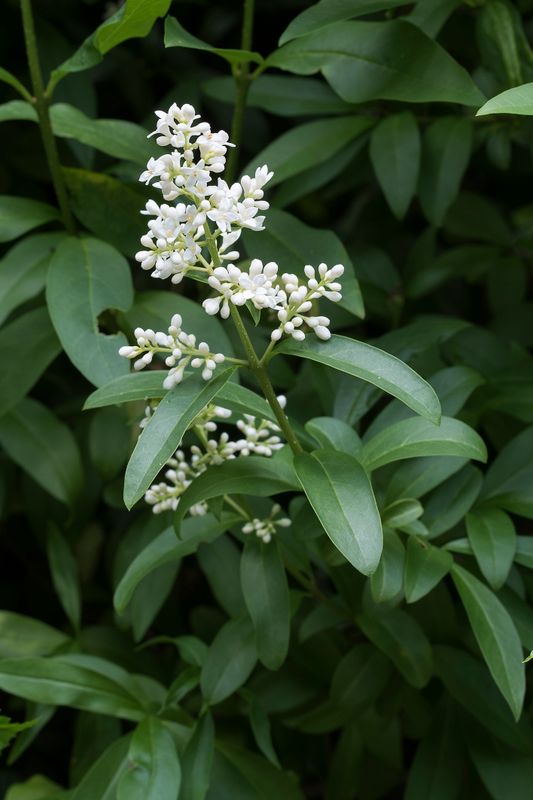
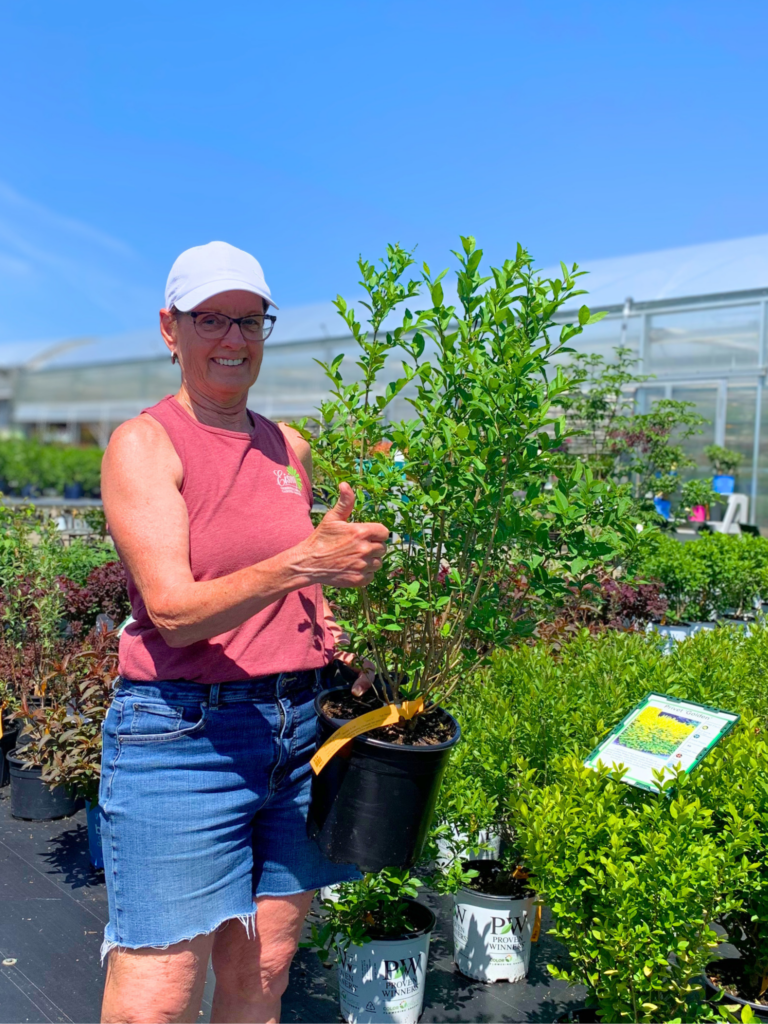
Amur Privet
When fast growth and privacy matter, Amur Privet is one of the best choices available. This dense, dark green shrub produces white flower panicles in late spring and small black berries in fall. It responds exceptionally well to pruning after it blooms, making it an ideal candidate for a formal or informal hedge. If you need to fill a space quickly and create structure in your garden, this is a reliable, low-maintenance option.
Best for: Hedging, screening, fast coverage | Sun: Full sun to part shade | Mature size: 12–15 ft. tall × 8–15 ft. wide
Viburnum ‘Fragrant Snowball’, Viburnum Opulus ‘Roseum’
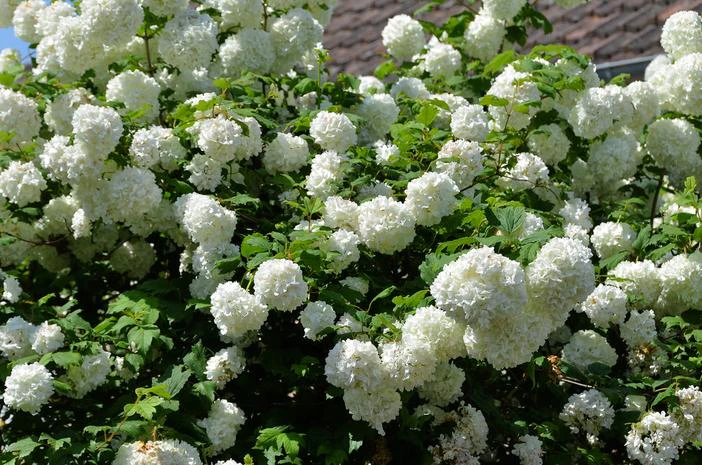
Few shrubs stop people in their tracks quite like Fragrant Snowball Viburnum in full bloom. Large, rounded clusters of sweetly scented white flowers cover the plant in spring, creating a display that’s hard to match. While it doesn’t produce fruit, it earns its place again in the fall when the foliage transitions to rich shades of purple.
Pruning after it blooms will help to keep it a manageable size and encourage healthy new growth. It’s also available as a standard, or tree form, which matures to a more compact 6 to 8 feet tall.
Sun or part shade are best for this deciduous shrub, a beautiful, solitary accent plant for the garden growing 12 feet high and 10 feet wide. As a standard, it is smaller, maturing at 6 to 8 feet tall and 5 to 6 feet wide.
Best for: Specimen planting, cottage gardens, fragrance | Sun: Full sun to part shade | Mature size: 12 ft. tall × 10 ft. wide (shrub); 6–8 ft. tall (standard)
Snowbelle Mockorange, Philadelphus ‘Snowbelle’
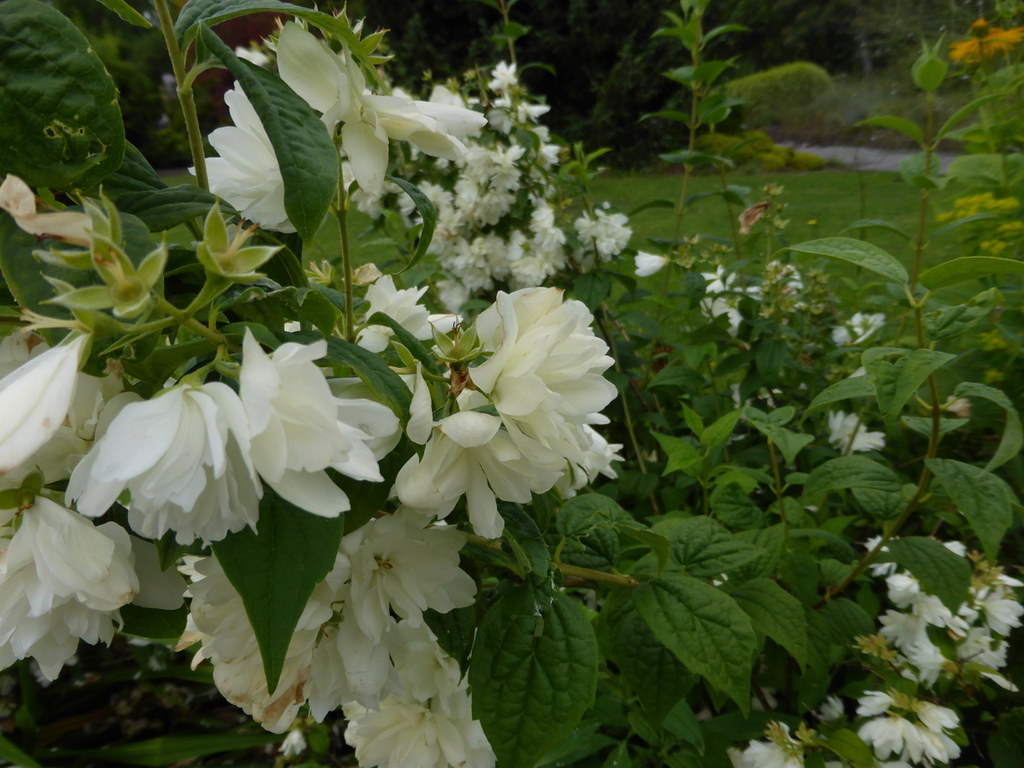
Don’t let its compact size fool you; when Snowbelle Mockorange blooms in early summer, it puts on a big show. This dense, mounded shrub is blanketed in sweetly fragrant double white blooms that are absolutely irresistible to bees and butterflies. Once the flowers fade, its rich, dark-green deciduous foliage makes it a lovely backdrop for other blooming plants in the border.
Growing just four feet tall and wide, it’s one of the best choices for smaller beds, borders and foundation plantings. It prefers full sun but handles part shade as well.
Best for: Small borders, foundation planting, fragrance | Sun: Full sun to part shade | Mature size: 4 ft. tall × 4 ft. wide
More Flowering Shrubs Worth Exploring
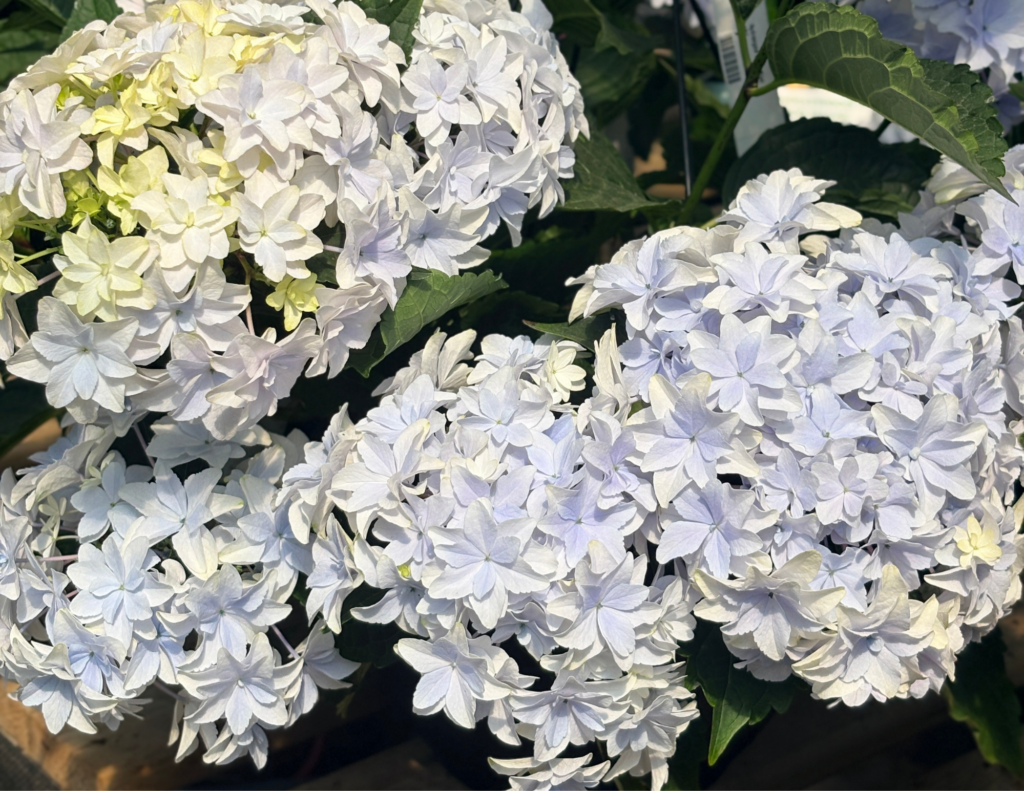
This is just the beginning! At Eising Garden Centre, we also carry a wonderful selection of Azalea, Eastern Redbud, Kwanzan Flowering Cherry, Hydrangea, Dogwood, Butterfly Bush, Beauty Bush, Lilac, Rose of Sharon, Forsythia, and Potentilla, to name a few.
The best way to find the right flowering shrub for your garden is to come in and see them in person, and right now is the perfect time to plant. Stop by and chat with Zach or Donna, who are always happy to help you find exactly what you’re looking for, based on your space, soil, and vision. We’re here to help you make the most of every corner of your garden!
By Ava Green
Is there anything sweeter than the scent of Lilacs in the spring? These beloved shrubs are remarkably easy to grow and will reward you with weeks of fragrant blooms for little or no effort. But a bit of attention can make a big difference, especially if you’ve noticed your blooms getting smaller or fewer with each passing year.
To help your lilac put on its best show, keep these steps in mind:
- Plant in full sun, at least 6 hours of direct sunlight a day, in well-draining soil
- Water newer plants during prolonged periods of drought until established (the first 3 years)
- Feed your lilacs annually with a balanced fertilizer (10-10-10, for example)
- Follow spacing instructions and prune yearly. Pruning is a very important step, and it’s well worth it.
Knowing When to Prune is Key
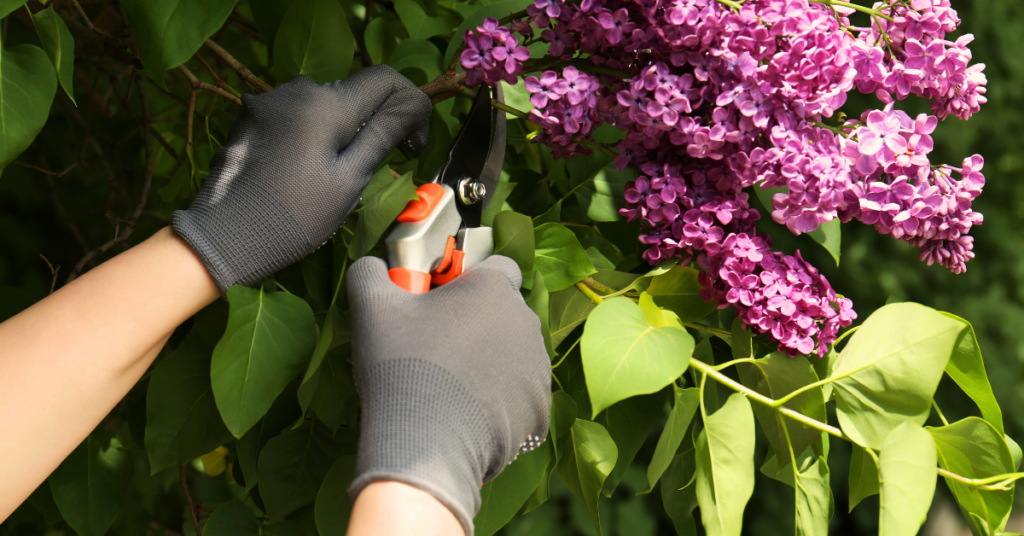
Timing is everything when it comes to pruning your lilacs. After the blooms fade, you have a two-week window to prune before the shrub sets its buds for next year's flowers. Yes, they set buds this year that will bloom next year! Pruning lilacs in the fall or the early spring risks cutting off all of the flower buds for the following year. Mark your calendar and prune promptly after flowering.
It also helps to understand how lilacs grow: Younger, thinner lilac stems produce more flowers. Older, thicker stems are more prone to disease and pests. Keeping this in mind will help with pruning decisions.
How To Prune Young Lilacs
If your lilac has been in the ground for less than three years, leave it alone; it doesn’t need pruning yet. Many young lilacs won’t bloom during those first few years.
After three years, once your shrub is established, begin by removing just one of the thickest, oldest stems down to the ground every 2 years. This gentle approach prevents the shrub from becoming overgrown while encouraging newer, flower-producing growth.
How To Prune Older, Overgrown Lilacs
If your lilac has been neglected or grown out of control, you have two options:
Option 1: Gradual Rejuvenation
Begin by removing any damaged stems, as these invite pests that can harm the entire shrub. Next, remove only the largest, oldest stems by cutting them right down to the ground. The key is to remove no more than one-third of the living wood (dead stems don’t count toward that total). Leave the younger, thinner stems intact so your shrub can still bloom the following year. Repeat this process each spring for three years, and you’ll gradually restore the shrub to its full, flowering potential without sacrificing a single bloom season.
Option 2: Full Cutback
For a severely overgrown lilac that has been largely ignored, a complete cutback is often the most practical solution. Cut the entire shrub as close to the ground as possible, either in early spring or immediately after blooming. Yes, this breaks the general rule of never removing more than one-third of live wood, but lilacs are remarkably resilient and respond well to this kind of hard reset. By the end of summer, you will have healthy new stems of three to five feet tall. While the shrub won’t bloom for approximately three years after a full cutback, the long-term results are well worth the wait.

Deadheading Your Lilacs
Deadheading, or removing spent flower clusters after the blooms fade, is a simple task that’s separate from pruning, and can be done during that same two-week post-bloom window. When you trim off faded blooms, the plant redirects its energy from seed production toward building bigger, healthier buds for the next year. It takes only minutes and can make a meaningful difference in the size and abundance of next year’s flowers.
A Note on Lawns and Lilacs
If your lilac grows near a lawn, be mindful of how much fertilizer you’re applying to the surrounding grass. Lawn fertilizers are typically high in nitrogen, which encourages lush leaf growth, but too much nitrogen reaching your lilac’s roots will suppress flower production.
Worthy Rewards
Lilacs are remarkably long-lived, often outlasting the gardens and even the homes they were planted beside. So whether you’re nursing a young shrub through its first few years or breathing new life into an old, overgrown beauty, the effort you put in now is an investment that will keep rewarding you, and perhaps generations after you. Every single spring!
Christmas Gift Buying Made Easy
By Ava Green
The Eising Holiday Gift Guide has become a popular tradition, and this year, I asked staff members to share their favourite gifts. We have some great picks to brighten anyone’s holidays: family, friends, teachers, hosts/hostesses, the cat sitter, the dog sitter - anyone you would like to wish a Merry Christmas to!
Everlasting Decorations

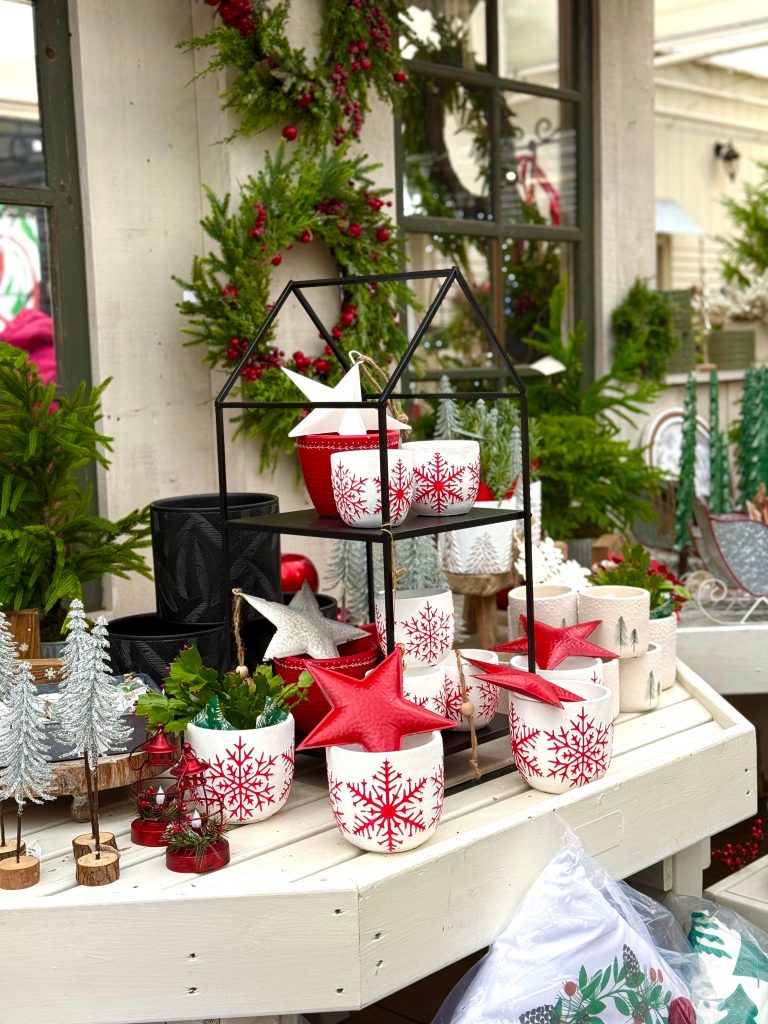

What looks good every year? Everlasting decorations! Kirsten’s favourites are natural wreaths with just a bit of an embellishment. Elegant, timeless and oh-so-festive!
An ornament from our Giving Tree is Arlene’s choice because she can gift the beautiful glass cardinal, and the proceeds go to the local toy drive. Now that’s a gift that keeps on giving!
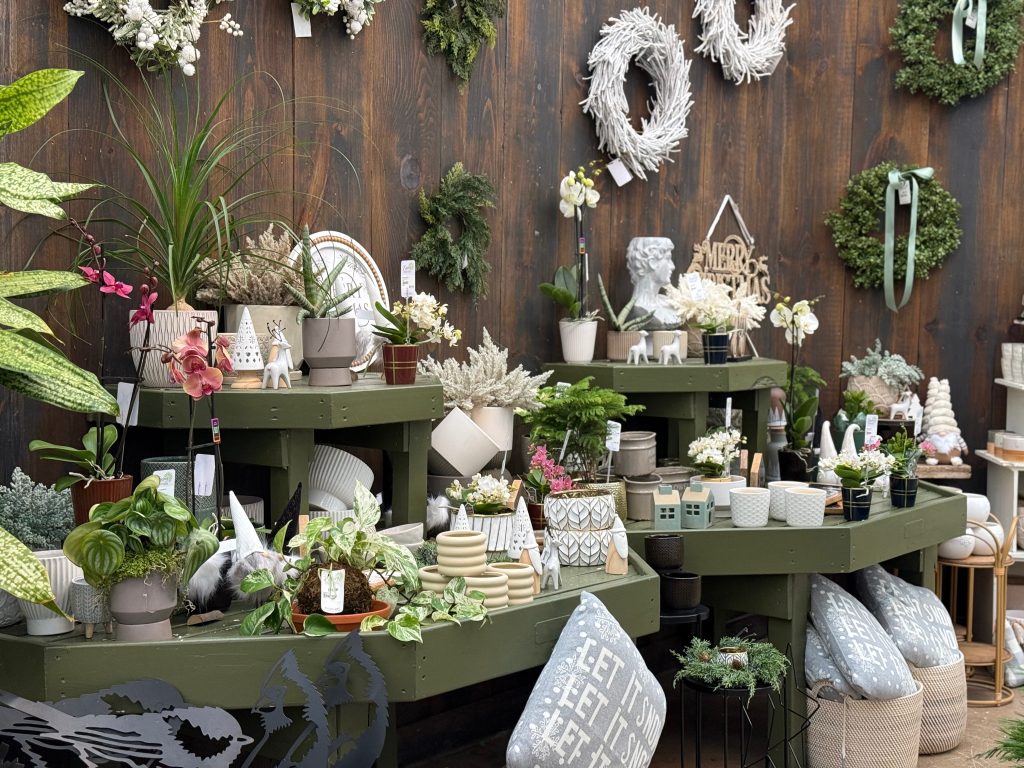
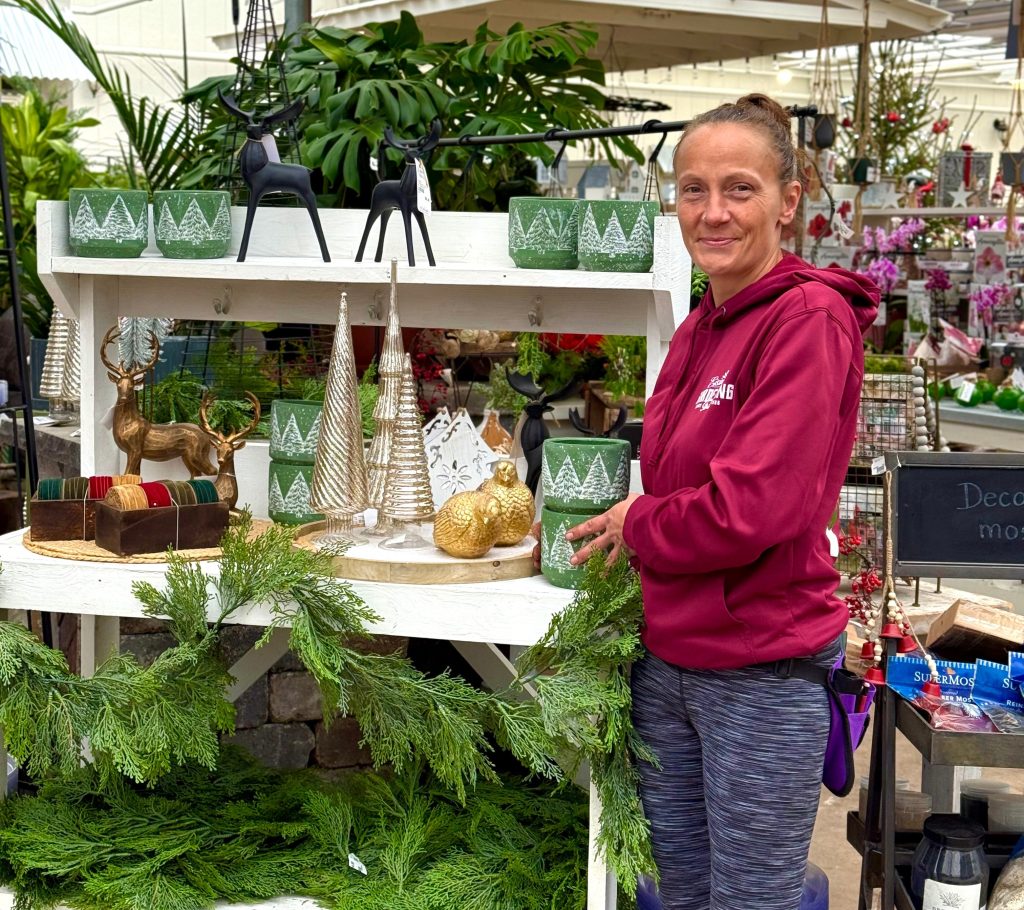
We also have lots of beautiful everlasting garlands, and Lindsey’s favourites: holiday-themed decorative containers to choose from. These festive plant pots transform any houseplant into a Christmasy gift or are perfect for holding other treasures if you’re creating a gift basket.
Fresh Greenery
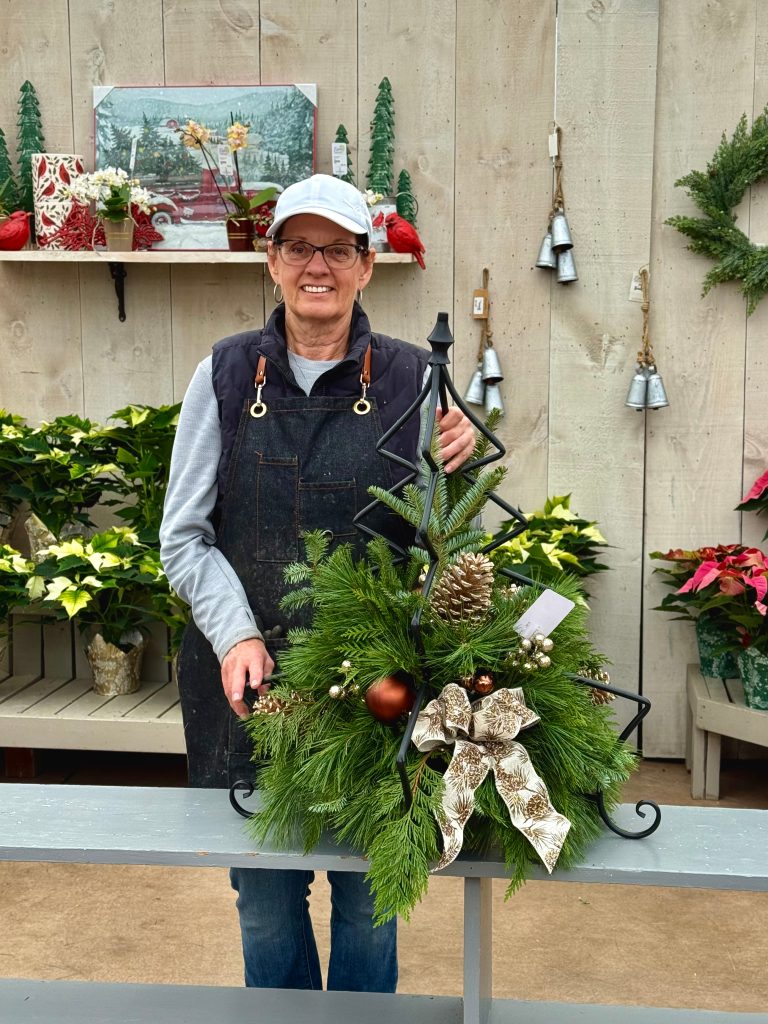
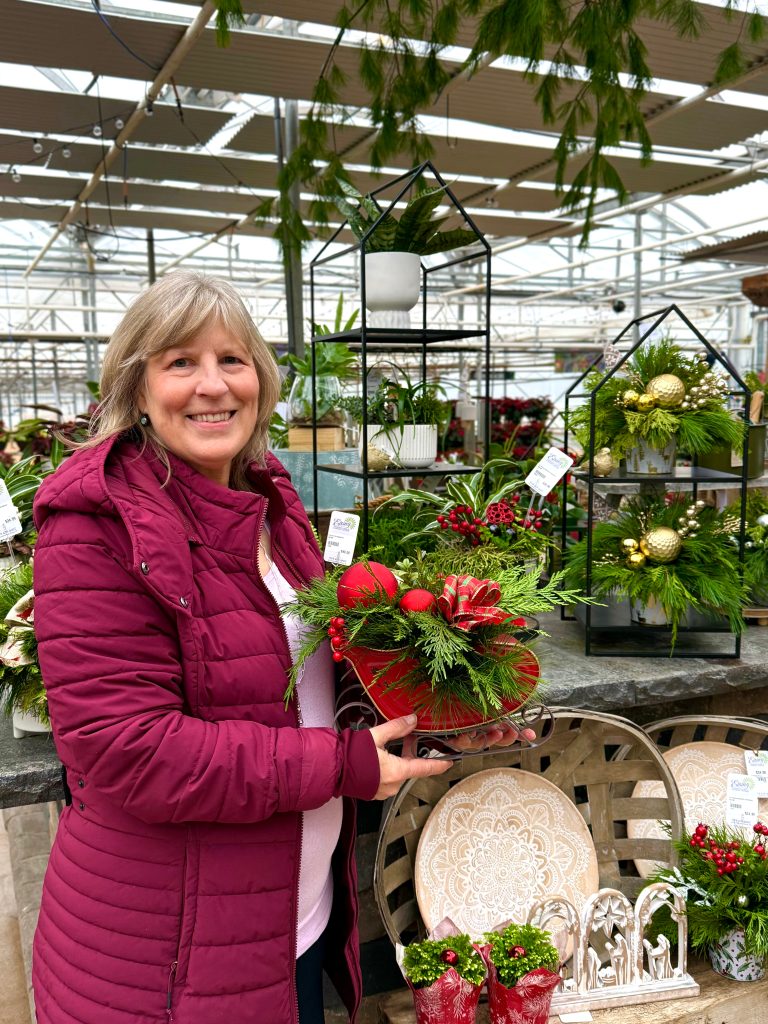

There’s an entire team of decorators, no…creators, no….elves, no…very talented staff members who spend the holiday season making the most beautiful urns, planters, and fresh greenery centrepieces. Donna and I are holding two of our favourites. Mary stopped making festive urns just long enough for this photo to be taken! She really pours her heart into it.
Tropicals, Holiday Plants, and Bulbs
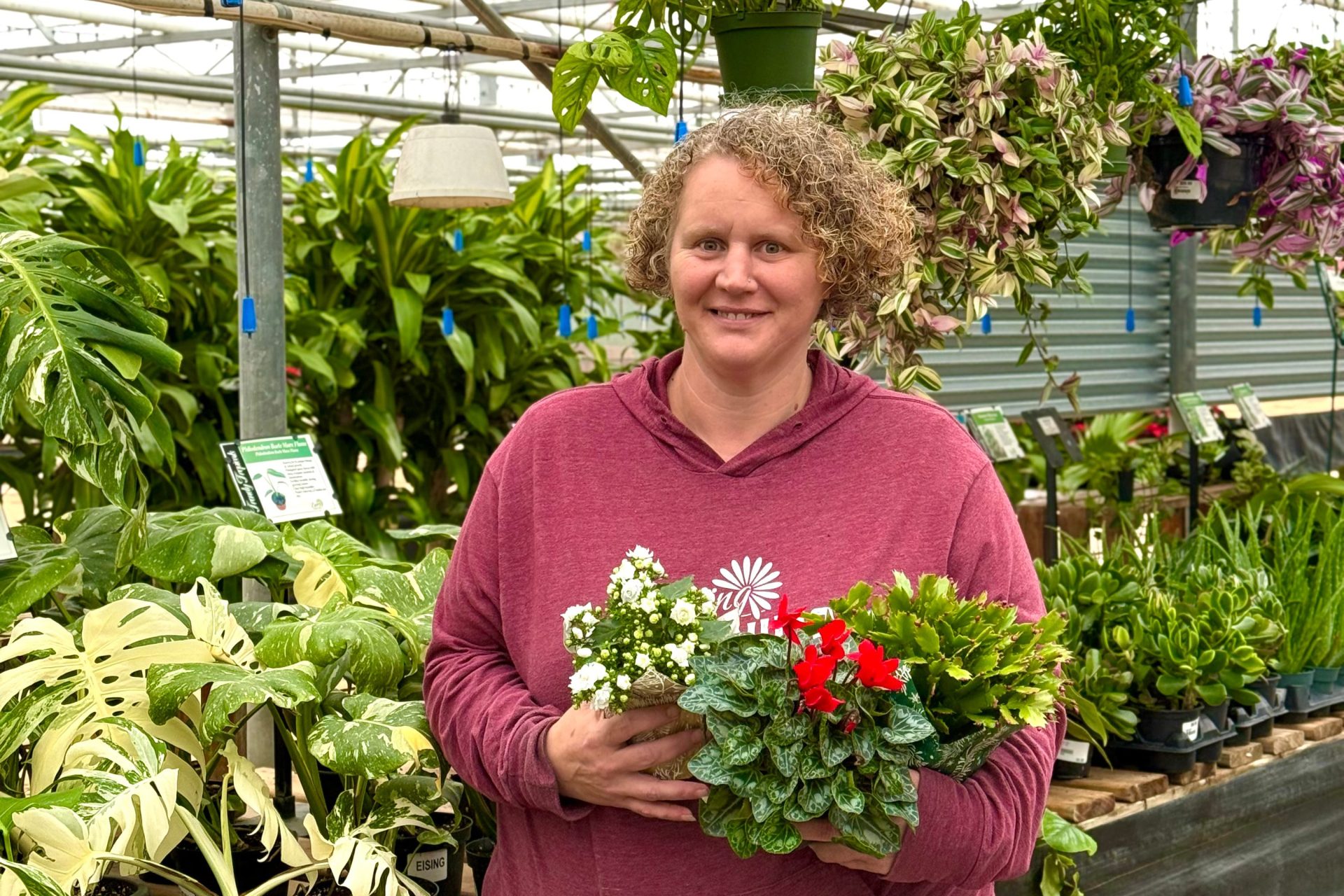
As always, Courtney has a phenomenal selection of tropical plants to choose from. Do not ask her which one is her favourite. Trust me. Too many to count.
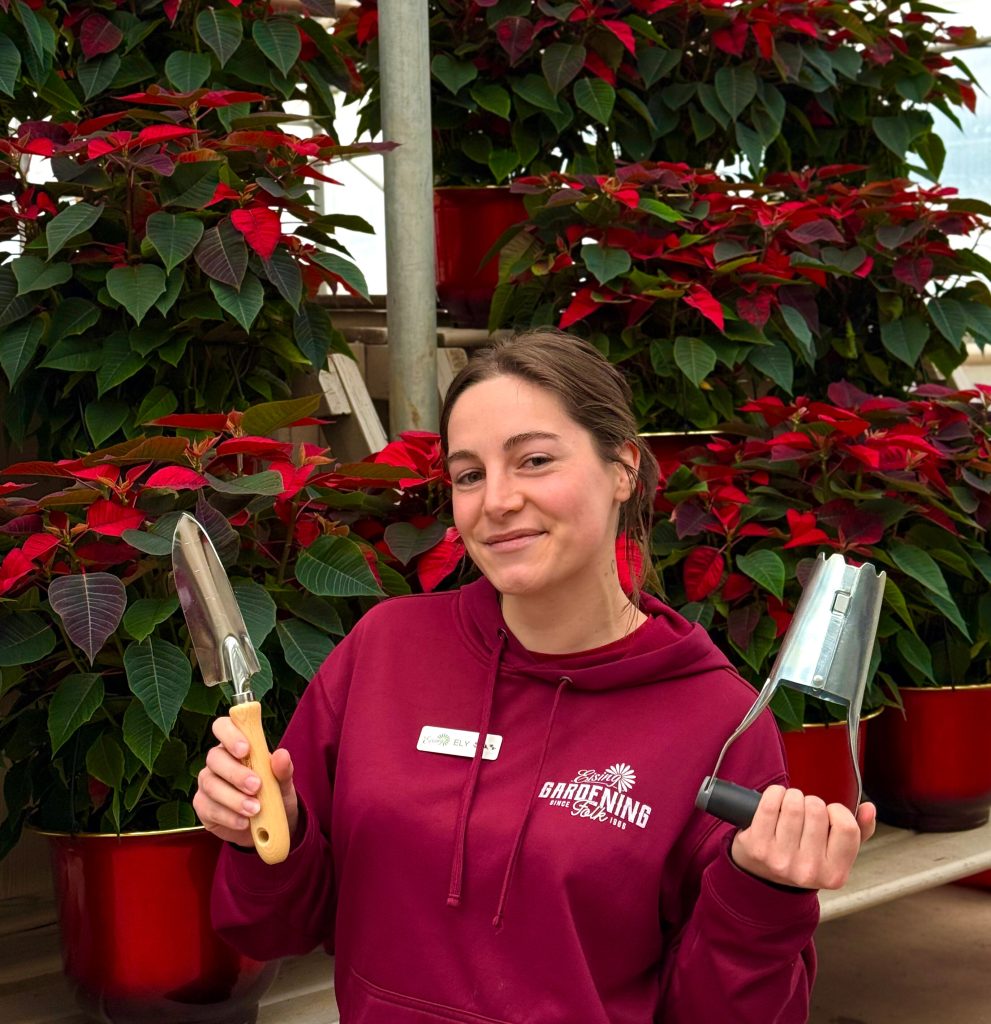
Ely is hoping for some gardening tools under the tree this year, and what gardener couldn’t use an array of trowels?!
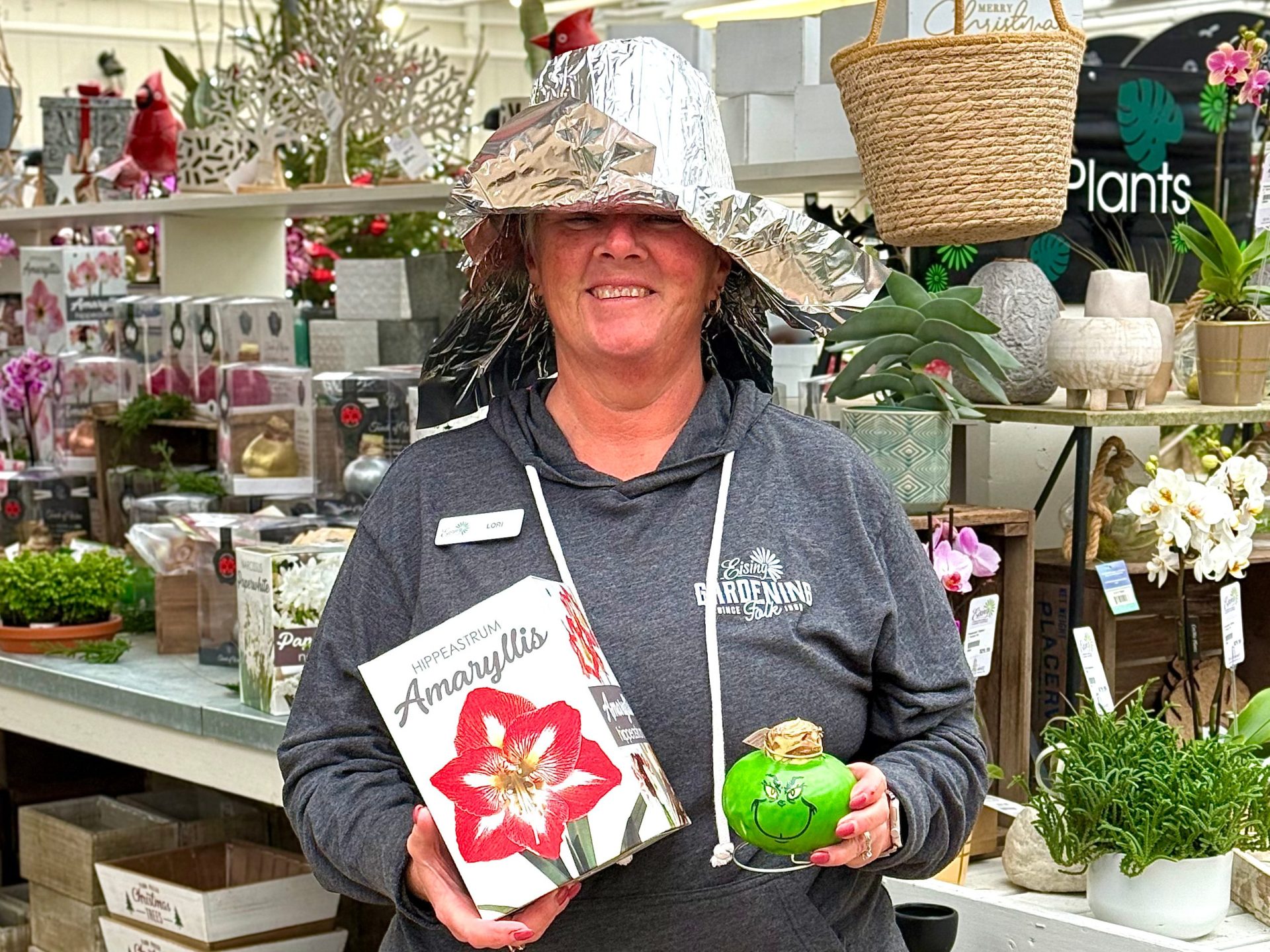
Lori is ready for a party with her favourite hostess gifts - Amaryllis bulbs. Apparently, the Grinch likes plants, too. Who knew? Cindy Lou Who, possibly, and Lori.
Sassy Fashion

Donna is wearing and holding some of her favourite clothes, jewelry, accessories, and products from Sassyfras Boutique inside Eising Greenhouse. Yes, she has many favourites. In her defence, who can pick just one thing from Sassyfras?! Not us.
For Your Favourite People!

Finally, this is THE most flexible item in the guide, our Eisings gift card. It can also be the perfect solution for the person who has everything already and is hard to buy for. Why is this Lucas’s favourite? Eising gift cards can be used for plants, landscaping, trees, shrubs, perennials, annuals, seeds, tropicals, decor, pots, garden tools, and any other items sold in the greenhouse. And that’s not all! Gift cards can also be used for anything in Sassyfras Boutique. So many options!
Good Tidings To All!
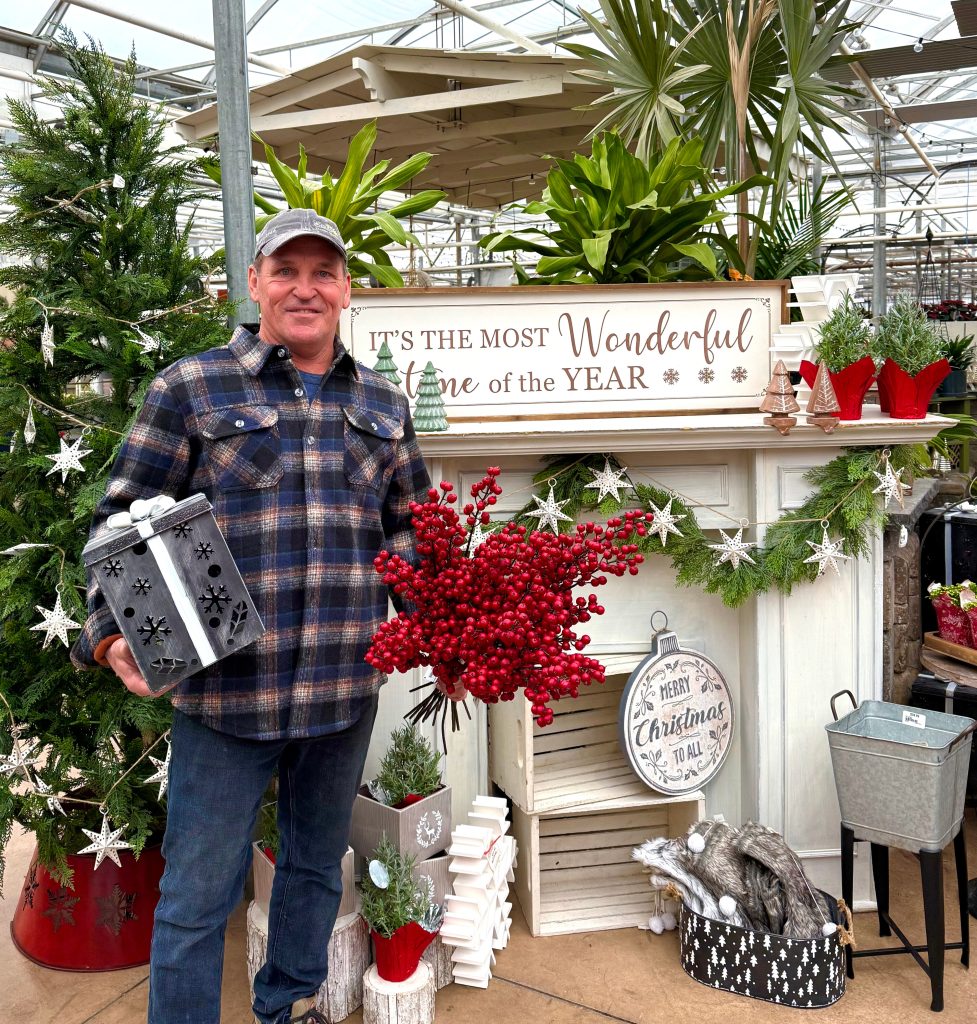
During this season of abundance, Henry and all of us at Eisings hope you get all of your favourite things, but mostly we wish you a safe and happy holiday season! ✨
By: Ava Green
One of the best things about living in southern Ontario is the beautiful show our deciduous trees and shrubs put on each fall.
Autumn is also the perfect time to plant trees, shrubs, and perennials. The sun is less intense, temperatures are slightly cooler, and with regular, deep watering, the plants are less prone to transplant shock, ensuring a successful planting.
As the leaves begin to change, they mark the arrival of autumn, a season full of colour and celebration. If fall is a special time of year for you, our staff have handpicked their favourite deciduous trees and shrubs with the most stunning seasonal displays. Here are their top recommendations.
Autumn Blaze Maple
Botanical Name: Acer x freemanii 'Jeffersred'
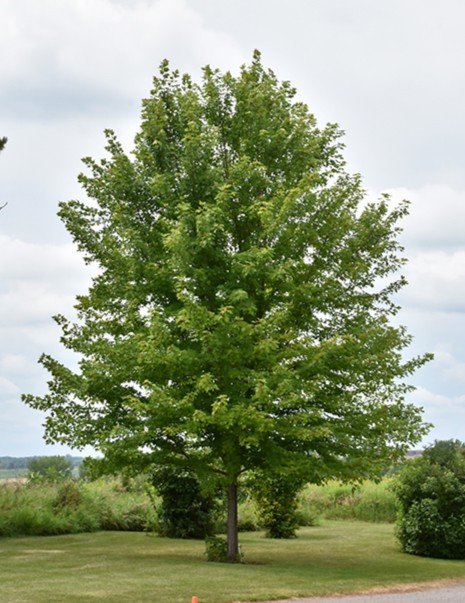
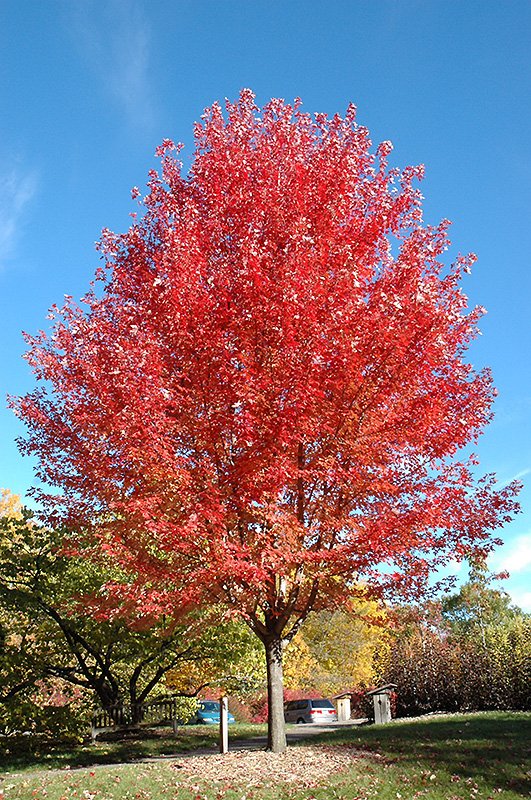
This tree is a cross between the fast-growing Silver Maple and the showy Red Maple - two very popular trees!
Autumn Blaze will provide a display of colour throughout autumn by starting earlier and lasting longer than most other trees. It’s large, with 5-inch leaves that begin by turning red at the top, then eventually shades of red and orange cascade down the length of the tree.
Even in the winter, this is a beautiful specimen because its shape is so symmetrical.
Seven-Son Flower
Botanical Name: Heptacodium miconioides
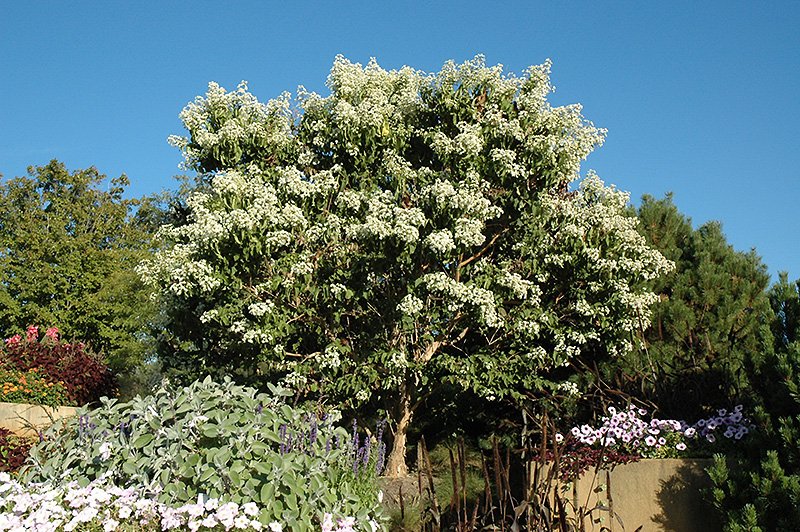
Considered a small tree or large shrub, Seven-Son Flower is popular for its year-round beauty!
Growing to a maximum of 6.1 metres (20 feet) tall and 3 metres (9.8 feet) wide, the leaves of this plant change from spring to summer, making it an interesting specimen plant in the garden.
The biggest attraction is the fragrant white blooms it produces late in summer, which are highly attractive to hummingbirds and other pollinators. As the blooms fall, they leave behind pink sepals, so it looks like it’s in bloom all over again!
Its unusual bark makes this tree beautiful year-round, but especially in the winter.
Washington Hawthorn
Botanical Name: Crataegus phaenopyrum
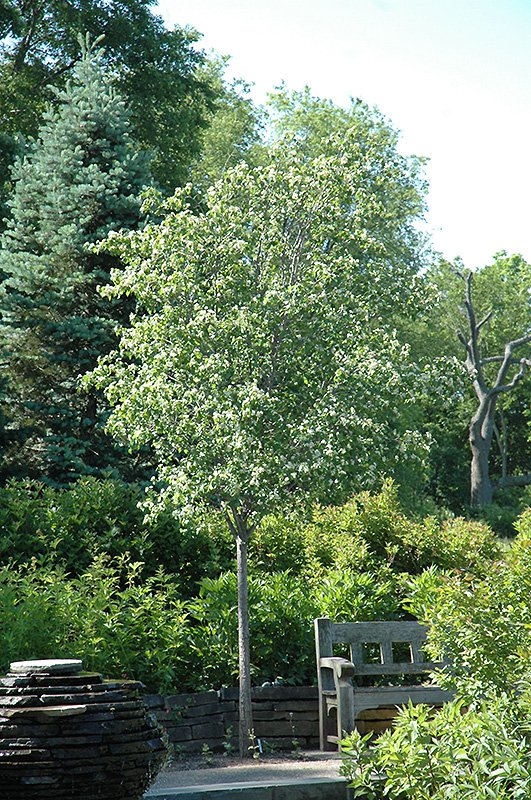

Leaves that turn vibrant shades of orange, purple or scarlet red in the fall are just part of the beauty of this small tree.
This is another specimen with year-round interest. In early spring, reddish-purple leaves emerge, which eventually turn dark green, followed by graceful white flowers. After its fall show, it produces bright red berries that last for most of the winter.
Maturing at 8 to 9 metres (25-30 feet) tall, Washington Hawthorn is also an important nectar plant for pollinators and provides food for birds in the winter.
Barberries
Botanical Name: Berberis thunbergii
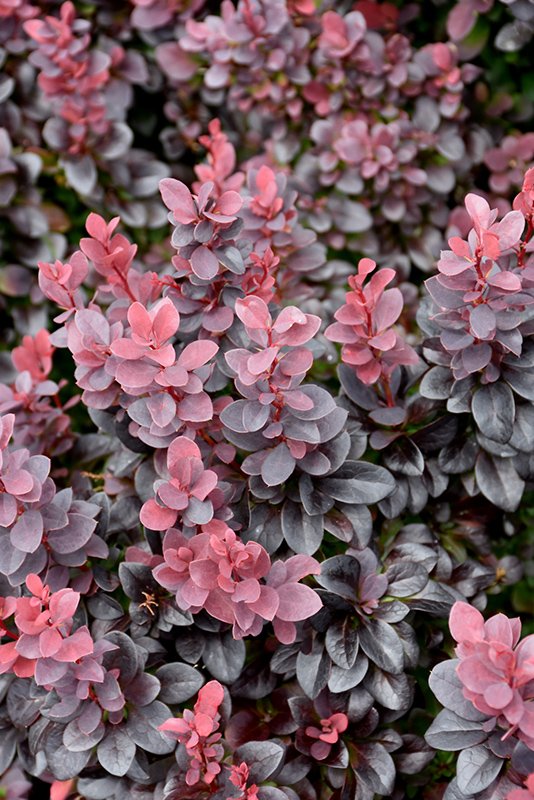
Concorde Japanese Barberry
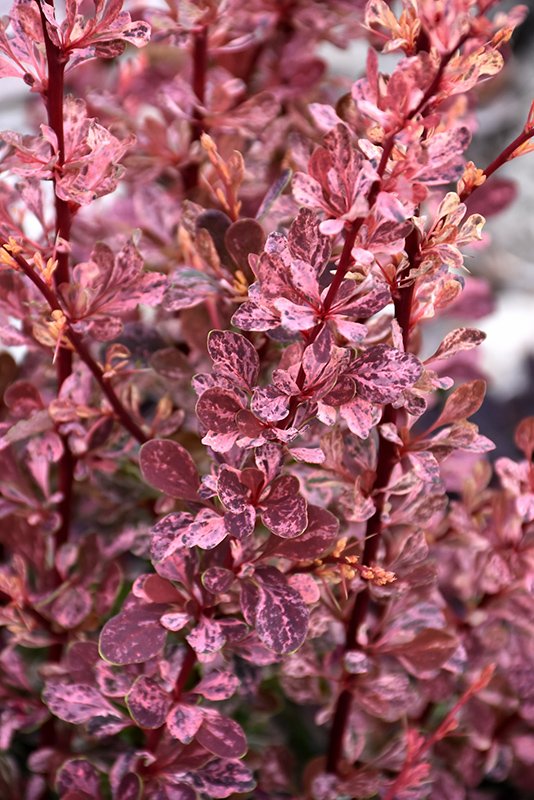
Rose Glow Japanese Barberry
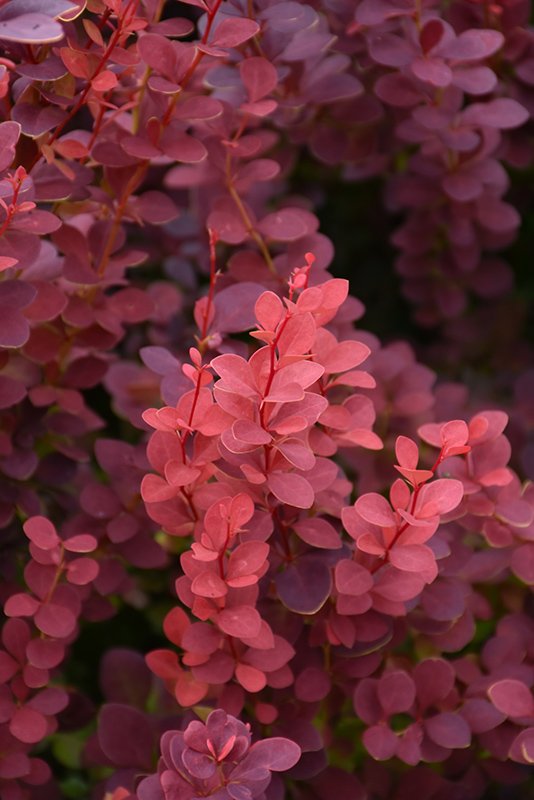
Ruby Carousel Japanese Barberry
Depending on the type of Barberry these deciduous shrubs can grow ½ to 3 metres (1-10 feet) tall and have varied shapes and features as well. For example:
- Barberry, Concorde (Berberis thunbergii 'Concorde')forms a nice globe when it's mature. Leaves start out red and gradually turn a deep, dark purple as they mature.
- Barberry, Ruby Carousel (Berberis thunbergii 'Bailone') is a compact variety with vibrant, ruby-red foliage.
- Barberry, Rose Glow (Berberis thunbergii 'Rose Glow') which matures to 1 to 1 ½ metres (3-5 feet) tall, starts out with a combination of green, white, and deep rose-red foliage in the spring. In the fall, it produces bright red berries that persist into winter.
Beautyberry, Pearl Glam
Botanical Name: Callicarpa 'NCCX2'
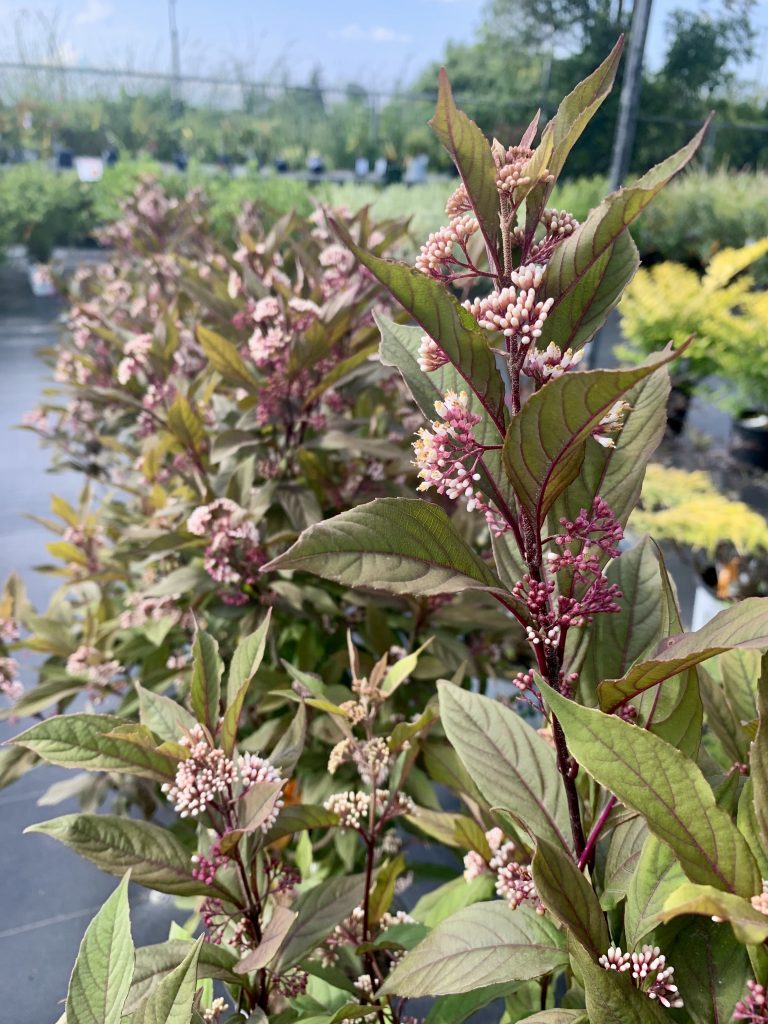
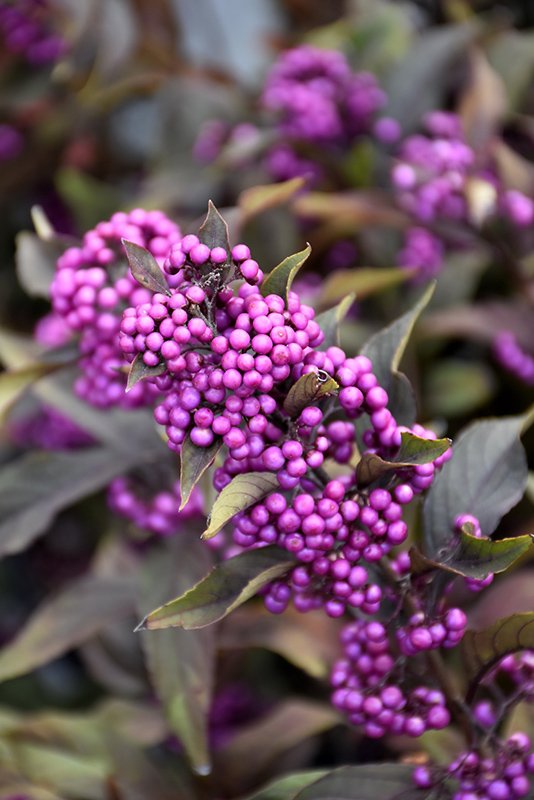
While many Beautyberry are showy in the fall, Pearl Glam is an upright, small shrub that has all-season interest. Its dark purple foliage emerges in the spring that lasts until frost.
In late summer it’s adorned with white flowers which attract butterflies and bees. After blooming it produces hundreds of beautiful violet-purple berries which last long after the leaves have fallen.
Crepe Myrtle, Cherry Mocha
Botanical Name: Lagerstroemia 'Cherry Mocha'
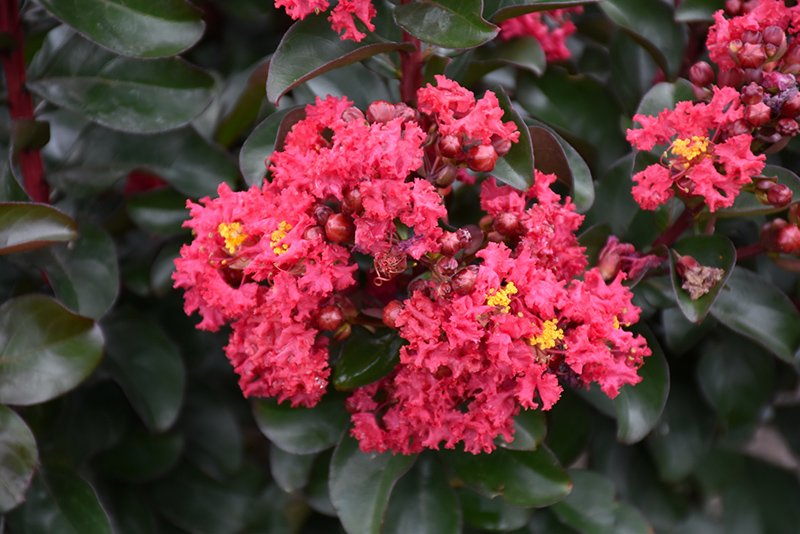
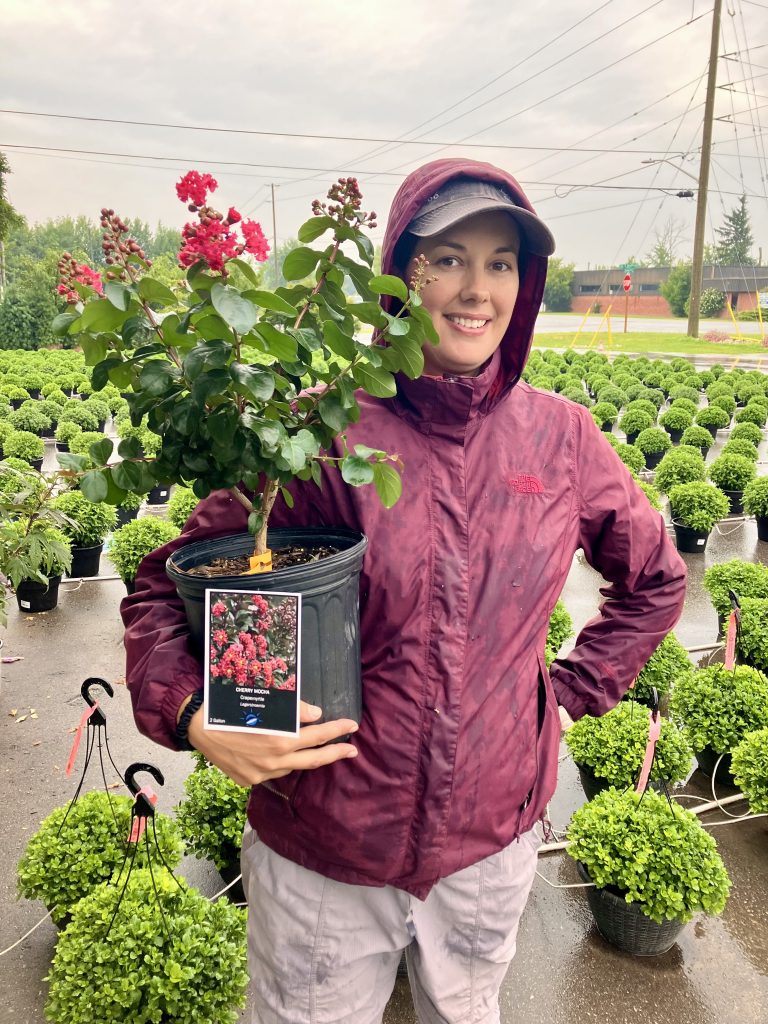
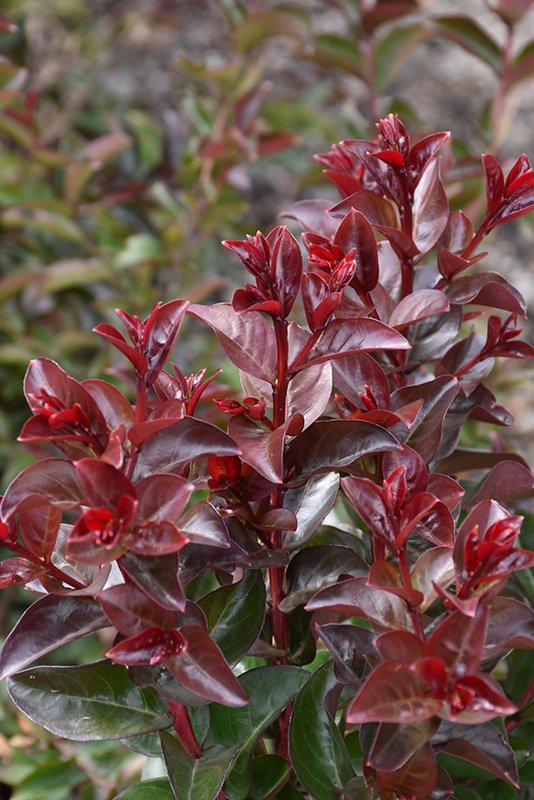
Another small ornamental deciduous shrub with an upright growing habit, Cherry Mocha Crepe Myrtle has decorative appeal in every season.
Burgundy coloured stems with semi-glossy burgundy leaves makes this plant stand out. To add to that, new growth at the tips starts out glossy, deep red. If that’s not enough, in late summer and early fall, the blooms on this cultivar are large, cherry-red flowers which stand out from the burgundy foliage. Its flowers late in the season provide important food for bees. After flowering, green seed pods provide extra interest.
Note: Have you ever wondered why leaves on trees and shrubs change each fall? Here’s a simple explanation. During the long, sunny days of summer, trees and shrubs produce plenty of chlorophyll - the food needed to keep the leaves green. In autumn, as the days grow shorter and temperatures are cooler, there is less chlorophyll produced and the plant breaks down residual chemicals on the surface of the leaves which produces shades of red, orange and yellow.
You’ll find more information in our handy Eisings online Plant Finder!
If flowers are the divas of the garden, foliage is the harmonious backup group that makes the whole performance shine. Colour, texture, and form don’t just come from blooms—there’s a world of interesting leaves that not only set the stage but often steal the show. Flowers may be the stars, but foliage is the picture frame, the atmosphere, and often the soul of a beautiful garden.
Start with a Standout
When choosing plants—whether for a garden bed or a container—don’t just focus on flowers. Especially in shady spots, standout foliage can create all the visual impact you need. Look for leaves that draw your eye, like the delicate structure of a cutleaf Japanese maple or the bold colour variations of Heuchera (Coral Bells), which range from deep burgundy to vibrant chartreuse.
Your standout feature doesn’t have to be a plant—it could be a sculptural shrub, an ornamental tree, or even a favourite birdbath. Try placing that birdbath atop a lush carpet of Irish moss, or line a path with the spotted leaves of Pulmonaria, silvery Artemisia, or graceful ferns. Light up a shady corner with glossy Bergenia or classic Hostas, which offer endless variety in shape, texture, and hues from bright green to cool blue-ish tones.
Build the Framework
Once you’ve chosen your focal foliage, you can build your planting scheme around it in creative ways. Think of it like building a quilt—each plant contributes a piece to the overall picture.
- Create a patchwork of leaf shapes: Group together plants with small, intricate foliage for a richly textured look.
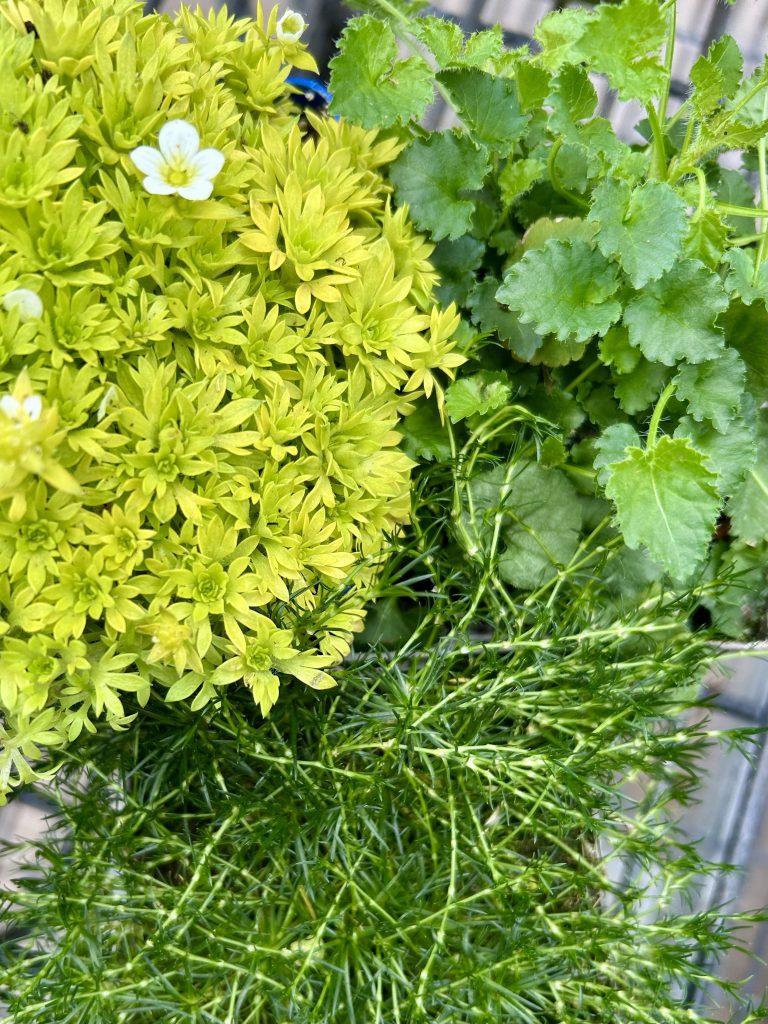
Mossy Saxifrage 'Cloth of Gold,' Sagina Subulata 'Irish Moss,' and Bellflower Campanula Carpatica 'Pearl Deep Blue'
- Echo colour tones: Pair burgundy Heuchera with other plants in similar shades, like dark-toned Euphorbia, for a cohesive palette.
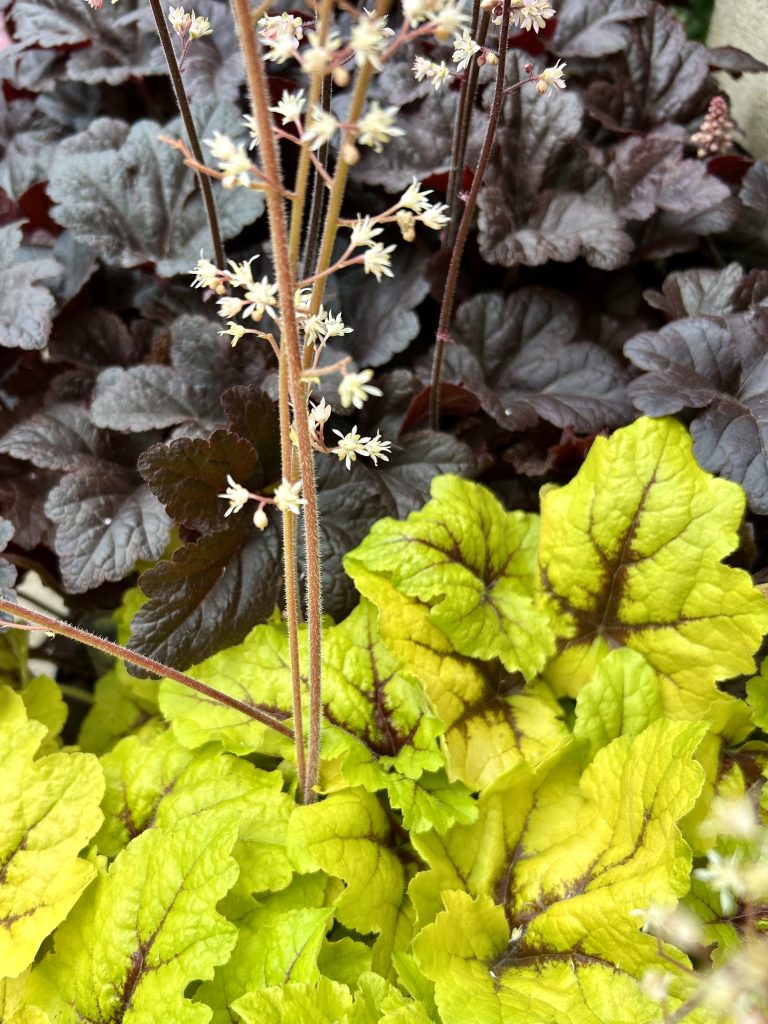
Foamy Bells 'Catching Fire,' and 'Onyx'
- Choose a colour theme: Work with warm hues like gold, rust, and copper.
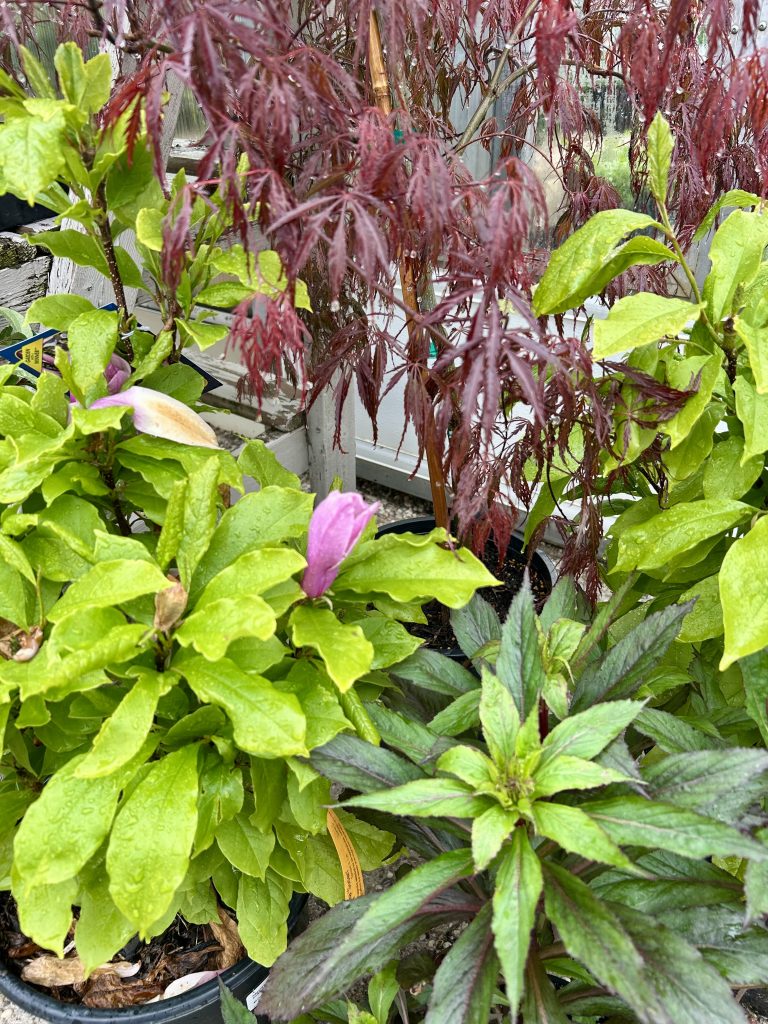
Japanese Maple 'Tamukeyama,' 'Magnolia x Soulangeana,' and Lobelia Speciosa 'Starship Scarlet'
- Mix textures, repeat colours: Choose different textures but repeat colour combinations like white and green.
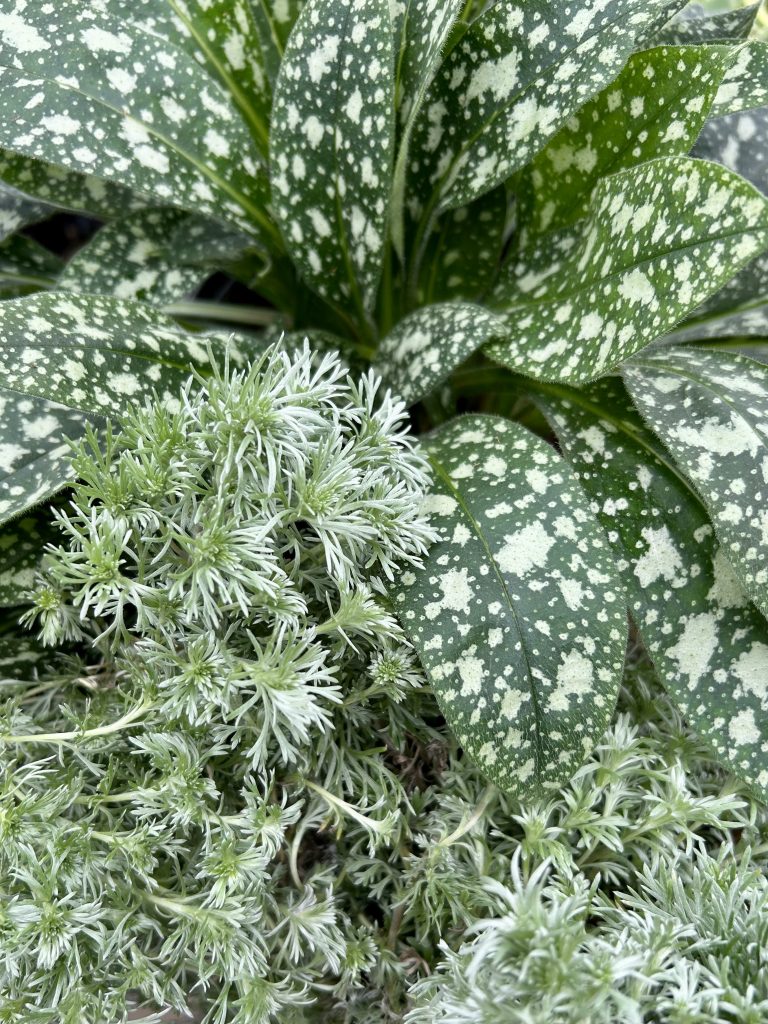
Pulmonaria 'Pink-a-Blue' and Artemesia 'Silver Mound'
Top it Off
Once your foliage framework is in place, add a statement piece to elevate it all - that favourite birdbath, a piece of artwork, an ornamental tree or shrub, or an unexpectedly showy flower. The layered, leafy backdrop with make your feature stand out even more.
Visit us at Eising Garden Centre to find all the foliage stars and supporting players you need to bring your garden vision to life!
What’s the best way to brighten up your garden? Add lots of annual flowers in the Spring! Here in Southern Ontario, the May holiday weekend is usually safe from frost - and go time for planting tender annuals!
At Eising Garden Centre, you’ll find a wide array of beautiful annual blooms. Here are ten of our sun-loving favourites to try.
Cosmos
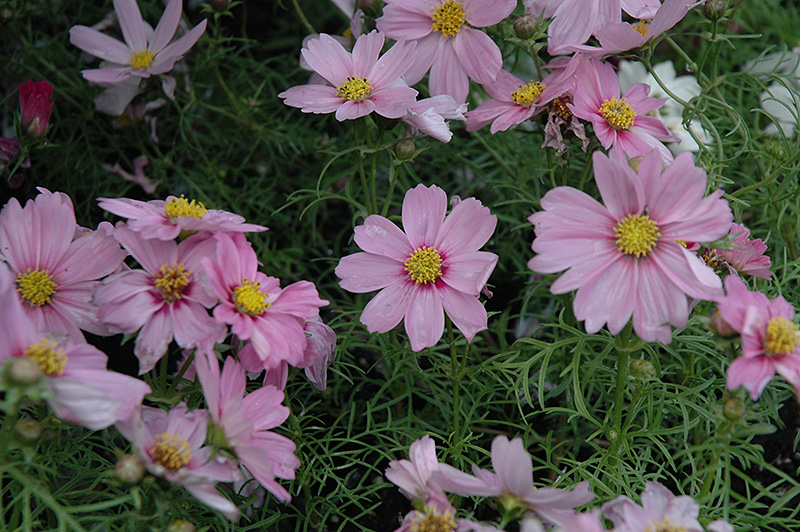
With daisy-like blooms in radiant shades of pink, red, and pure white adorned with mellow yellow centres—Cosmos are irresistible. They're perfect planted along a fence or at the back of a border, where they can lean on a little support. Depending on the variety, Cosmos can grow anywhere from 12 to 80 inches tall!
Zinnia
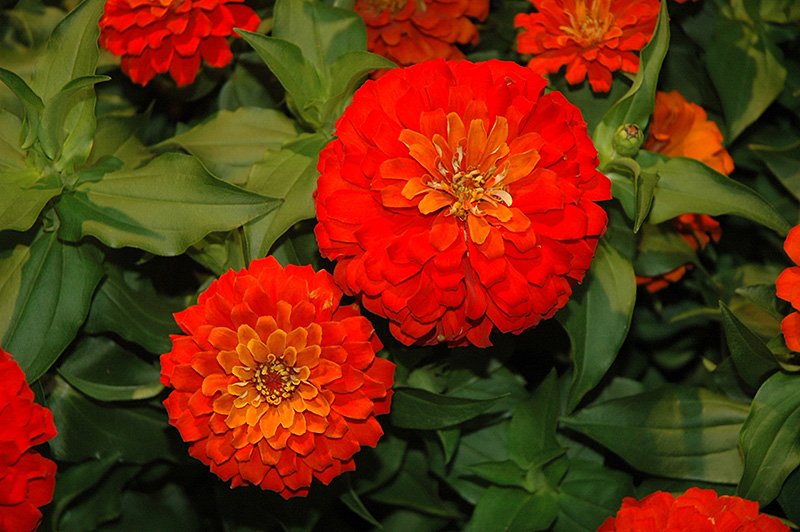
Bold, structured, and bursting with colour, Zinnias bring serious wow factor. Their cheerful blooms come in red, green, orange, yellow, purple, pink, and white. Depending on the variety, Zinnias grow between 6 and 36 inches tall and spread about 12 inches wide.
Calendula
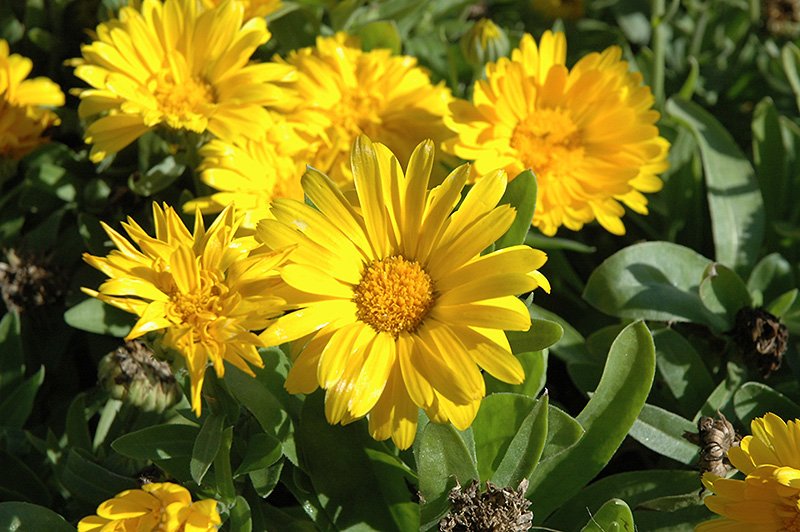
Decorative and useful, Calendulas are edible flowers with culinary and medicinal value. Their soothing, antiseptic properties make them popular beyond the garden. Calendula come in gorgeous, bright shades of copper, orange, gold, and yellow blooms and grow 10 to 24 inches tall.
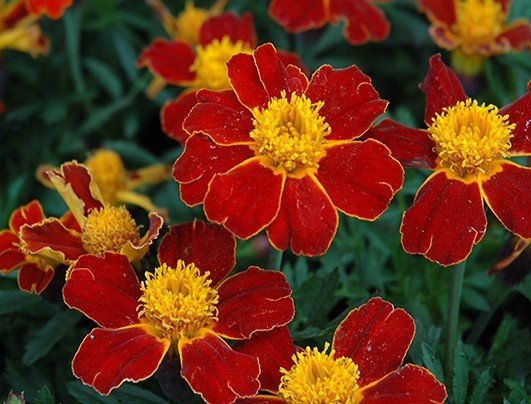
Marigold
Tough and reliable, Marigolds handle heat and humidity with ease, thriving even in the driest parts of your garden. They offer a beautiful range of bloom types—from large, ruffled flowers to small, delicate blossoms—and a palette of cream, yellow, orange, red, and bi-colours. Depending on the variety, Marigolds can grow from 6 to 36 inches tall.
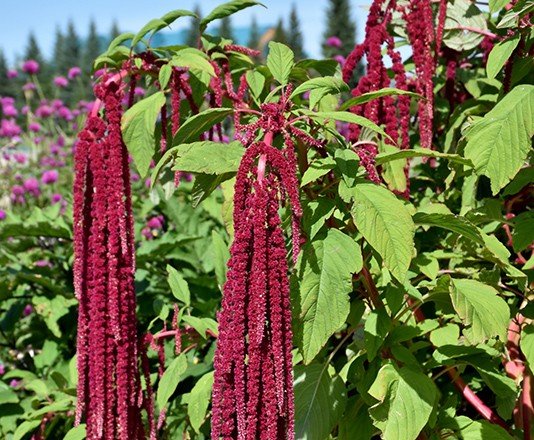
Amaranth
If you're after drama, Amaranth is your plant! Reaching heights of 3 to 5 feet, these bold beauties flaunt long, rope-like clusters of maroon or red flowers. While low-maintenance, Amaranths may need a bit of support to stay upright as they mature.
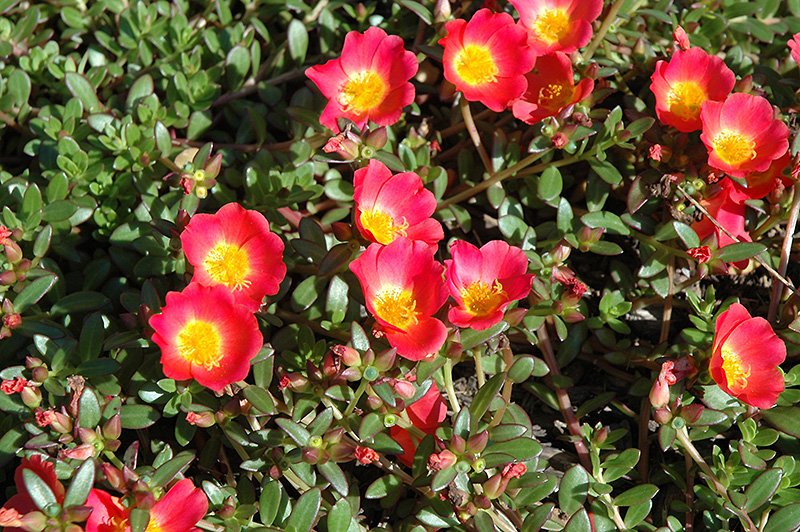
Portulaca
Perfect for hot, dry, and neglected spots, Portulacas deliver a brilliant show of colour with minimal effort. Their rose-like blooms come in vivid shades of red, pink, yellow, white, orange, and purple. Low-growing at just 4 to 8 inches tall, they're ideal for the front of borders, or alongside driveways, and patios.
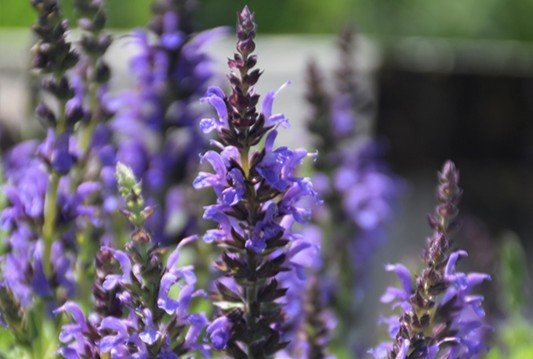
Salvia
With tall spikes of bold purple, red, blue, pink, or white blooms, Salvias are garden standouts. Growing 8 to 24 inches tall and often blooming continuously, they quickly become must-haves for flower beds or large containers.
Geranium
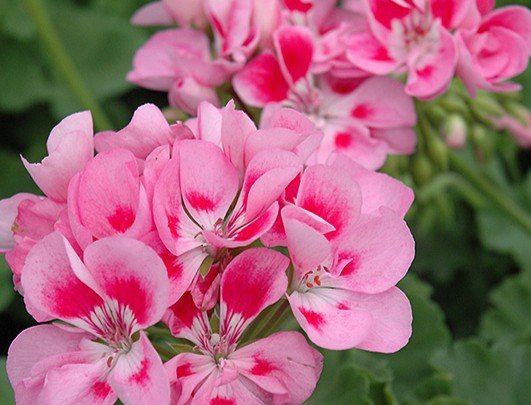
Drought-tolerant and tough as nails, Geraniums have long been a gardener’s favourite. Regular deadheading (removing spent blooms) will reward you with non-stop flowers until frost. Their lush foliage and bright flowers—ranging from salmon, white, purple, violet, and orange to red and pink—also shine in mixed containers. Geraniums typically grow between 8 and 24 inches tall.
Petunia
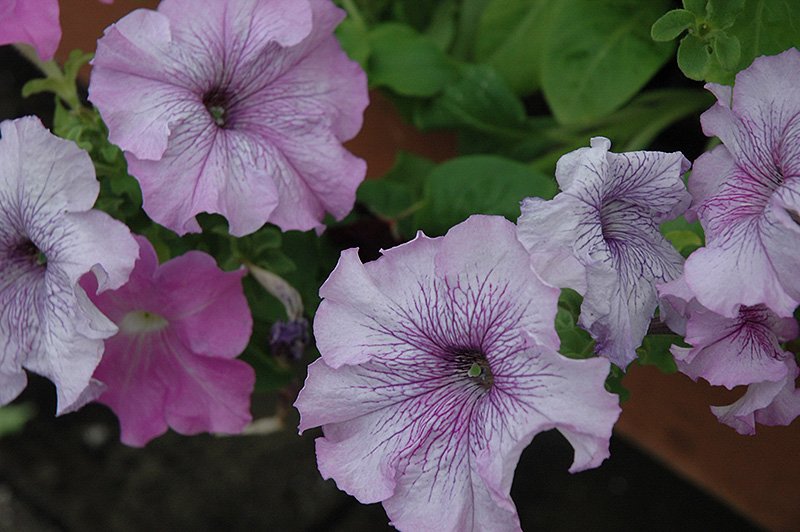
It’s no surprise Petunias have remained beloved for generations. They grow quickly, bloom prolifically, and require little care. Available in mounding or trailing forms—and sometimes carrying a heavenly scent—Petunias are perfect for flower beds, hanging baskets, pots, or window boxes. Growing 6 to 18 inches tall, they come in white, yellow, pink, purple, red, bi-colours, and even black!
Dahlia
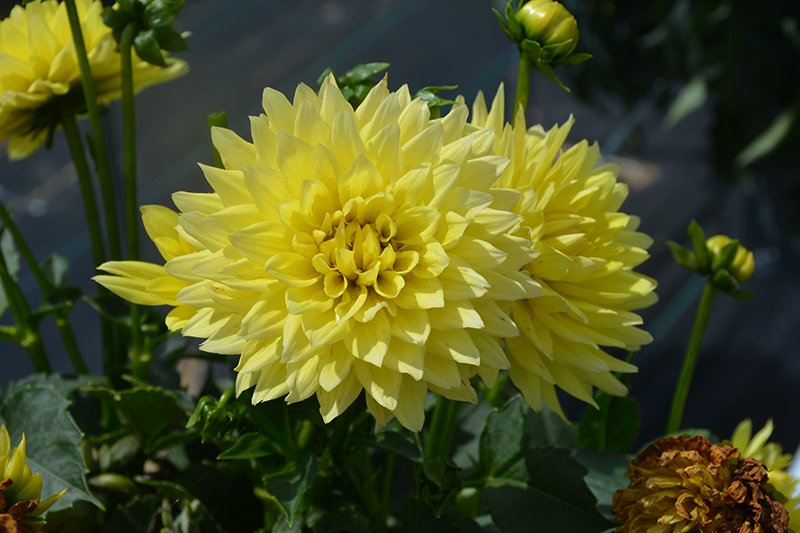
Dahlias can become a full-on passion project—and it’s easy to see why. Their breathtaking blooms come in a stunning range of sizes, shapes, and colours. While Dahlias can be a bit particular (they love rich, well-drained soil and plenty of water, but hate soggy conditions), they are absolutely worth the extra attention.
Sunshine + Food + Hydration = Success
All of these annuals thrive in full sun and will reward you with even more blooms when given consistent water and fertilizer.
Adding a continuous-release fertilizer to your soil at planting time—or feeding weekly with a balanced, water-soluble fertilizer—makes it easy to keep your garden thriving all summer long!
*TIP: Check our handy Plant Finder for more details! https://plants.eising.ca/11110015/
Growing Vegetables in Pots!
A few years ago, I was walking through town with a friend as we discussed planting vegetables in our tiny front gardens. It seemed like an unusual idea until we spotted not one but two front gardens with pumpkin vines rambling amongst the shrubbery. What a novel way to cover the ground without mulch and have the bonus of showy, bright blossoms and bold foliage! Of course, this is eventually followed by the standout feature of brightly coloured pumpkins. It’s built-in fall decorating!
Right now, everyone is looking for ways to reduce grocery bills, and growing a few vegetables amongst the flowers and shrubs can make a big difference. If your garden is on a patio or balcony, there are lots of ways to add edible plants to maximize your space and beautify it at the same time. Who says vegetables can’t be ornamental and beautiful?!

Gaps and Small Spaces
If you have a new shrub and flower garden that has gaps or there’s a space in your garden where you’re not sure what to plant, consider tucking in a potted vegetable. In a cool, shady space, try some luscious lettuce bowls. Shade allows lettuce to grow more slowly in the heat of the summer. Keeping lettuce in a cool, shady spot will prevent it from bolting and becoming bitter.
If you have a small garden, a patio or a balcony, pots with compact varieties and hanging baskets are a terrific alternative for growing vegetables, herbs, and some fruits. These are some of the options we offer at Eising Garden Centre (based on availability) that can be purchased fully planted, or you can grow your own from seed if you have time, space and lights.
Trellised Planters and Patio Pots
For patios, balconies, or even a gap in the garden, there are lots of vegetables that can be grown in a trellised planter.
Tomatoes, peppers, cucumbers and eggplant all love warm soil and growing in pots provides the heat to help them thrive. Eising trellis pots are planted with specific varieties that are smaller but pack a flavourful punch.
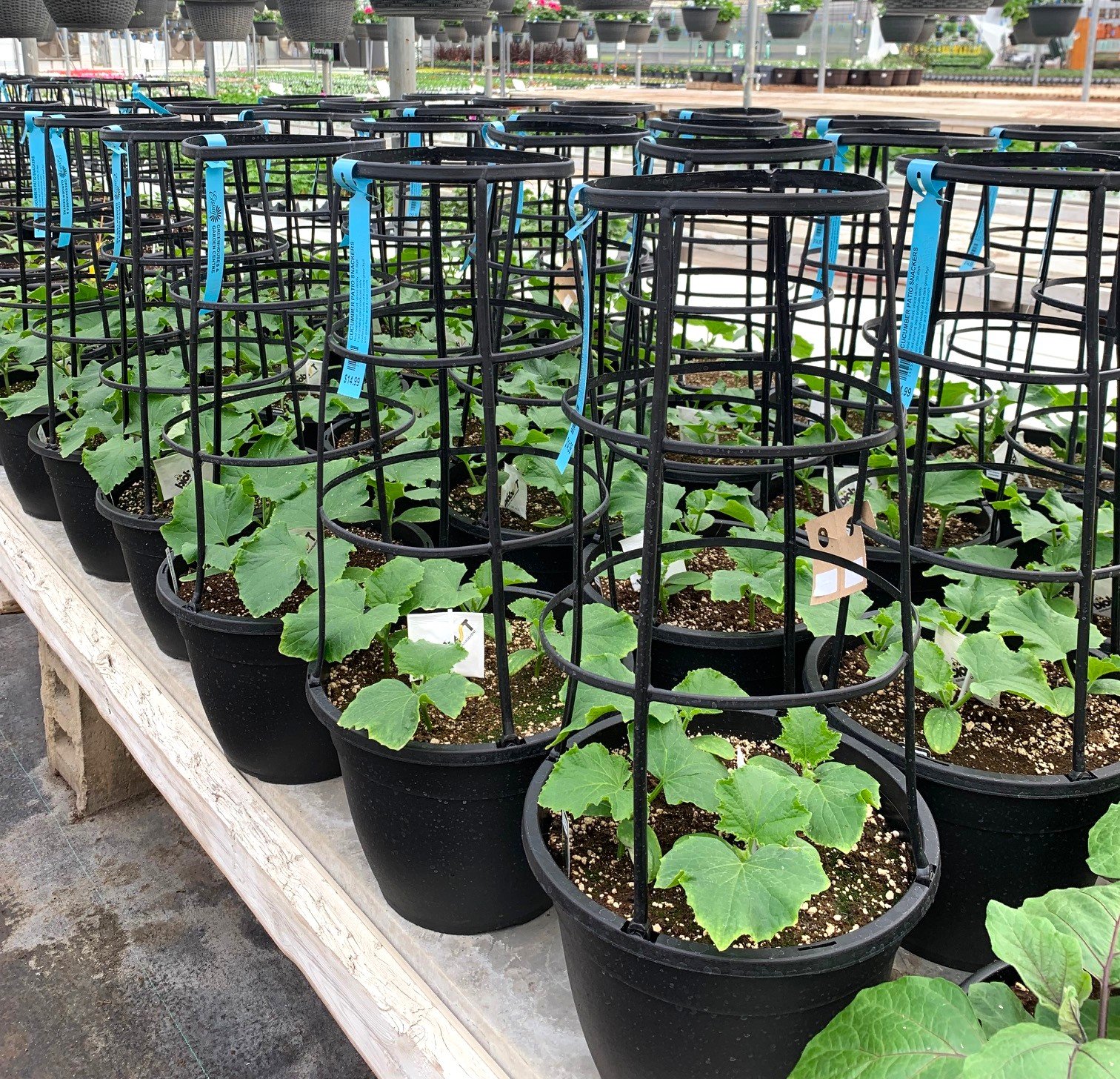
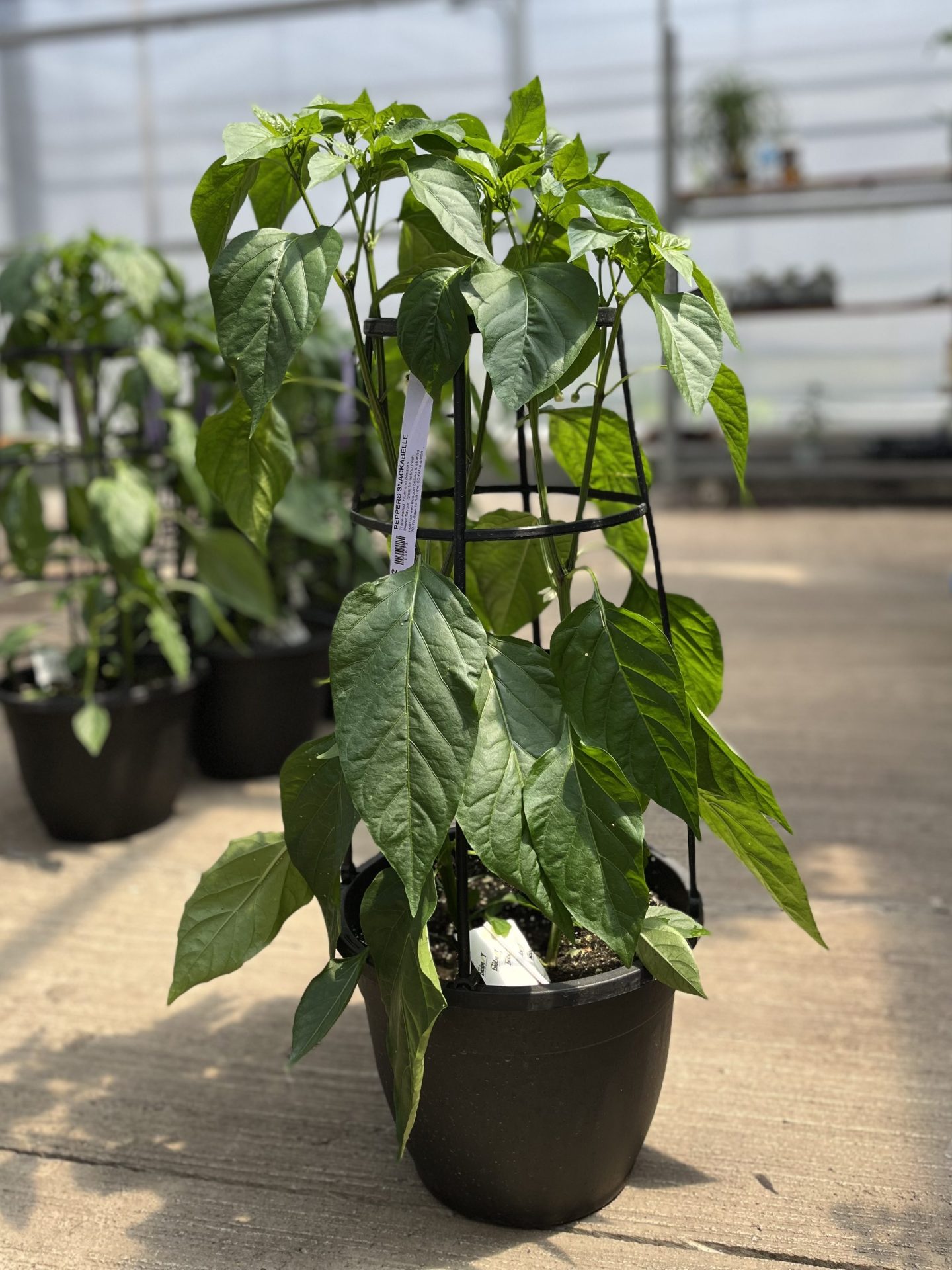
Sweet Snackabelle, Candycane Chocolate Cherry or Red, Mocha Swirl and Fresh Bites peppers.
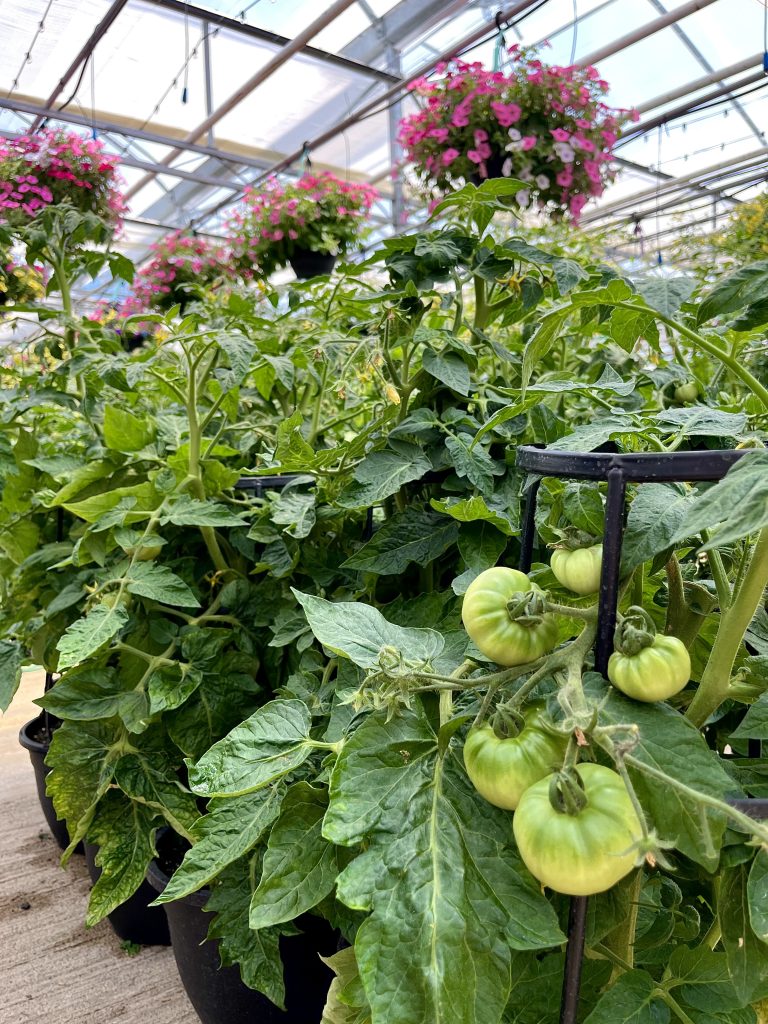
Little Sicily, Patio Hybrid, Candyland Red, Rapunzel and Tidy Treats tomatoes.
Eising Greenhouse also carries eggplants in trellised pots - a patio pot with Patio Baby eggplants is a perfect choice if ratatouille is on the menu!
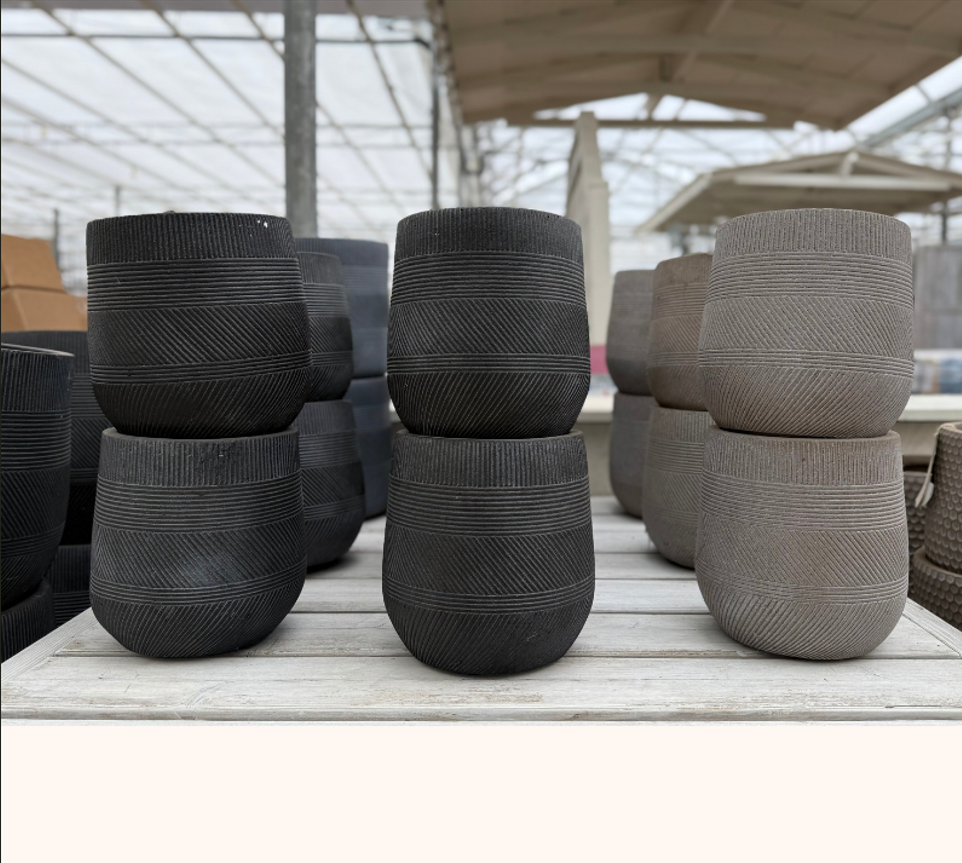
All of Eising's trellised planters would look lovely plopped into one of our decorative outdoor cover pots!
Herb Planters
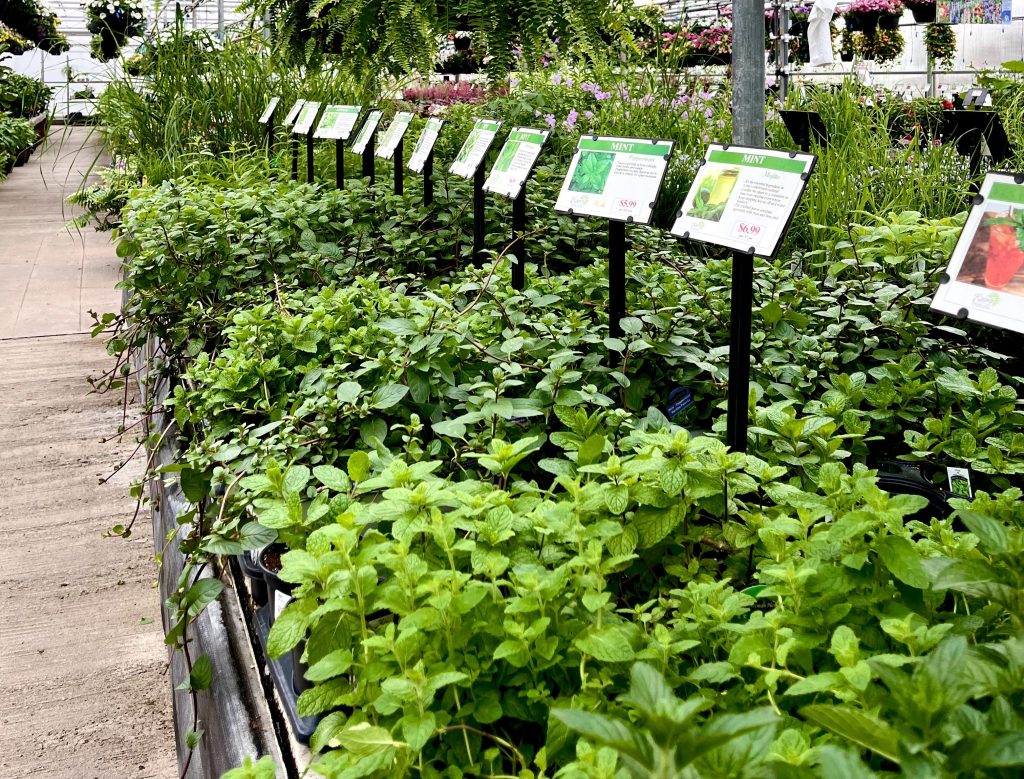
Many herbs thrive in a sunny and warm spot with well-drained soil, making a pot the perfect container for them. Herbs also make great companion plants with other vegetables and can be tucked into other pots. Most herbs also love to be harvested frequently, especially when they’re given these ideal conditions.
Lettuce Bowls
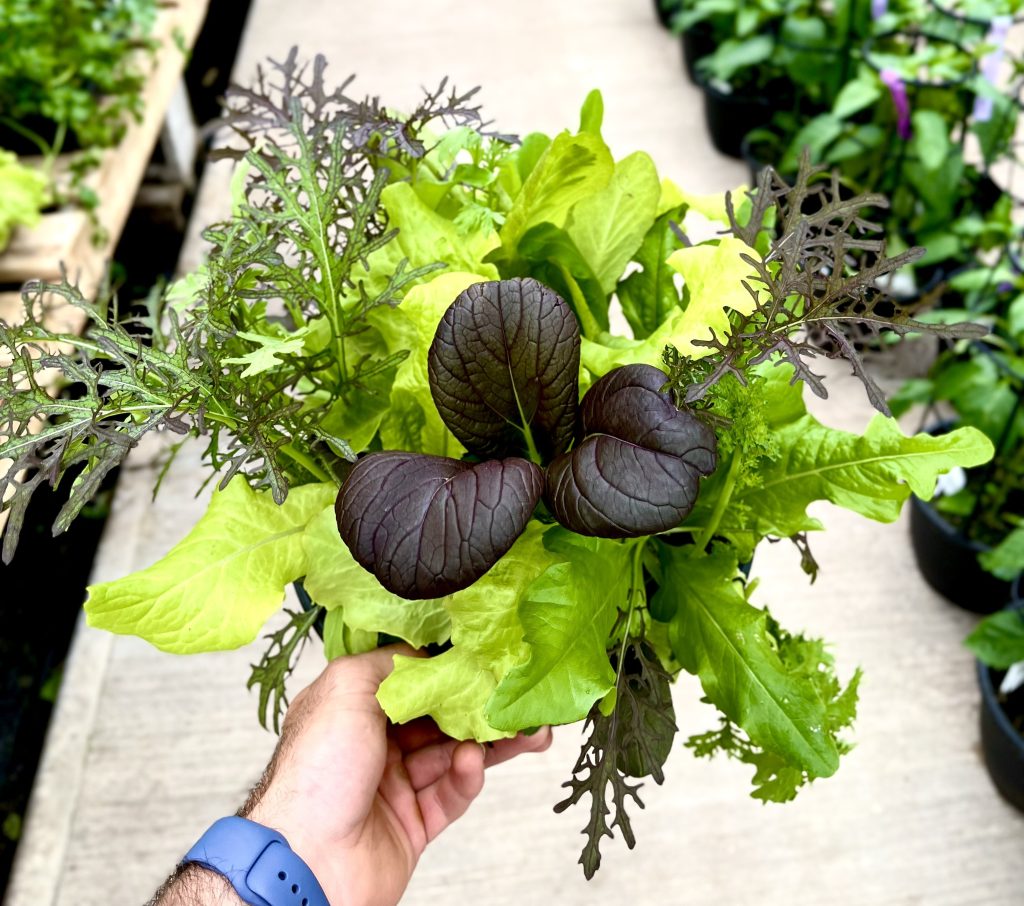
Lettuce bowls are a great way to grow greens in small spaces. Our 10” bowls are chock full of a variety of lettuces and are never boring!
👍Tip: Try the “cut and come again” method for harvesting lettuce, which prolongs the plant’s life. Simply pinch off the outer, mature leaves each time you pick the lettuce and leave the centre of the plant to keep growing.
Hanging Baskets
If there’s a spot to hang a basket or place a shepherd’s hook, you will want to grow one of the edible options we offer.

Topsy Tom tomatoes.
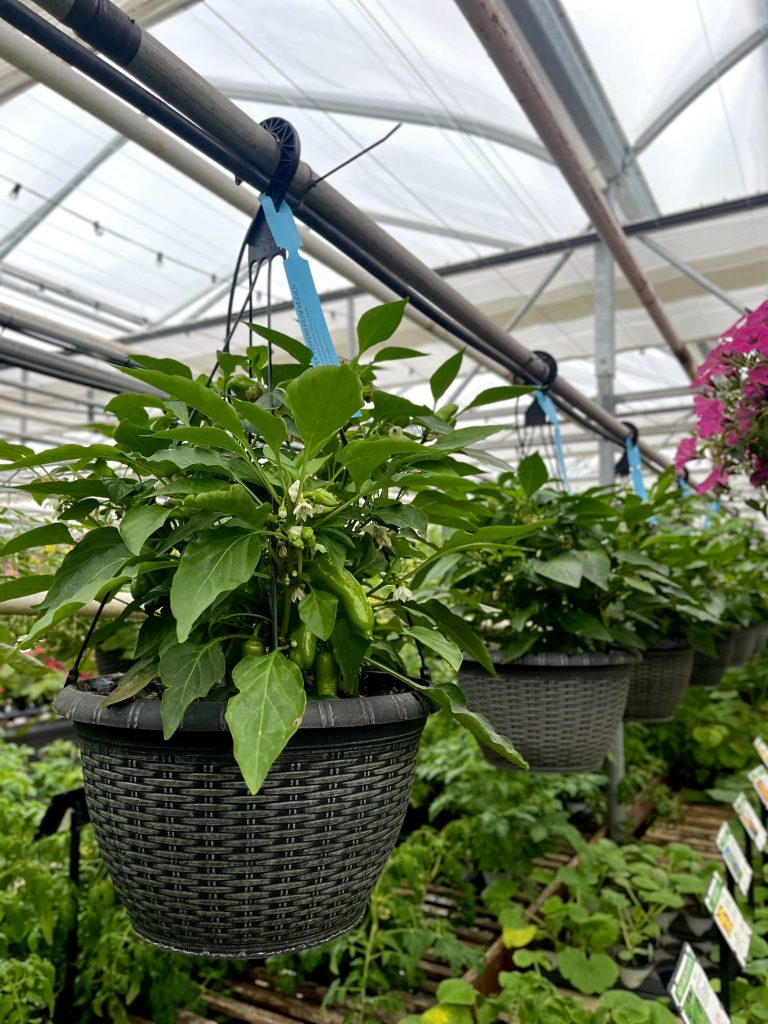
Pot-a-Peno and Peppers From Heaven peppers.
Tomatoes, peppers, and strawberries are all available in hanging baskets. Our deliciously sweet everbearing strawberries are also available in 4.5" pots and bareroot, which are great options for window boxes.
👍Tip: Pick strawberries as they ripen to encourage your plants to produce more. Also, remove runners as they grow to allow your plants to send energy into growing fruit instead of bigger plants. Painting rocks to look like strawberries is said to deter birds from feasting on ripe berries.
Citrus and Figs
Consider growing a beautiful and fragrant lemon, orange, fig or grapefruit tree in a patio pot. Just keep in mind that it will need to come indoors in the fall.
Container Plant Care


Whether you’re growing edible plants in the garden, a pot or a hanging basket, don’t forget to give them the care they need to maximize productivity:
- Water regularly, deeply and in the heat of the summer, frequently. Watering early in the morning is ideal. Pour water on the soil, not the foliage to prevent diseases like powdery mildew.
- Feed your vegetables and fruits throughout the growing season with fertilizer or compost.
- Remove dead foliage and prune plants as needed. Especially herbs.
Once you start foodscaping by including vegetables with your flowers and ornamental plants we’re sure you’ll want to keep looking for innovative ways to grow your own food! Who knows, maybe even pumpkins by the front porch!
Now that everything in the garden has been put to bed for the winter, our thoughts are on the holidays - decorating, parties, and that seemingly never-ending list of gifts. At Eising Garden Centre we have solutions to help bring joy to your holiday season.
Your Gift Giving Problem Solver
We know that finding the perfect gift for someone can be a challenge. There’s always that one person that has everything and it’s impossible to buy for them! The good news is that we have plenty to offer at Eising Garden Centre so that you can cross even the most perplexing person off your list.
For Fashion Lovers
You’ve probably heard it before - accessorizing is the key to making any outfit sing. At the Sassyfras Boutique you’ll find beautiful, casual clothing as well as hats, mitts, winter scarves, plus socks for men and women. They also have jewelry and handbags that are sure to add flair to any ensemble.
For The Wanderer
If you have friends or family members that love to travel, new sunglasses, beach towels, a fashionable scarf, a roomy handbag, or new pajamas from Sassyfras are sure to be a hit.


Your Just Retired Husband Or Wife
If they no longer have to go into the office every day and don’t know what to do, give them a challenge!
Pick up some seed packets to get them started on planning and maybe even planting for Spring.
Growing indoor flower bulbs can be a fun project to brighten winter days too. You’ll be amazed by the dainty blooms of Paperwhites versus the massive blooms of an Amaryllis!
Or how about a Sprouting Kit to grow tasty, organic greens all winter long? Let’s face it, we all know that healthy eating will be on the New Year’s Resolutions list!
Deck The Halls, And More
When decorating your home or getting ready to host a holiday party, come see us first.
While supplies last, we have lots of fresh Christmas trees (call us to check availability (519) 428-4607), ornaments and Christmas decor, fresh greenery, garlands, urns, wreaths, hanging baskets, centrepieces, and live plants like Cyclamen, Frosty Ferns and of course, Poinsettias.
Did you know that we also create custom containers? Bring in your own vase or container for centrepieces and urns, and we’ll do the rest. We’ll create an arrangement that will make that vase that 'Aunt Martha' gave you, sparkle with fresh greenery and holiday flair.
Previous
Next
Holiday Parties and Hostess Gifts
Solve the “I have nothing to wear to a party” blues, with a wardrobe “pick me up” from Sassyfras.
While you’re there, check out the selection of lovely locally handmade soaps, and great houseware gift items like dish cloths, scrubbies, and wine or bottle openers. Perfect gifts for your party host.
There’s also a wide variety of potted plants in the garden centre, and beautiful decorations that any host or hostess would love to add to their holiday decor!
For Your Kid’s Teacher
Let your child’s teacher know that you recognize that they’re already looking forward to summer vacation by giving them an Eising gift card. Once May rolls around, they can pick up plants that will bring them joy all summer long!
Great Gifts We Recommend
Eising gift cards go a long way too since they can be used on anything in the shop, including Sassyfras. A gift card is a great way to help someone with their next landscaping project, or even Spring garden clean up. Now that’s something to look forward to!
Not into gift cards? We have a great selection of items you could bundle together into your own custom gift basket! Think of all the things that you would love to get and we think someone on your list will love them too!

Soak Up The Holiday Mood
We know that you love wandering through the greenhouses when they’re full of summer plants, but we also invite you to stop by to visit us in November and December to enjoy the winter paradise we’ve created for your gift giving and decorating inspiration.
Take the pressure off the holidays and join us for Starlight Shopping Night on Thursday, December 8th. On December 8th only, we’ll be open late - from 9am to 7pm! Enjoy the ambiance, the specials, the exciting draws, the extended shopping hours and get all of your gift buying done early!
You’ll find us at 814 Cockshutt Rd, Simcoe, ON Monday to Saturday, 9am to 5pm until December 23, and 9am to 2pm on December 24th.
After December 24th, we will be closed until Spring, but the greenhouse elves will be working to have everything ready for you in 2023.
Happy Holidays from all of us at Eising Greenhouses & Garden Centre!
Planting new trees into the landscape is always a worthwhile investment! Not only are they pretty to look at and provide cool shade on hot days, but they add a pretty significant increase in property value. Watching trees transition through each season is always a delight, but trees in autumn are especially beautiful. But did you know that autumn is actuaslly the perfect time to plant many of our favourite trees?
The root ball of a tree is quite sensitive. After all, it acts like their “brain” or central nervous system, so if you stress those roots out too much, you’re going to have a very tired looking tree on your hands. Here in Southern Ontario, if you plant in late spring or in the middle of summer, those high temperatures may be a bit too much for the roots to handle. The cool, mild temperatures of autumn are just right for transplanting.
6 Trees You Can Plant In Fall
Want to liven up your landscape with some colourful foliage? These ornamental trees for fall are so distinctly beautiful in their own different ways—it’s hard to pick just one!
Tulip Tree
This tree has so much style, and it grows surprisingly quickly, so if you’re a bit of an impatient gardener, you’ll love watching the tulip tree develop over the years. It gets its name from its gorgeous spring flowers, which you probably have guessed, look quite similar to the classic tulip! While it puts on quite a show in spring, it has a reputation for being especially beautiful in fall, when its sunny golden foliage turns a fiery orange shade.
Because the tulip tree grows so quickly, its branches tend to be a bit thin, so you may want to put it in a spot that gets some protection from the wind. Just make sure it gets at least some partial sun and isn’t too shaded, or else its leaves may turn brown. Regular pruning of your tulip tree and cleanup of any damaged branches will help keep things neat and help prevent pests from showing up.

Autumn Blaze Maple
There’s something so charming about a giant maple, and the blazing red leaves of this maple tree in autumn look so classically Canadian! It’s a perennial favourite, because it’s actually a cross between the red maple and the silver maple, and it seems to have taken on the best traits of both. Overall, it has stunning colours, a nice, balanced branching habit, and pretty sturdy limbs despite being a very fast grower.
Autumn blaze maples need full sun to grow to their best potential, but the condition of the soil is much less critical. This variety is actually quite drought tolerant and doesn’t mind poorer soils—just be sure you water it very regularly for those first couple of months after planting to help the roots establish.
Eastern Redbud
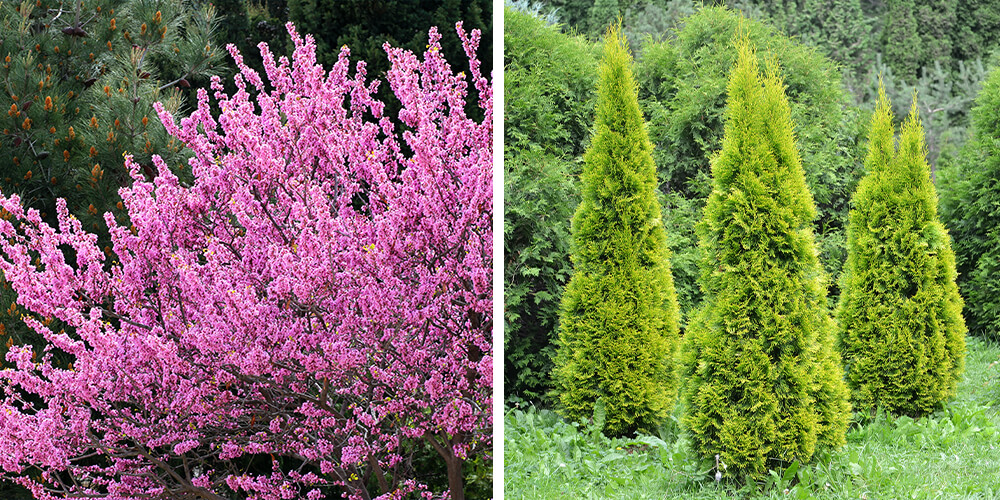
You’ll always look forward to spring in your yard with this show-stopping beauty around! It bursts into bright magenta blossoms and looks like it’s straight off the pages of a fairytale book. They don’t grow especially big—about 30 feet tall and wide at its largest—so if you’re looking for something a little smaller scale, the eastern redbud will suit the landscape nicely.
Ideally, you’ll want to plant your tree in a spot that gets direct sunlight in the morning, but a bit of shade in the afternoon, so a North or East-facing spot in the yard would work best. Plant it at least 8 feet away from any buildings to give it adequate room to spread, and try to put it in a spot that isn’t at the bottom of any slopes. This could cause too much moisture to collect near its roots, and this tree doesn’t like to sit in soggy soil. So long as the soil is quick-draining and isn’t piled up around the trunk of the tree, you aren’t likely to encounter any problems.
Emerald Cedar
We had to add a nice evergreen into the mix! Having vibrant foliage to admire year-round is always such a treat. This narrow variety is upright and handsome, reaching around 12 feet at maturity, so it’s super easy to integrate into the landscape and works particularly well as a hedge border. Its emerald green foliage is finely textured and lush all year long; it’s so classically refined!
This evergreen prefers full to partial sun. It likes well-drained soils, but isn’t very drought-tolerant and prefers moderate moisture, so if we go through a long stretch without rain, you’ll definitely want to water the roots with the hose to keep conditions comfortable. You aren’t likely to have too many pests issues with the emerald cedar, but in December, you may want to wrap it up with burlap to prevent the foliage from getting winter burn.
Heritage Birch
The bark of the birch tree is so uniquely beautiful and textured—we love the way it naturally peels off like paper, revealing fresh new bark underneath. The mature bark of the heritage birch almost has a pinkish tint to it, revealing creamy white new growth underneath. Growing up to around 70 feet tall and wide, it’s quite a sight to behold when grown with multiple trunks, instead of being trained into a single-trunked tree.
The heritage birch actually prefers its soil to be a bit more on the moist side and is more tolerant of clay soils compared to many other common landscape trees. It’s also quite heat tolerant, so as long as it gets some extra water, it shouldn’t be too fazed by a summer heatwave. If you’re going to prune your heritage birch, wait until fall to do so—in spring, the sap is a lot runnier and will make quite a mess!

Autumn Brilliance Serviceberry
This compact tree loves to show off its personality, covered with pretty white flowers every spring, and outdoing itself with orangey-red fall foliage. It produces berries from late spring and into summer, and it has smooth grayish-silver bark. It’s a nice small tree at just 25 feet maximum height. This is a great shade choice for small-scale landscapes. This serviceberry is suitable for planting under power lines.
Serviceberries grow best in full to part sun, and should not be allowed to dry out. This serviceberry is relatively low maintenance, and a beautiful addition to any yard.
Ready to plant some new trees at home? We’ve still got plenty in stock at Eising, and if you aren’t feeling super confident in your own tree-planting abilities, our experts are happy to provide landscaping services. Visit us in-store, or shop online to see our selection of trees that are ready for fall planting, and if you’d like to arrange for home delivery or curbside pickup, we can make that happen!
We’ve been seeing so many creative ideas for garden and landscape design lately, and we’re particularly interested in one element of backyard design that doesn’t get as much attention: garden paths and stepping stones. After all, it’s hard to truly appreciate your garden without a good path to help you navigate through it!
On top of giving you a better view of all the hard work you’ve put into your garden, you can also use pathway design as a tool for separating your yard into different areas, creating the illusion of more space and providing a framework for your design layout. A simple, straight path isn’t all that exciting, but a winding path that curves around trees and surrounding terrain adds a bit of whimsy, inviting you to explore the space.
We always love getting creative and thinking outside the box when it comes to landscaping projects. These stone pathway ideas are a perfect first step to transforming your space.

Recycled Mosaic Flower Stepping Stone
Lots of folks have been interested in recycled garden path ideas, because fancy stones aren’t always the most budget-friendly material. Plus, reusing our available resources and reducing landfill waste is always a big win! One of our favourite walkway ideas on a budget is the classic mosaic stepping stone, but with a fun twist that us garden geeks can really get behind: floral motifs!
Instead of placing your mosaic materials into a random pattern, arrange them in a swirling, geometric pattern that resembles a blooming flower! Use one round piece in the very centre, and then place the “petals” all around it. Suitable recyclable materials for your mosaic stones include:
- Broken china
- Bottles and glassware
- Crystals
- Colourful rocks
- Shells
A general-purpose sand-mix concrete will be the best material for walking path stones full of mosaic pieces, because it’s nice and smooth and won’t take away from the colorful accents, whereas a gravel mix would be too pebbly and uneven. Remember to use a generous layer of grout on top of your stones to fill in all the cracks and cover up any sharp edges.
Stone Pathways With Phlox And Other Groundcovers
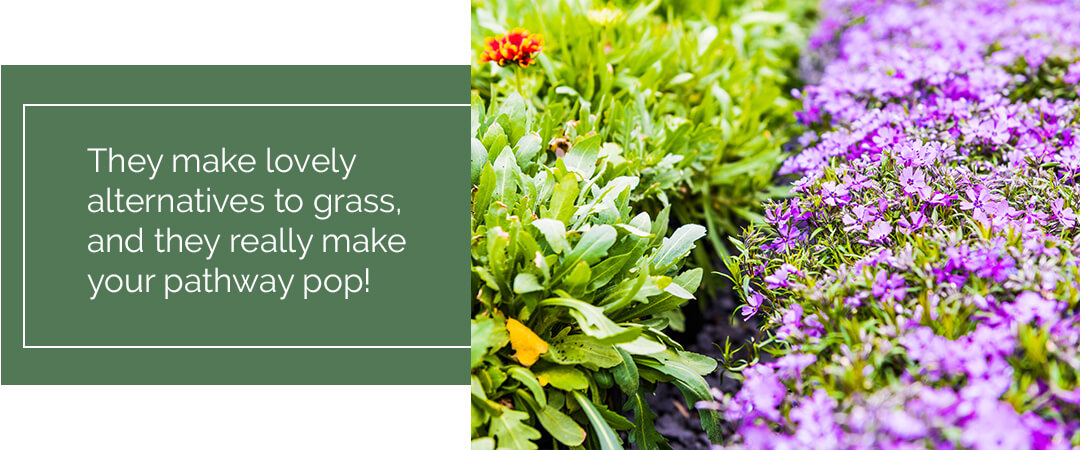
Instead of plopping some paver stones on the lawn and calling it a day, why not jazz things up a bit with some colourful flowering groundcover plants? There are many low-growing plants that form dense mats of foliage and can handle a little bit of trampling without sustaining any damage, so they make lovely alternatives to grass, and they really make your pathway pop!
Creeping phlox is one of our favourite flowering groundcovers, because its candy-coloured shades of purple, pink and blue look like something out of a fantasy novel. Imagine, instead of the same old green lawn grass, your garden path was surrounded by a cotton candy meadow! Here are a few other eye-catching groundcovers we highly recommend:
- Creeping thyme
- Deadnettle
- Sedum
- Candytuft
- Bugleweed
- Clover
To see more flowering plants and groundcovers for the yard, check out our brand new webstore that’s loaded with images of our available plants!
Container Garden Pathway Design
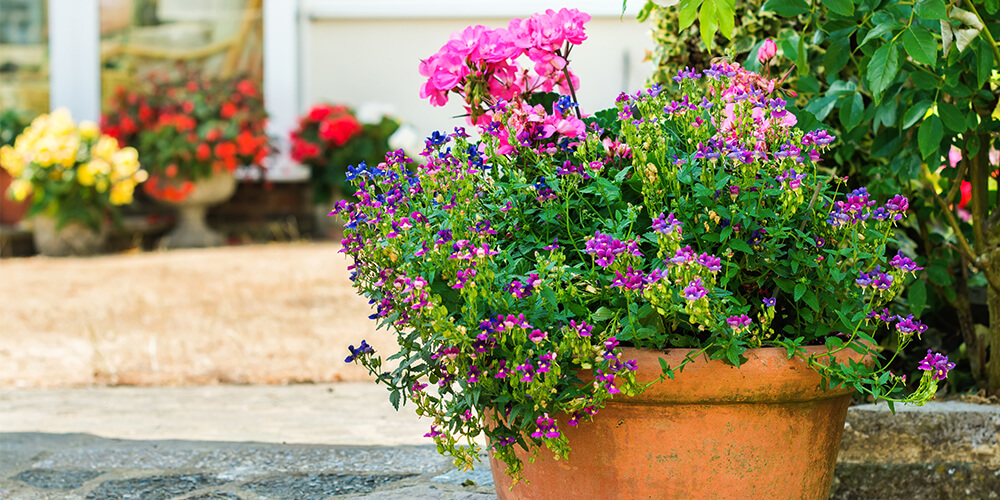
A clever way to add a border along your pathway without digging anything up is by lining the walkway with container gardens! This is an opportunity to really get creative, as you’ve got limitless options for your layout. You can go streamlined and buy a bunch of terracotta pots all in the same size, or you can mix and match different sizes and colours with a few funky accent containers thrown in for extra impact.
You can also play around with the different heights of the plants you put in your containers. Taller flowering plants like salvia and cardinal flowers, potted conifers, or even creeping plants on small trellises can act as a great divider between the yard and the walkway. Smaller flowering plants have more of an understated look, but are great if you don’t want to block the view of your surrounding garden plants.
Got any wild landscaping ideas of your own that you’d like to try to take on? We’d love to help! Our team of expert landscape consultants are happy to answer any questions you may have about DIY backyard makeovers. Visit us in-store or shop online to see our selection of plants and patio decor that are ready to make a new home in your backyard.