
Making a Lot ... A Lot More
By Ely Schweyer
This spring, Mary – you may know her as the Perennials Gal at Eising Greenhouses and Garden Centre – invited me over for a garden tour. I knew to expect a good collection of perennials, but this garden also shines with personality and character. Having brought my big camera, I wanted to help Mary show off all her efforts, as this property has undergone some serious changes. If you wish to make your garden unique to you, whilst eco and budget friendly, may this garden tour inspire you!
A Clean Slate
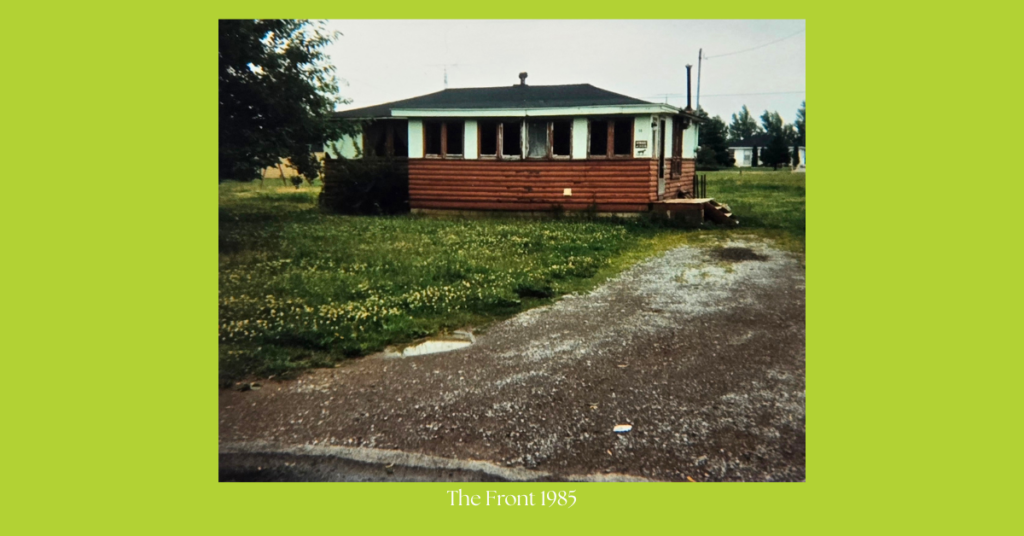
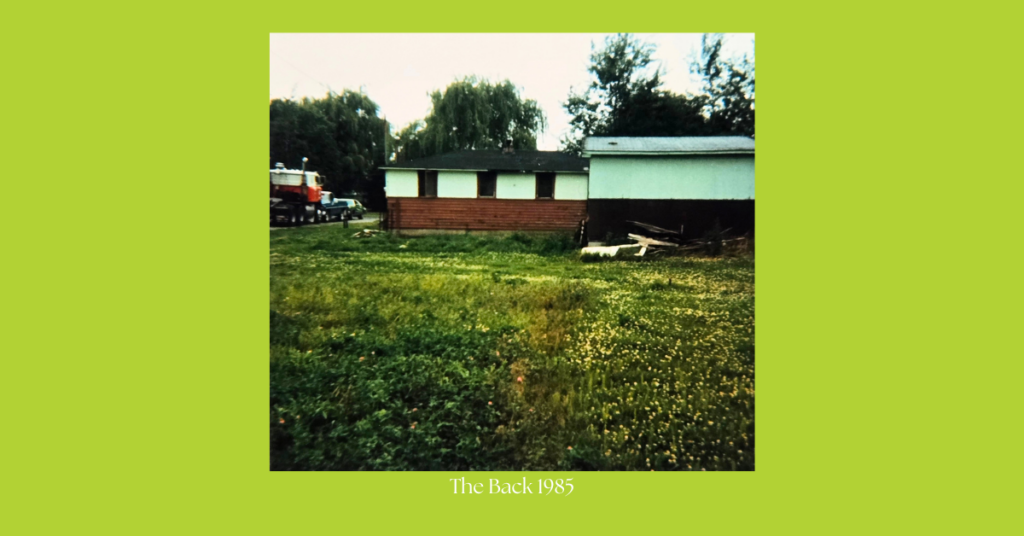
Mary and her husband, Chris, brought their 60’ x 120’ property in July of 1985, which was then “no trees, no lawn, just weeds.”
The lack of trees and the overabundance of Norfolk County clay resulted in drainage issues, which led to the first planted tree drowning, and quickly made mowing a strenuous chore.
The Fix
With her husband driving truck for a construction business, Mary and Chris had access to hauling 17 dump truck loads of sand home to raise the property. Mary says the blue-grey clumps of clay still make their way to the surface – but the drainage issues have subsided!
🖱️ Visit this blog to learn more about soil amendments!
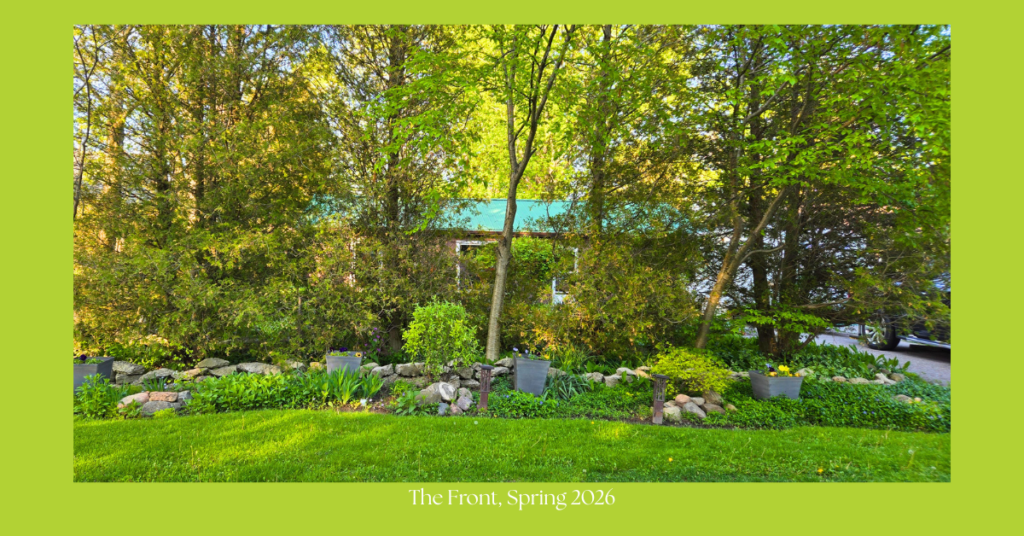
Mary then focused on establishing some native trees on a small budget, and that’s when the community began to grow in her garden. “We have had the best neighbors ever, for 46 years, watched their kids grow, and leave, and come back, and leave - pets come and go - quite the legacy!” With the leaves she collected from her neighbours, Maple Trees volunteered sporadically over the property. Then, after buying a native Carolinian forest seed package at a Toronto garden show, Mary carefully seeded Yellow Birch, White Birch, Wild Crab Apple, and three Sycamores, which now stand tall and proud in her garden. One of my favourites in the little forest was a variegated lilac!
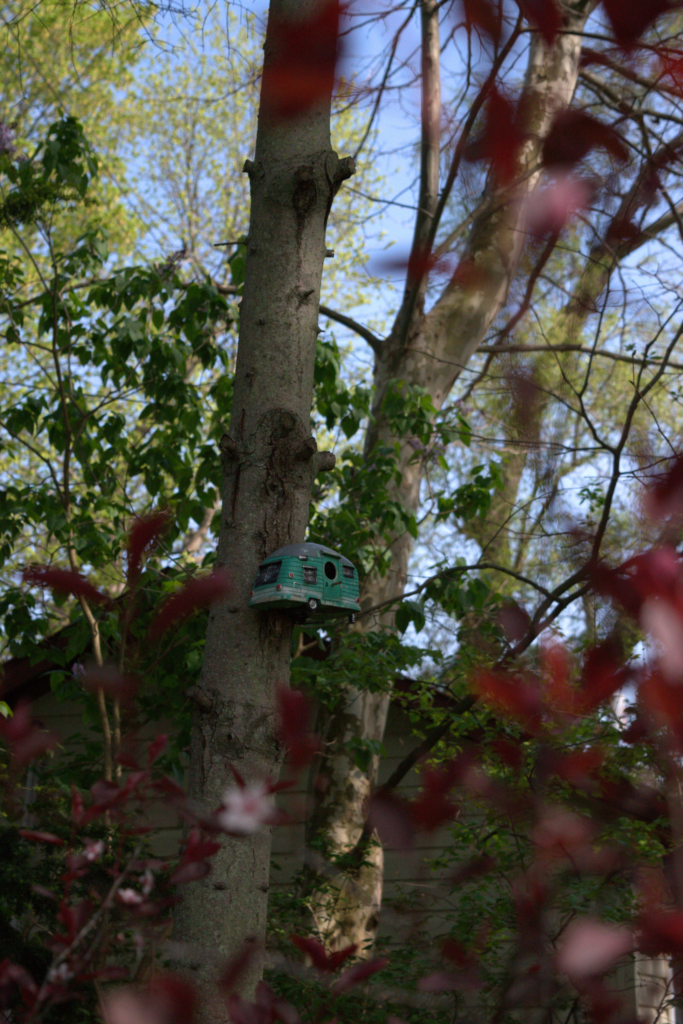
These trees not only provide protection for the house and the many birds but also offer enough shade to maintain a moss-like lawn that requires minimal mowing. The shady canopy offers a coziness adding to the overall quaintness of the garden.
The Perennials Gal’s Perennials
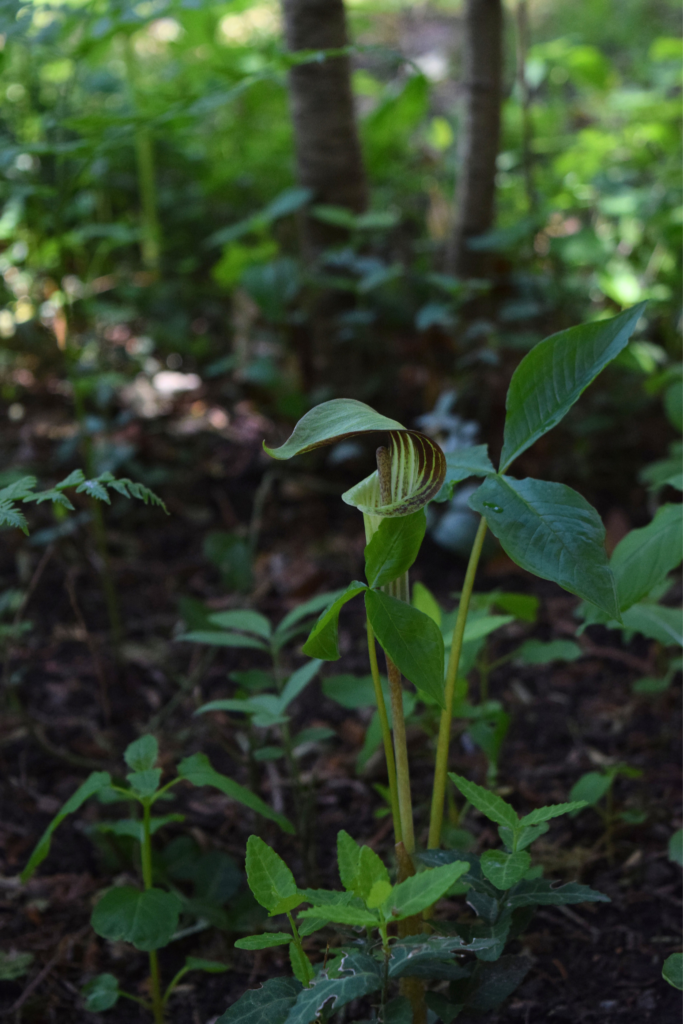
In 1985, the property was surrounded by woodlots; however, all is subject to change. “When we learned of a housing development planned for the forest across the highway from us, I lead crusades to save the native plants that were so abundant there.” The forest may now be gone, but the Trilliums, Mayapples, Violets, Solomon’s Seal, and Ferns are still growing happily and abundantly in Mary’s – and her neighbours’ – gardens. “Over the years I have shared many trunk loads of perennials, many of which were given to me!” Other notable perennials in Mary’s garden are an abundance of Crocus and Forget-Me-Nots, a Jack-in-the-Pulpit, and a Prickly Pear Cactus.

Hardscaping
One of my favourite things in any garden is creative ways to recycle and repurpose, and Mary’s garden does not disappoint!
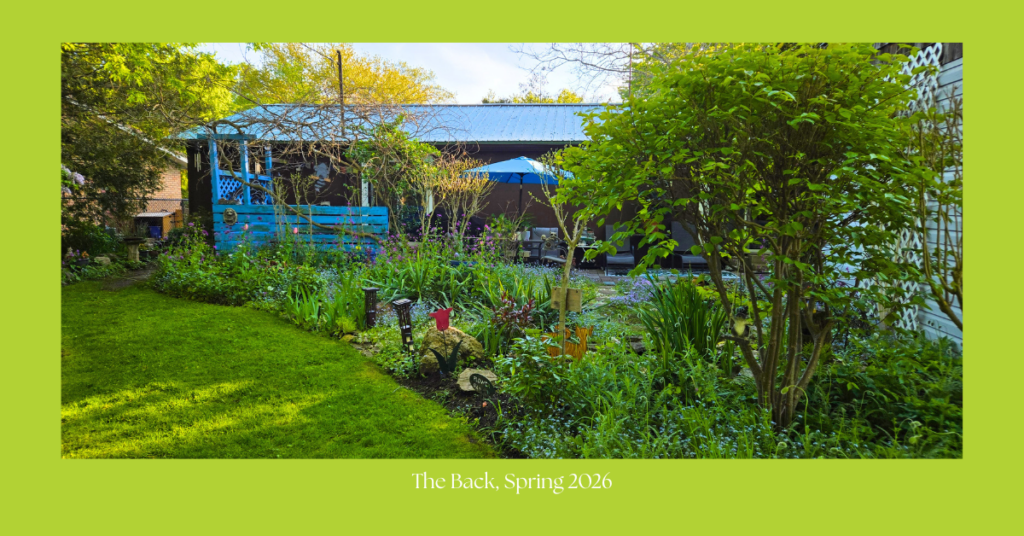
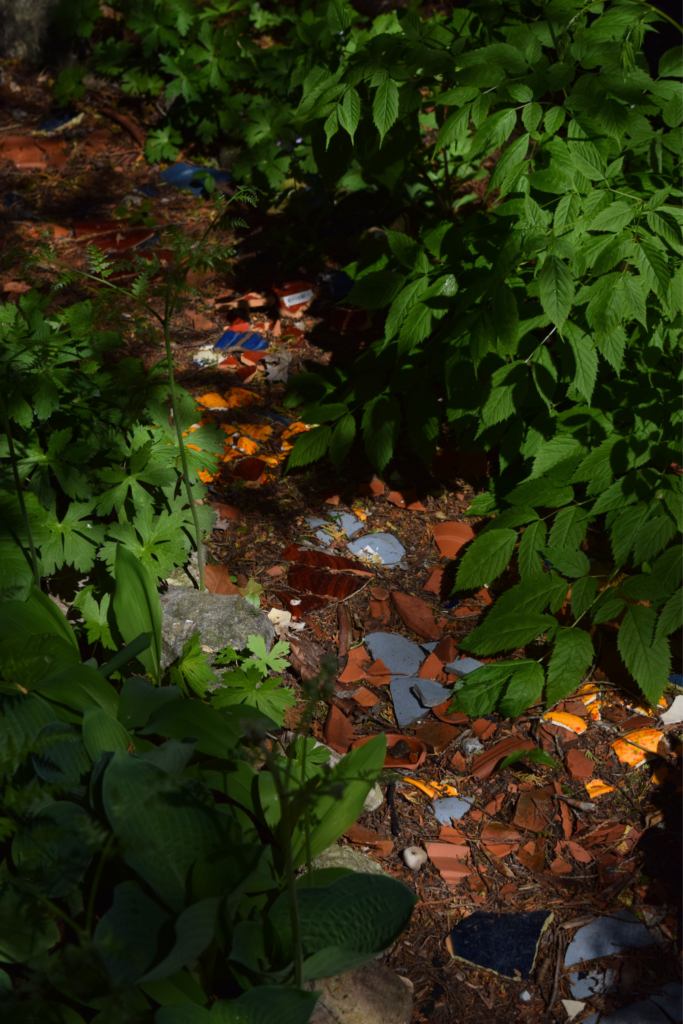
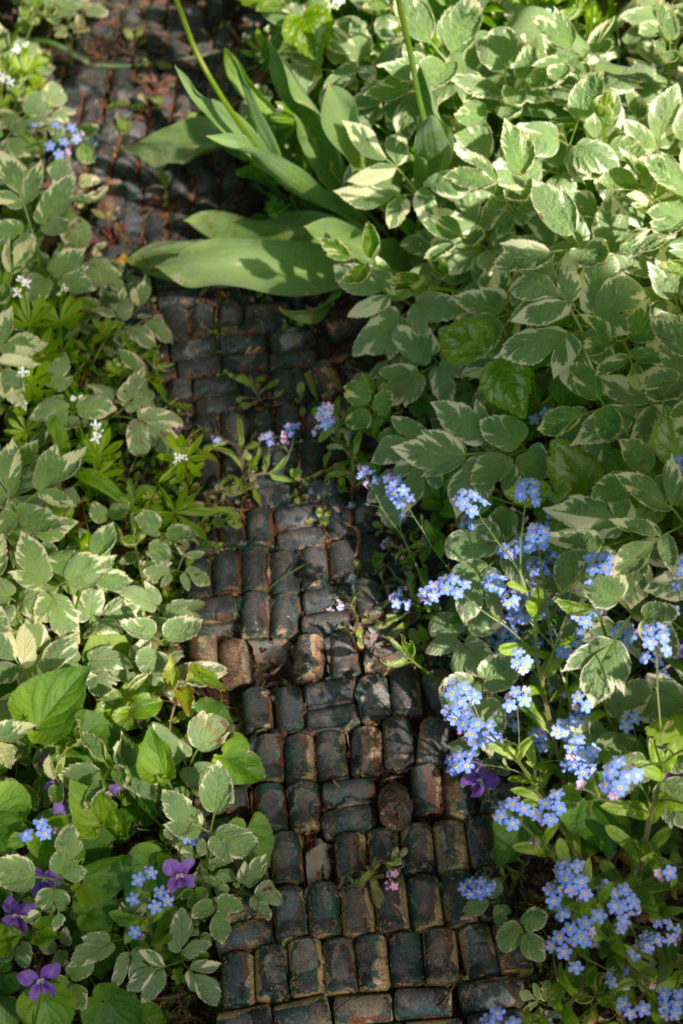
Immediately, one will notice the unique pathways that intertwine throughout the spaces. Mary collects broken terracotta and ceramic pottery pieces to create footpaths akin to mosaics. The addition of colour is not only visual but provides an audio sensory experience as one moves throughout the garden, “we can always tell when a little animal is coming to visit us sitting out here,” as the pieces gently clink underfoot.
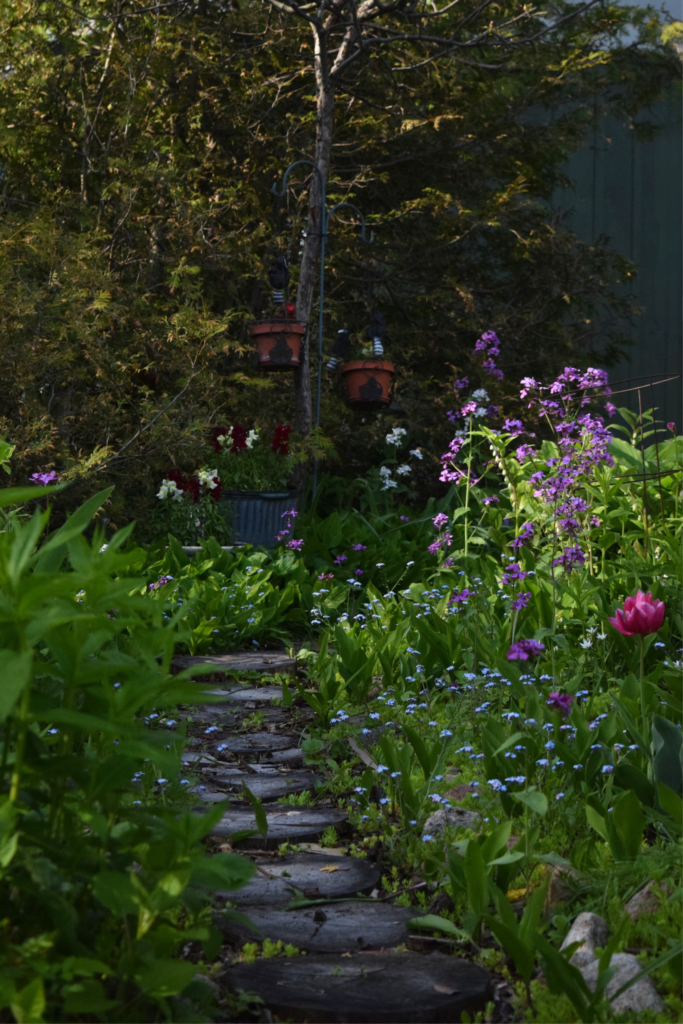
I also must make note of the wine cork pathway to the fairy garden!
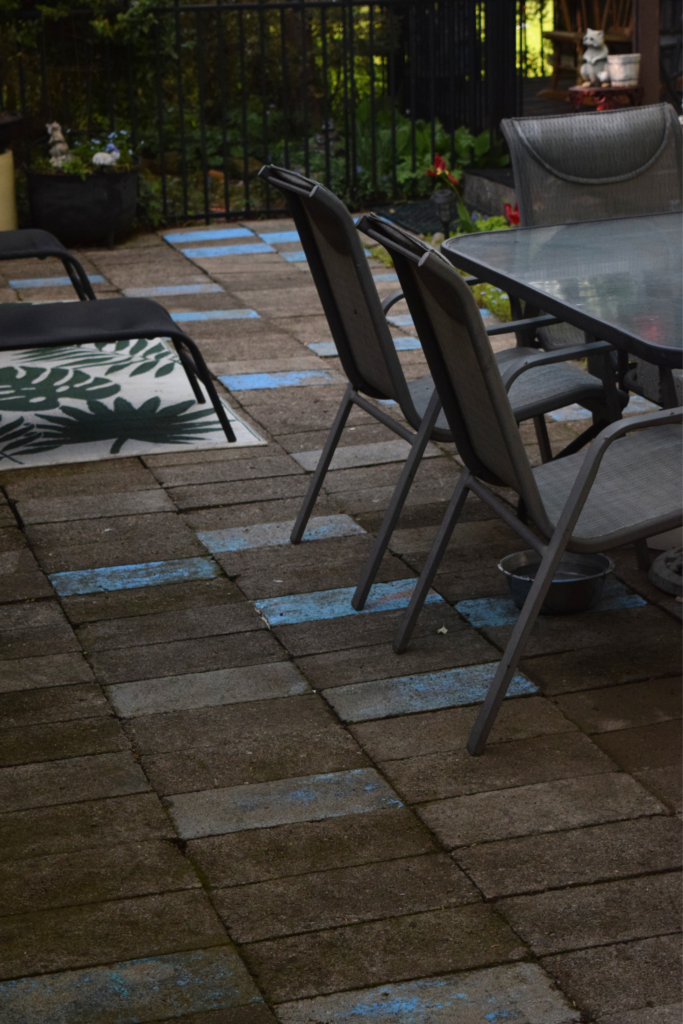
The back patio too is tasteful and playful visually, with blue blocks laid interspersed. You’ll be pleased to know that the Dover Arena lives on in Mary’s garden – the repurposed blocks lie on their sides – and the blue? Those came from the men’s washroom!
The Ponds
Two little ponds provide popular watering holes for birds, raccoons, skunks, opossums, and the neighbours' cats, all of which are welcome.
The pond nearest the patio is a fish tote off the Dover Fish Tugs. Mary dug into the clay to set the 4’ x 4’ x 3’ deep tote, knowing she had one chance or she’d never be able to pull the heavy tote out. “We figure that whoever inherits this property will have to dynamite the pond out, it is set in Norfolk County Clay!” The tote pond is home to a family of goldfish, who don’t mind wintering in it with its little waterfall that keeps the water moving. The goldfish weave through Irises, Waterlilies, and Dwarf Hyacinth.
Another small pond sits in the very back of the yard between the trees, visited by many birds and critters.
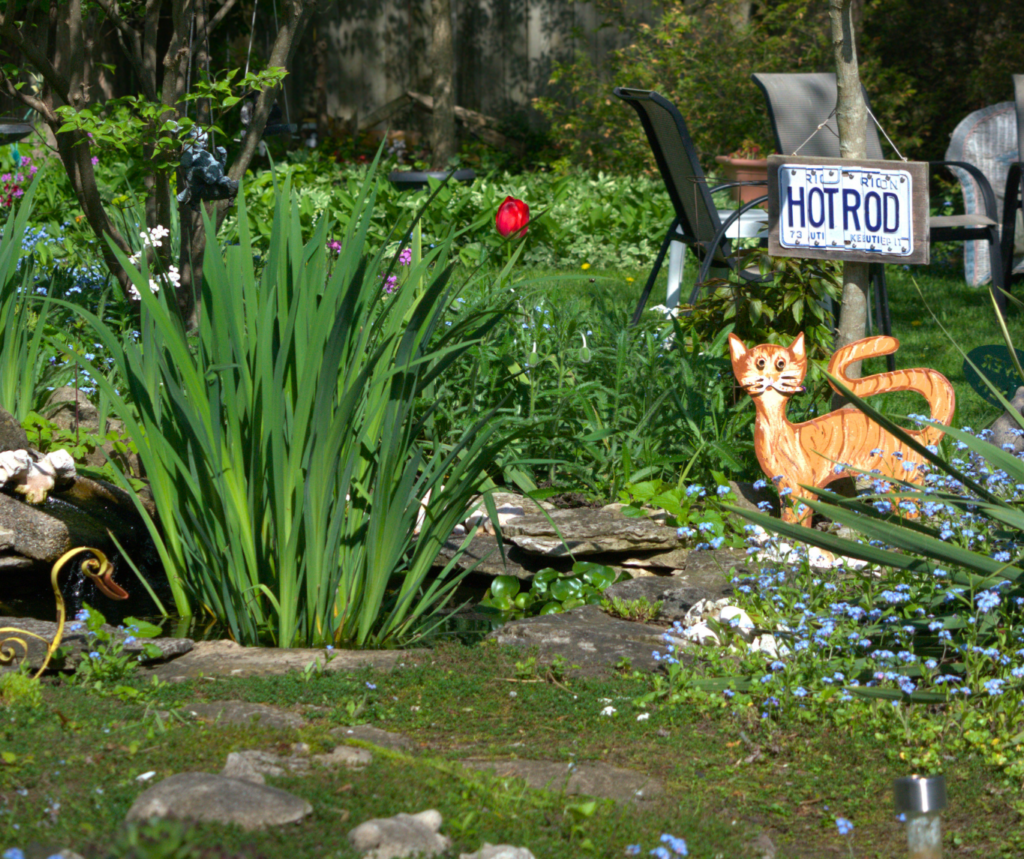
Mary's love for felines knows no bounds. During her time at Purrfect Companions, she treated 'Hot Rod,' a special-needs orange tabby, as her very own. Hot Rod had likely been injured in a vehicle accident, and would spend his remaining days in the shelter - brightened by Mary's big heart. Hot Rod is now buried and truly at home by Mary's pond. At Eising Garden Centre, Mary spoils Peat, the resident rodent controller. Peat makes sure to keep Mary company when she makes her many, many Christmas Urns.

The Fairy Garden
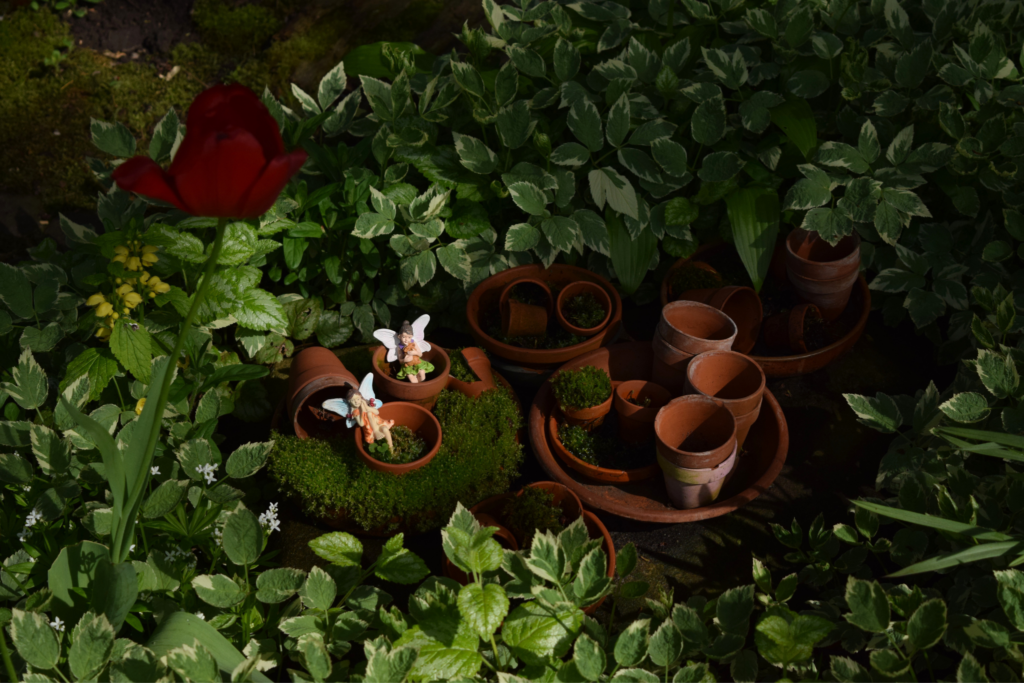
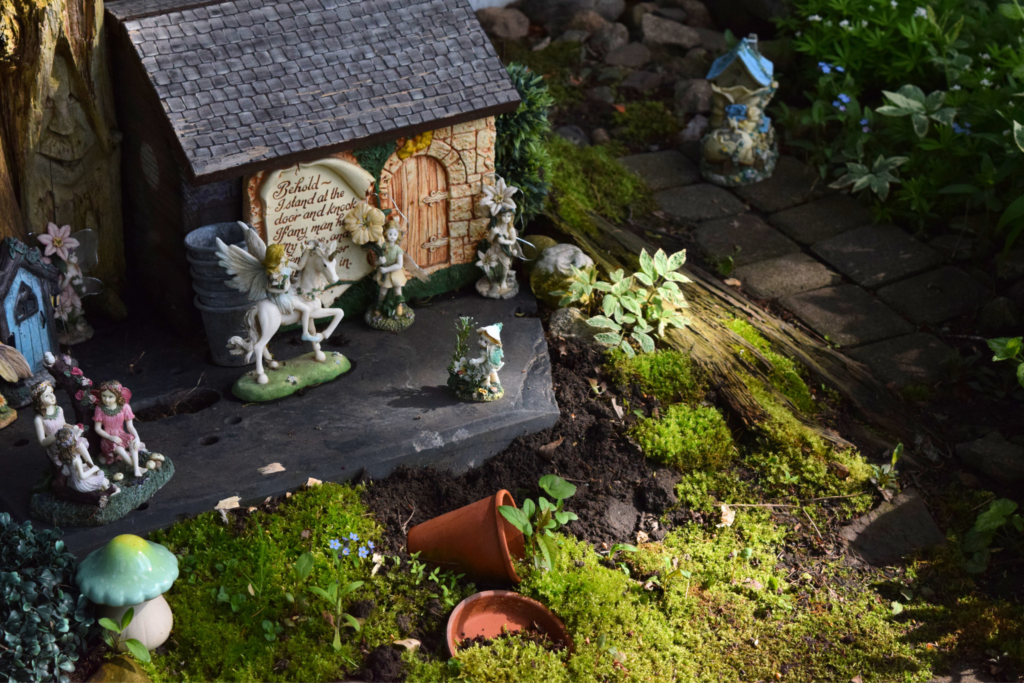
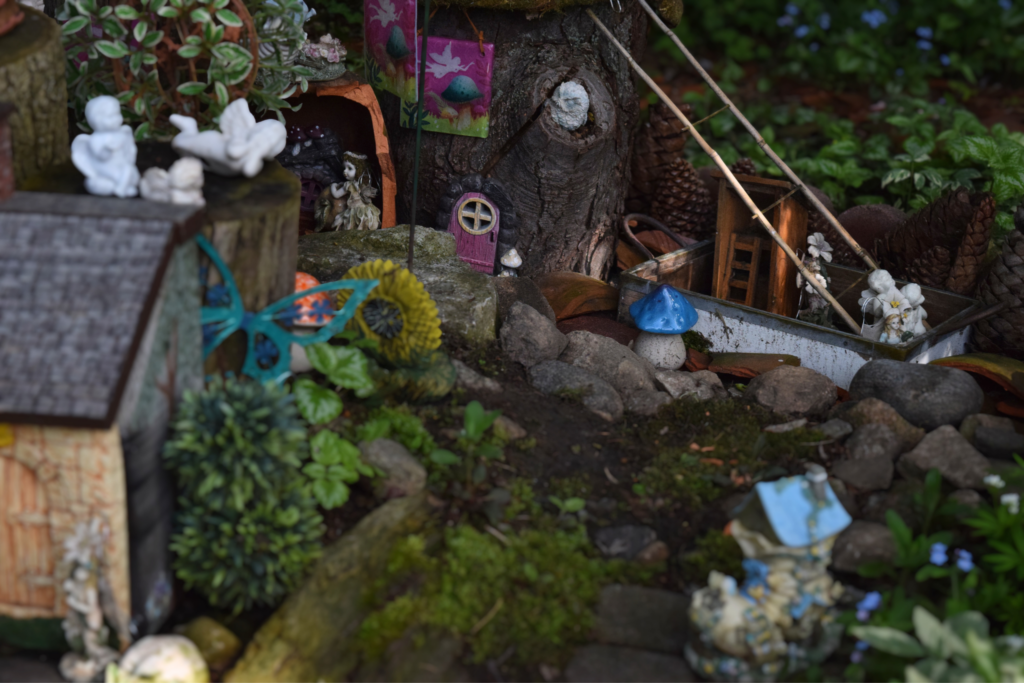
As a fun ongoing project, Mary recently began a fairy garden – and is it ever quaint! Central to a tree and skirted by a pathway, many of the pieces are thrifted or gifted!
Pots as More Than Just Containers
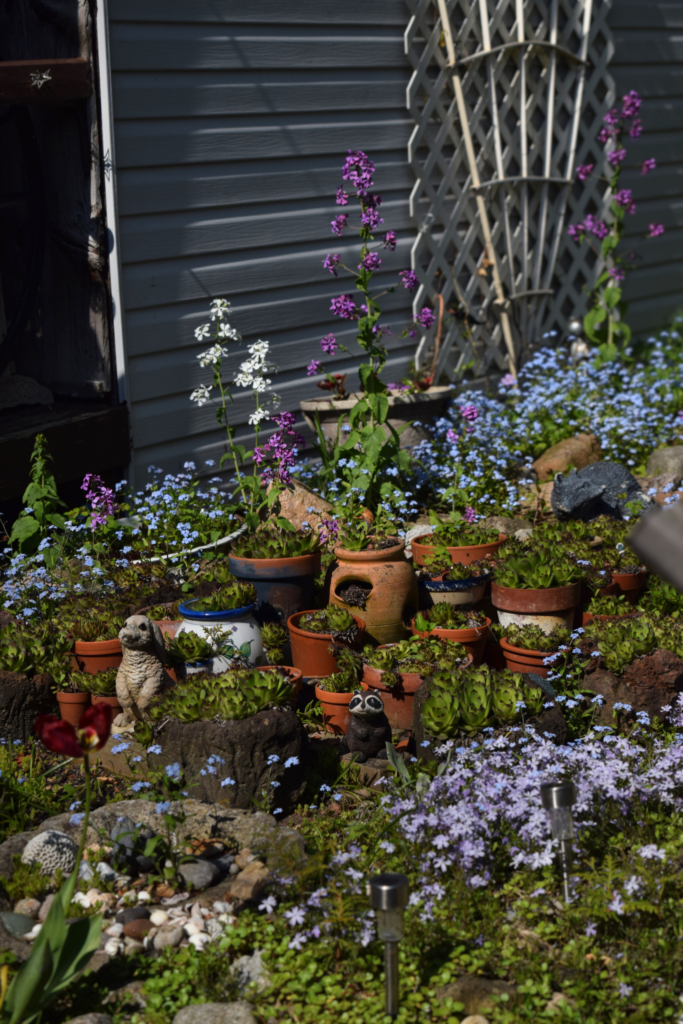
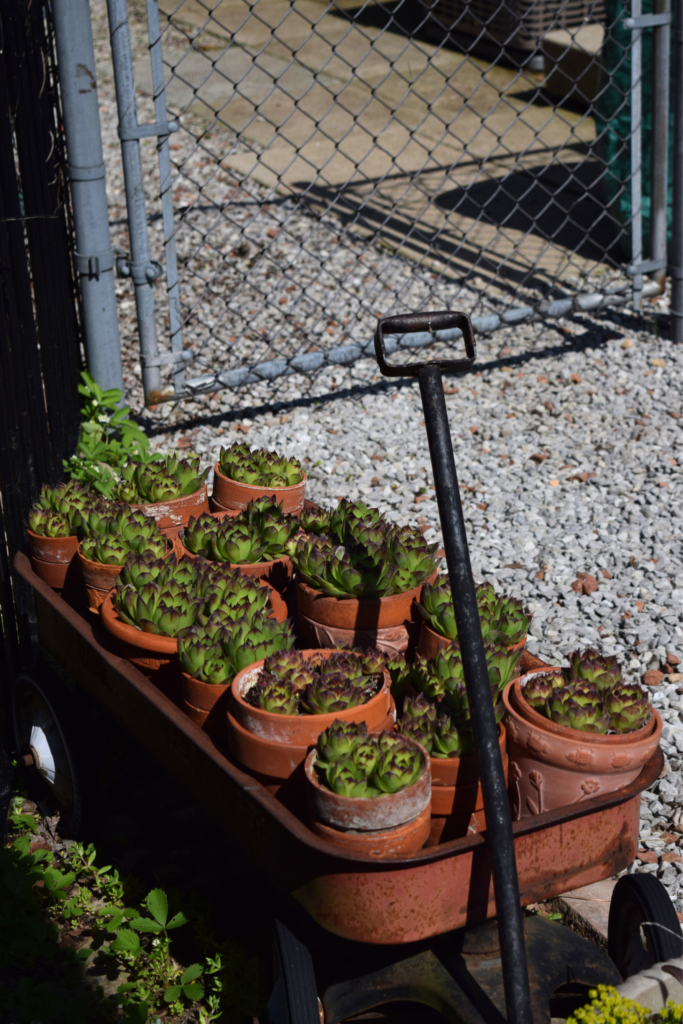
Mary uses pots to extend where she can grow her favourites; this is an excellent way to create varying heights, breaking up horizon lines and adding interest. The terracotta orange also contrasts beautifully with Mary’s frequent use of blue.
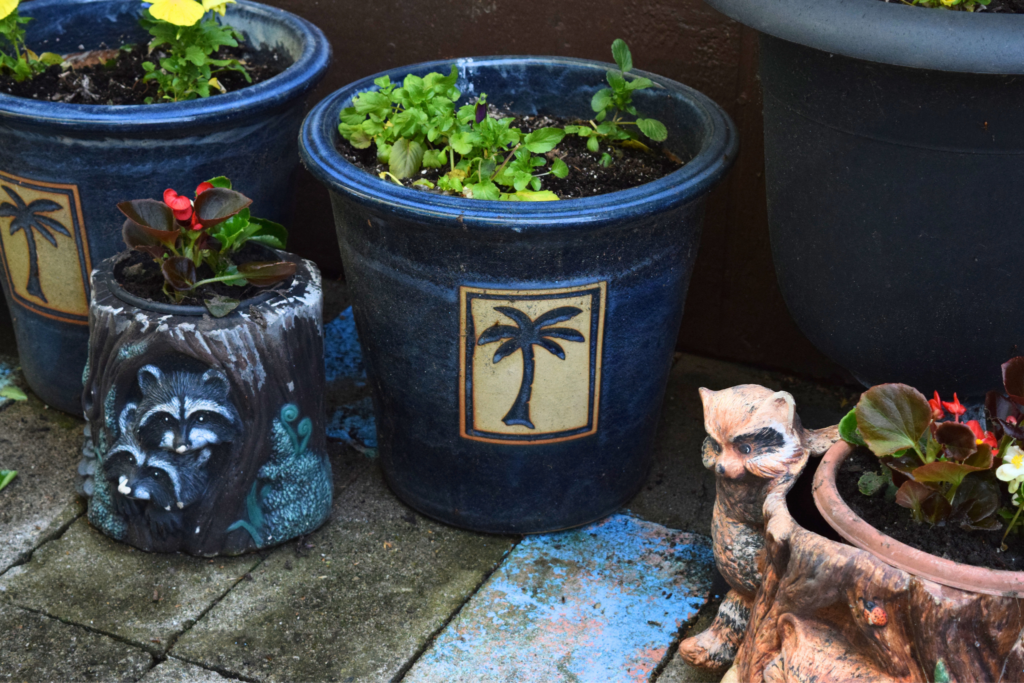
Things that Make it Just Mary and Chris
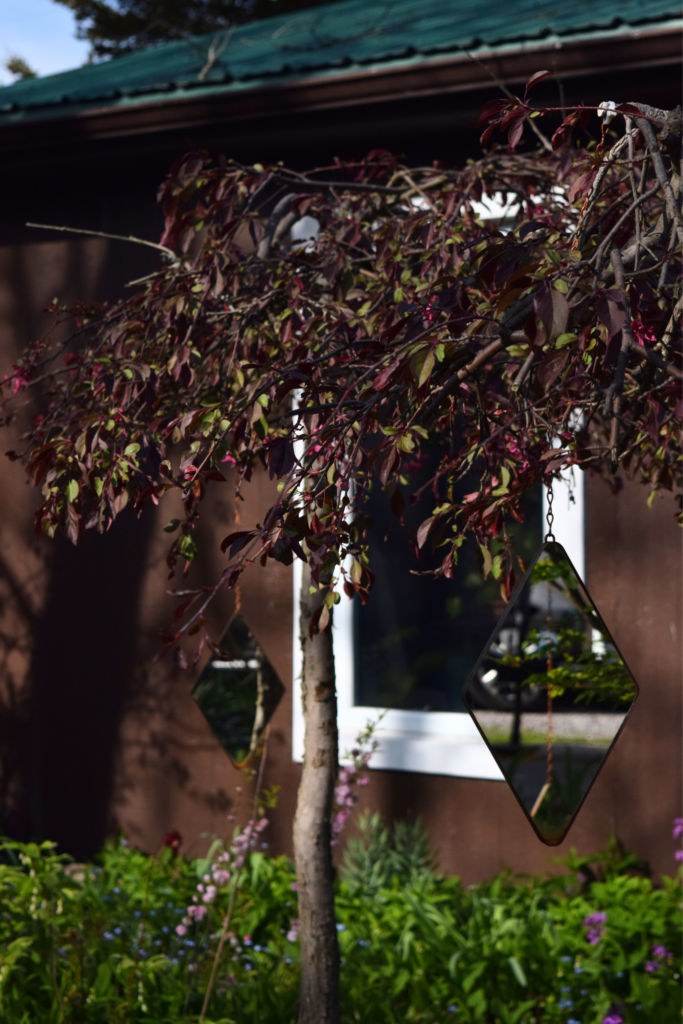
Vintage and found objects help to ground any space. Mary and Chris have collected rocks, driftwood, shells, “anything that makes a statement, big or small,” bringing unique natural elements into their garden that sync with their interests.
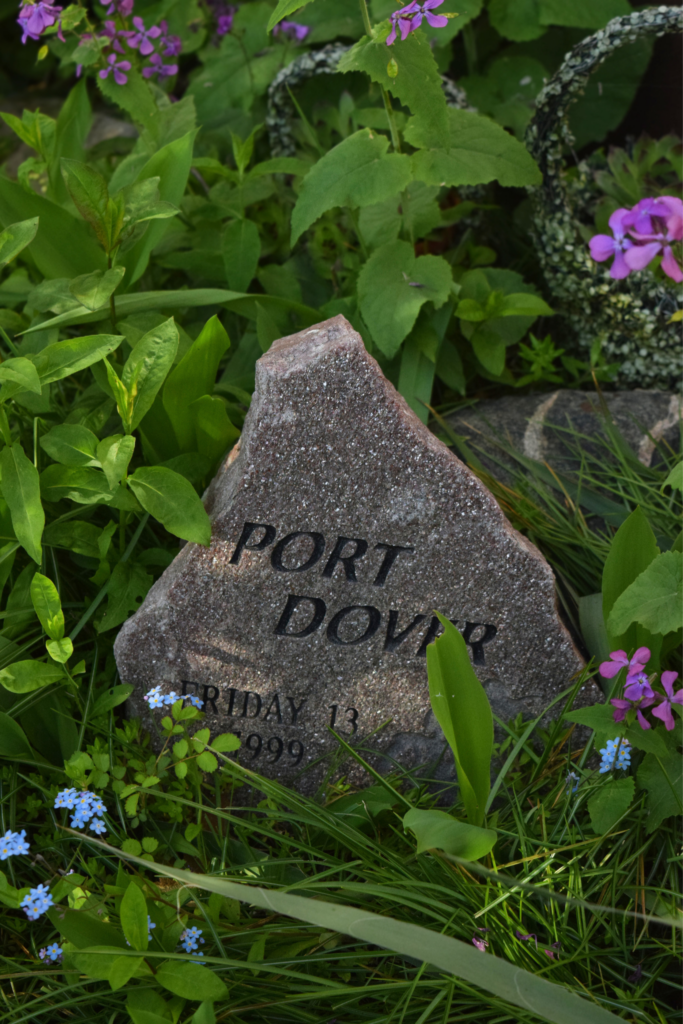
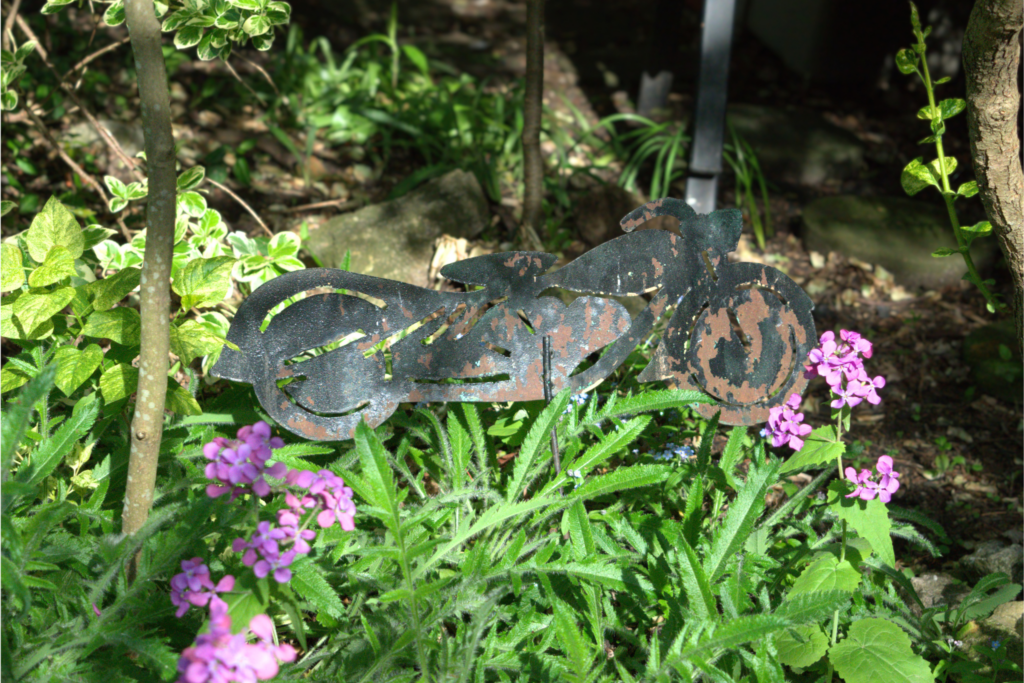
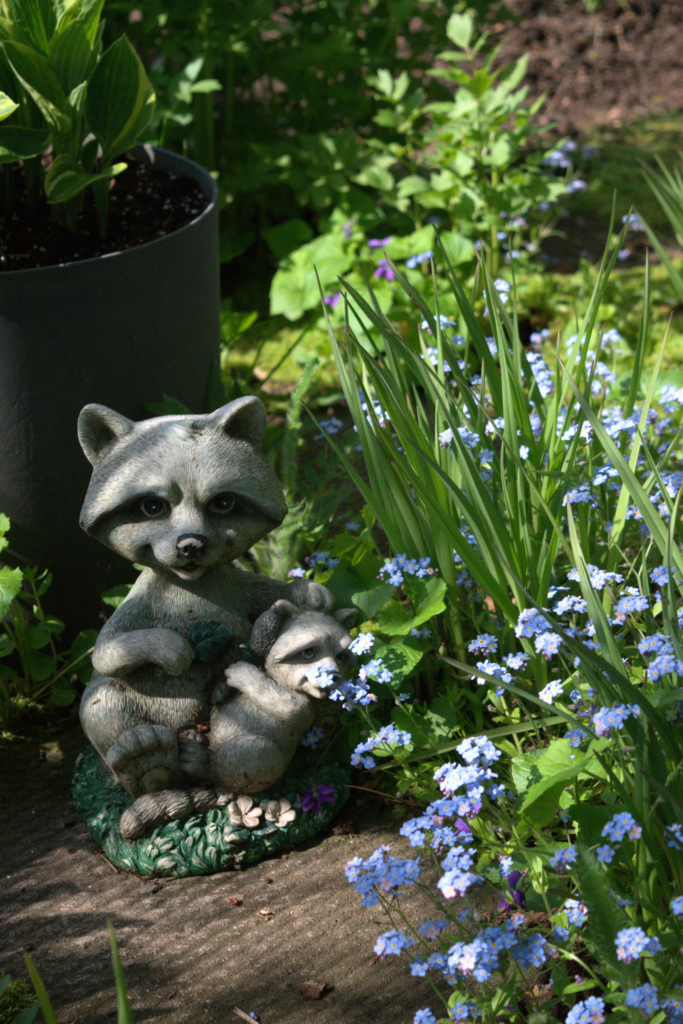
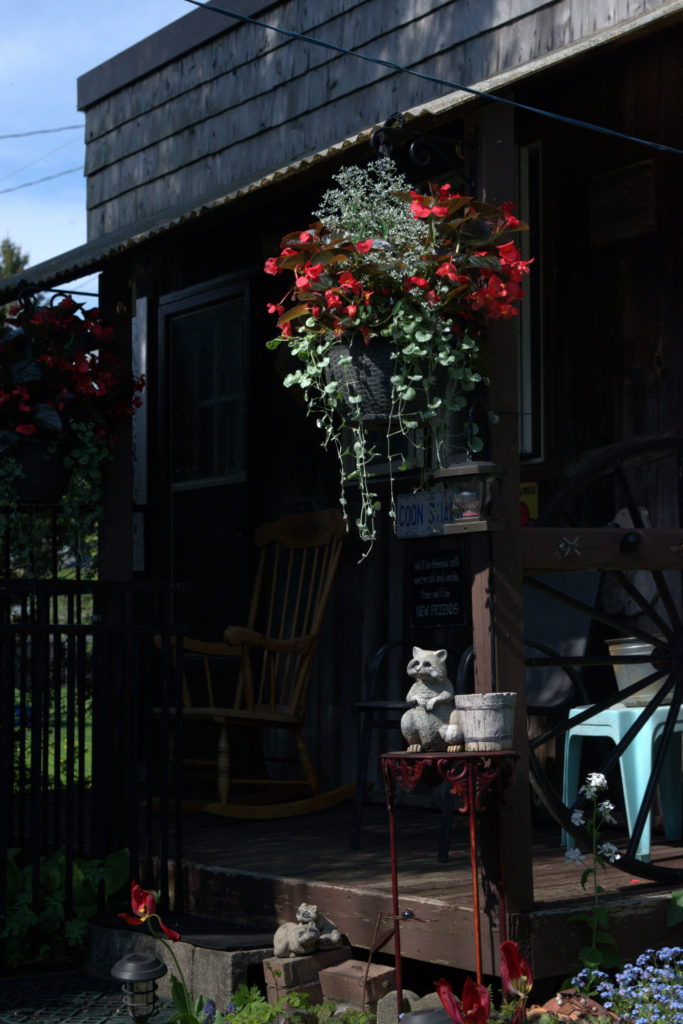
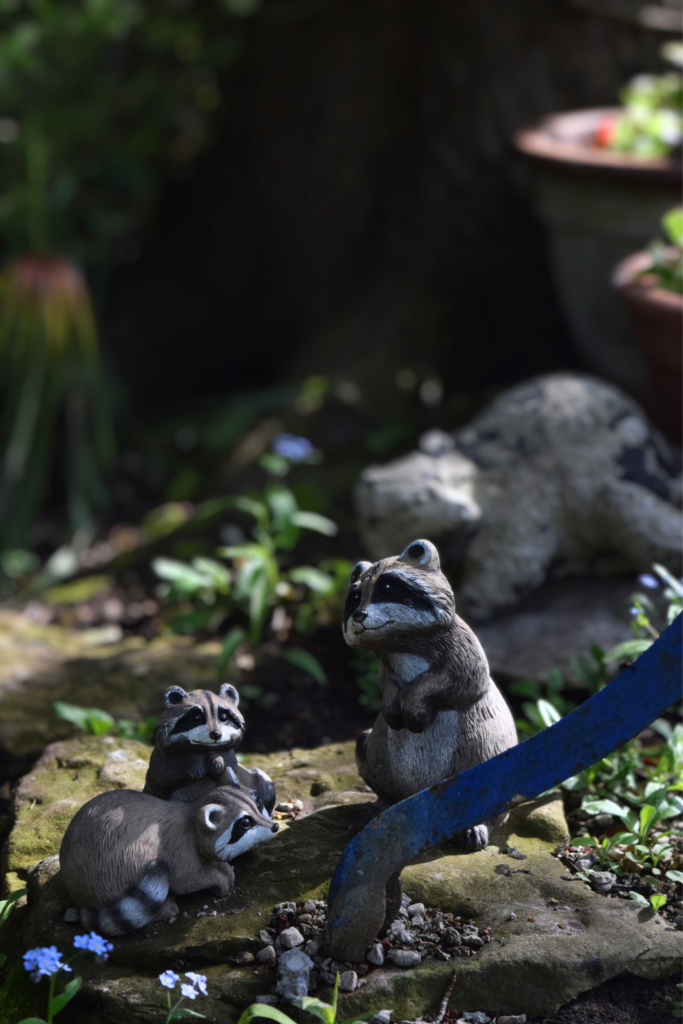
Mary and Chris, founders of Port Dover’s famed Friday the 13th, undoubtedly have a longtime love of motorcycles. In March of 1978, they travelled south to Daytona, Florida, for Bike Week, the largest motorcycle event in the world. There, Mary would earn a ‘raccoon’ nickname from wearing wide-brimmed shades all day in the sun. “Of all the stuffed toys Chris could possibly have owned at that time, he had a little raccoon at his bed side table, I still have it, it would be Number 1 of 3920! Yes, the collection is cataloged, every piece is given a number and recorded. I still collect to this day, but am very selective as to what I buy, as I have so many.” Mary’s raccoon collection is playfully hidden throughout her garden, with little mischievous eyes watching you as you move about. The ornaments help to draw the eye up into the trees and into the shrubs. Mary makes an effort to carefully pack them all up in the fall and bring them out again each spring.

Speaking of spring, this blog will be updated with summer and fall pictures as the garden moves through time!
Mary’s garden is a little ode to a life well cherished; no one thing in it is without purpose or a memory. It is also a great example of reusing and repurposing – gardening does not have to cost an arm and a leg to be great. When you enter the space, you know whose energy is channeled into it, and that is, in my opinion, exactly how to garden!
A Full List of Plants that Grow in Mary’s Garden
Plants that Enjoy Zone 5a and 6b - Provided by Mary
TREES and SHRUBS
- Norway Maple
- Sugar Maple
- Sycamore
- White Birch
- Yellow Birch
- Cedars
- Forsythia
- Burning Bush
- Butterfly Bush
- Kousa Dogwood
- Weeping Cherry
- Sand Cherry
- Pine
- American Oak
- Ginkgo
- Red Bud
- Annabelle Hydrangia
- Variegated Lilac
- Wisteria
- Rose of Sharon
- Variegated Euonymus
- Juniper
- Holly Bush
- Wild Crabapple
SPRING BULB PERENNIALS
- Tulips, Daffodil, Hyacinth, Narcissus, Windflower, Snowdrops, Cilia, Crocus, Frittalaria, Grape Hyacinth
FREE SEEDERS
- Forget Me Nots
- Lunaria (Money Tree)
- Columbine
- Sun drops
GARDEN PERENNIALS
- Hostas (approx 10 species)
- Irises (approx 4 species)
- Tall Phlox: pink, purple, white, coral
- Creeping Phlox
- Candytuft
- Periwinkle
- Lily of the Valley
- Oriental Poppies
- Cranesbill Geranium
- Jacobs Ladder
- Lamnium
- Goutweed
- Lungwort
- Sweet Woodruff
- Clematis
- Ivy ground cover
- Sedum, creeping 2 Species
- Sedum tall
- Ajuga
- Blue Grass
- Hens and Chickens - 100’s!
- Variegated Solomon’s Seal
- Allium
- Beard Tongue
- Brunaria
- Goats Beard
- Bergenia
- Creeping Thyme
NATIVE PERENNIALS
- Red and white Trillium
- Jack in the Pulpit
- Wild Geranium
- Mayapple
- Wild Violet
- Ferns (approx 6 kinds)
- Solomon’s Seal
- Euphorbia
- Prickly Pear Cactus
POND PLANTS
- Yellow Iris
- Dwarf Hyacinth
- Water Lily
Be sure to visit Mary in the perennials section at Eising Greenhouse & Garden Centre this summer for many of the mentioned plants – and be sure to make your garden yours! 🪴
Expert Picks You Can Plant Right Now
By Ava Green
Looking for a flowering shrub that delivers season after season? We asked our experts at Eising Garden Centre to share their top picks, the ones that customers and staff love most, and they delivered. Whether you’re looking for spring blooms, fall colour, wildlife and pollinator value, or a shrub to suit your space, there’s something on this list for every garden.
Fuji Cherry ‘Little Twist’, Prunus incisa ‘CarltonLT’
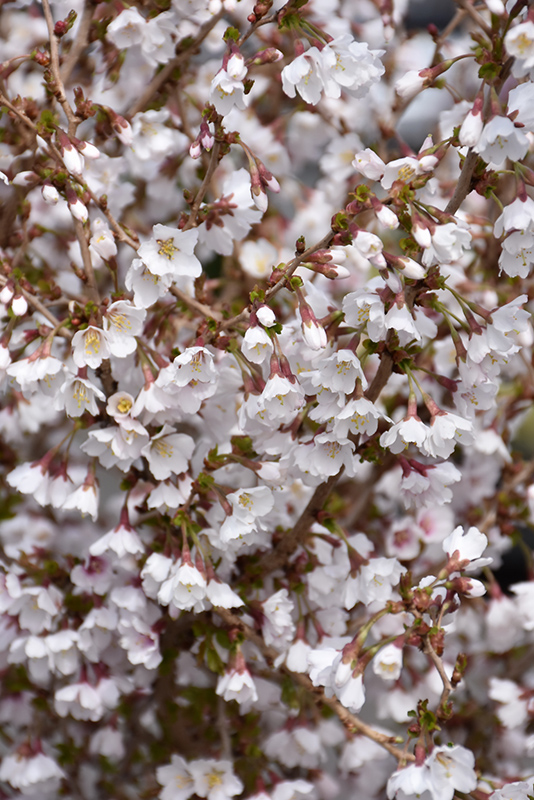
As an accent in a small garden, or planted in a grouping in a larger garden, this multi-stemmed shrub is a gem!
In early spring, crimson buds emerge before the leaves appear. Little Twist then produces clusters of lightly scented white, bell-shaped flowers with soft pink centres that grow along its stems, a stunning early-season display. It is a deciduous shrub, and leaves begin as green before shifting to coppery-bronze, then deepen to a rich burgundy in fall. Smooth, dark red bark adds interest in the winter once the leaves are gone.
This slow-growing, multi-stemmed shrub makes a striking feature in your garden.
Best for: Small gardens, accent planting, four-season interest. | Sun: Full sun | Mature size: 6 ft. tall × 6 ft. wide
Downy Serviceberry, Amelanchier canadensis
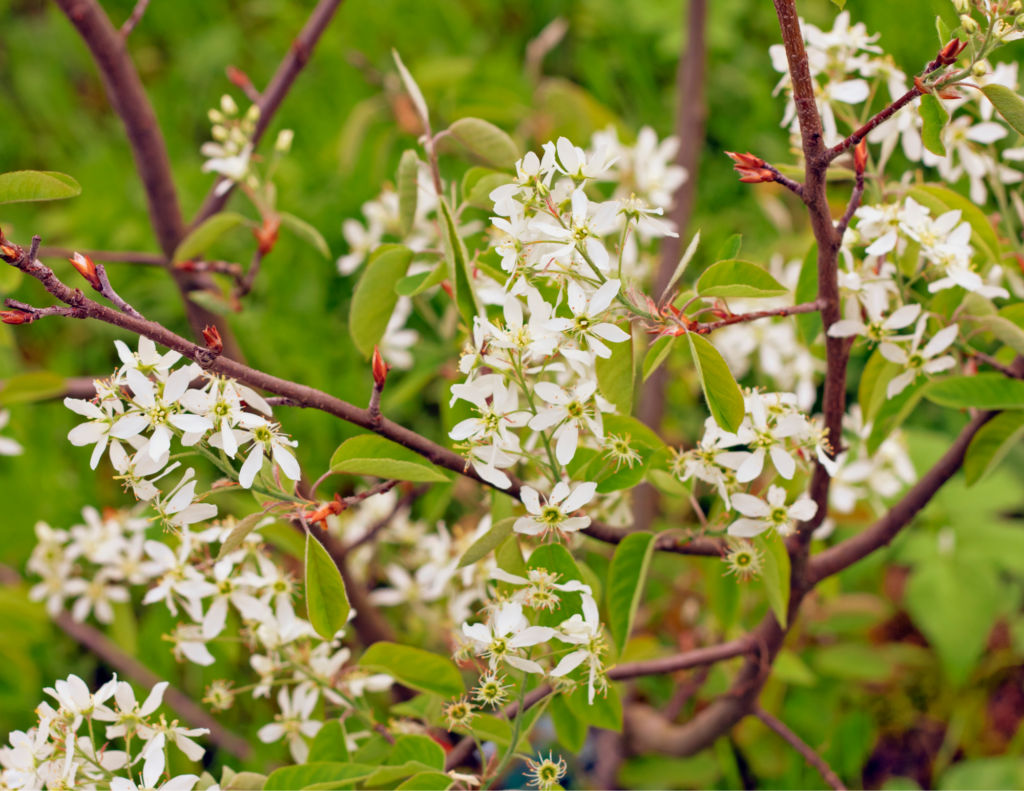
One of the most rewarding native shrubs you can plant, Downy Serviceberry earns its place in the garden from spring right through to fall. Showy clusters of fragrant white flowers in early spring, followed by small, sweet, edible purple-blue berries in early summer that are wonderful for making jam and an absolute favourite for birds. Come fall, the foliage puts on a spectacular show in shades of yellow, red, and orange.
As a bonus, choosing a native plant like Serviceberry supports local pollinators and wildlife, making it as ecologically valuable as it is beautiful. It works well as a specimen plant on it’s own, in a grouping or hedge, or naturalized in a larger landscape.
Best for: Wildlife gardens, naturalized areas, multi-season interest | Sun: Full sun to part shade | Mature size: 20 ft. tall × 10 ft. wide
Amur Privet, Ligustrum Amurense
Amur Privet
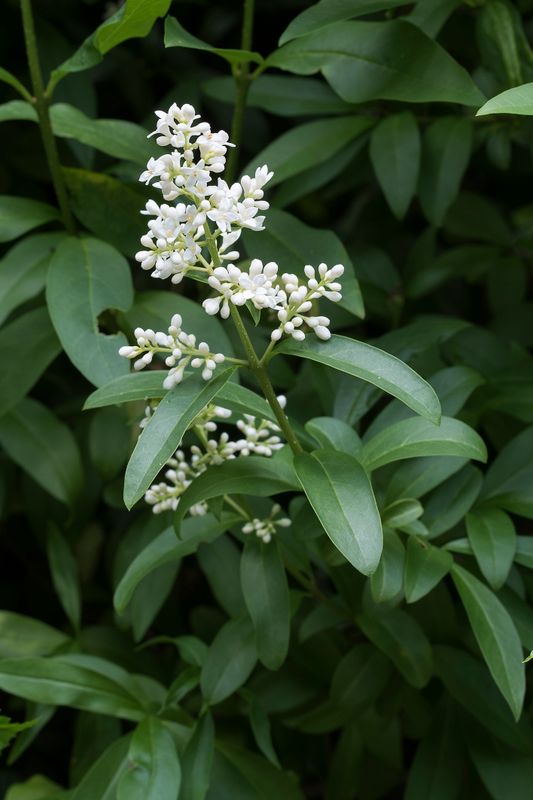
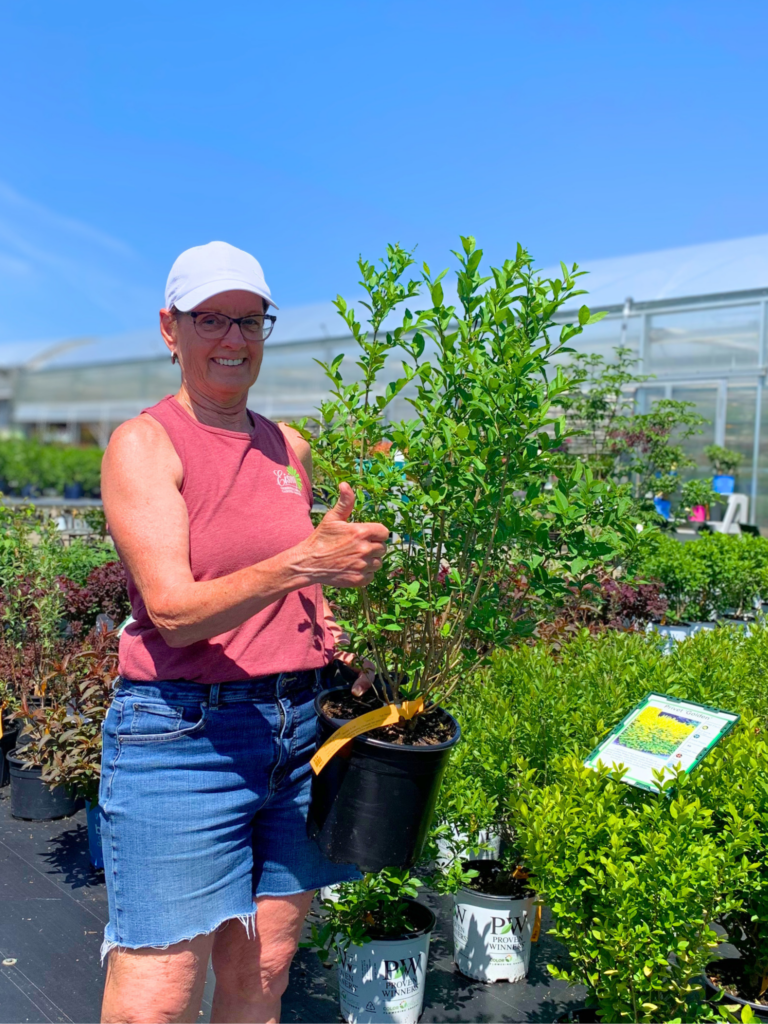
When fast growth and privacy matter, Amur Privet is one of the best choices available. This dense, dark green shrub produces white flower panicles in late spring and small black berries in fall. It responds exceptionally well to pruning after it blooms, making it an ideal candidate for a formal or informal hedge. If you need to fill a space quickly and create structure in your garden, this is a reliable, low-maintenance option.
Best for: Hedging, screening, fast coverage | Sun: Full sun to part shade | Mature size: 12–15 ft. tall × 8–15 ft. wide
Viburnum ‘Fragrant Snowball’, Viburnum Opulus ‘Roseum’
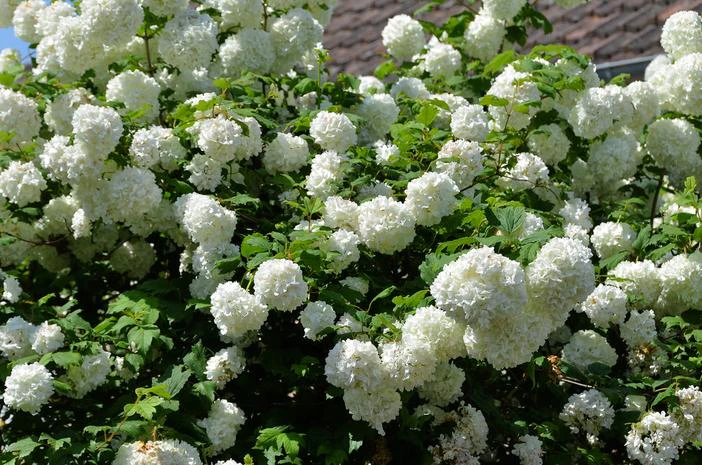
Few shrubs stop people in their tracks quite like Fragrant Snowball Viburnum in full bloom. Large, rounded clusters of sweetly scented white flowers cover the plant in spring, creating a display that’s hard to match. While it doesn’t produce fruit, it earns its place again in the fall when the foliage transitions to rich shades of purple.
Pruning after it blooms will help to keep it a manageable size and encourage healthy new growth. It’s also available as a standard, or tree form, which matures to a more compact 6 to 8 feet tall.
Sun or part shade are best for this deciduous shrub, a beautiful, solitary accent plant for the garden growing 12 feet high and 10 feet wide. As a standard, it is smaller, maturing at 6 to 8 feet tall and 5 to 6 feet wide.
Best for: Specimen planting, cottage gardens, fragrance | Sun: Full sun to part shade | Mature size: 12 ft. tall × 10 ft. wide (shrub); 6–8 ft. tall (standard)
Snowbelle Mockorange, Philadelphus ‘Snowbelle’
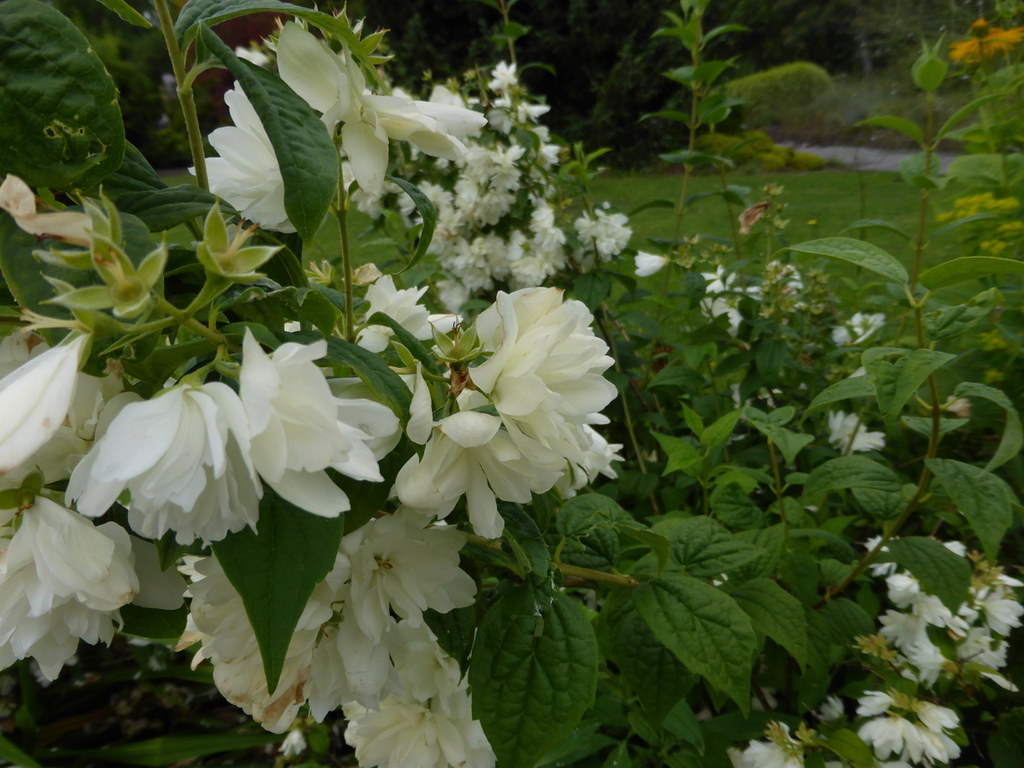
Don’t let its compact size fool you; when Snowbelle Mockorange blooms in early summer, it puts on a big show. This dense, mounded shrub is blanketed in sweetly fragrant double white blooms that are absolutely irresistible to bees and butterflies. Once the flowers fade, its rich, dark-green deciduous foliage makes it a lovely backdrop for other blooming plants in the border.
Growing just four feet tall and wide, it’s one of the best choices for smaller beds, borders and foundation plantings. It prefers full sun but handles part shade as well.
Best for: Small borders, foundation planting, fragrance | Sun: Full sun to part shade | Mature size: 4 ft. tall × 4 ft. wide
More Flowering Shrubs Worth Exploring
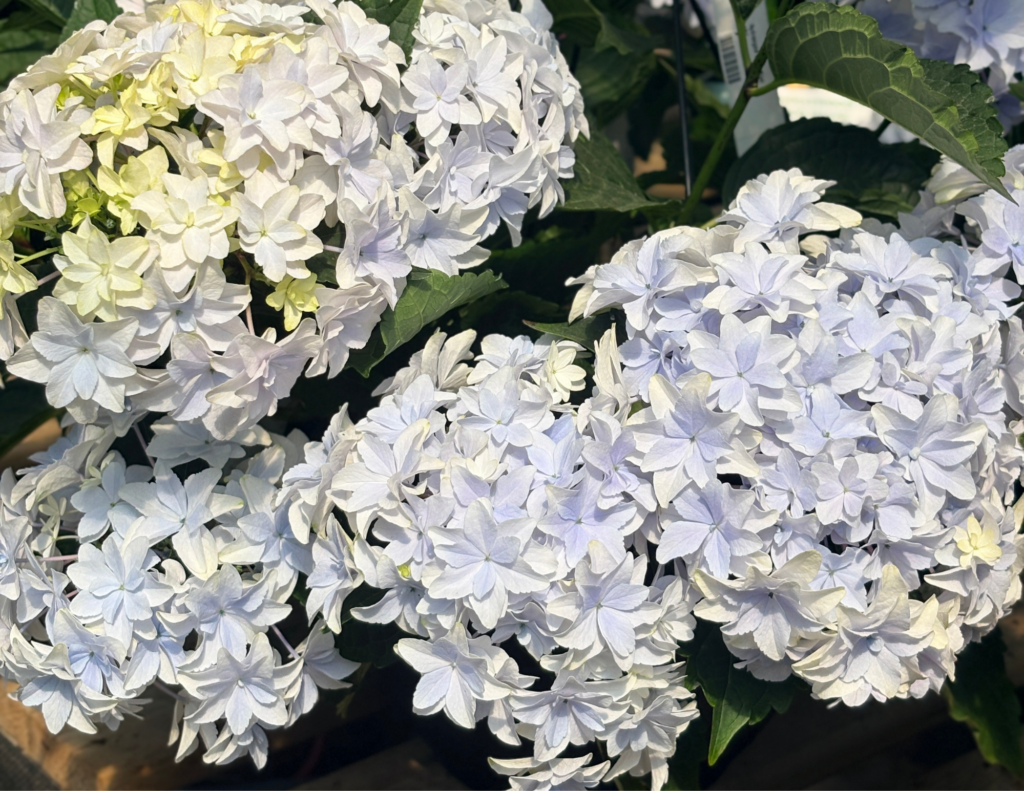
This is just the beginning! At Eising Garden Centre, we also carry a wonderful selection of Azalea, Eastern Redbud, Kwanzan Flowering Cherry, Hydrangea, Dogwood, Butterfly Bush, Beauty Bush, Lilac, Rose of Sharon, Forsythia, and Potentilla, to name a few.
The best way to find the right flowering shrub for your garden is to come in and see them in person, and right now is the perfect time to plant. Stop by and chat with Zach or Donna, who are always happy to help you find exactly what you’re looking for, based on your space, soil, and vision. We’re here to help you make the most of every corner of your garden!
5 Easy Steps To Get Started
By Ava Green
There’s a common myth that you need a lot of space to grow vegetables, but whether you have a few containers, a small sunny corner, or a larger garden bed, there’s lots you can grow! Here in Norfolk County, which is Zone 6 in Southern Ontario, some vegetables can go in the ground as early as the beginning of May, while many others are usually safe to plant around the May 24th weekend, once the risk of frost has passed. Here are five simple steps to get you growing your own food this season if you’re new to vegetable gardening.
Step 1: Decide What You’d Love To Grow
Start with a list of the vegetables you actually want to eat. Coming into Eising Garden Centre with a list in hand makes choosing plants so much easier! When building your list, consider:
- Vegetables you love
- High-value vegetables, the ones that are expensive at the grocery store but easy and economical to grow yourself
- Anything that tastes better when it’s freshly picked, like tomatoes, cucumbers, and fresh herbs

Step 2: Make a Simple Plan
You don’t need an elaborate design; a rough sketch on a scrap of paper is just fine. The goal is simply to get a sense of your space and where things will go before you start digging. We recommend starting a garden notebook or journal to track what you plant each year and how it performs. It will be especially helpful next spring!! A few planning tips to keep in mind:
- Most heat-loving vegetables, such as tomatoes, peppers, zucchini, eggplant and beans, need at least six hours of sun per day
- Cool-weather and shade-tolerant crops like lettuce, chard, kale, radishes, and beets do well with just three to four hours of sun
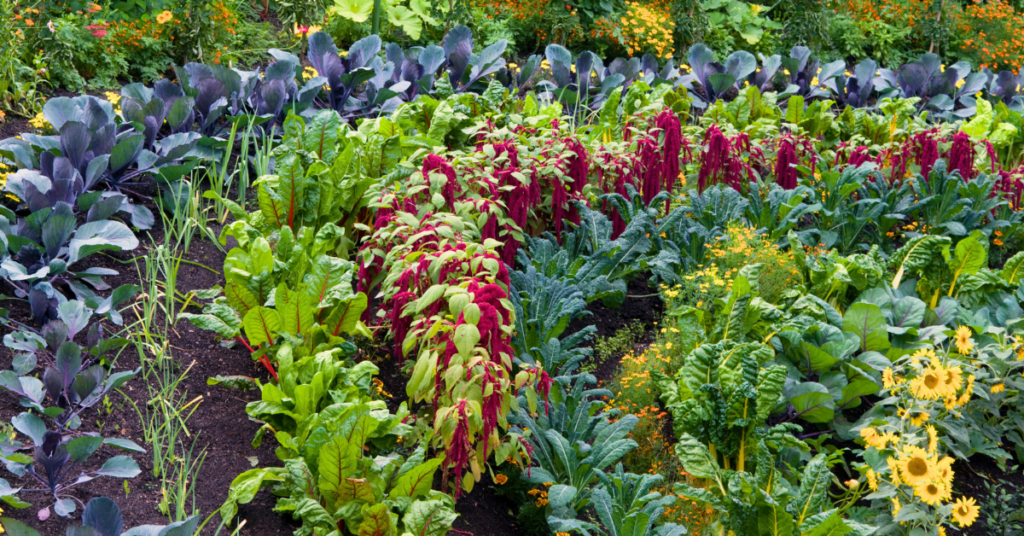
- Spacing in a vegetable garden can be much tighter than in other types of gardens. Less empty space means fewer weeds and bigger harvests. Square foot gardening is an excellent method to explore
- Layer your garden beds with plants that are great companions. For example, basil and marigolds planted beside tomatoes are said to improve flavour and repel pests. Carrot and beet seeds tucked in beside and between your lettuce plants (which are a cool-weather crop) are a smart pairing; as your lettuce finishes in the summer heat, your carrots and beets will be sprouting up to take their place. This is referred to as succession planting and optimizes the space in your garden
- Make use of vertical space with poles or trellises for peas, pole beans and cucumbers
- Tuck herbs into any gaps between your vegetables; they’re useful, beautiful, and most pollinators love them
Step 3: Prepare Your Space
Once you’ve chosen a spot with enough light, it’s time to get the soil ready:
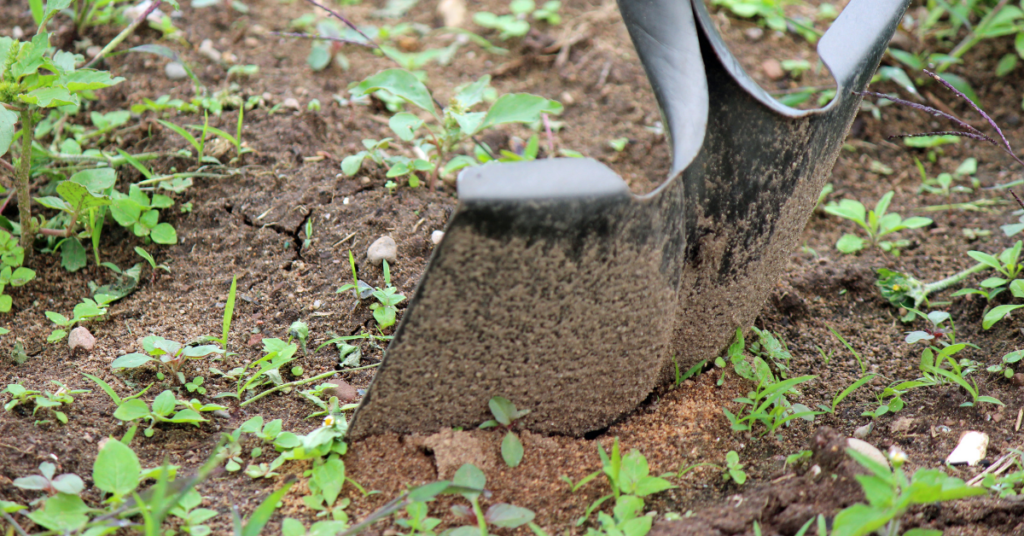
- Remove any sod or weeds before planting. If you’d rather not dig, the No Dig gardening method uses a layer of cardboard as the base for the new bed. This suppresses weeds naturally and breaks down into the soil over time
- Add a good-quality compost to your soil by either spreading a layer across the top of the garden bed or scooping some into each plant hole
- For container gardening, almost any container works, just make sure it’s deep and wide enough for the mature size of your plants. Also, drainage holes are a must! Fill containers with a soilless mix containing compost, peat moss or a peat alternative, and one of the following: sand, vermiculite, or perlite. Avoid using garden soil, triple mix, or topsoil in containers, as they compact easily and will restrict root growth. Learn more about soil mixes, amendments, and fertilizers here

Step 4: Water and Feed Consistently
Consistent watering and feeding are the foundation of a productive vegetable garden:
- Vegetables need regular, reliable watering. Inconsistent moisture leads to stressed plants and poor yields
- Always water the soil, not the leaves. Plant roots take in water, and wet foliage can invite disease. Water deeply so moisture reaches the roots. Use your fingers to check how far down the water has penetrated into the soil
- Containers dry out faster than garden beds and will need more frequent attention
- Morning is the best time to water. If your plants are struggling on a particularly hot afternoon, a second watering is fine. Just be sure to aim at the base of the plant and avoid the foliage, which can scorch in direct sun
- Feed with organic fertilizers throughout the season to keep your plants healthy and productive. Follow the package instructions for the product you choose
Step 5: Plant Flowers for Your Pollinators
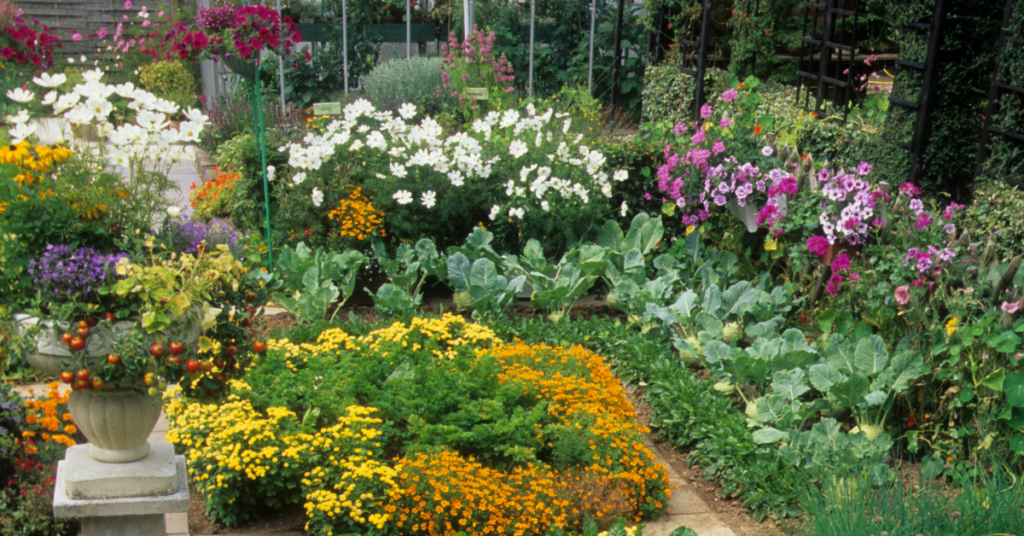
A vegetable garden without pollinators is a garden that won’t reach its full potential. Attracting bees, butterflies and other beneficial insects to your garden is one of the best things you can do for your harvest. Some of our favourite pollinator-friendly flowers for the vegetable garden include marigold, calendula, nasturtium, borage, sunflowers and culinary lavender. As a bonus, most of these are edible, so they earn their space twice over.
It’s Time
Starting a vegetable garden is one of the most rewarding things you can do with an outdoor space. There’s a quiet satisfaction in growing something from seed or a seedling and bringing it to your own table.
Start simple, grow what you love and don’t be afraid to learn as you go.
The team at Eising Garden Centre is always happy to help you choose the right plants for your space and answer any questions along the way. This could be the season that changes the way you think about your garden!
Resources:
Why Use a Garden Journal?: https://eising.ca/why-use-a-garden-journal/
Square Foot Gardening: https://www.almanac.com/planning-square-foot-garden-grow-more-less-space
Fertilizers & Soil Amendments: https://eising.ca/fertilizers-soil-amendments/
Companion Planting: https://eising.ca/companion-planting-with-herbs/ and https://eising.ca/incorporating-vegetables-into-your-garden/
Optimizing the Gardening Season: https://eising.ca/optimizing-the-gardening-season/
No Dig Gardening Method: https://charlesdowding.co.uk/blogs/no-dig-resources/beginners-guide
Reading Plant Tags: https://eising.ca/full-sun-part-shade-what-do-plant-tags-actually-mean/
Growing Vegetables in Pots: https://eising.ca/planters-are-for-more-than-flowers/
By Dave Zeldon and Ely Schweyer
As plant people, we’ve all experienced that moment when we realize the novelty phase of that plant we brought home from the garden centre has worn off. The plant isn’t standing quite as tall, the flowers aren’t as bold, and the leaves are unravelling smaller or not at all. What is this magic they perform in the greenhouse? Perhaps you’ve provided sufficient lighting and adequate watering; there’s just one thing that is often overlooked because dirt is dirt, isn’t it?
97% percent of plant tissue is made up of carbon, hydrogen, and oxygen pulled from the air and water, the remaining 3% is comprised of 16 other elements taken up from the soil. The quality of soil then is crucial to your plant’s health. Whether your plants are in pots or in ground, each soil type you could provide your plant offers something unique and may lack in another.
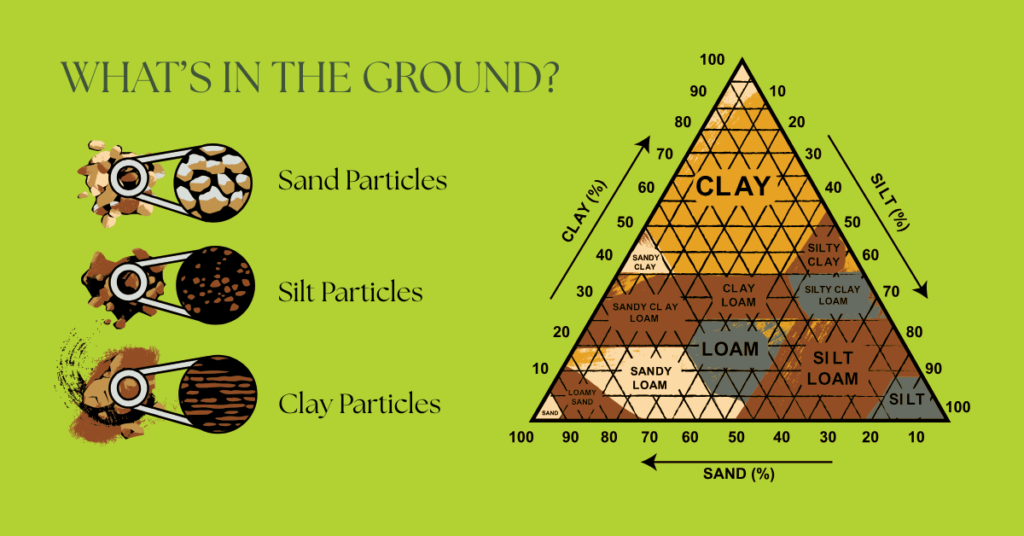
*Clay particles are even smaller than silt particles.
Resist the Urge to Slam Your Plant in Potting Soil
There’s bags and bags of rocks, sand, bark, manure, and moss on the shelves, yet the common buyer seems to always opt for potting mix. It’s fair; organic matter is usually great for plants and simple to use. However, most people don’t realize it’s merely an ingredient.
Strictly using potting mix is like attempting to make a loaf of bread out of only flour. All those bags of other materials on the shelves are also components for a successful plant diet!
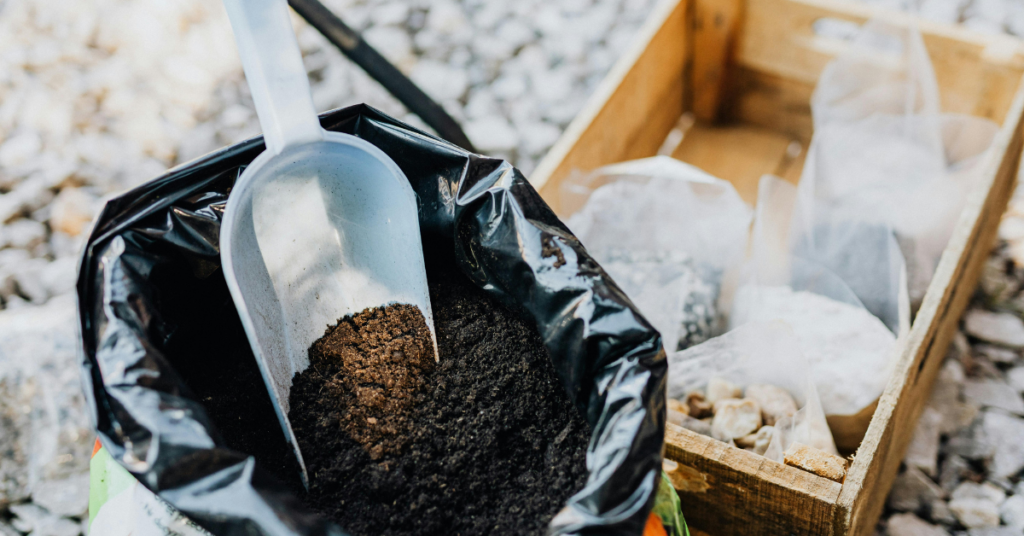
Potting mix is a great base material, however, alone it presents risks of compacting, becoming waterlogged, can mold easily, and over time will become depleted of nutrients. Consider mixing the following ingredients into your pots, ground and raised beds to meet your plant’s required nutrients, pH level, and volume of moisture.
🖱️Use our Plant Finder to find some details on your plant! We try our best to keep this updated!
👍 Rule of Green Thumb: Plant roots can help you to determine the medium needed – thick, robust roots (i.e., yucca) typically enjoy chunkier materials, and smaller, delicate roots (i.e., begonias) enjoy finer materials.
Mulch and Bark Bites
- Mulch is the organic slow-release fertilizer, as it slowly decomposes, it lowers soil pH. However, may eventually compact soil once fully broken down.
- In the meantime, it creates shelves in the soil that create air pockets and prevent the soil from compacting. Mulch is a great short term medium for arid potted plants.
- If kept too wet, it can harbour fungus gnat larvae.
- Make sure when sourcing your mulch it doesn’t contain any black walnut.
🖱️ See more on mulching here.
Sphagnum Peat Moss
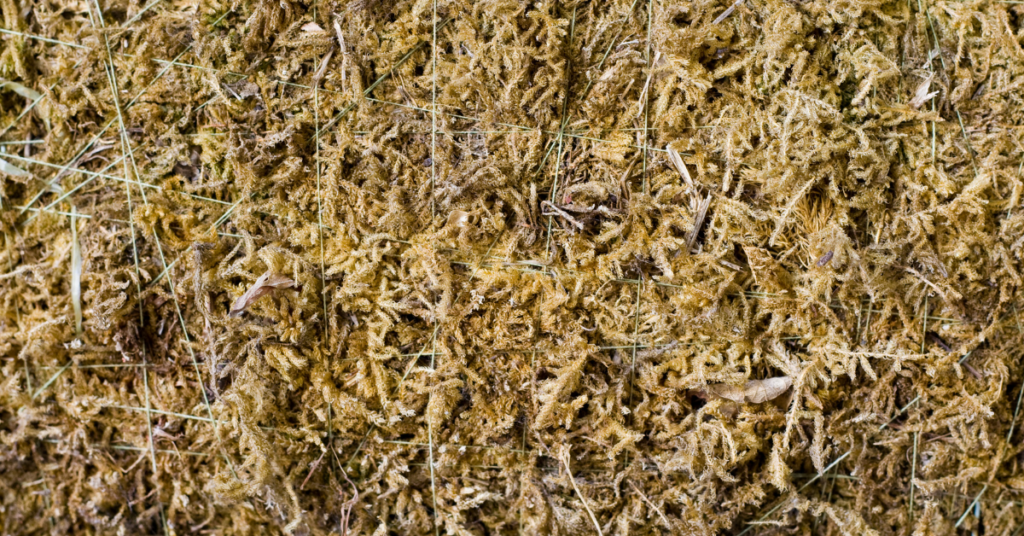
- Peat moss is used to help retain moisture and lower pH in the soil given it is harvested from bogs.
- Retains nutrients very well.
- It is difficult to rehydrate once it loses moisture.
Coconut Coir
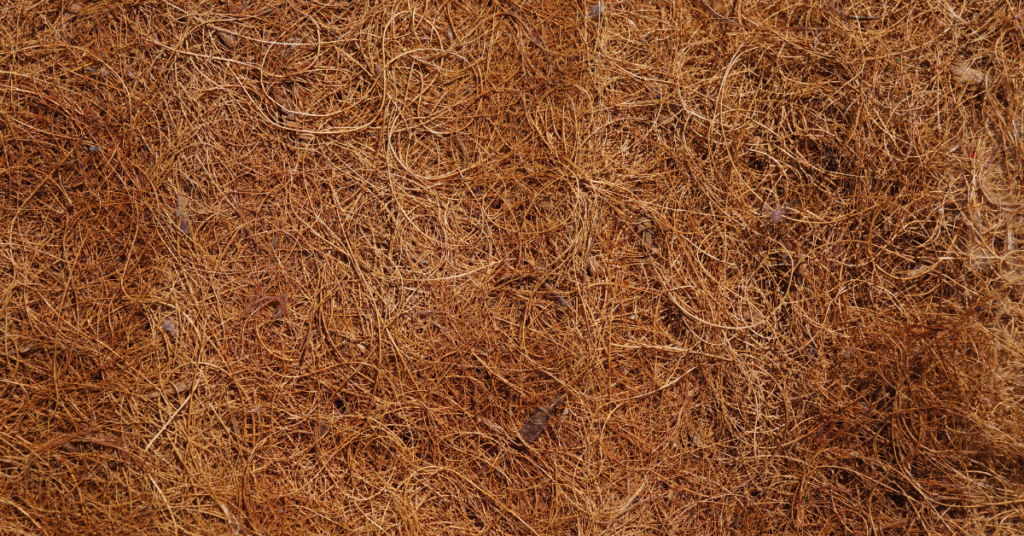
- Coco coir, much like peat moss is used to keep the soil moist and keep pH low, however it lasts longer and is possibly less invasive to harvest.
Sand
- Grains are relatively large and do not bind, allowing for excellent drainage depending on grade.
- Adds weight to top heavy plants.
- Has no ability to store minerals itself, however, pH can vary by its content of shells, minerals like silica, or fine organic matter.
Manure & Compost

- Source these organic by products locally and ensure they’re not too hot. These additions can significantly lower pH.
- Sheep manure is usually near free of weed seeds as sheep digest seeds better than cattle and horses!
Perlite
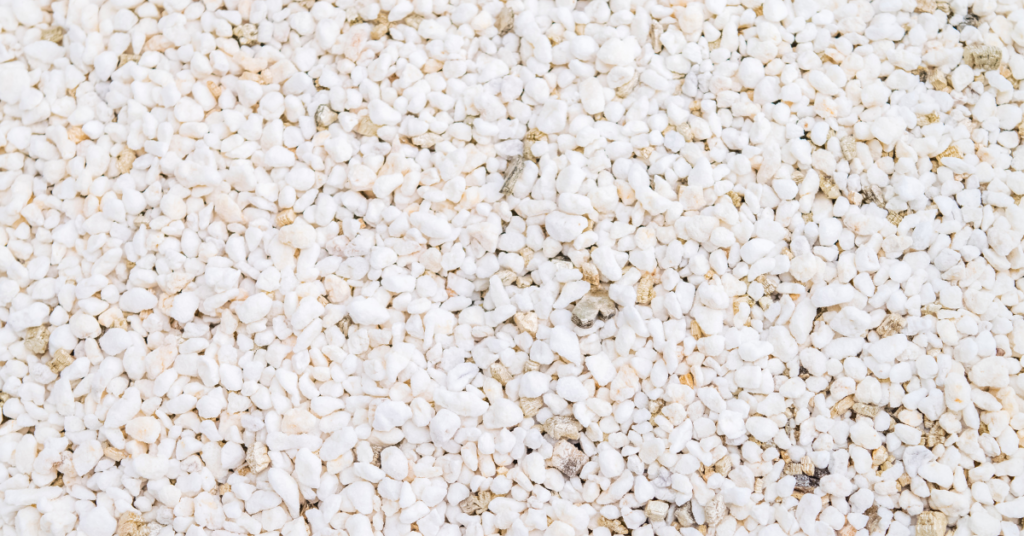
- Perlite is a volcanic byproduct (so it floats like pumice) that helps drainage in the soil and prevents compaction – vital in the case of starting seeds.
- If a rockier, well-draining medium is required for your plant, consider perlite.
- Perlite can expand holding trace amounts of water.
- Perlite has a neutral, slightly acidic pH.
- Make sure when sourcing perlite, that you are not being sold Styrofoam balls.
Vermiculite
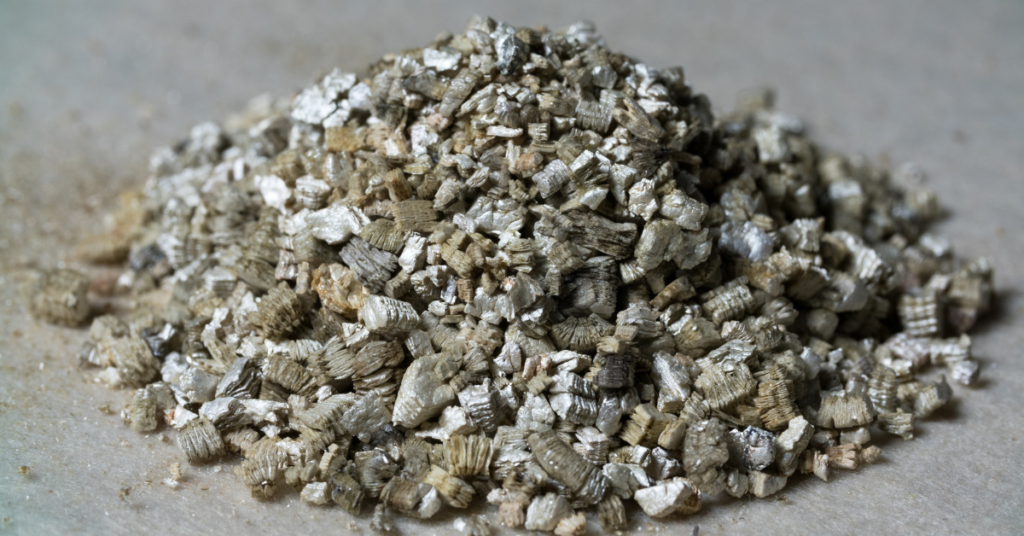
- Vermiculite is a recycled mineral used similarly to perlite, and too has a neutral, slightly acidic pH.
- Expands with water content.
- Can contain amounts of potassium and magnesium (as well as good cation exchange capacity).
- Runs the potential risk of introducing asbestos into your soil.
Calcined Clay Materials

- Clay materials like recycled brick bits, pottery, or lecca are typically used for arid plants as it improves aeration and drainage.
- Can raise pH.
- Can retain some water.
- High cation exchange.
- Can also be used for starting robust cuttings when kept moist.
- Probably not ideal for inground amendments.
Maintaining Your Plant’s Dietary Needs
Perhaps we’ve crafted the perfect soil type for your plant – your plant thanks you – but over time, we will end up in the same staling predicament. Why? Because with each thorough watering, we leech the soil of the provided nutrients. Best we use the plant-specific required fertilizer for your plant to prevent nutrient loss.

Organic sources of fertilizer such as bonemeal, composts, and manures, along with the application of lime, will improve the physical condition of the soil in terms of water and element holding ability. Unfortunately, in many cases though, manures and lime alone cannot be depended upon to provide enough available nutrients in soils with low essential element reserves.
Let’s talk about commercial fertilizers, which can help target your plant’s exact needs much like vitamins and supplements!
The Scoop on Fertilizers
Of the essential 16 elements your plant pulls from the soil, Nitrogen (N), Phosphorus (P), and Potassium (K) are the most critical for good plant growth. You’ll recognize the three numbers appearing on your commercial fertilizer labels known as the fertilizer analysis of the product, representing the percentage of each of the three "macronutrients" in the order of N, P & K.
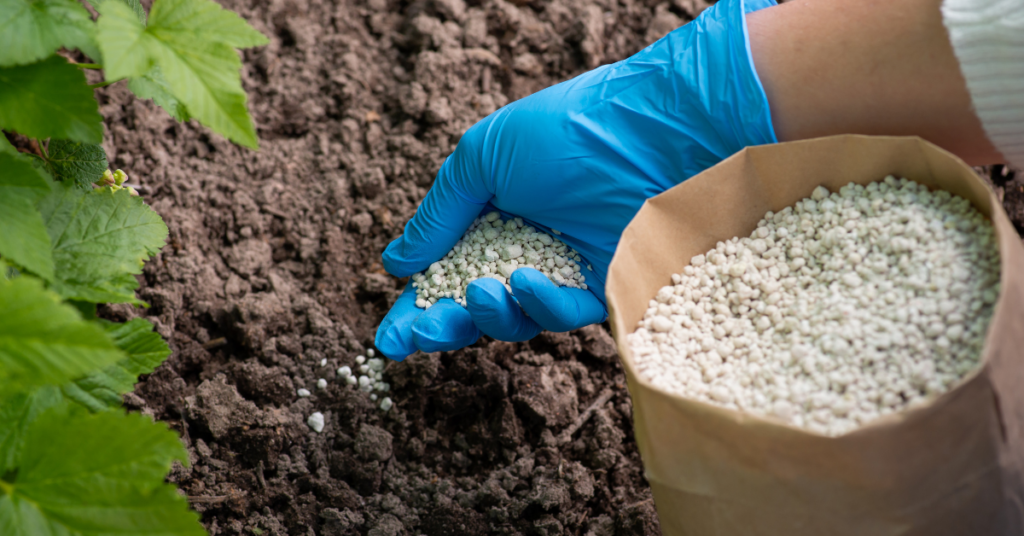
Nitrogen (N) is necessary for green leafy or vegetative growth which is important in crops like corn, cabbage, and potatoes.
☝️ It is important to remember that you should not use a fertilizer which is high in nitrogen late in the summer on your perennials, as it may cause a boost of growth which will only freeze as the cold weather sets in. Also, too much nitrogen in the analysis could cause too much lush, leafy growth thus inhibiting the desired flowering aspect of a plant species.
Phosphorus (P) promotes the development of flowers, fruit and roots. Crops like tomatoes, cauliflower and garden flowers.
Potassium (K) boosts plant hardiness, stem strength, resistance to disease and drought which is important to all crops, but especially in potatoes, celery and rhubarb.
👍 Rule of Green Thumb: For foliage plants, provide them with shade and lots of nitrogen, and for flowering and fruiting plants, provide them with lots of sun and lots of phosphorus!

Amending Clay
Hello Haldimand and Eastern Norfolk!
We’re presented with the challenge of compacted, often shallow and waterlogged clay, which proves difficult but not impossible.
Clay becomes compacted and waterlogged as it is the smallest soil particle – smaller than a grain of sand, and even smaller than silt – with rough edges that allow it to interlock and bind. In this instance, roots cannot penetrate further into the soil, are susceptible to root rot, and air pockets are slim to none.
This, however, can be fixed with the addition and renewal of the above materials.
Mindful that you don’t create a watery bowl in the ground (score the edges the area being worked), you can add organic matter (i.e., manure, compost, and potting soil) for nutrients, as well as mulch, sand and perlite for aeration and drainage. Annual soil particle aggregation in clay soils increases air porosity (air pockets) and is accomplished by the incorporation of organic matter that breaks down to form humus.
🖱️ See more here for planting trees in clay.
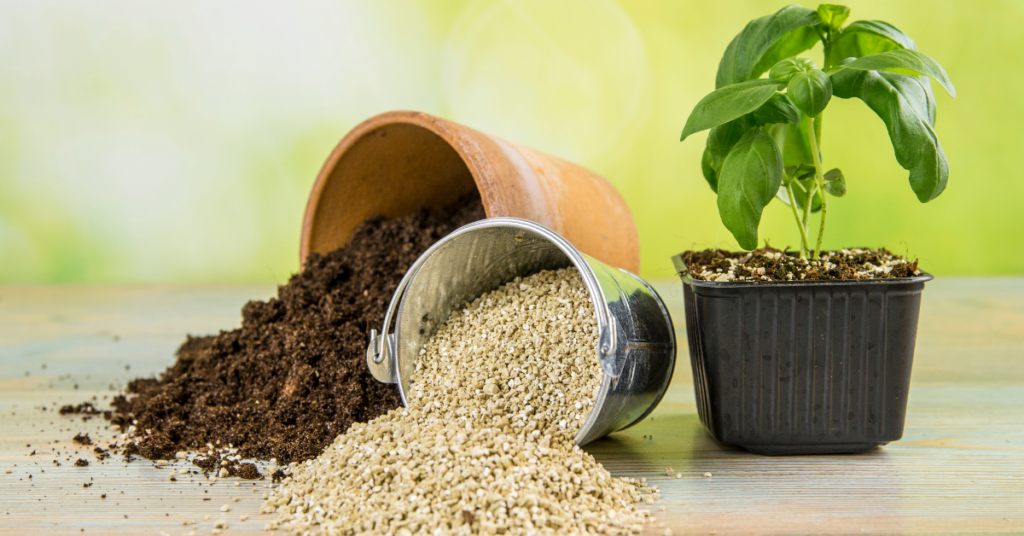
We hope this soil and fertilizer guide helps you provide all the vital nutrients to your beloved plants in ground and above ground! For more information - and soil – visit Eising Greenhouse and Garden Centre! 🌱
Christmas Gift Buying Made Easy
By Ava Green
The Eising Holiday Gift Guide has become a popular tradition, and this year, I asked staff members to share their favourite gifts. We have some great picks to brighten anyone’s holidays: family, friends, teachers, hosts/hostesses, the cat sitter, the dog sitter - anyone you would like to wish a Merry Christmas to!
Everlasting Decorations

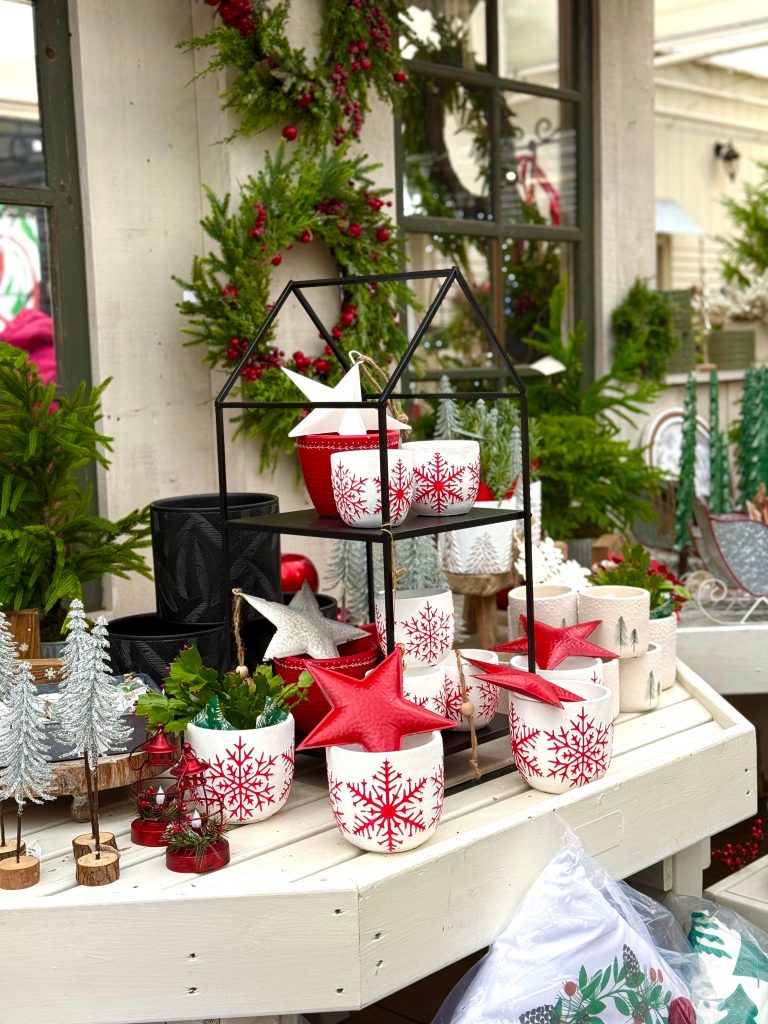

What looks good every year? Everlasting decorations! Kirsten’s favourites are natural wreaths with just a bit of an embellishment. Elegant, timeless and oh-so-festive!
An ornament from our Giving Tree is Arlene’s choice because she can gift the beautiful glass cardinal, and the proceeds go to the local toy drive. Now that’s a gift that keeps on giving!
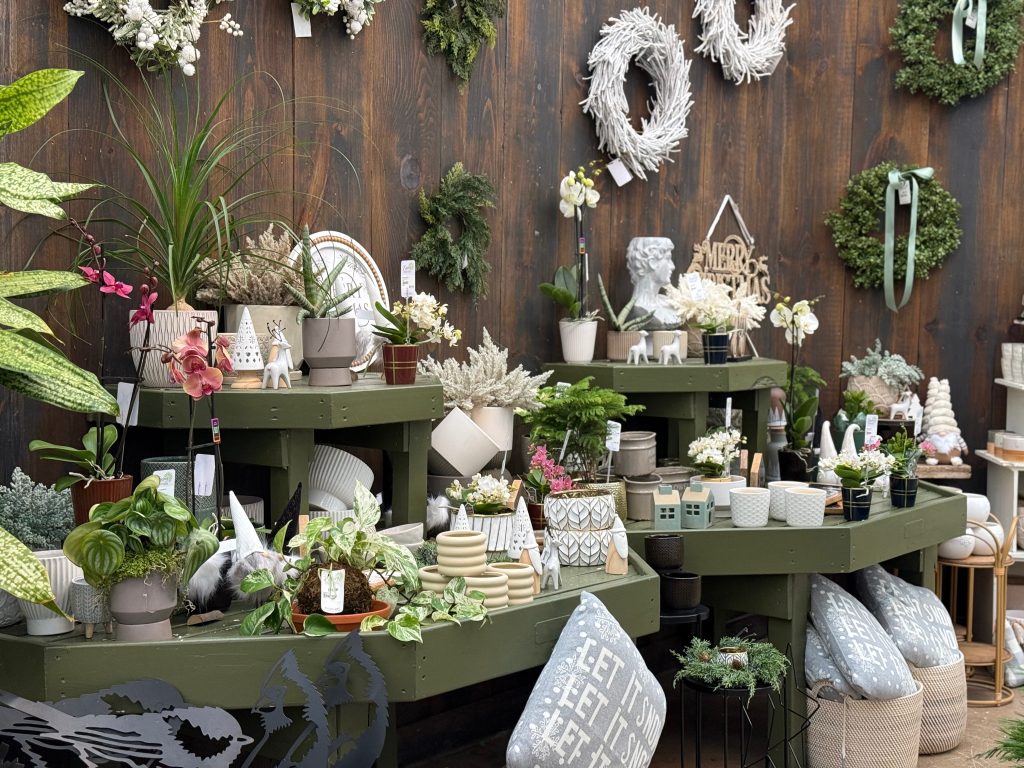
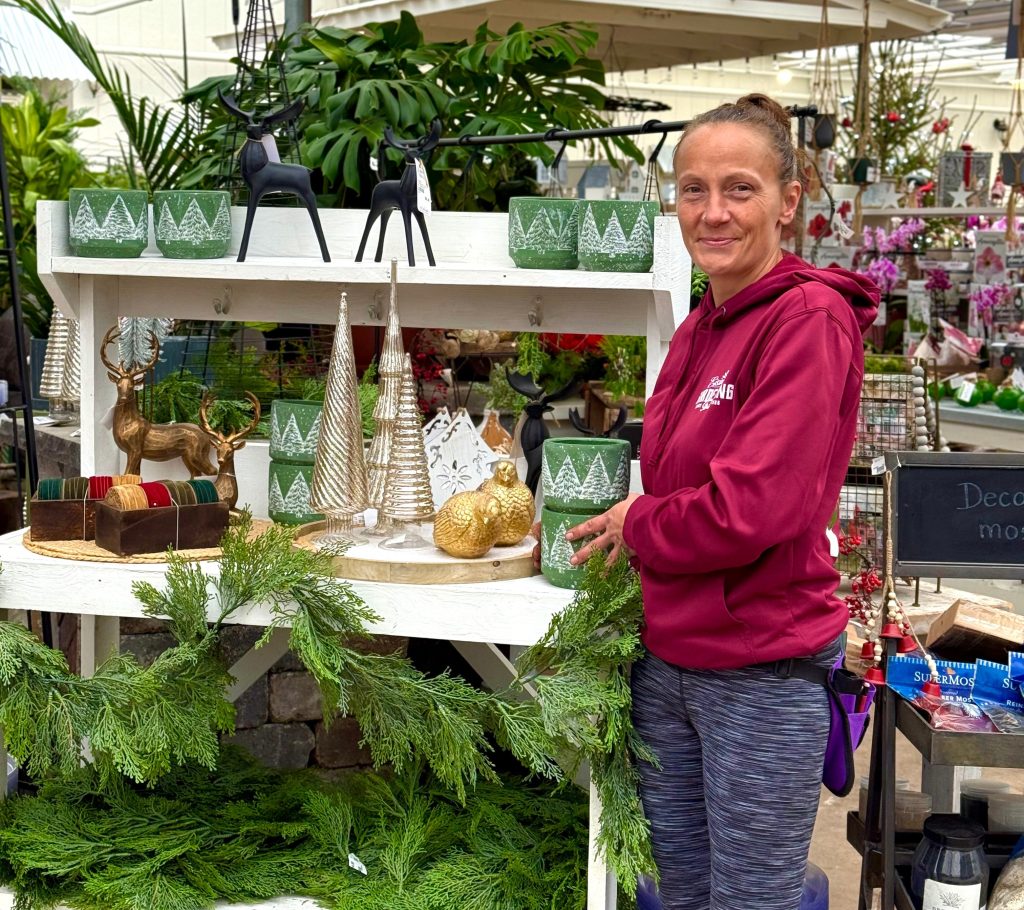
We also have lots of beautiful everlasting garlands, and Lindsey’s favourites: holiday-themed decorative containers to choose from. These festive plant pots transform any houseplant into a Christmasy gift or are perfect for holding other treasures if you’re creating a gift basket.
Fresh Greenery
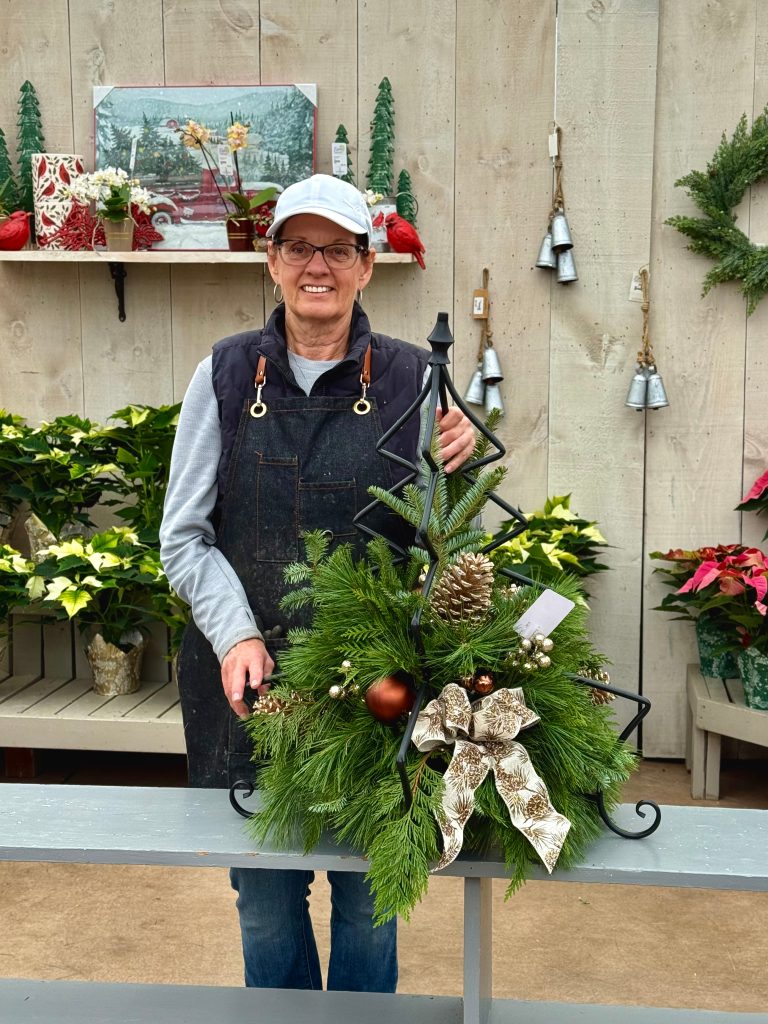
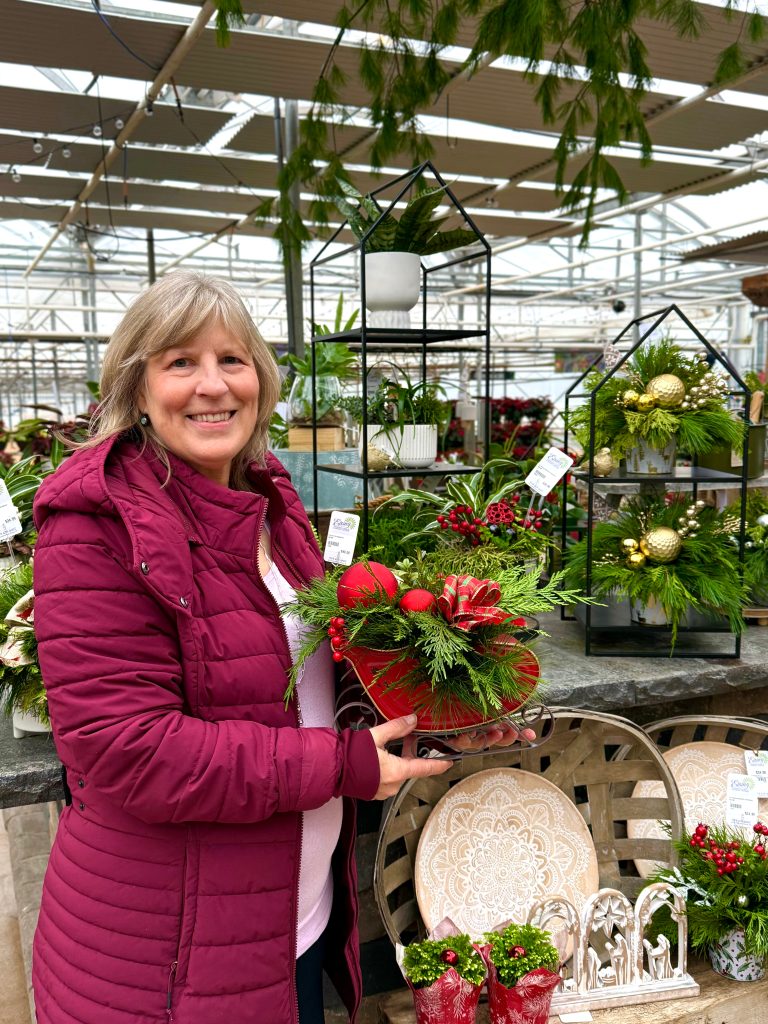
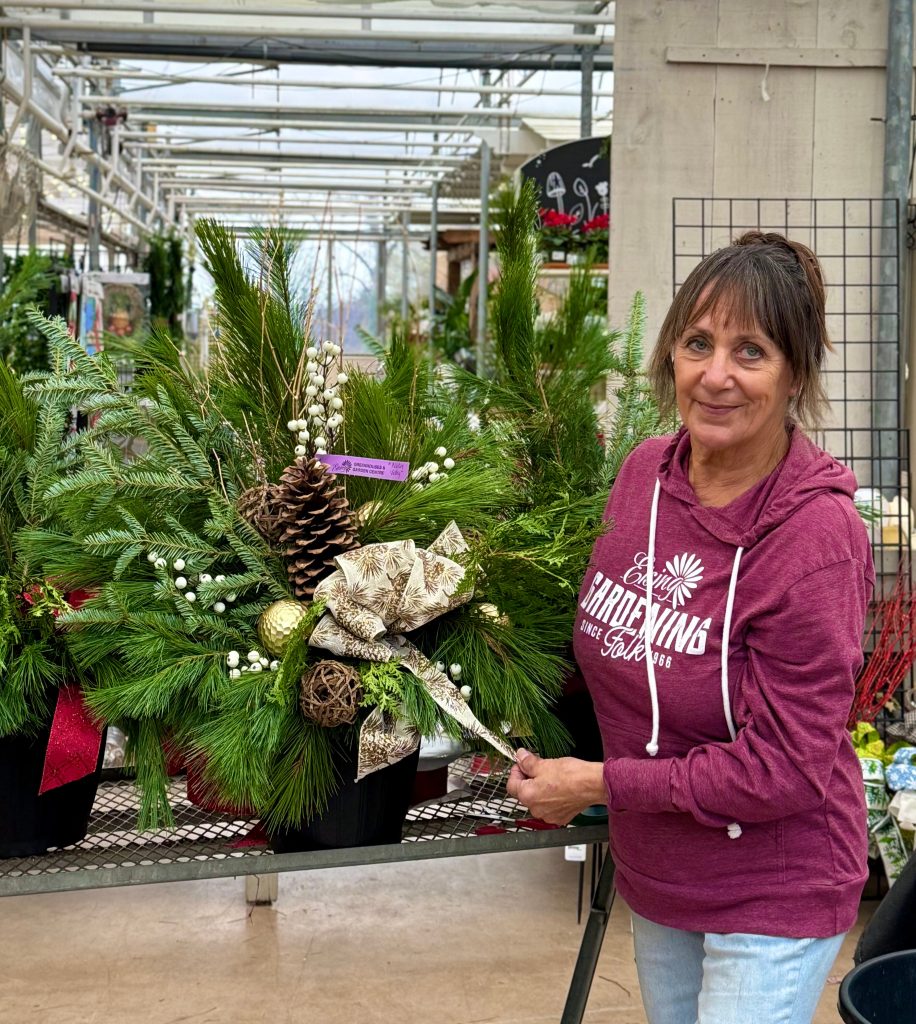
There’s an entire team of decorators, no…creators, no….elves, no…very talented staff members who spend the holiday season making the most beautiful urns, planters, and fresh greenery centrepieces. Donna and I are holding two of our favourites. Mary stopped making festive urns just long enough for this photo to be taken! She really pours her heart into it.
Tropicals, Holiday Plants, and Bulbs
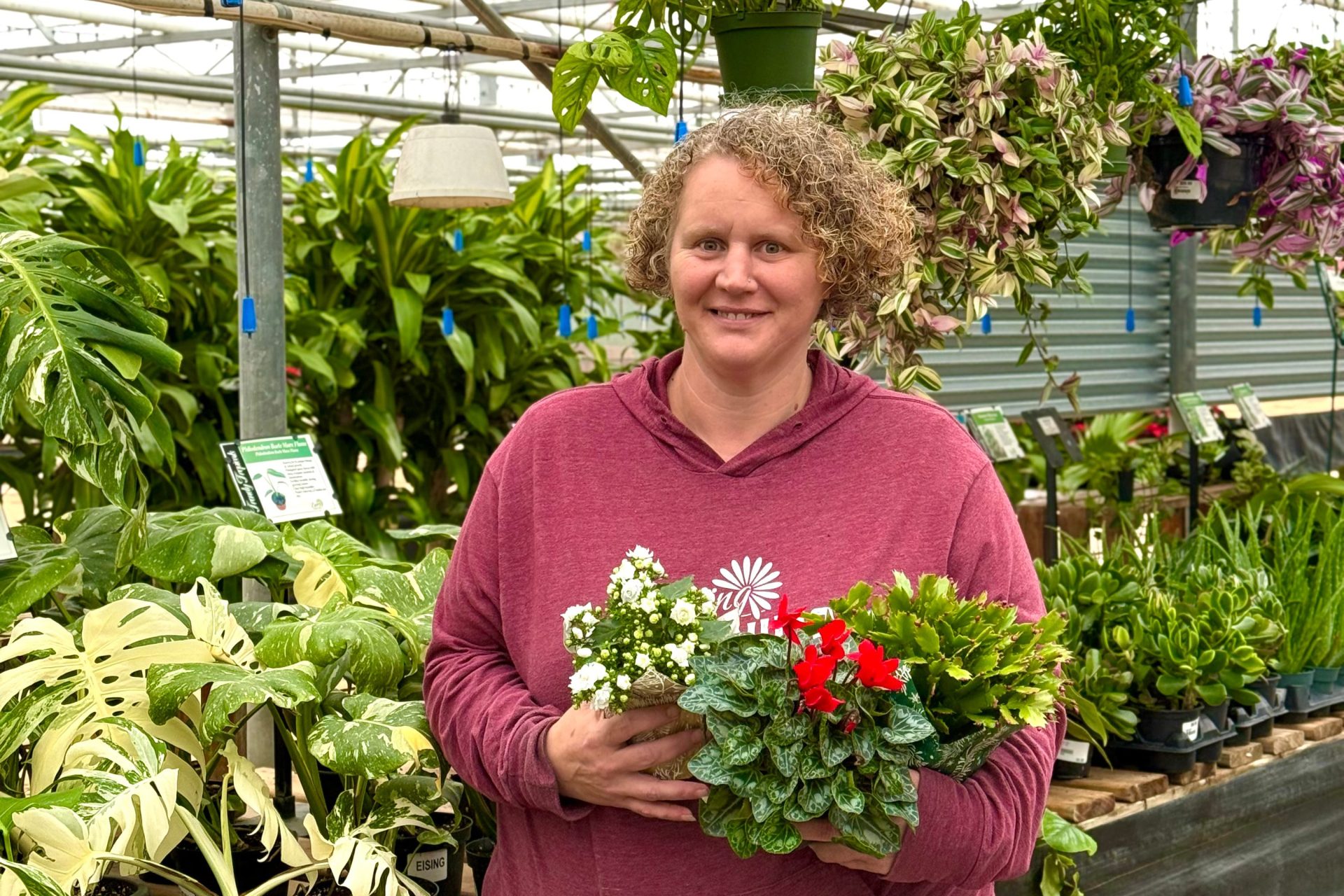
As always, Courtney has a phenomenal selection of tropical plants to choose from. Do not ask her which one is her favourite. Trust me. Too many to count.
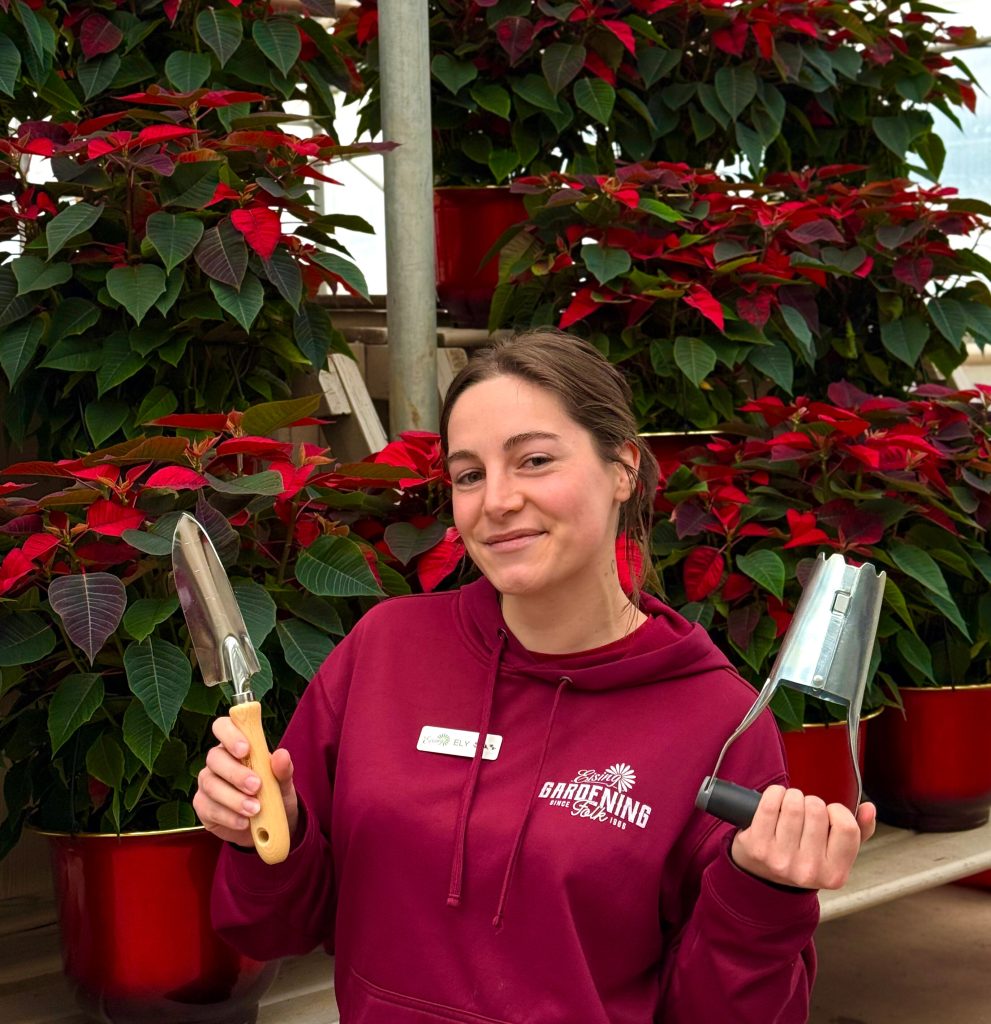
Ely is hoping for some gardening tools under the tree this year, and what gardener couldn’t use an array of trowels?!
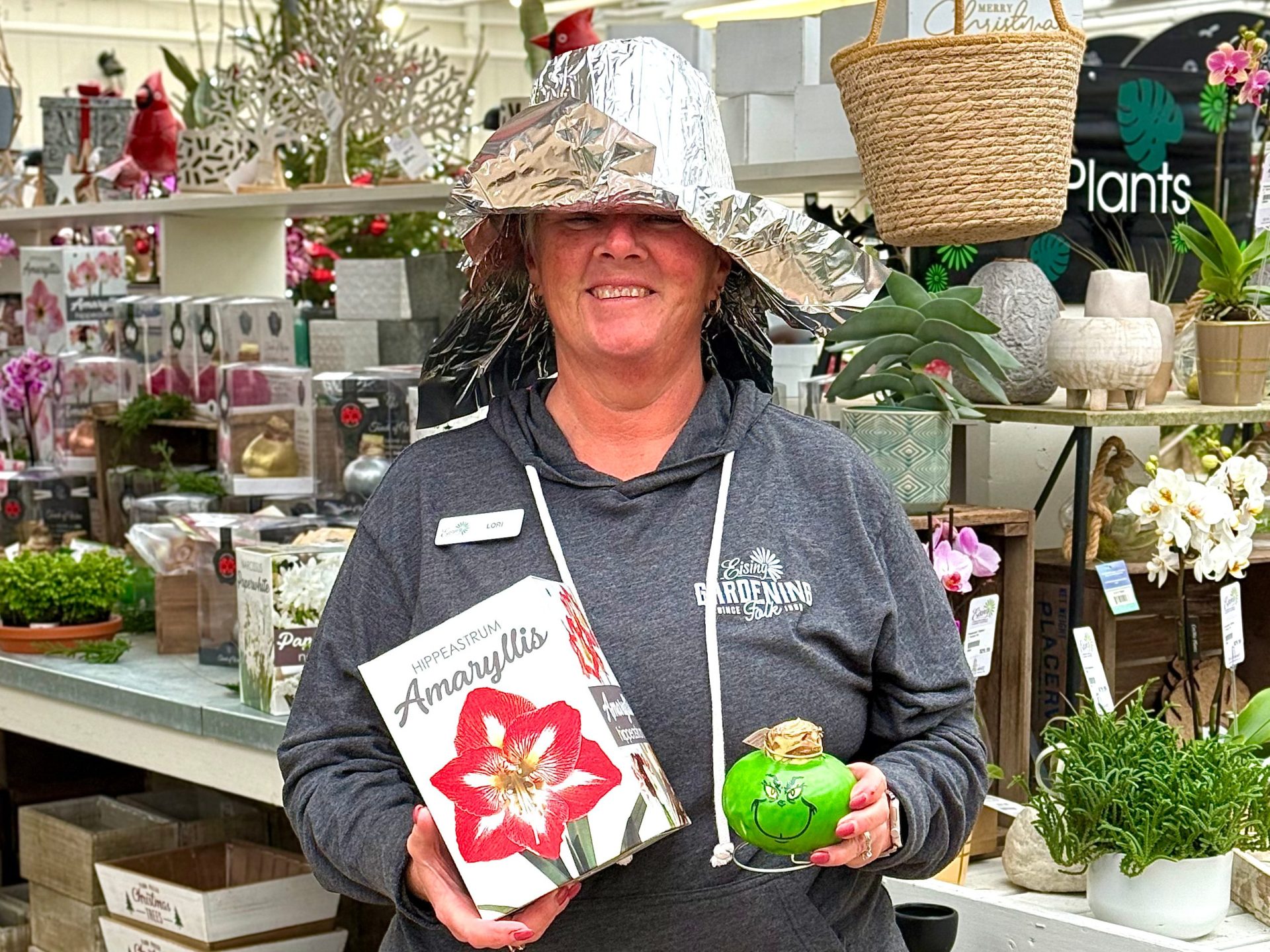
Lori is ready for a party with her favourite hostess gifts - Amaryllis bulbs. Apparently, the Grinch likes plants, too. Who knew? Cindy Lou Who, possibly, and Lori.
Sassy Fashion

Donna is wearing and holding some of her favourite clothes, jewelry, accessories, and products from Sassyfras Boutique inside Eising Greenhouse. Yes, she has many favourites. In her defence, who can pick just one thing from Sassyfras?! Not us.
For Your Favourite People!
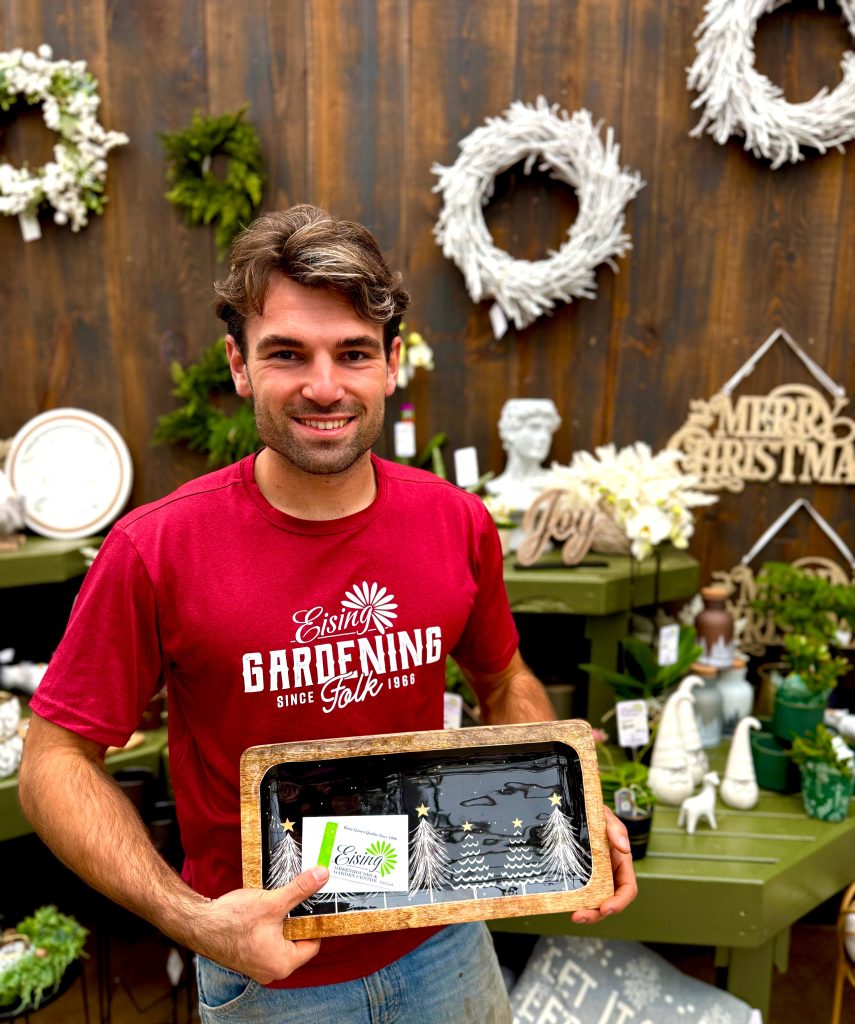
Finally, this is THE most flexible item in the guide, our Eisings gift card. It can also be the perfect solution for the person who has everything already and is hard to buy for. Why is this Lucas’s favourite? Eising gift cards can be used for plants, landscaping, trees, shrubs, perennials, annuals, seeds, tropicals, decor, pots, garden tools, and any other items sold in the greenhouse. And that’s not all! Gift cards can also be used for anything in Sassyfras Boutique. So many options!
Good Tidings To All!
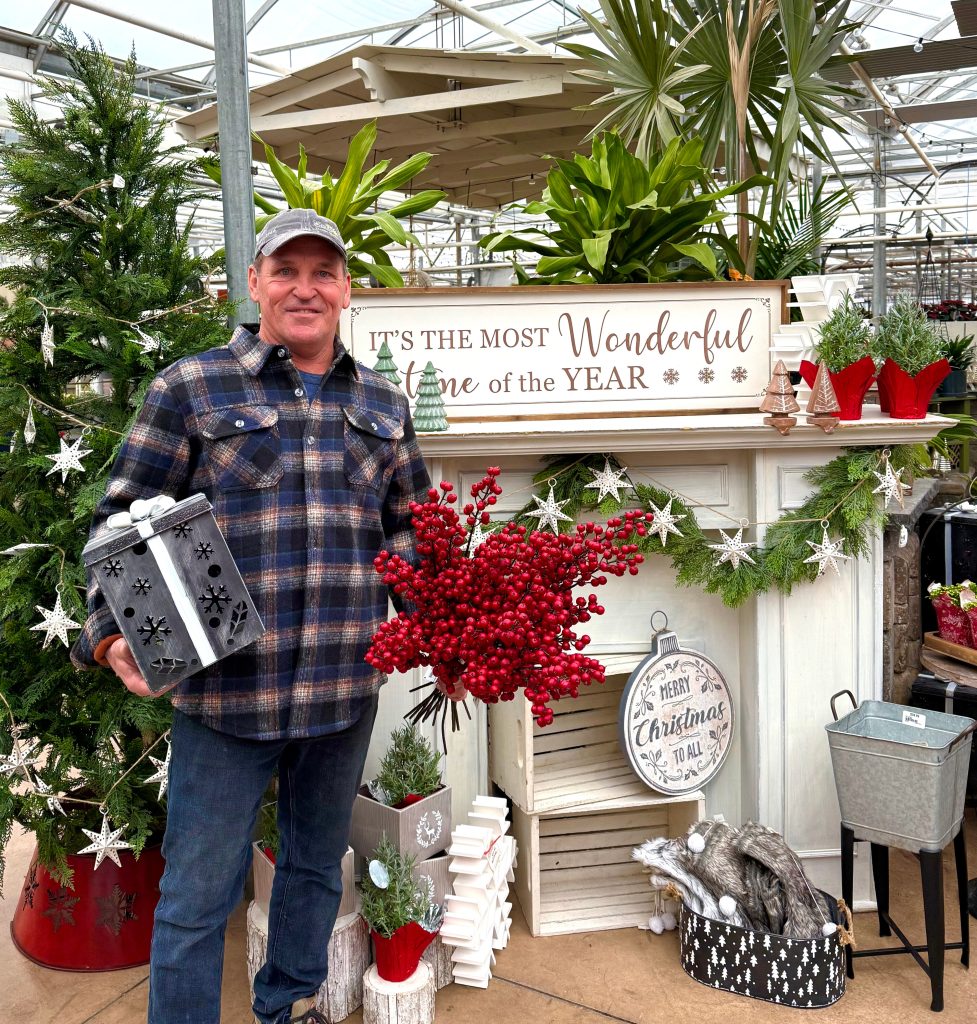
During this season of abundance, Henry and all of us at Eisings hope you get all of your favourite things, but mostly we wish you a safe and happy holiday season! ✨
By: Dave Zeldon and Ely Schweyer
If you’ve ever wondered how the warm weather succulent came to be a seasonally regarded indoor plant, or how to keep one going, read on!
History and Cultural Significance
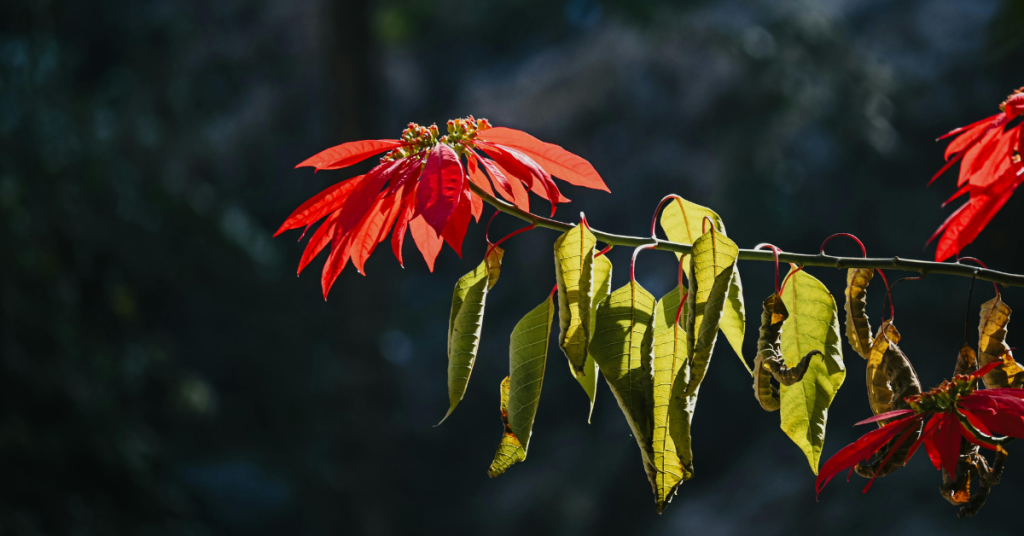
The Poinsettia was named after Joel Roberts Poinsett, the first U.S. Minister to Mexico. He introduced this native Mexican the United States in 1828. In the Mexican Christmas tradition, the star-shaped leaf pattern is said to symbolize the Star of Bethlehem, and the red colour represents the blood sacrifice through the crucifixion of Jesus.
Since the species is native to Mexico and found in the wild in deciduous tropical forest at moderate elevations, we then have a challenge to keep this plant alive and in a healthy form in our colder, northern climate.
It's Just A Rumour!
There is a common misconception that the poinsettia is highly toxic. This is not true.
Yes, it may be mildly irritating to the skin or the stomach if it is eaten, but otherwise, there have been no documented cases of poisoning. The origin of this myth could be found in the fact that most plants of the spurge genus (Euphorbia) are indeed toxic. Fortunately, this family member is a good one!

Here are Some Helpful Hints to Get the Most Longevity Out of Your Plant:
☝️Unsleeve the plant as soon as possible as the leaves may become droopy if left too long in the wrapper. Fortunately, the plant should recover in a few days if this does occur.
☝️If you want to try to keep your plant until next Christmas then fertilize after the blooming season with an all-purpose fertilizer, repot it later in the early Summer and then introduce it to 12 hours of uninterrupted darkness come September.
For more information on Poinsettia care (i.e., temperature, lighting, and watering), visit Ava's blog Caring for Poinsettias.
If you’re looking for more information – or perhaps a Poinsettia – visit Eising Greenhouse and Garden Centre! Happy Holidays! ✨
Figures.
By Dave Zeldon and Ely Schweyer
Now that we’ve brought our plants inside the house to over-winter, we begin to notice those slender, dark gray flies (0.2- 0.4 cm long) flitting about atop the pot soil. Yuck!
These insects are known as fungus gnats (Bradysia sp.). Whereas they are considered only to be a minor nuisance in house plants, due to their sheer numbers hovering around an attractive plant, they can certainly take away from its appeal. Below is a bit about these pests and some basic control measures.
How Do Fungus Gnats Affect Your Plant?
Other than their swarming presence, fungus gnats are not a direct threat to your plant, but an indirect threat. As their name implies, they are concerned with snacking on the fungi mycelium living in your plants’ soil. (Yes, it’s there and it’s a good thing!) However, these little flies can transfer disease between plants, making them nuisance pests.
A Quick Look at Their Life Cycle:
Adults may lay 300 eggs at a time, which hatch a week later into tiny, threadlike larvae. The larvae feed upon organic matter in the potting soil. After two weeks, they pupate into winged adults, that have no trouble annoying you to no end.
Basic Control Measures:
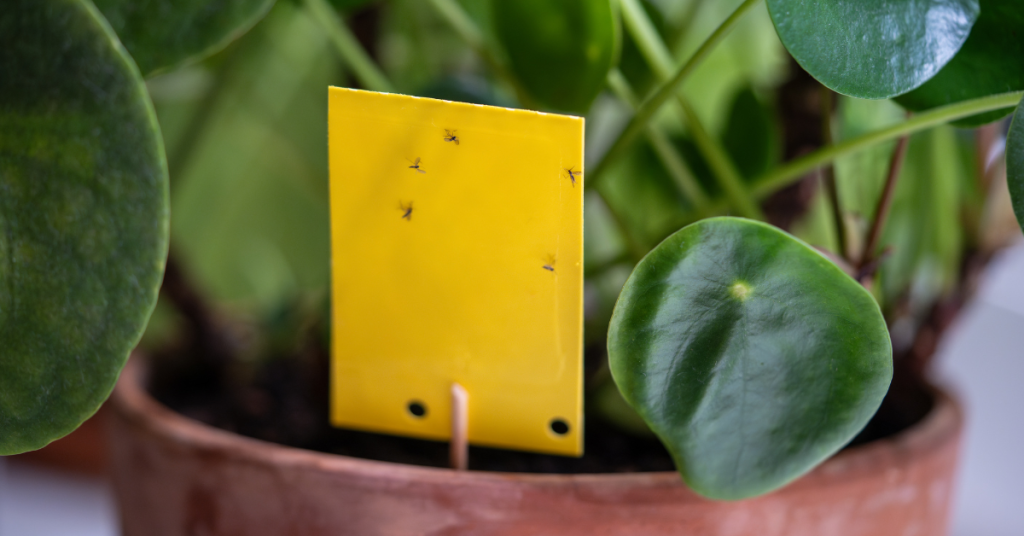
- The fastest and easiest method of control is to catch the flying adults with yellow sticky cards. The large cards can be cut into little strips and mounted onto little wooden splints (popsicle sticks) then placed around the base of the plant out of the line of sight.
- Water your potted plant from the bottom (sub-irrigation) by adding water to the saucer it is sitting in. This will keep the soil surface dry, making it uninhabitable for the hatching insect larvae. If the surface soil is already very wet, try placing a few potato discs or slices on the surface of the soil. This will attract the larvae as they migrate to the potato to feed. Simply replace the discs every three to four days with fresh slices to eliminate the next generation of adults.
- If you have a large number of plants afflicted as in a greenhouse situation, an application of predatory nematodes (Steinernema feltiae) as a soil drench is suggested. Nematodes will attack the fungus gnat larvae in the soil which will in turn lead to more nematodes being produced.
Good Bugs Are Working at Eising Greenhouse and Garden Centre!
Here at Eising’s Greenhouse and Garden Centre, we practice what as known as I.P.M. or Integrated Pest Management. Since we try to create a perfect environment for our plants, we also, unintentionally create perfect conditions for their related pests. To keep the pests at bay, we institute series of steps:
1 - Cultural Controls: We select only the healthiest of plant material to sell and keep them healthy through proper fertilization and growing conditions. We’ve learned that insects are attracted to stressed-out plants!
2 - Physical Controls: We are constantly walking through our plant aisles checking for insect and disease presence and removing the affected plants. Also a clean growing area means there is less chance of pest populations building up on alternate host plants such as weeds.
3 - Biological Controls: At the beginning of the growing season, even before there is any evidence of pest problems, we introduce naturally occurring predators into the growing areas. This is to be at the ready for when the pests do arrive!
In our arsenal we have a series of tiny parasitic wasps, microscopic wire-worms called nematodes, predatory mites as well as bacterial inoculants. So therefore, we cannot spray any chemical insecticides as they will hurt our very valuable biological cache!
Did you ever imagine all the behind-the-scenes work that goes into your plant purchases from Eising's to make them the best value around?
For more information – and bug products - visit Eising Greenhouse and Garden Centre soon! 🪰
By: Ava Green
One of the best things about living in southern Ontario is the beautiful show our deciduous trees and shrubs put on each fall.
Autumn is also the perfect time to plant trees, shrubs, and perennials. The sun is less intense, temperatures are slightly cooler, and with regular, deep watering, the plants are less prone to transplant shock, ensuring a successful planting.
As the leaves begin to change, they mark the arrival of autumn, a season full of colour and celebration. If fall is a special time of year for you, our staff have handpicked their favourite deciduous trees and shrubs with the most stunning seasonal displays. Here are their top recommendations.
Autumn Blaze Maple
Botanical Name: Acer x freemanii 'Jeffersred'
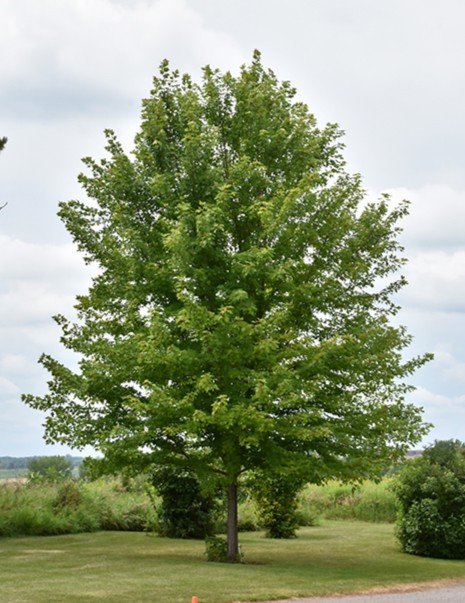
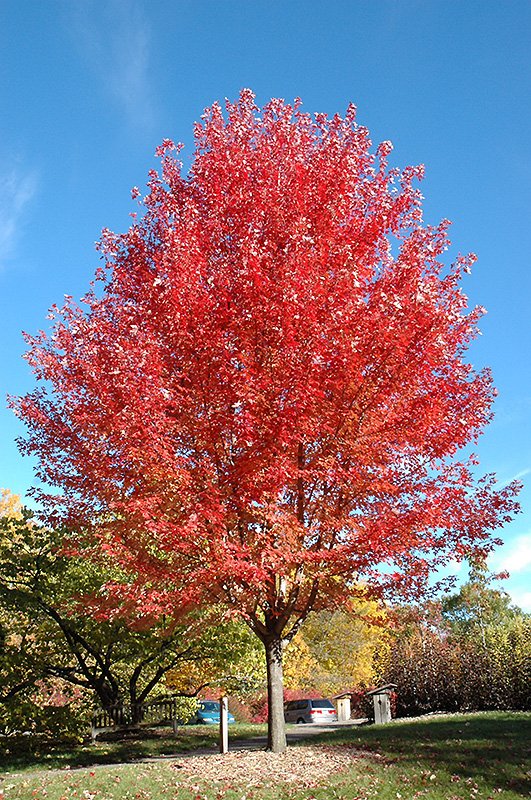
This tree is a cross between the fast-growing Silver Maple and the showy Red Maple - two very popular trees!
Autumn Blaze will provide a display of colour throughout autumn by starting earlier and lasting longer than most other trees. It’s large, with 5-inch leaves that begin by turning red at the top, then eventually shades of red and orange cascade down the length of the tree.
Even in the winter, this is a beautiful specimen because its shape is so symmetrical.
Seven-Son Flower
Botanical Name: Heptacodium miconioides
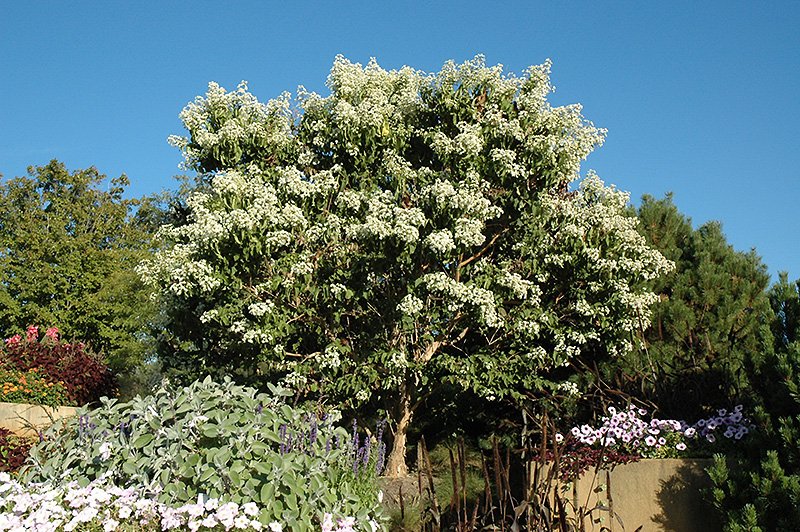
Considered a small tree or large shrub, Seven-Son Flower is popular for its year-round beauty!
Growing to a maximum of 6.1 metres (20 feet) tall and 3 metres (9.8 feet) wide, the leaves of this plant change from spring to summer, making it an interesting specimen plant in the garden.
The biggest attraction is the fragrant white blooms it produces late in summer, which are highly attractive to hummingbirds and other pollinators. As the blooms fall, they leave behind pink sepals, so it looks like it’s in bloom all over again!
Its unusual bark makes this tree beautiful year-round, but especially in the winter.
Washington Hawthorn
Botanical Name: Crataegus phaenopyrum
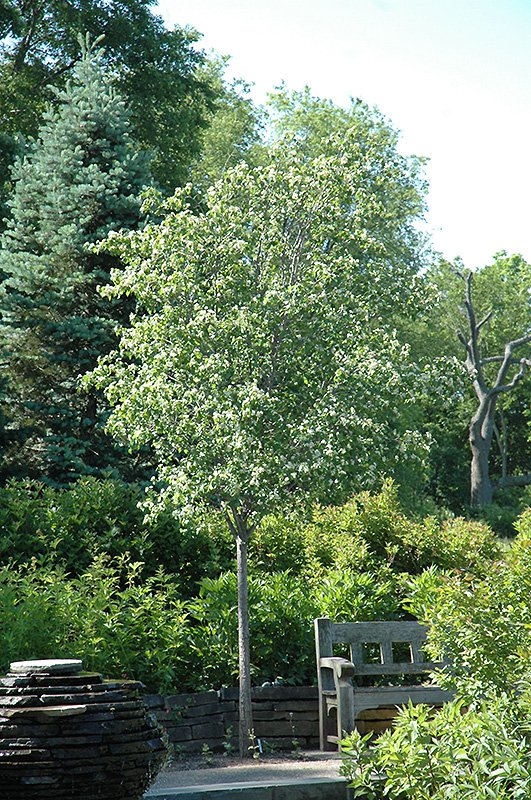

Leaves that turn vibrant shades of orange, purple or scarlet red in the fall are just part of the beauty of this small tree.
This is another specimen with year-round interest. In early spring, reddish-purple leaves emerge, which eventually turn dark green, followed by graceful white flowers. After its fall show, it produces bright red berries that last for most of the winter.
Maturing at 8 to 9 metres (25-30 feet) tall, Washington Hawthorn is also an important nectar plant for pollinators and provides food for birds in the winter.
Barberries
Botanical Name: Berberis thunbergii
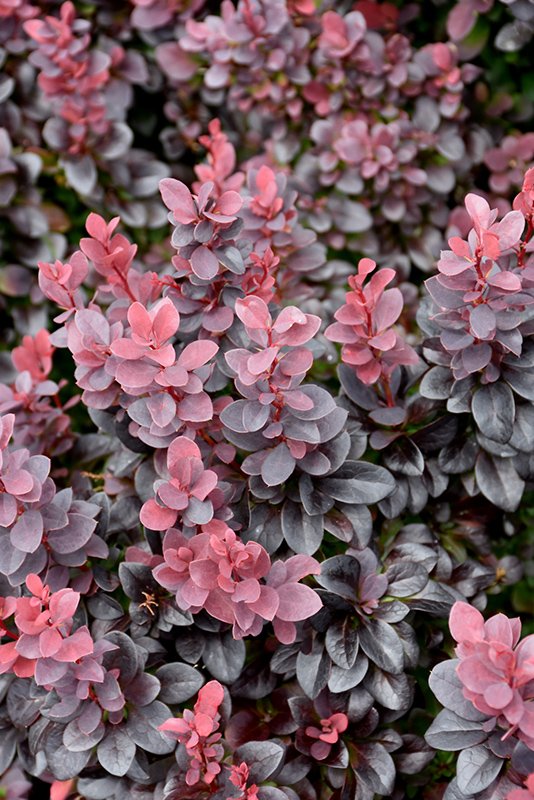
Concorde Japanese Barberry
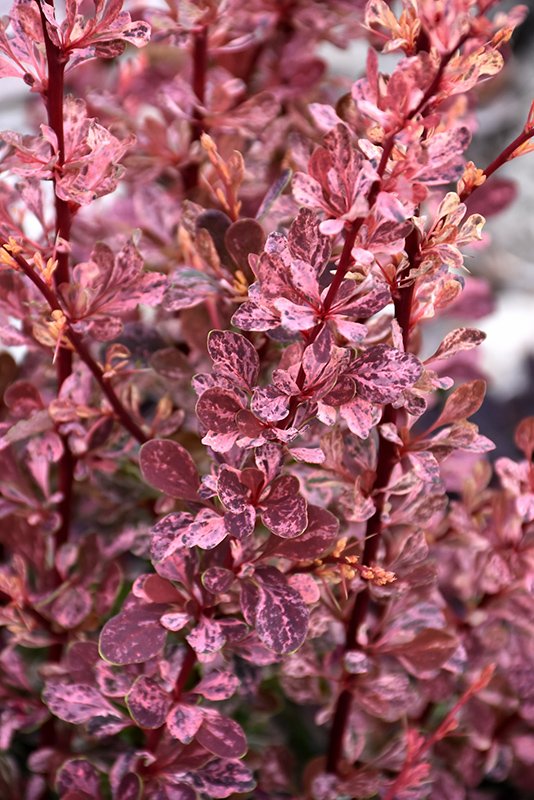
Rose Glow Japanese Barberry
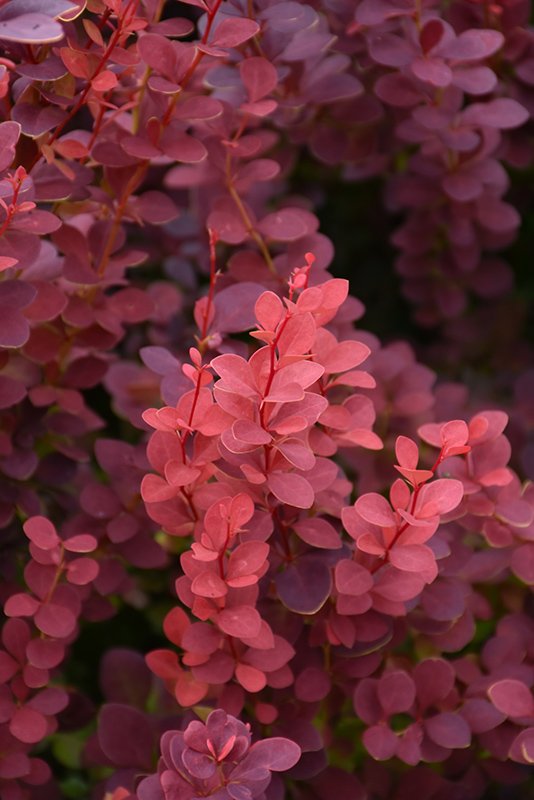
Ruby Carousel Japanese Barberry
Depending on the type of Barberry these deciduous shrubs can grow ½ to 3 metres (1-10 feet) tall and have varied shapes and features as well. For example:
- Barberry, Concorde (Berberis thunbergii 'Concorde')forms a nice globe when it's mature. Leaves start out red and gradually turn a deep, dark purple as they mature.
- Barberry, Ruby Carousel (Berberis thunbergii 'Bailone') is a compact variety with vibrant, ruby-red foliage.
- Barberry, Rose Glow (Berberis thunbergii 'Rose Glow') which matures to 1 to 1 ½ metres (3-5 feet) tall, starts out with a combination of green, white, and deep rose-red foliage in the spring. In the fall, it produces bright red berries that persist into winter.
Beautyberry, Pearl Glam
Botanical Name: Callicarpa 'NCCX2'
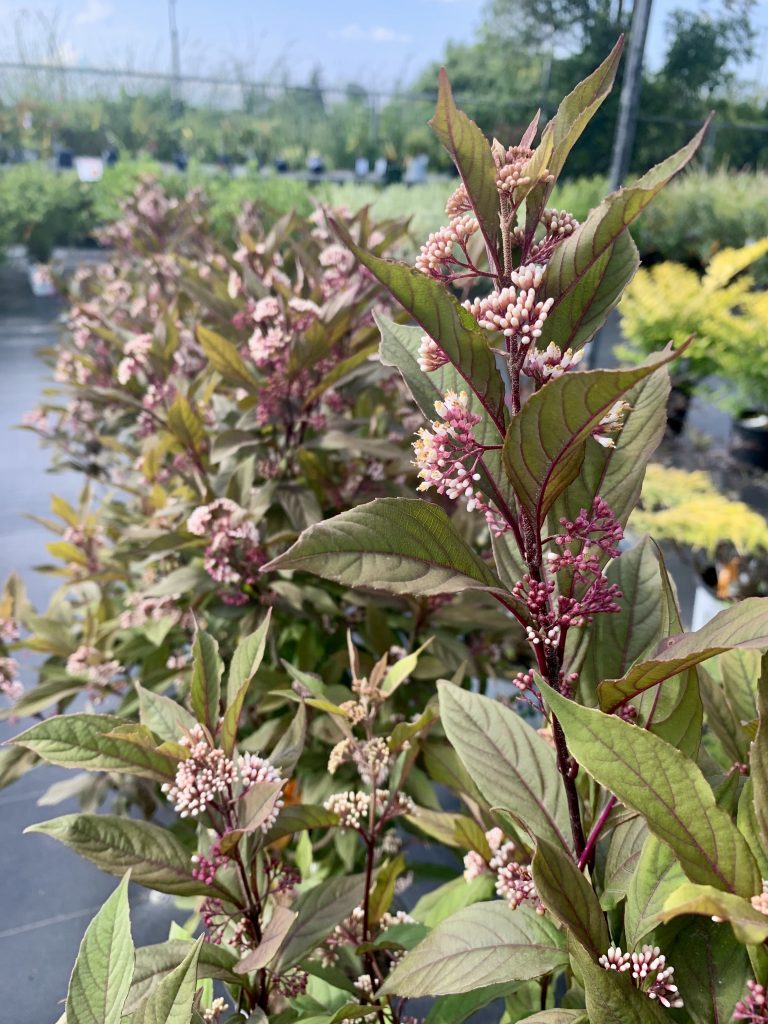
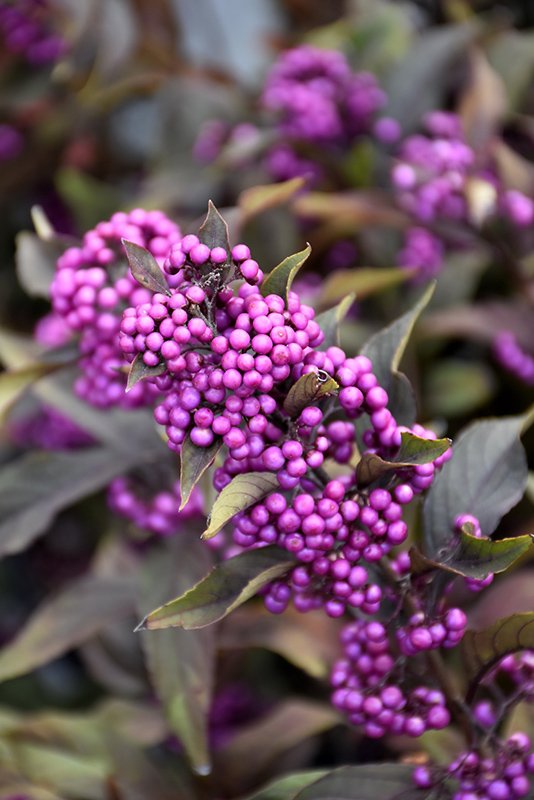
While many Beautyberry are showy in the fall, Pearl Glam is an upright, small shrub that has all-season interest. Its dark purple foliage emerges in the spring that lasts until frost.
In late summer it’s adorned with white flowers which attract butterflies and bees. After blooming it produces hundreds of beautiful violet-purple berries which last long after the leaves have fallen.
Crepe Myrtle, Cherry Mocha
Botanical Name: Lagerstroemia 'Cherry Mocha'
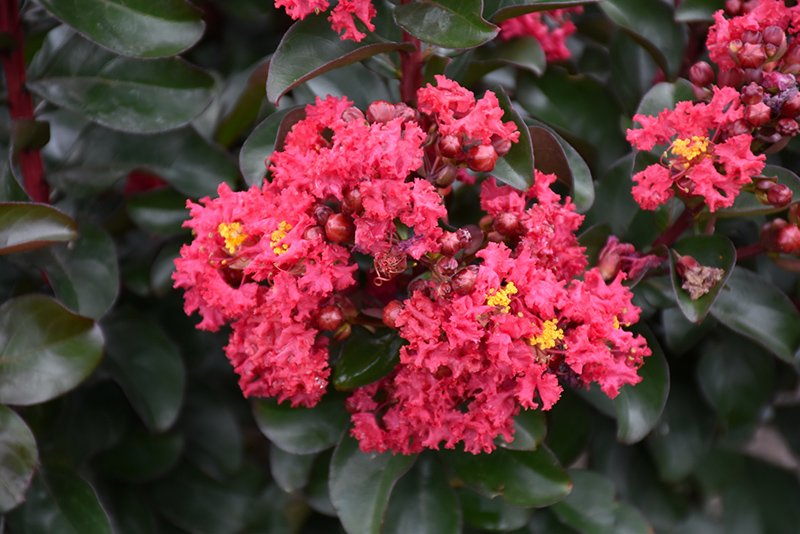
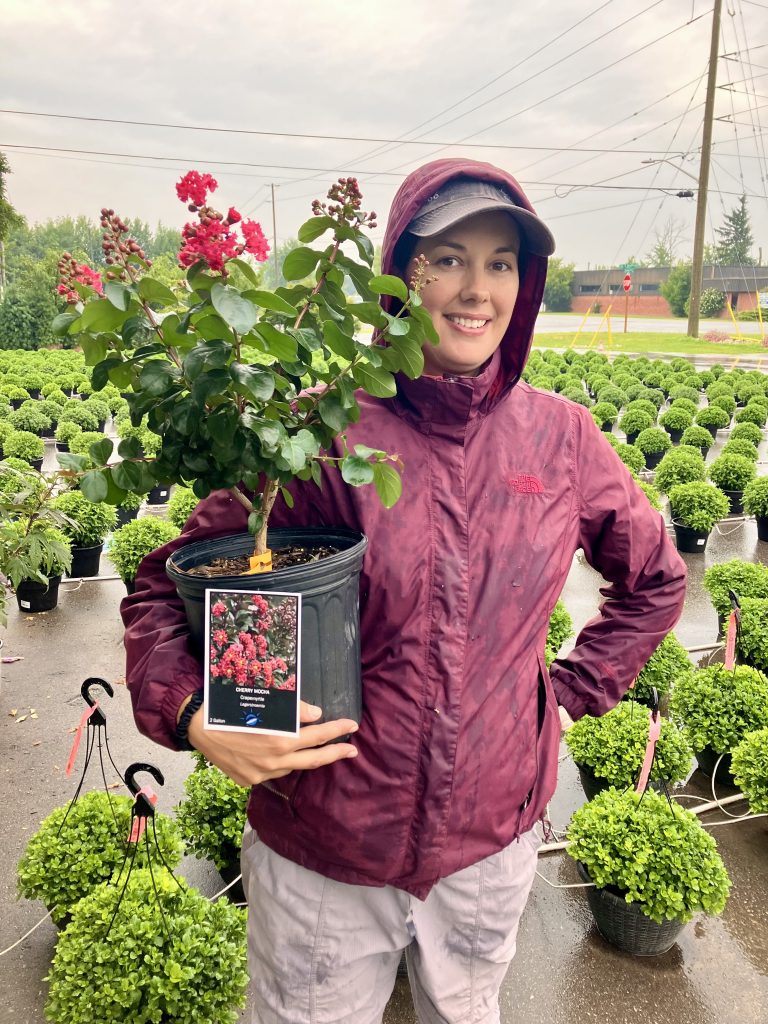
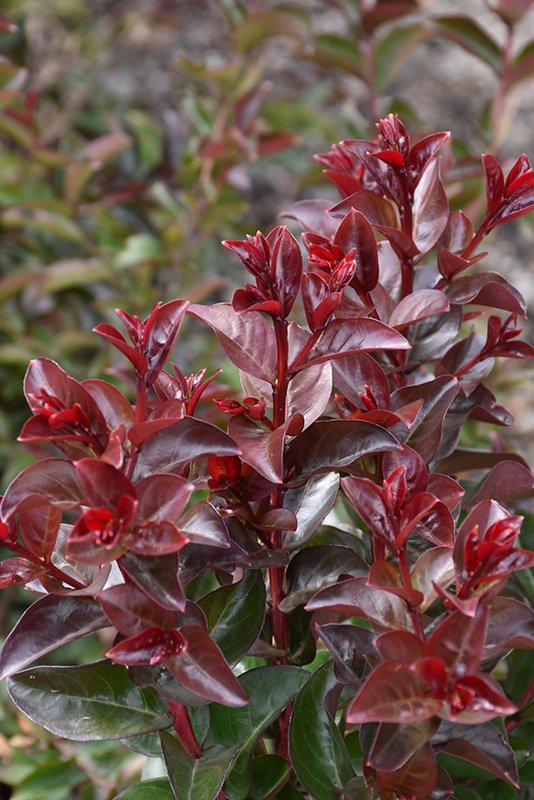
Another small ornamental deciduous shrub with an upright growing habit, Cherry Mocha Crepe Myrtle has decorative appeal in every season.
Burgundy coloured stems with semi-glossy burgundy leaves makes this plant stand out. To add to that, new growth at the tips starts out glossy, deep red. If that’s not enough, in late summer and early fall, the blooms on this cultivar are large, cherry-red flowers which stand out from the burgundy foliage. Its flowers late in the season provide important food for bees. After flowering, green seed pods provide extra interest.
Note: Have you ever wondered why leaves on trees and shrubs change each fall? Here’s a simple explanation. During the long, sunny days of summer, trees and shrubs produce plenty of chlorophyll - the food needed to keep the leaves green. In autumn, as the days grow shorter and temperatures are cooler, there is less chlorophyll produced and the plant breaks down residual chemicals on the surface of the leaves which produces shades of red, orange and yellow.
You’ll find more information in our handy Eisings online Plant Finder!
By: Ava Green
More than just a name, the brands we love and trust at Sassyfras not only have a great reputation but also offer excellent quality, fit, and, importantly, style. We trust their track record and can enthusiastically recommend these brands to you!
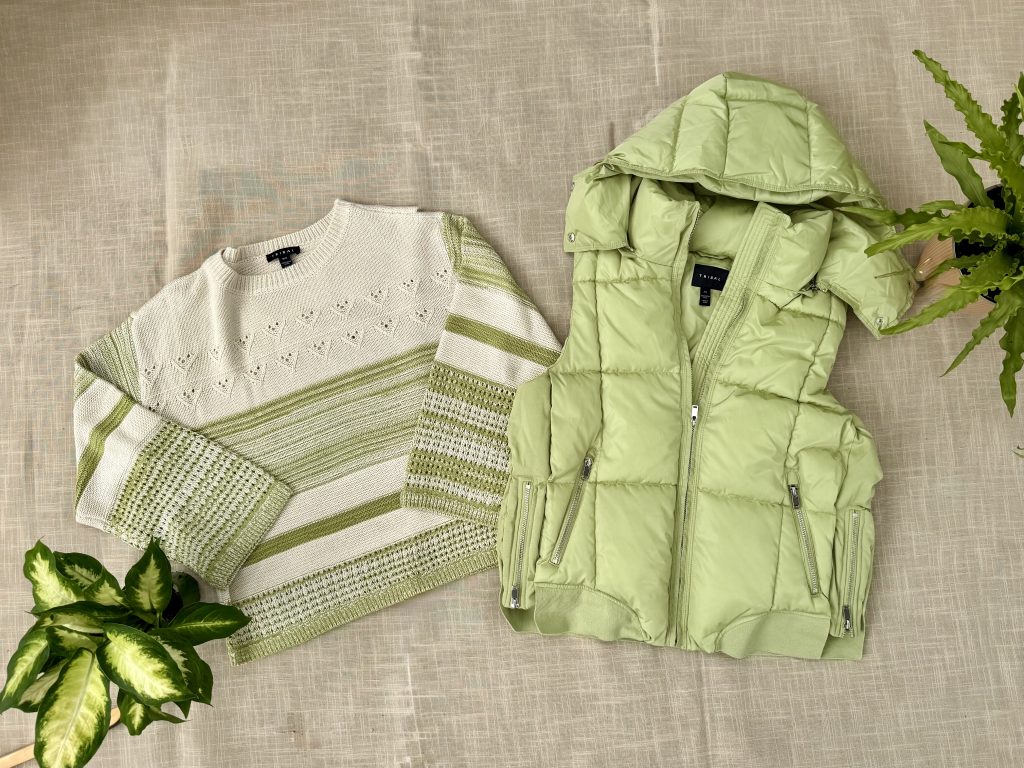
Tribal
Founded more than 50 years ago in Montreal, their mission still remains the same - to make women look and feel their best, no matter what they’re doing. They know first-hand what that is because women design Tribal clothing for women. Consistent fit and premium fabrics are hallmarks of their quality garments.
Habitat
Comfort, fit and detail are the priorities for clothing from the Habitat brand. Founder and designer Suzanne Connelly is committed to creating clothing that fits well and suits customers’ tastes. This is not fast fashion that you’ll find everywhere, Habitat produces limited quantities for specialty boutiques - like Sassyfras!

b.Young 🍁
Great quality designs with value for your money have been the focus of b.Young since their inception in 1991 in Denmark. Creating timeless pieces using improved processes with an eye on the environmental impact of textile production, their goal is to produce pieces that will last. This is a brand that creates beautiful styles with integrity.
Culture Clothing
Daring to be different, and urging you to be you, Culture Clothing is a brand that stands out. Whether you’re looking for a piece that’s comfy and classic or a colourful statement piece, this is a brand worth checking out!
Soya Concept
Fashionable, colourful, and feminine for everything from shirts to skirts that are made for women. With a focus on sustainability, high-quality fabrics, affordable prices, and the latest trends, Soya Concept is a brand that aims to earn your loyalty.

Point Zero🍁
One of Canada’s leading clothing brands for men and women since 1979, Point Zero has lots to offer. Based in the heart of Montreal’s fashion district, this Canadian company is focused on great design, superior quality, and trendy fashions all at an attractive price. Additionally, they focus on their ecological footprint in terms of materials and the manufacturing process. An admirable brand that’s homegrown.
Dévia 🍁
Based in Montreal, Devia clothing is proudly designed and made in Canada. With a passion for fashion, they create inspiring and eclectic designs at affordable prices.
Terrera 🍁
Earth-friendly fibres, conscious production, and a commitment to giving back make Terrera an outstanding, sustainable, Canadian company. We think you’ll fall in love with their comfortable, easy-to-wear bamboo basics like bralettes, undies and leggings all created to fit and flatter women.
Moffi
Unique, high-quality clothing with sophisticated details and elegant design. Moffi is designed to appeal to every woman.
What’s In Store For You?
Step into Sassyfras at Eising Garden Centre and explore our carefully curated collection of trusted clothing brands. We’re here to provide great personal service and high-quality pieces from brands you’ll be proud to wear!
A well-chosen hedge can do a lot more than just look great—it can give you privacy, act as a windbreak, define garden spaces, reduce noise, or add year-round greenery. Whether you're looking to block out a view, frame your garden, or just create a lush backdrop, hedges are incredibly versatile.
One of the most underappreciated roles of a hedge? It makes everything in front of it—flowers, trees, garden art—look even better. Think of it as a green stage curtain that lets your garden stars shine.
Pretty much any shrub planted in a row can create a hedge, but the right plant depends on what you want it to do. Here are some of our top picks.
Evergreen Hedges - The Classic Green Wall
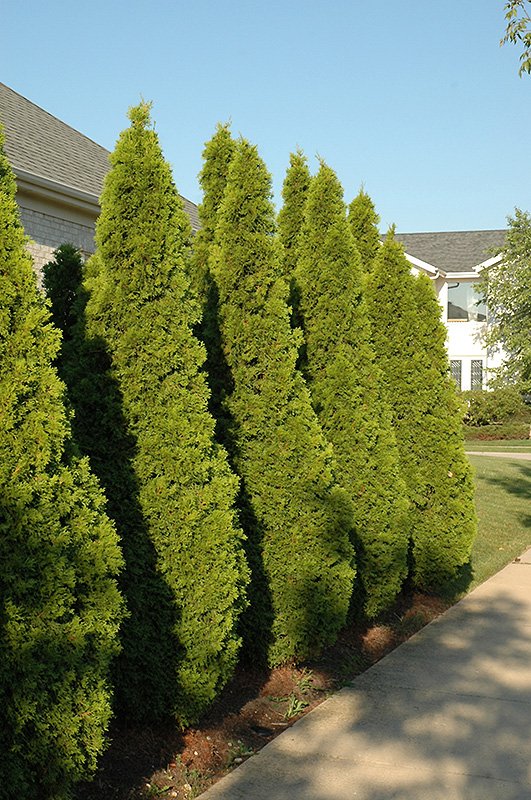
Botanical Name: Thuja occidentalis 'Smaragd'
Cedar is a favourite for a reason. With its dense, year-round green foliage and low-maintenance nature, it's ideal for privacy. Depending on the type, cedars can grow between 9–14 feet tall, forming a living wall that blocks wind, noise, and prying eyes. It also makes a lovely backdrop for all your other plants.
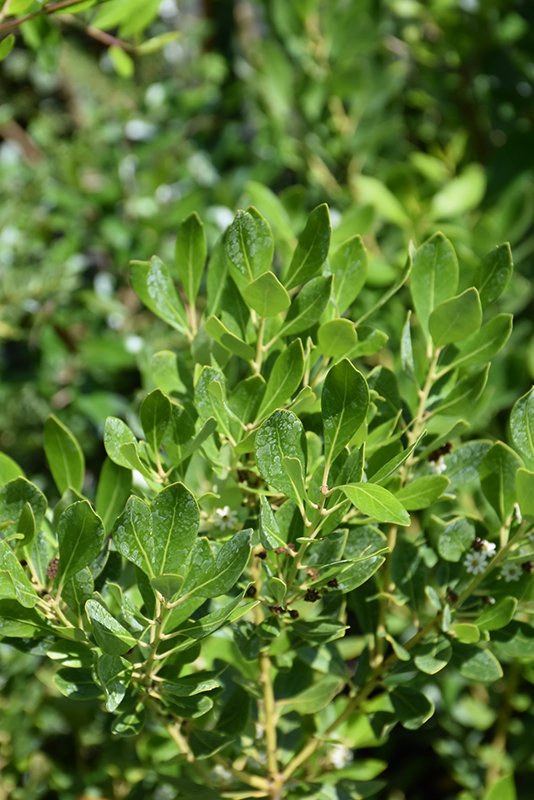
Botanical Name: Ilex glabra
Looking for a Boxwood alternative? Inkberry Holly is a great choice—especially if you're concerned about Boxwood Blight. This broadleaf evergreen keeps its dark, glossy green leaves all year and can grow up to 8 feet tall if left unpruned. It loves full sun, wet soil, and even acidic conditions. You can trim it to keep it neat or let it grow naturally—either way, it makes a fantastic border or garden divider.
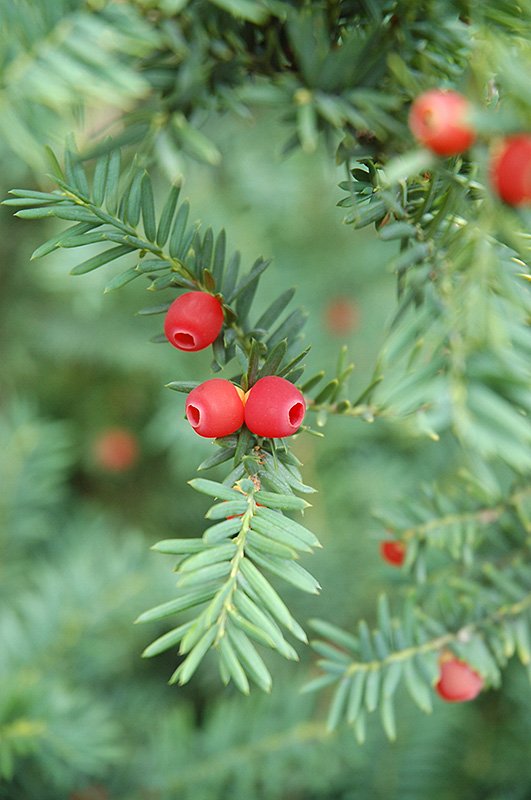
Botanical Name: Taxus cuspidata
With dense, dark green foliage that stays lush all year-round, Yews make excellent hedges for privacy, property lines, and garden backdrops. They’re incredibly versatile—leave them to grow naturally for a softer look or trim regularly for a crisp, formal shape. Yews respond beautifully to pruning, creating a smooth, tailored finish. Just be sure to wear gloves when handling them, and plant them away from children, pets and livestock, as all parts of this striking plant are toxic.
Deciduous Hedges with Drama and Colour
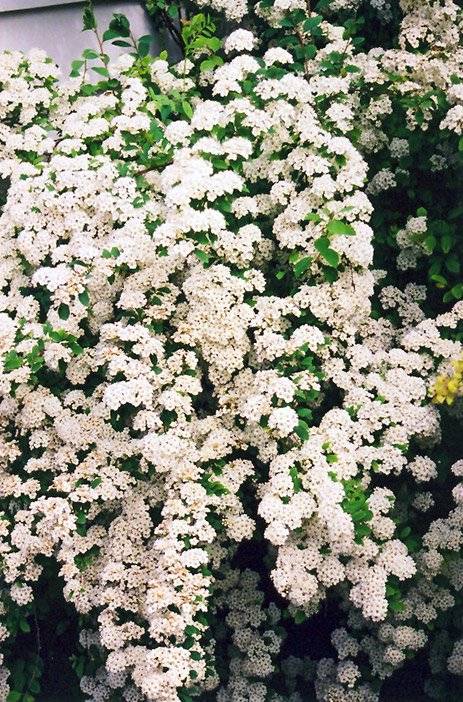
Botanical Name: Spiraea x vanhouttei
Graceful, arching branches that are completely covered in double-white blooms in the Spring make Bridalwreath Spirea a truly stunning hedge plant in the spring. After its spring show, small, glossy green leaves cover this plant until the fall, when its leaves take on beautiful autumn colours.
Bridalwreath Spirea grows to a mature height of 4-9 feet, can tolerate light shade as well as a variety of soil conditions and can be lightly pruned to shape. They are also deer-resistant.
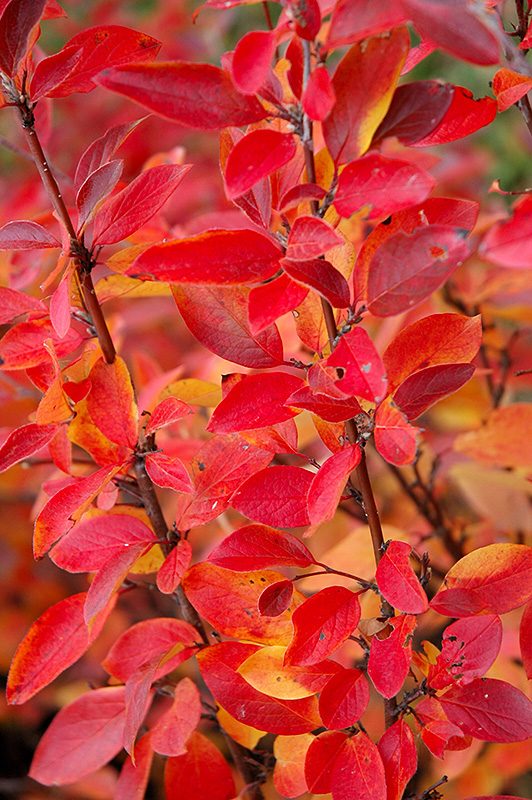
Botanical Name: Cotoneaster lucidus
Peking Cotoneaster may not be flashy, but there are lots of reasons to love this shrub. Its smooth, dark green leaves create a clean, structured look that works beautifully behind flowering plants or along fences. In fall, the leaves turn a fiery red, and black berries appear, which birds snack on through the winter. Growing 5–7 feet tall, this shrub is also a great choice for wind protection and bird habitat.
Still not sure which plants to choose for your hedge? Stop in to see us at Eising Garden Centre and talk to one of our tree and shrub specialists - Zach, Sandy and Donna, or contact one of our landscape design specialists, Emily or Lucas. We’re here to help!