
Expert Picks You Can Plant Right Now
By Ava Green
Looking for a flowering shrub that delivers season after season? We asked our experts at Eising Garden Centre to share their top picks, the ones that customers and staff love most, and they delivered. Whether you’re looking for spring blooms, fall colour, wildlife and pollinator value, or a shrub to suit your space, there’s something on this list for every garden.
Fuji Cherry ‘Little Twist’, Prunus incisa ‘CarltonLT’
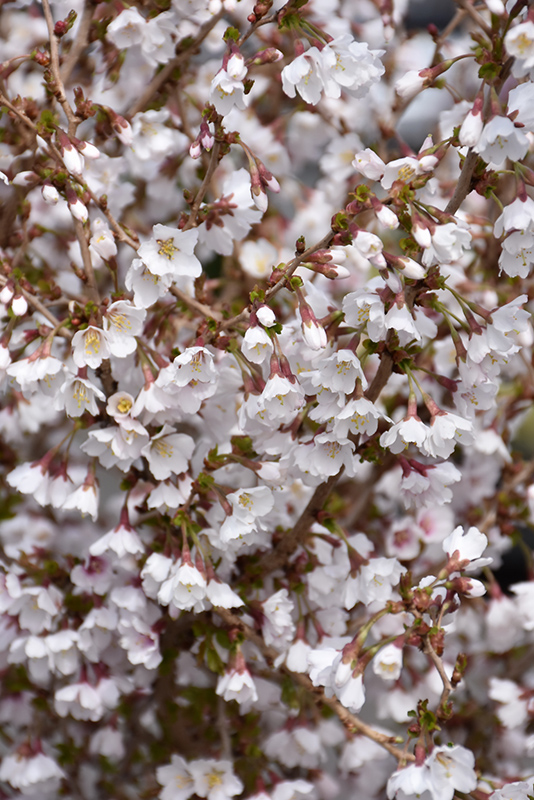
As an accent in a small garden, or planted in a grouping in a larger garden, this multi-stemmed shrub is a gem!
In early spring, crimson buds emerge before the leaves appear. Little Twist then produces clusters of lightly scented white, bell-shaped flowers with soft pink centres that grow along its stems, a stunning early-season display. It is a deciduous shrub, and leaves begin as green before shifting to coppery-bronze, then deepen to a rich burgundy in fall. Smooth, dark red bark adds interest in the winter once the leaves are gone.
This slow-growing, multi-stemmed shrub makes a striking feature in your garden.
Best for: Small gardens, accent planting, four-season interest. | Sun: Full sun | Mature size: 6 ft. tall × 6 ft. wide
Downy Serviceberry, Amelanchier canadensis
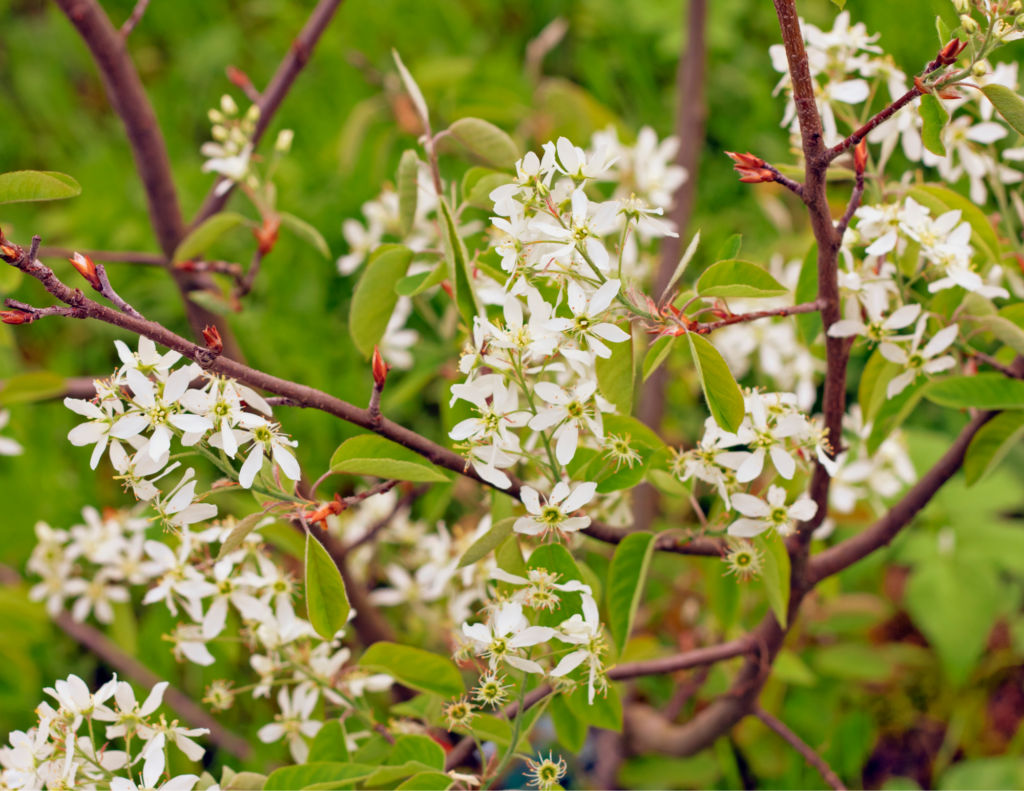
One of the most rewarding native shrubs you can plant, Downy Serviceberry earns its place in the garden from spring right through to fall. Showy clusters of fragrant white flowers in early spring, followed by small, sweet, edible purple-blue berries in early summer that are wonderful for making jam and an absolute favourite for birds. Come fall, the foliage puts on a spectacular show in shades of yellow, red, and orange.
As a bonus, choosing a native plant like Serviceberry supports local pollinators and wildlife, making it as ecologically valuable as it is beautiful. It works well as a specimen plant on it’s own, in a grouping or hedge, or naturalized in a larger landscape.
Best for: Wildlife gardens, naturalized areas, multi-season interest | Sun: Full sun to part shade | Mature size: 20 ft. tall × 10 ft. wide
Amur Privet, Ligustrum Amurense
Amur Privet
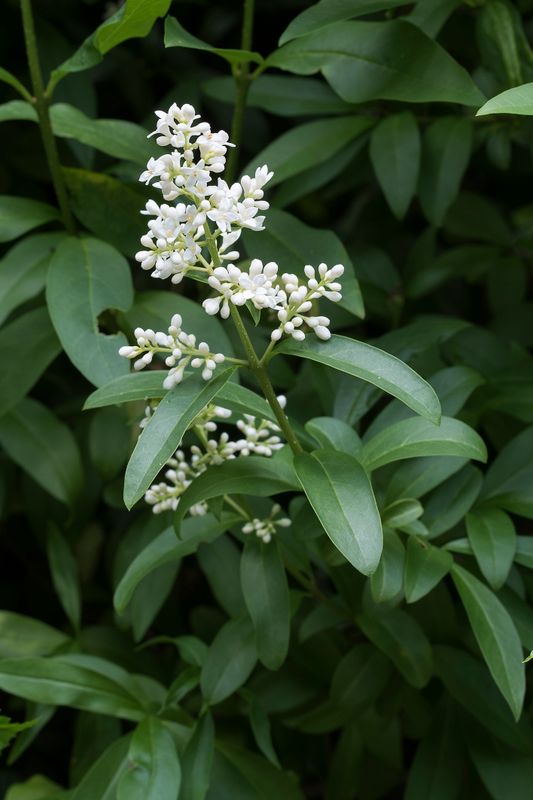
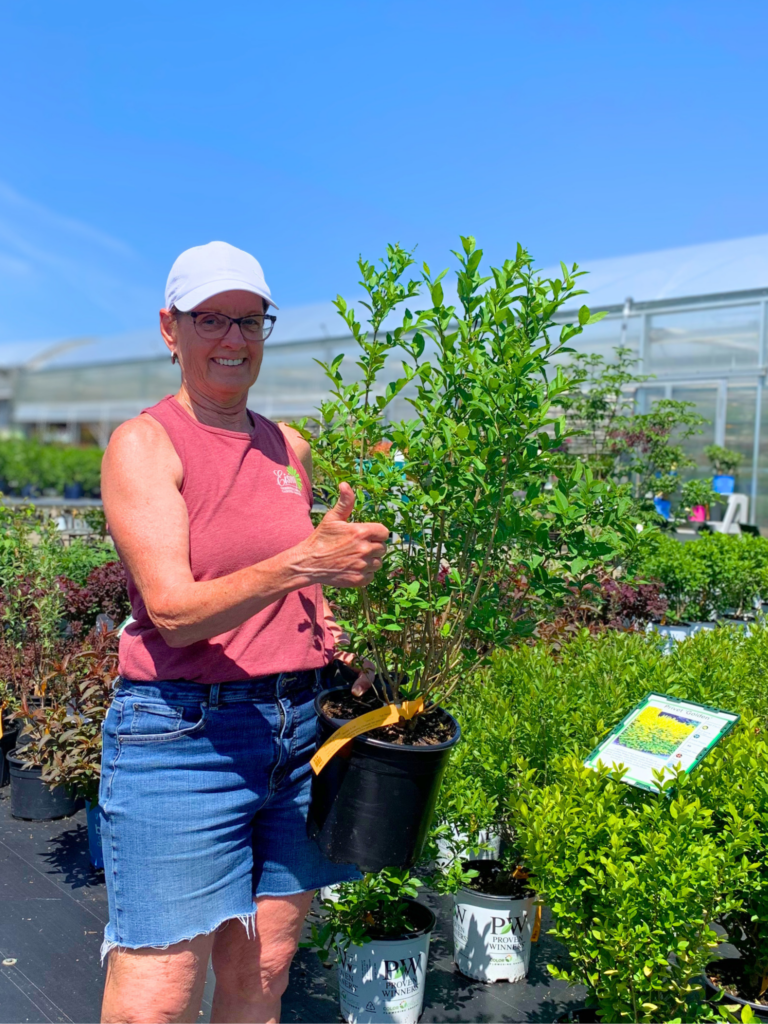
When fast growth and privacy matter, Amur Privet is one of the best choices available. This dense, dark green shrub produces white flower panicles in late spring and small black berries in fall. It responds exceptionally well to pruning after it blooms, making it an ideal candidate for a formal or informal hedge. If you need to fill a space quickly and create structure in your garden, this is a reliable, low-maintenance option.
Best for: Hedging, screening, fast coverage | Sun: Full sun to part shade | Mature size: 12–15 ft. tall × 8–15 ft. wide
Viburnum ‘Fragrant Snowball’, Viburnum Opulus ‘Roseum’
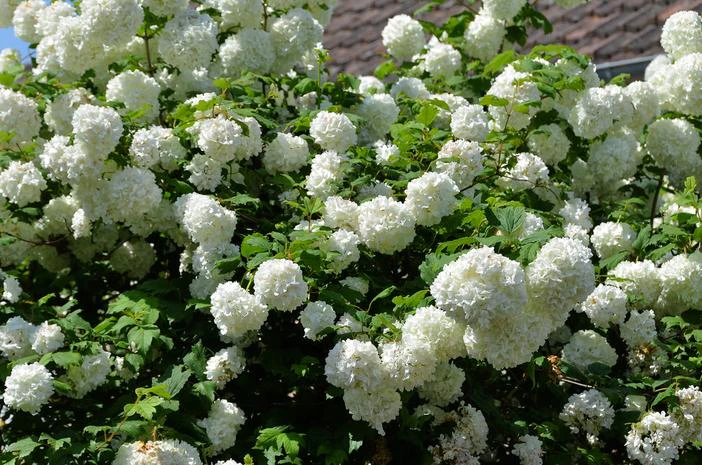
Few shrubs stop people in their tracks quite like Fragrant Snowball Viburnum in full bloom. Large, rounded clusters of sweetly scented white flowers cover the plant in spring, creating a display that’s hard to match. While it doesn’t produce fruit, it earns its place again in the fall when the foliage transitions to rich shades of purple.
Pruning after it blooms will help to keep it a manageable size and encourage healthy new growth. It’s also available as a standard, or tree form, which matures to a more compact 6 to 8 feet tall.
Sun or part shade are best for this deciduous shrub, a beautiful, solitary accent plant for the garden growing 12 feet high and 10 feet wide. As a standard, it is smaller, maturing at 6 to 8 feet tall and 5 to 6 feet wide.
Best for: Specimen planting, cottage gardens, fragrance | Sun: Full sun to part shade | Mature size: 12 ft. tall × 10 ft. wide (shrub); 6–8 ft. tall (standard)
Snowbelle Mockorange, Philadelphus ‘Snowbelle’
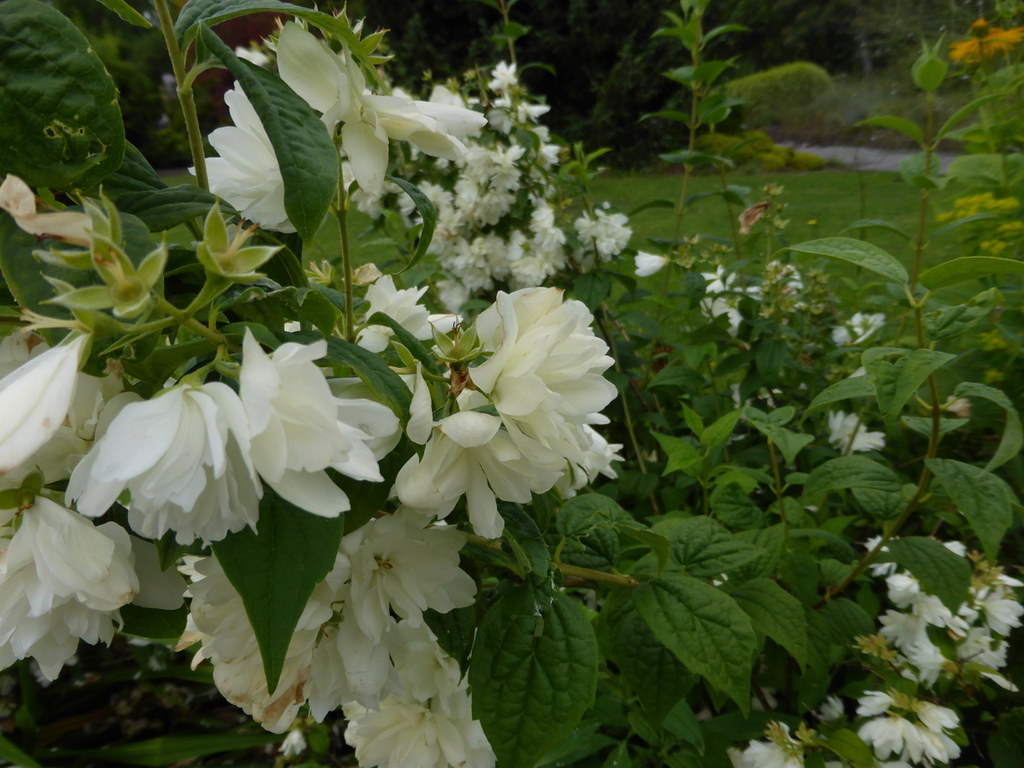
Don’t let its compact size fool you; when Snowbelle Mockorange blooms in early summer, it puts on a big show. This dense, mounded shrub is blanketed in sweetly fragrant double white blooms that are absolutely irresistible to bees and butterflies. Once the flowers fade, its rich, dark-green deciduous foliage makes it a lovely backdrop for other blooming plants in the border.
Growing just four feet tall and wide, it’s one of the best choices for smaller beds, borders and foundation plantings. It prefers full sun but handles part shade as well.
Best for: Small borders, foundation planting, fragrance | Sun: Full sun to part shade | Mature size: 4 ft. tall × 4 ft. wide
More Flowering Shrubs Worth Exploring

This is just the beginning! At Eising Garden Centre, we also carry a wonderful selection of Azalea, Eastern Redbud, Kwanzan Flowering Cherry, Hydrangea, Dogwood, Butterfly Bush, Beauty Bush, Lilac, Rose of Sharon, Forsythia, and Potentilla, to name a few.
The best way to find the right flowering shrub for your garden is to come in and see them in person, and right now is the perfect time to plant. Stop by and chat with Zach or Donna, who are always happy to help you find exactly what you’re looking for, based on your space, soil, and vision. We’re here to help you make the most of every corner of your garden!
By Dave Zeldon and Ely Schweyer
Got cabin fever? Perhaps you’re going a little stir crazy looking out the window and seeing the drab, limited pallete in your seemingly lifeless outdoor space. It’s important to embrace this time of year as the composting and cleansing part of Earth’s cycle before spring’s renewal – but that doesn’t mean we should be trapped inside forever. Here’s a winter/early spring list of activities, divided by indoor (Part 1) and outdoor (Part 2), for the gardener and yard keeper.
☝️ First, let’s quickly note the important activity happening under the snow – and how your actions now will affect the summer garden!
What's Going on Outside When We Aren't Paying Attention?
Before heading out to attend to these jobs have a look at the ground beneath you.
If it is frozen hard you are good to go but avoid treading on the crowns of perennials.
If it has been warm and sunny and the soil is warm and dry, consider laying down a few planks to walk on.
If the soil is soggy then postpone those tasks until it has dried. What we are trying to protect is not your shoes but the soil itself.
Ideally, soil is comprised of 50% solid materials such as minerals and organic matter in various stages of decomposition, and 50% open air space. Water from rain or melting snow enters the soil, displacing the air. Wet soil is easier to squish down and that process is called compaction.
While walking on wet soil would not seem to have much effect, it occurs within the depth where annuals, perennials and lawn grasses have their roots. Compaction makes it harder for roots to grow through the soil. Roots can grow stronger to push aside the soil particles, but tougher roots are less effective at drawing in nutrients and moisture. Removing air spaces makes it more difficult for water to percolate down so compacted soils remain wetter. Plants don’t grow as well and are more prone to insect damage.
The freeze/thaw cycles of fall, spring, and winter heave the soil relieving compaction and aerating the soil; a good way to start the growing season. Preventing further damage to the soil is relatively simple. Stay off it when it’s wet. Later, consider using pavers or pathways in heavily travelled areas of the lawn. Aerate the lawn with a machine that removes small plugs of soil and redistributes them over the surface. In beds and borders, add compost and use a thick mulch layer to absorb some of the pressure.
And stay off it when it’s wet.
With this in mind, we can appreciate Earth’s renewal capabilities, as well as prevent destroying our yards and gardens!

Part 1: Activities for When it’s too Cold and the Soil isn’t Ready Yet
Yup, it’s bleak out there. It’s time we make that herbal tea and turn our attention to creating a lively, green indoor environment, even if just to get us through the winter. Here’s a to-do list for trapped gardeners and plant enthusiasts to make the most of our wintry sentence.
Indoors: Get Inspired!
- Expand your knowledge: There’s an endless plethora of botanical media at our fingertips, use this down time to learn more!
- Sustainable winter crafts: Why buy décor and gifts when you can make them from materials found outside? Perhaps you dried flowers or found some interesting seed pods – time to display them, and perhaps, eventually compost them.
- Visit botanical gardens: Ely’s boyfriend took her to the Royal Botanical Gardens as a birthday gift last year! Botanical gardens are a great way to experience interesting plants being preserved in a welcoming environment that differ from the dreary winter outside.
- Get floral: Try buying flowers and displaying your own arrangements! Colour is something we sometimes lack in the wintry months, and this is a good way to introduce it impermanently.

Indoors: Thinking Ahead!
- Use this winter down time to plan the next garden season - find more here on garden planning.
- Use a garden journal to assist your garden planning - see here inspo for garden journaling.
- Consider planning companion plants - see more here on companion planting.
- Go pot shopping – your local greenhouses and ceramic shops would love your support in the winter.

Indoors: New Beginnings!
- Bulb forcing and small science experiments: Flowering bulbs like amaryllis (more on amaryllis here) aren’t just a holiday splendor! Now is also the time to create cuttings to share with friends.
- Invest in winter fruiting botanicals like indoor fruit trees. Small, potted citrus by the window don’t only liven up the place but offer nutritious treats in the winter. Consider a calamondin!
- Microgreens - see our blog about it! When it’s too early to start seedlings that will go in the ground, you can still garden right on your kitchen counter.
- In late winter, start seedlings: but make sure you don't do so too early! Untimely seedlings can be too leggy before it's time to plant them outside - learn about hardening off seedlings here.

Part 2: When the Soil IS Ready!
Suit up!
Outdoors: Don’t Fall Behind!
- Appropriate seasonal décor: It goes without saying stringing lights and ornaments everywhere is good for the spirits in these dreary months… however 😬… come February, they seem to lose their vigor. Taking the décor down in preparation for new exciting things to come is also good for the soul! Remember to recycle your Christmas tree (see how here)!
- Turn your compost! Perhaps you’ve faithfully continued to add to your compost all year – your garden thanks you! On a warm day, remember to turn it and aerate it so it’s ready for spring.
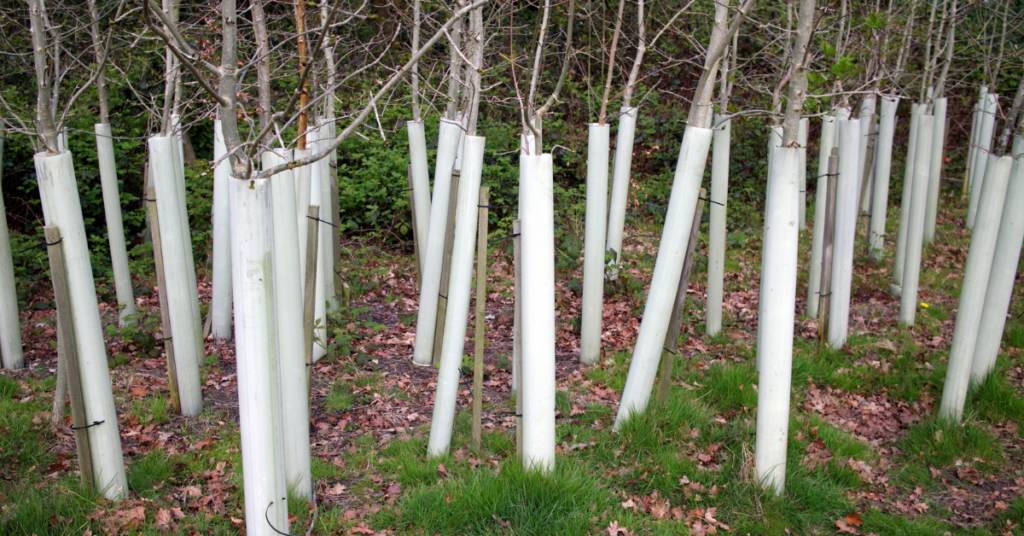
- Cover all your bases: Make sure to prevent rodents from damaging your tree bases by wrapping them well above the anticipated snow level – so rodents can’t chew your unprotected trees with the helpful elevation of snow!
Outdoors: Get Inspired!
- Go for nature walks: if you can safely go for a walk, hit the trails or stroll around your neighbourhood! A slow-paced change of scenery will help to fight your cabin fever, keep you active, and help you gather inspiration from the natural world.
- Visit your local maple syrup producers for tours.
- Don’t forget our critters: Provide winter homage and appropriate food for our nonmigratory friends (i.e., hutches and feeders) outside windows where pets can observe nature too!

Outdoors: Thinking Ahead!
- Winter weeding: Some tough varieties of plants have evolved to use other plants’ winter dormancy to their advantage, tugging them out now will ensure that you and all the wanted plants in your garden have a fair start this spring.
- Manage snow piling: Heaped snow piling can kill plants including lawn, as well as introduce gravel and debris to areas where gravel is not wanted. Make sure your snow piles aren’t suppressing anything you’d like to live this summer.
- Early spring: Perhaps ice storms and plows have done a number on your trees and shrubs - prune broken branches to prevent pests and disease from entering your plants.
- Litter control: pick up the debris revealed by melting snow so it doesn’t venture farther into natural habitats or tempt wild animals to hurt themselves.

Outdoors: Start Something New!
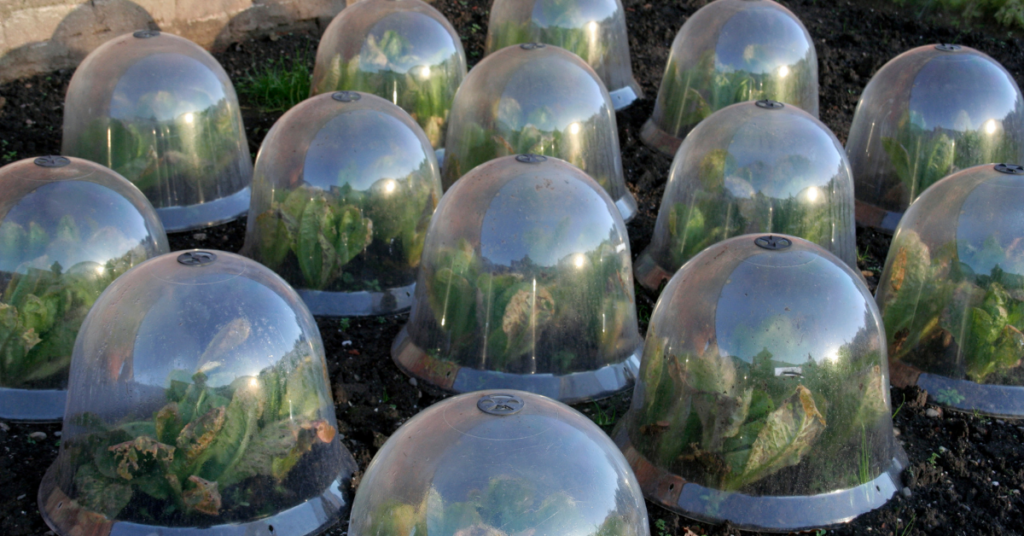
- Cold hardy crops in cold frames: Cold frames are doable! Use recycled materials - Victory gardens often used car windshields and old windows – to construct in-ground beds facing the sun (southwards) for passive solar heating.
- Winter sowing: Find more on winter sowing here.
We hope these suggestions help you stay green this spring and winter! For more gardening activities, see our other blogs here. We hope to see you this spring (March 5th, 2026) at Eising Greenhouses and Garden Centre! 🌱❄️
By: Dave Zeldon and Ely Schweyer with tips from Mary K, Zach C, Sandy M, and Jeanine LT!
Now is the time to prep our outdoor landscapes for the coming cold weather and the ensuing spring! Perhaps your autumn is calmer than your spring, and this is the best time to clean up and begin new projects. The following are some simple but effective tips to get your yard winter-ready - so your spring will be a little more pleasant for you!
Planting
When warm weather still allows it, plant trees, shrubs, perennials, and bulbs to allow them to establish for budding and blooming next spring.
Pond Care
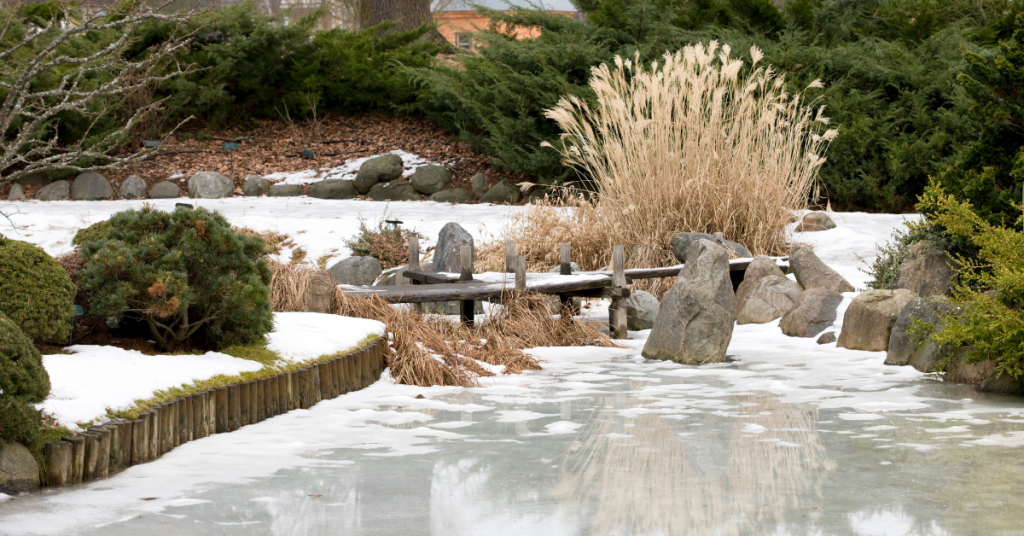
Mary, our perennials gal, suggests not removing any water from your pond but instead aerating it all winter. She skims out the leaves to maintain the balance of the nitrogen cycle in the water and suggests waiting to do a big pond clean out in the spring, as that’s when the water’s culture can bounce back easier.
Fertilizing
After top growth of your landscape plants ceases, reduce your annual fertilizer application by up to half of the requirement. Autumn is a major root growth period for woody and herbaceous perennials; roots will grow and absorb nutrients whenever soil temperatures remain above 5 °C but can be over fertilized quickly in these cooling temperatures.
Produce gardens could benefit at this time from a top layer of compost that will break down during the winter so it isn't too 'hot' for spring planting.
Leaf Litter
Here’s our pitch on the ‘leave it – don’t leave it’ debate: It DEPENDS.
Ideally, we should leave litter leaf on the ground for our pollinator friends and endangered species like fireflies to hide out in the winter. But, there are appropriate situations in which to remove leaf litter.
- When they’re covering your bulbs and tender perennials, remove SOME. Leaf litter acts as a ground insulant, which can amplify our temperamental zone 6b temperatures. This freezing and thawing can often confuse and kill early spring bulbs and tender perennials.
- Zach, our trees and shrubs guy, suggests that if a tree shedding leaves has been diagnosed with pests and fungi, remove the leaf matter to reduce the spread to other plants. Diseased matter should always be removed in a quarantined fashion and taken to a landfill or burned.
☝️Please note: Unless diseased, compost your leaves, they contain vital nutrients specific to the plants they came from!

Lawncare
With autumn mowing practices you have the opportunity for the addition of much needed organic matter for your lawn, which is also an excellent source of slow release nutrients. Keep mower blades sharp since leaves can be tougher than grass. Raise the mower height up and mow leaves when they are lightly wet (e.g., morning dew). This will keep the leaves from blowing all over and will prevent the mower from getting bogged down in wet leaves.
See more on general lawncare in Dave's Lawncare 101 post.
Clean Up
Now is a good time to wash your tools with soap and water to prevent diseases spreading from plant to plant.
☝️Mary's tip is to spray garden tools with PAM before use, so the dirt slides right off them!

Pruning Perennials
Mary, our perennials gal, suggests leaving things until frost to cut back. This way they're easier to compost. Make sure to leave seedheads (i.e., coneflowers and black-eyed Susans) for wildlife, and things like hydrangeas for winter interest.
☝️Make sure if things are cut back, to leave them sticking up enough you can still find them in the spring!
Dividing and Moving Perennials
Moving or dividing perennials in the autumn is a great way to reduce your work next spring. The cool, moist weather is an ideal time for perennial roots to become well established.
👍The rule of green thumb for moving perennials: If the plant blooms between early spring and late June, then early fall division/moving is ideal. If the plant blooms after late June, then early spring division is ideal (except for Peonies which should only moved or divided in the fall, Poppies in August, Irises in July & Lilies in the Fall).

Overwintering Trees
Zach and Sandy from trees and shrubs suggest a couple of things to help your favourite trees along this winter:
- To reduce winter injury in evergreens: Keep properly watered throughout the growing season and into the fall is another way to reduce winter injury. Decrease watering slightly in September to encourage hardening off, then water thoroughly in October until freeze-up.
- Cedars - Spray cedars with antidesiccant spray (available at Eising GC) or wrap in burlap (with stakes to create dead air space) so wind doesn't dry out and burn tips.
- Fruit trees - In late fall, spray fruit trees with sulfur-horticultural oil (available at Eising GC) for protection against fungi and pests overwintering in the bark.
- Ornamental trees - wrap the base of young trees to protect from chewing rodents.
- Pruning trees - trees that prefer winter pruning rather than spring pruning are maples, oaks, birches, and elms, as well as with fruiting trees such as apples and pears. This ensures blight and pests will not affect the tree's open wounds.
If you missed the frosty deadline for transplanting trees, Sandy suggests insulating unplanted potted trees to help them best survive the coming winter. Here are some methods:
- Double-pot your tree with an insulative barrier (i.e., burlap, straw, mulch, etc.) stuffed between the two pots and securely cover the top with tarp to deflect moisture.
- Bury your potted tree in the ground, level with the top of the pot (don’t forget to dig it back up!) and mulch the area.
- Huddle all of your unplanted trees and plants together when using the above methods.

Mulching
Mulching is one of the simplest and most beneficial practices you can do for your garden. Just by simply placing a protective layer of material over the bare soil will benefit the soil as it decomposes providing the much-needed organic matter which improves root growth, the infiltration of water and the nutrient-holding capacity of the soil while reducing soil erosion.
A good layer of mulch allows the soil to warm more slowly in the spring, so perennials aren't fooled into breaking dormancy too early, as you want the ground to stay cold until it really is spring!
☝️Make sure your mulch application won't stunt the growth of your plants come spring as discussed in our Transplant Troubleshooting blog post!

Japanese Beetle Prevention
Nematodes are microscopic worms that should be applied to lawns that have been ravaged by grubs especially of the Japanese Beetle. Nematodes have a short shelf life and must be refrigerated until they are applied. Normally, they are sprayed onto the lawn from mid-May to mid-June and then again (for best practice) from mid-August to mid-September.
Pots
To prevent freezing and cracking, Mary suggests emptying and turning your pots upside down. You can disinfect at this time too.
Design Time!
Jeanine, from production, suggests writing down what worked best in your produce garden this year so you can implement it again in the spring.
With the trees and land being barren enough you can see its contour, now is a great time to plan ahead for spring landscaping! Don't forget Eising GC would love to offer help with your landscape designing!
We hope these tips help your landscape plants enjoy your winter abode as much as you do this season, for more information - and plants – visit Eising Greenhouse and Garden Centre! 🍁
At some point, garden life calls to many of us. Even if you’ve never nurtured a plant before, planting something and keeping it alive offers a fun, low-cost, and highly rewarding experience. Whether you opt for a few potted plants on a patio or balcony, join a community garden, dedicate part of your yard to flowers, herbs, trees, or vegetables, install raised beds, or set aside a corner of your property to attract pollinators, it’s exciting to consider the possibilities!
The Benefits of Gardening
Stress Release
Nature has a calming effect, and gardening helps you stay grounded in the present moment, freeing your mind from worries about the past or future. For example, the repetitive task of weeding allows your brain to focus, turning the activity into a form of mindful meditation. Meditation doesn’t always involve sitting in solitude on a mountain—it can be as simple as engaging in repetitive tasks like planting or weeding. This process reduces stress and anxiety, ultimately leading to greater happiness.

Boosting Happiness
Speaking of happiness, research shows that certain bacteria in the soil get under fingernails and also get inhaled while you garden. This bacteria can boost your healthy gut flora and release happiness chemicals like serotonin. A healthy gut flora supports a strong immune system, making that dirt-under-the-nails gardener’s manicure well worth it.

Strength & Flexibility
At the start of each gardening season, you might hear from fellow gardeners about their sore muscles—backs, hands, shoulders, hips, and so on. The physical demands of gardening can be challenging at first, but over time, they help build muscle strength and improve flexibility.
If you find working in the garden too strenuous, try kneeling on a soft pad or using a small stool to sit on. Consider using a shovel or rake to assist you in moving up and down to your knees or the stool. Opt for smaller pots and smaller bags of soil and mulch - they’re easier to carry.

Growing Food & Healthy Eating
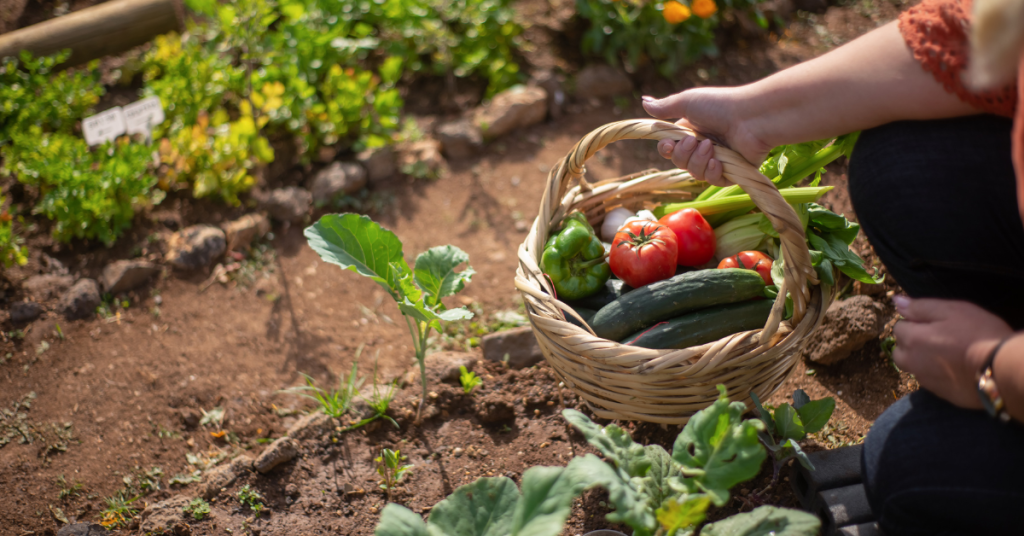
Anyone who’s tasted fresh, homegrown vegetables knows just how delicious they can be. Growing your own produce also encourages you to eat more fruits and vegetables, which naturally leads to better health. The fibre in these foods supports the healthy gut flora mentioned earlier, too!
The Perks of Being Outdoors
All the benefits of gardening—stress relief, happiness, strength, flexibility, and healthy eating contribute to your overall physical and mental well-being. But there’s more.
While outdoors, you absorb vitamin D from the sun, which boosts calcium levels in your body, promoting strong bones and a robust immune system.
Being outside and working in the garden also improves your sleep. After a day of gardening, you’re likely to feel pleasantly tired, helping you fall asleep faster and enjoy a deeper rest. Good quality sleep is essential for overall health, just as important as diet and exercise.
Finally, spending time outdoors encourages deeper breathing, which increases oxygen levels in your blood and boosts serotonin. Deep breathing also aids digestion and helps clear stagnant air from your lungs. Try stepping outside and taking a nice, deep breath. It just feels good, doesn’t it?
While your initial goals for gardening may include harvesting delicious vegetables or creating beautiful bouquets, you’ll also be improving your health in ways you might not have expected!

The promise of Spring signals the season of revitalization, even for your wardrobe. Wouldn’t it be great to open your closet and find clothes that go together and that fit? Also, why is it that just when you find the perfect pair of black pants, there is never anything in the closet that seems to go with them?
Reorganizing your closet so that you can find what you need and know what is missing is easier than you might think. Even if you are already organized and can effortlessly pull an outfit together, this is always a great exercise to freshen things up. A revitalized closet just makes life easier! And organizing each year can be a quick, simple task that is quite enjoyable. Especially when you know there’s a payoff at the end of the job - getting something new to add to the mix!
These simple steps will help you see what items you need to update your closet. Then, when you come in to shop, you will know whether you need something with a burst of colour to freshen things up, like a colour block tee, or one of the great graphic tees at Sassyfras. Or maybe you bought a men’s dryweave shirt from us last year, and one just isn’t enough to use for sports, supper out, and that vacation in Spain. Once you follow this plan, you will know, and it will probably save you money.
If you set an afternoon aside, and do this with a friend - in person or on a video chat - time will fly by. Or, just put on some good music now and let’s get started.

1 - Make a Pile
First take everything out of your closet. Empty out drawers and all the things on the shelves above and below, including those birthday presents you meant to give out last year. Put it all on the bed or the floor, depending on the amount of space needed.
2 - Sort
Grab five boxes, bags or bins and label them as: Keep, Donate, Sell, Other and Trash.
As you pick up each article of clothing from the pile, decide which of the five containers it should go into. It can be a tough thing to do if you hate to part with old favourites. This is when you need that friend to support you and ask questions like “How often do you wear this? Is it still useful to you?” If you’re going it alone, and you’re not sure, just put it in the Other bin for now, along with those birthday gifts from last year.

3 - Clean
Don’t let this one scare you! It’s an empty closet, so it will go quickly. Give the closet a good vacuum. Wipe down poles, shelves, drawers and the floor. Maybe even add a quick coat of paint. Just make sure that it’s dry before continuing to the next step!
4 - Organize
Drawing from the Keep pile, start to put these items back into the closet in an organized way - pants in one section, blouses in another, etc. Keep colour in mind as you go so that you can organize items by colour as well. For example, keep all the blue blouses together.
If anything on the shelves was disorganized when you emptied the closet (sweaters, t-shirts, shoes), find containers to gather each of these items into and label them clearly. Even if it’s cardboard boxes with labels written in magic marker for now - you can always find a clear bin later and swap them out if you like.
Once everything that you know you want to keep is back in the closet, take another look in the Other bin. Where those items go may be more clear to you now. If not, put that box into the closet, except those birthday gifts - for heaven’s sake give those away. Or, hang these items up with the hangers facing backwards. If the hangers are still facing backwards in a year, or the Other box still has items in it, it’s time for those things to go!

5 - Remove
Now you’re ready to post the items you’re selling, or put the box in the car to take to a consignment store, along with the box of items that you’re donating.
Take the trash bag out to the curb, pull your shoulders back, and brush your hands together because you’ve done some great work! Doesn’t it feel good?! The final step is your sweet reward.
6 - Revitalize
While a sparkling clean and organized closet does feel good… nothing feels better than a new piece of clothing. It’s time to think about what’s next.
Take a look inside your beautiful closet, and see what you need. It should be so much easier to make a list of items that will revitalise your wardrobe now.
Bring that list with you on your next shopping trip! Of course, Sassyfras is stocked up with lots of great clothing, and ready to help you when Eising Garden Centre reopens on Thursday, March 2 for the 2023 season.
If you would like updates with everything that’s happening at Eising Garden Centre, this is the link to sign up for our fabulous newsletter.
We look forward to seeing you soon!
Sassyfras Hours
Beginning March 2, 2023
Monday - Saturday 10am-5pm
Eising Garden Centre
Spring Hours - Beginning March 2, 2023
Monday - Saturday 9am-5pm
Believe it or not, winter is the absolute best time to ponder, dream, and plan your garden and landscape design. Why? Spring is the optimal season to plant and transplant, and with a design in hand, we can hit the ground running once warmer temperatures arrive. Can you plant and transplant throughout the garden season? There are some exceptions, but for the most part the answer is yes. But why not get a head start, and take advantage of having plants established at the start of the growing season? Sure, we have designers sitting by the phone right now on these long, cold winter days but don’t just feel sorry for them - take advantage of the fact that it’s a great time to contact them! Contact details for Eising Garden Centre Landscape Design* are at the end of this post.
You may be asking why you should bother having someone else design your garden? One reason that I have learned the hard way is that it pays off in the long run. I’m probably not the only one who has planted flowers before putting in a patio or walkway, only to rip everything up because of construction, then re-plant all over again.
Besides saving you money on costly mistakes, here are a couple more things to consider:



1. Curb appeal and property value
When most people think of those two concepts, they think about preparing a home for selling. I’m not referring to that. Every day, when you arrive home from work, or errands, wouldn’t it be great to love the way your home and garden looks when you pull into the driveway? That’s curb appeal and property value for your own benefit! However, if you are planning to sell, investing a bit of money in sprucing up the yard definitely impacts the selling price.
2. Design for living
Because we have a few precious months to enjoy our outdoor spaces, landscaping allows you to make better use of the space available. What do you use your space for? What do you need to incorporate into your plan to include those activities? Will you need to install a patio, or create a garden, and where should you put them on the property? Maybe you need to create privacy with an evergreen hedge? Landscape design makes sense of all of it.
Maybe you’re interested in an opportunity to make your garden more environmentally friendly. For example, adding native plants, a birdhouse and birdbath. Perhaps you want to add shade trees to shelter birds, and decrease the need for air conditioning your house in the summer.

3. Structure and a plan are sexier than you think
Lastly, I want to tell you a personal story about my experience hiring a landscape designer. I’m a plant lover and I never considered design. I studied plants, and spent several years joyously collecting all kinds of perennials, shrubs, water and bog plants, and trees.
My garden was chaotic! But I loved the wild looking patchwork quilt of rare and unusual plants scattered within the confines of borders around my property. I nurtured each individual plant, and when I looked at my garden that’s what I saw, individual plants. Then I hired a landscaper to build a bigger pond for my growing collection of water and bog plants.
When the time came to build the pond, he moved my plants to make way for all of the construction. Once that was complete, he placed my plant material back following his design. My plants, the same plants I had before the project, looked completely different. There was harmony in the arrangement.
The overall effect was such an incredible improvement that I could not believe my eyes. It was a whole new garden, and proved the value of good garden design. Hint: it doesn’t involve buying a new, spectacular plant and plunking it into an empty spot, or digging another bed in some random location that gets sunlight. That was my AHA! moment.
Someone who understands plants AND design can take the things on your wish list and make them all come together in a way that just works.


*Eising Garden Centre Landscape Design
Contact Roman Bodnar to set up an appointment: by email here or call 519-428-4607.
Consultation Fee: $175 consultation fee per space (2023 pricing) - for example, the front yard would be considered one space.
What your consultation includes:
1) A knowledgeable staff member will meet with you at the site of the project for up to 1 hour.
2) Any questions and concerns that the customer has will be reviewed and helpful suggestions will be made to ensure a successful project.
3) A simple 3D visual landscape design will be made, to enable the customer to see the potential of their space.
4) A detailed list will be provided to exhibit the needs, amounts and prices of the materials.
5) A 10% discount will be made available on all plant material in the design within 90 days of the consultation purchase.
Our specialty is soft-scaping: plants, soil and mulch. If the design we create warrants it, we will also utilize some armour stone and other natural stone features. We can’t wait to show you the potential of your property! Don’t delay your planning any longer…contact Eising Garden Centre today.
We’ve been seeing so many creative ideas for garden and landscape design lately, and we’re particularly interested in one element of backyard design that doesn’t get as much attention: garden paths and stepping stones. After all, it’s hard to truly appreciate your garden without a good path to help you navigate through it!
On top of giving you a better view of all the hard work you’ve put into your garden, you can also use pathway design as a tool for separating your yard into different areas, creating the illusion of more space and providing a framework for your design layout. A simple, straight path isn’t all that exciting, but a winding path that curves around trees and surrounding terrain adds a bit of whimsy, inviting you to explore the space.
We always love getting creative and thinking outside the box when it comes to landscaping projects. These stone pathway ideas are a perfect first step to transforming your space.

Recycled Mosaic Flower Stepping Stone
Lots of folks have been interested in recycled garden path ideas, because fancy stones aren’t always the most budget-friendly material. Plus, reusing our available resources and reducing landfill waste is always a big win! One of our favourite walkway ideas on a budget is the classic mosaic stepping stone, but with a fun twist that us garden geeks can really get behind: floral motifs!
Instead of placing your mosaic materials into a random pattern, arrange them in a swirling, geometric pattern that resembles a blooming flower! Use one round piece in the very centre, and then place the “petals” all around it. Suitable recyclable materials for your mosaic stones include:
- Broken china
- Bottles and glassware
- Crystals
- Colourful rocks
- Shells
A general-purpose sand-mix concrete will be the best material for walking path stones full of mosaic pieces, because it’s nice and smooth and won’t take away from the colorful accents, whereas a gravel mix would be too pebbly and uneven. Remember to use a generous layer of grout on top of your stones to fill in all the cracks and cover up any sharp edges.
Stone Pathways With Phlox And Other Groundcovers
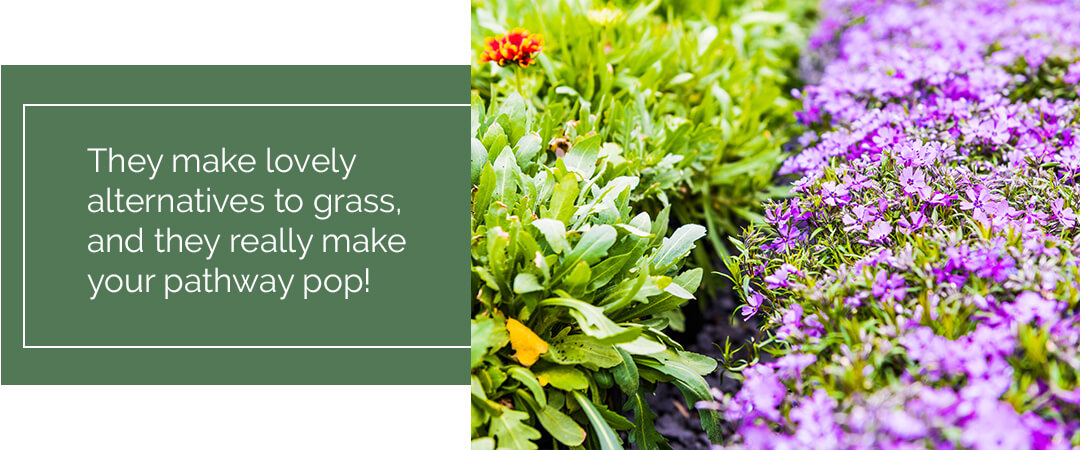
Instead of plopping some paver stones on the lawn and calling it a day, why not jazz things up a bit with some colourful flowering groundcover plants? There are many low-growing plants that form dense mats of foliage and can handle a little bit of trampling without sustaining any damage, so they make lovely alternatives to grass, and they really make your pathway pop!
Creeping phlox is one of our favourite flowering groundcovers, because its candy-coloured shades of purple, pink and blue look like something out of a fantasy novel. Imagine, instead of the same old green lawn grass, your garden path was surrounded by a cotton candy meadow! Here are a few other eye-catching groundcovers we highly recommend:
- Creeping thyme
- Deadnettle
- Sedum
- Candytuft
- Bugleweed
- Clover
To see more flowering plants and groundcovers for the yard, check out our brand new webstore that’s loaded with images of our available plants!
Container Garden Pathway Design
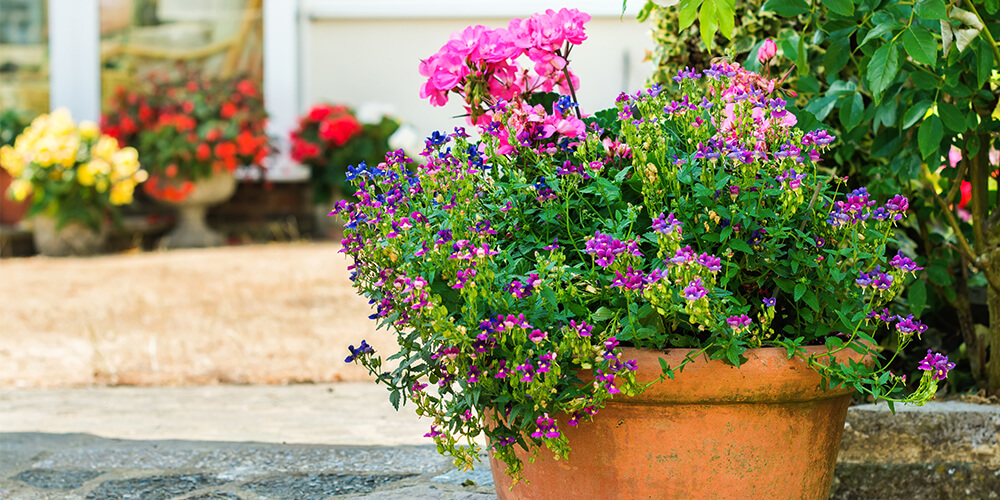
A clever way to add a border along your pathway without digging anything up is by lining the walkway with container gardens! This is an opportunity to really get creative, as you’ve got limitless options for your layout. You can go streamlined and buy a bunch of terracotta pots all in the same size, or you can mix and match different sizes and colours with a few funky accent containers thrown in for extra impact.
You can also play around with the different heights of the plants you put in your containers. Taller flowering plants like salvia and cardinal flowers, potted conifers, or even creeping plants on small trellises can act as a great divider between the yard and the walkway. Smaller flowering plants have more of an understated look, but are great if you don’t want to block the view of your surrounding garden plants.
Got any wild landscaping ideas of your own that you’d like to try to take on? We’d love to help! Our team of expert landscape consultants are happy to answer any questions you may have about DIY backyard makeovers. Visit us in-store or shop online to see our selection of plants and patio decor that are ready to make a new home in your backyard.