
Expert Picks You Can Plant Right Now
By Ava Green
Looking for a flowering shrub that delivers season after season? We asked our experts at Eising Garden Centre to share their top picks, the ones that customers and staff love most, and they delivered. Whether you’re looking for spring blooms, fall colour, wildlife and pollinator value, or a shrub to suit your space, there’s something on this list for every garden.
Fuji Cherry ‘Little Twist’, Prunus incisa ‘CarltonLT’
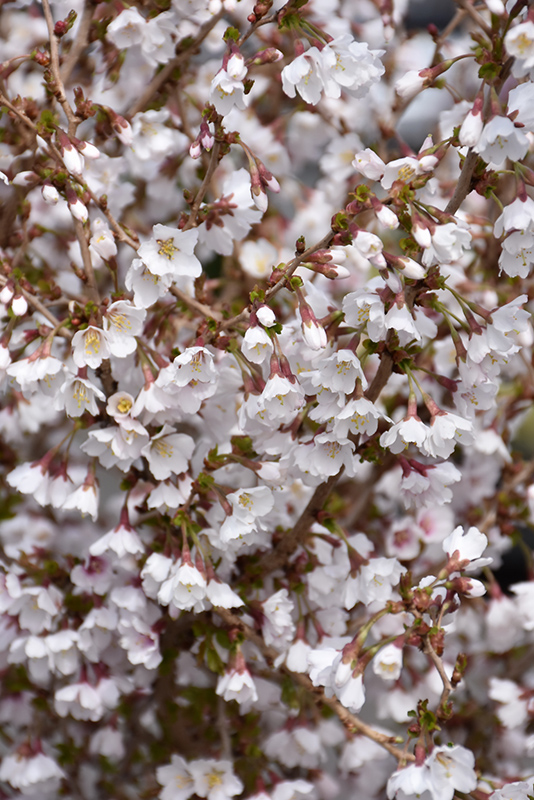
As an accent in a small garden, or planted in a grouping in a larger garden, this multi-stemmed shrub is a gem!
In early spring, crimson buds emerge before the leaves appear. Little Twist then produces clusters of lightly scented white, bell-shaped flowers with soft pink centres that grow along its stems, a stunning early-season display. It is a deciduous shrub, and leaves begin as green before shifting to coppery-bronze, then deepen to a rich burgundy in fall. Smooth, dark red bark adds interest in the winter once the leaves are gone.
This slow-growing, multi-stemmed shrub makes a striking feature in your garden.
Best for: Small gardens, accent planting, four-season interest. | Sun: Full sun | Mature size: 6 ft. tall × 6 ft. wide
Downy Serviceberry, Amelanchier canadensis
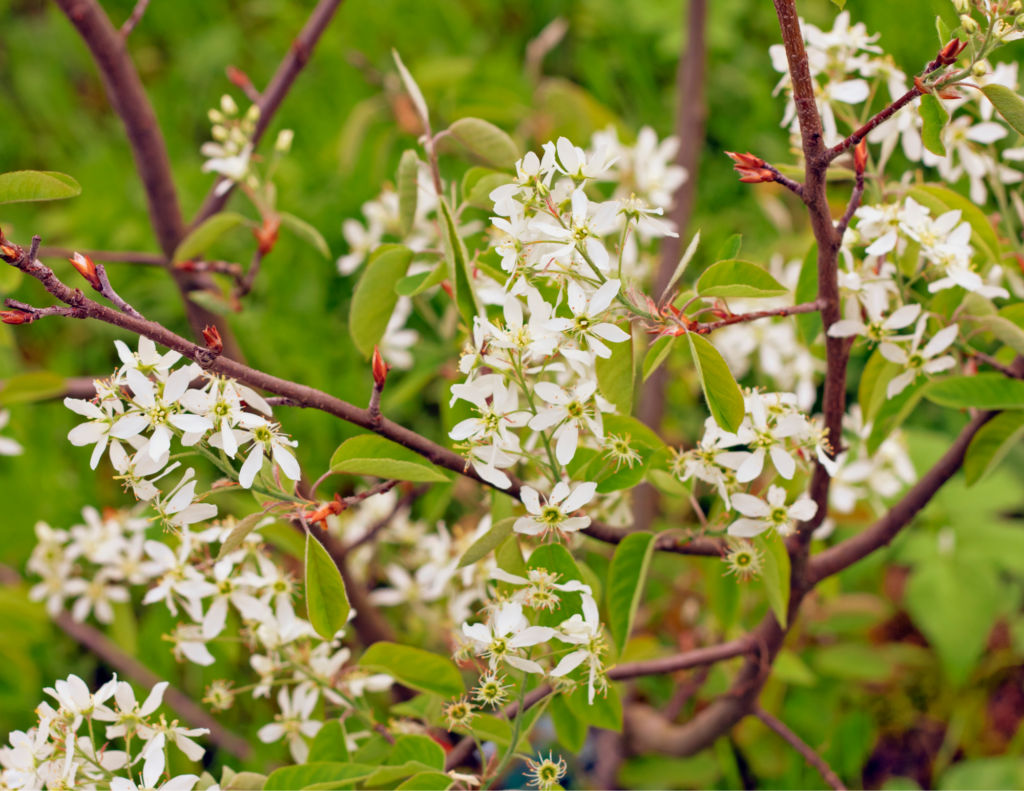
One of the most rewarding native shrubs you can plant, Downy Serviceberry earns its place in the garden from spring right through to fall. Showy clusters of fragrant white flowers in early spring, followed by small, sweet, edible purple-blue berries in early summer that are wonderful for making jam and an absolute favourite for birds. Come fall, the foliage puts on a spectacular show in shades of yellow, red, and orange.
As a bonus, choosing a native plant like Serviceberry supports local pollinators and wildlife, making it as ecologically valuable as it is beautiful. It works well as a specimen plant on it’s own, in a grouping or hedge, or naturalized in a larger landscape.
Best for: Wildlife gardens, naturalized areas, multi-season interest | Sun: Full sun to part shade | Mature size: 20 ft. tall × 10 ft. wide
Amur Privet, Ligustrum Amurense
Amur Privet
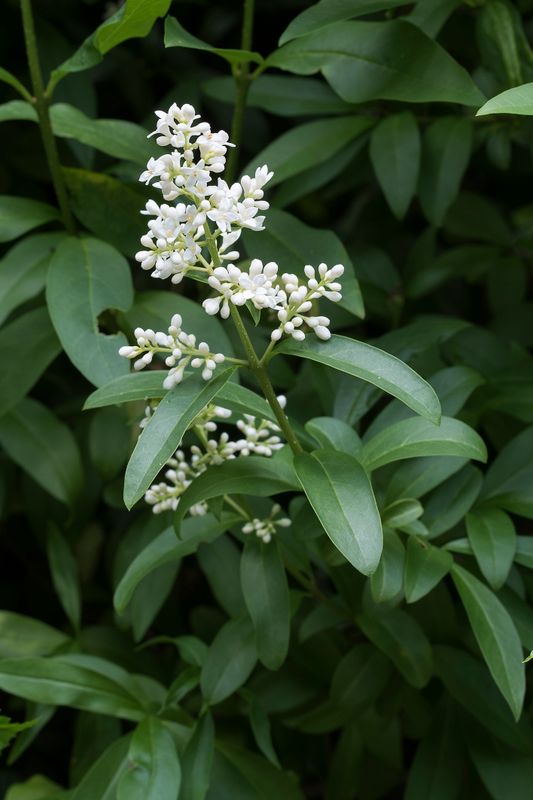
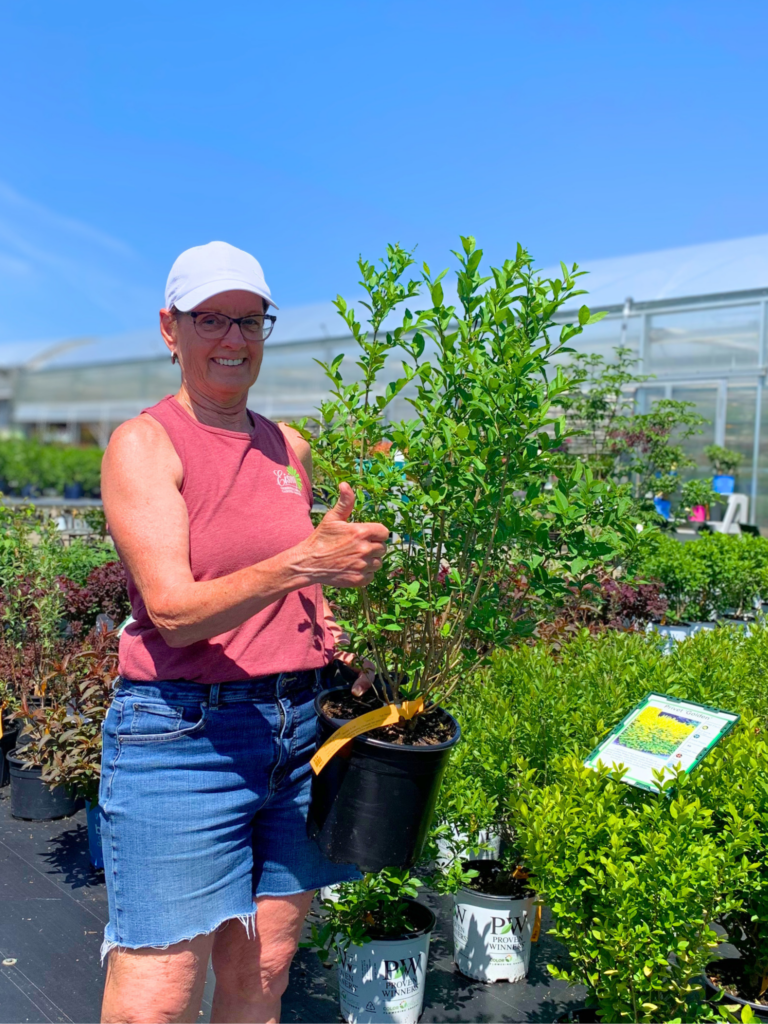
When fast growth and privacy matter, Amur Privet is one of the best choices available. This dense, dark green shrub produces white flower panicles in late spring and small black berries in fall. It responds exceptionally well to pruning after it blooms, making it an ideal candidate for a formal or informal hedge. If you need to fill a space quickly and create structure in your garden, this is a reliable, low-maintenance option.
Best for: Hedging, screening, fast coverage | Sun: Full sun to part shade | Mature size: 12–15 ft. tall × 8–15 ft. wide
Viburnum ‘Fragrant Snowball’, Viburnum Opulus ‘Roseum’
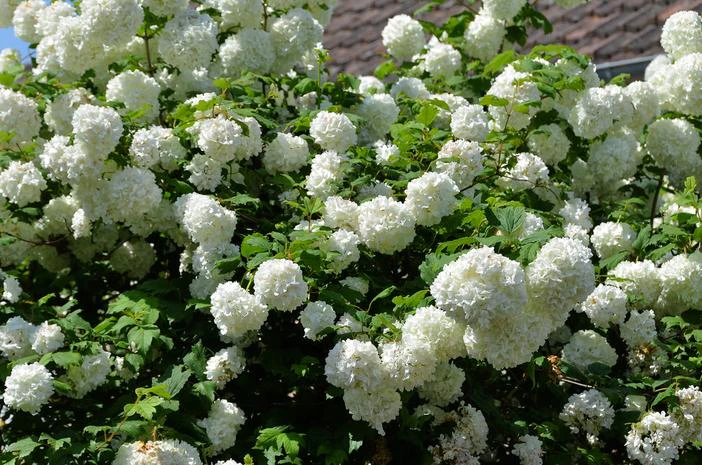
Few shrubs stop people in their tracks quite like Fragrant Snowball Viburnum in full bloom. Large, rounded clusters of sweetly scented white flowers cover the plant in spring, creating a display that’s hard to match. While it doesn’t produce fruit, it earns its place again in the fall when the foliage transitions to rich shades of purple.
Pruning after it blooms will help to keep it a manageable size and encourage healthy new growth. It’s also available as a standard, or tree form, which matures to a more compact 6 to 8 feet tall.
Sun or part shade are best for this deciduous shrub, a beautiful, solitary accent plant for the garden growing 12 feet high and 10 feet wide. As a standard, it is smaller, maturing at 6 to 8 feet tall and 5 to 6 feet wide.
Best for: Specimen planting, cottage gardens, fragrance | Sun: Full sun to part shade | Mature size: 12 ft. tall × 10 ft. wide (shrub); 6–8 ft. tall (standard)
Snowbelle Mockorange, Philadelphus ‘Snowbelle’
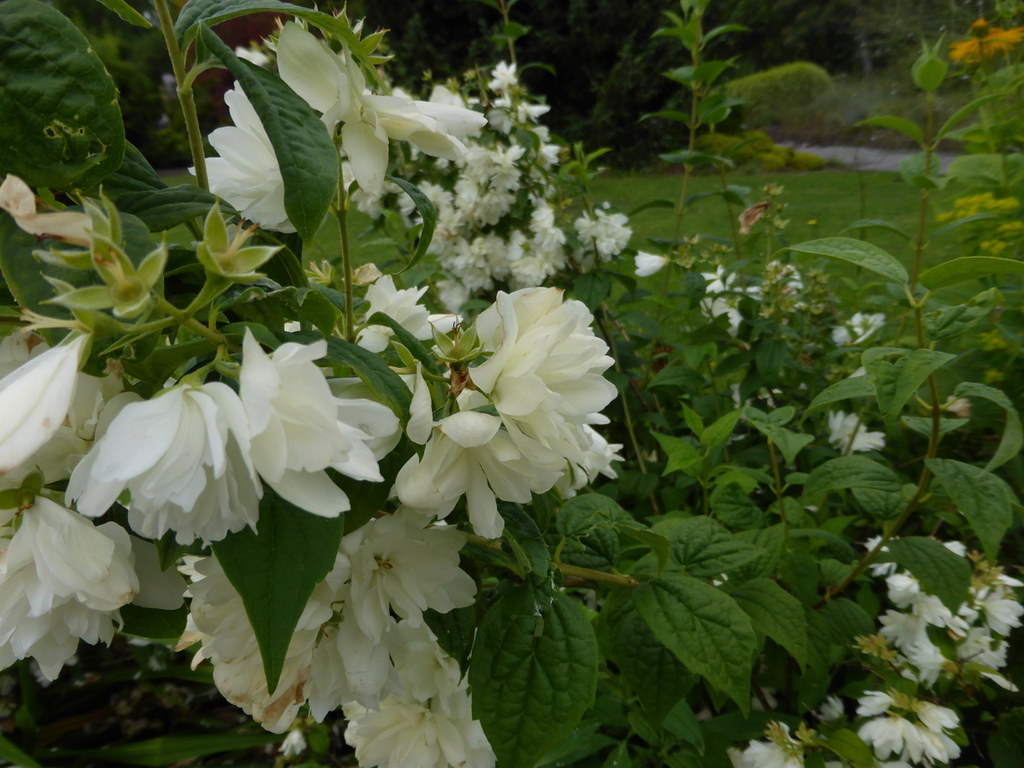
Don’t let its compact size fool you; when Snowbelle Mockorange blooms in early summer, it puts on a big show. This dense, mounded shrub is blanketed in sweetly fragrant double white blooms that are absolutely irresistible to bees and butterflies. Once the flowers fade, its rich, dark-green deciduous foliage makes it a lovely backdrop for other blooming plants in the border.
Growing just four feet tall and wide, it’s one of the best choices for smaller beds, borders and foundation plantings. It prefers full sun but handles part shade as well.
Best for: Small borders, foundation planting, fragrance | Sun: Full sun to part shade | Mature size: 4 ft. tall × 4 ft. wide
More Flowering Shrubs Worth Exploring
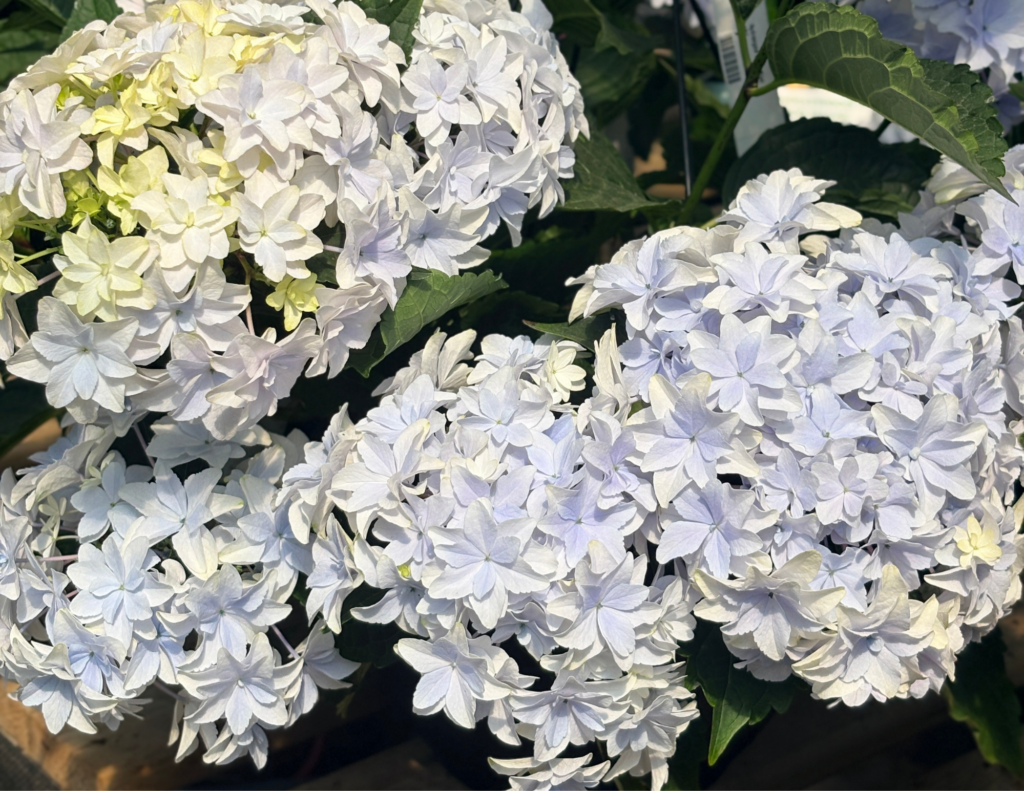
This is just the beginning! At Eising Garden Centre, we also carry a wonderful selection of Azalea, Eastern Redbud, Kwanzan Flowering Cherry, Hydrangea, Dogwood, Butterfly Bush, Beauty Bush, Lilac, Rose of Sharon, Forsythia, and Potentilla, to name a few.
The best way to find the right flowering shrub for your garden is to come in and see them in person, and right now is the perfect time to plant. Stop by and chat with Zach or Donna, who are always happy to help you find exactly what you’re looking for, based on your space, soil, and vision. We’re here to help you make the most of every corner of your garden!
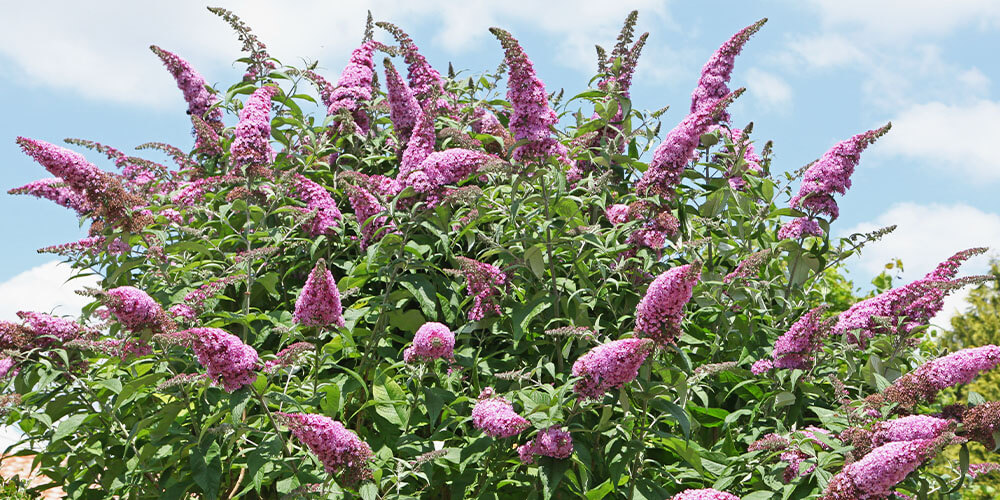
Butterfly bush, also known as summer lilacs, is a fast-growing flowering shrub perfect for pops of colour in your garden—and for attracting oodles of butterflies to your yard! With deceivingly delicate flowers, it is surprisingly hardy from zones 5 through 9. Sometimes, you may run into a few issues with them. If you’re asking yourself: why is my butterfly bush not blooming? Read our tips for caring for your butterfly bush in Ontario.
Best Butterfly Bush Varieties
There are plenty of varieties to choose from, depending on your needs. These different options boast various bloom colours, all of which pollinators adore. A few we would recommend are:
Pugster Butterfly Bush: The Pugster variety comes in many gorgeous hues including pink, white and blue. This dwarf version is perfect for smaller garden beds or creating some low-level visual interest in any landscape.
Prince Charming Butterfly Bush: Get swept off your feet by planting this dashing variety. The Prince Charming has boastful, tall, bright pink clusters of honey-scented flowers: a fan favourite of many pollinators (and people).
Royal Red Butterfly Bush: This incredible magenta-red option can grow up to 6-8 feet tall, a real eye-catcher! A variety that loves full-sun, and with proper care, it’s perfect for using as fresh-cut flowers in your summer bouquets.
Planting Butterfly Bushes
When it comes to planting your own butterfly bush, it’s best to do your planting in either spring or fall before your first frost. If you’re planting more than one shrub, make sure you space them 5-10 feet apart so they have plenty of space to grow and won’t be fighting for nutrients and sun. Choose a location that gets ample sunlight, and plant them in well-draining, nutrient-rich soil.
Caring for Butterfly Bushes
Butterfly bushes will do well in full or part-sun. The key to caring for butterfly bushes is to make sure it’s not getting over-watered. Overwatering will cause soggy, rotten roots. If you plant yours in nutrient-rich soil, you won’t need to do much fertilizing. In fact, too much fertilizing can cause the plant to direct energy into growing foliage and not the flowers.

How to Keep Your Butterfly Bush Blooming
If you are asking yourself “why is my butterfly bush not blooming?” there could be a few culprits. Consider these tips for getting your butterfly bush blooming, or reblooming.
You need to prune it back: The butterfly bushes’ blooms will only grow on new wood. An occasional, thorough haircut in early spring will entice it to grow back to its full glory. Many owners of deciduous shrubs are hesitant to prune back too much, but the butterfly bush loves it! New blooms will not grow on the branches of last year’s growth, so an early spring or late winter trim will allow you to shape the bush and promote new growth.
You need to deadhead it: Deadheading works very well when it comes to enticing new blooms on the butterfly bush. Once the blooms start to look dry and slightly withered, it starts to look a bit sad, and you can give the shrub a chance to push out another round of blooms with some thorough deadheading. Simply pinch just below the dried bloom, being careful not to pinch off new buds.
Check the growing conditions: Finally, be sure that your shrub is getting everything it needs from the sun, soil, and water. If your butterfly bush is not blooming, it could be under stress because of the growing conditions, or it could be overly fertilized with a nitrogen-rich fertilizer. Check to make sure the soil is moist but not soggy, and check the nursery tags to make sure that it’s getting the prescribed amount of sun.

Put the “Butterfly” back into “Butterfly Bush.”
Although butterfly bushes attract adult butterflies, they don’t always have what it takes to nurture the caterpillars that turn into our beautiful pollinating friends. If you want your garden to become a real haven for butterflies, you can plant milkweed, dill, and aster. Then, you’ll have a paradise for the entire lifecycle of a butterfly. Bonus: planting species that caterpillars love will distract any from potentially munching on your butterfly bush!
If you’re just as excited as we are about this incredible shrub, come visit us to find out more about getting your own butterfly bush in Simcoe.
Shrubs that flower in summer and fall make gorgeous accent plants for the landscape. We're so accustomed to seeing trees and shrubs blossom during spring, so it's a real treat to have all that vibrant colour and texture to enjoy throughout the later months of our growing season in Southern Ontario.
While many gardeners will insist that summer is too hot to plant shrubs, that simply isn't the case! It can still be done successfully if you follow the correct steps to prevent your plant from getting heat stress. If you wait until later in the evening on a cloudy day to transplant a shrub, then water it thoroughly after planting, it will have all night to adjust to its new habitat and will be hydrated—ready to soak up the summer sun the following morning.
Want to enhance the design and layout of your yard with some large, flowering shrubs? These late-season bloomers will bring a burst of colour and energy to the landscape, creating a fantastic setting for summer entertaining, hangouts on the patio, and picture-perfect photo ops.
Bluebeard
True blue is certainly the rarest colour to encounter in the plant world, so we can't help but get excited when we see flowering plants sporting this deep, cool hue. Our Beyond Midnight Bluebeard is totally on-trend—after all, Pantone named 'Classic Blue' as the 2020 Colour of the Year!
Bluebeard is a gorgeous flowering shrub that blooms from late summer to early fall, and its dark, glossy green foliage catches the sunlight beautifully. Plant it in full sun for best results, and prune it yearly in early spring, right at the first sign of new growth. Make sure its soil is well-draining because this shrub does not take kindly to soggy earth or stagnant water hanging around its roots.

Butterfly Bush
These pollinator-friendly shrubs have incredibly vivid flowers that attract butterflies, bees, and hummingbirds alike. Our Crown Jewels variety has some of the brightest purple petals we've ever seen, nestled in a mass of golden lime green foliage. Talk about a high-impact colour palette!
Butterfly bush is an incredibly hardy plant that's resistant to drought and tolerant of rocky soils. You'll have to water it regularly for the first few months after planting, but by year two, you'll be able to just leave it be, and the regular rainfall will be plenty enough to keep it hydrated.
Hydrangea Macrophylla
There's something so dreamy and beautiful about the lush clusters of flowers boasted by the hydrangea macrophylla—there's a reason why they're so popular for wedding bouquets! With so many different varieties and colours to choose from, you're bound to find a variety that suits your fancy.

We really love our Bloomstruck hydrangeas because their colour can shift from blue to pink, depending on the soil's pH levels. The blossoms last all summer long, but even after they fade, this shrub adds so much visual interest through the fall, because of its emerald green foliage transitions into a rich, warm burgundy colour.
Rose of Sharon
Rose of Sharon actually comes from the hibiscus family, and it grows in an upright form that can be trained into a tree shape. Like most hibiscus plants, Rose of Sharon's flowers are quite large and showy. Our Woodbridge variety has stunning blossoms in a rosy blush shade, with a ruby red centre. It loves the sun and can grow up to ten feet tall and six feet wide, so it makes an excellent option for privacy borders around the perimeter of your yard.

Smoke Tree
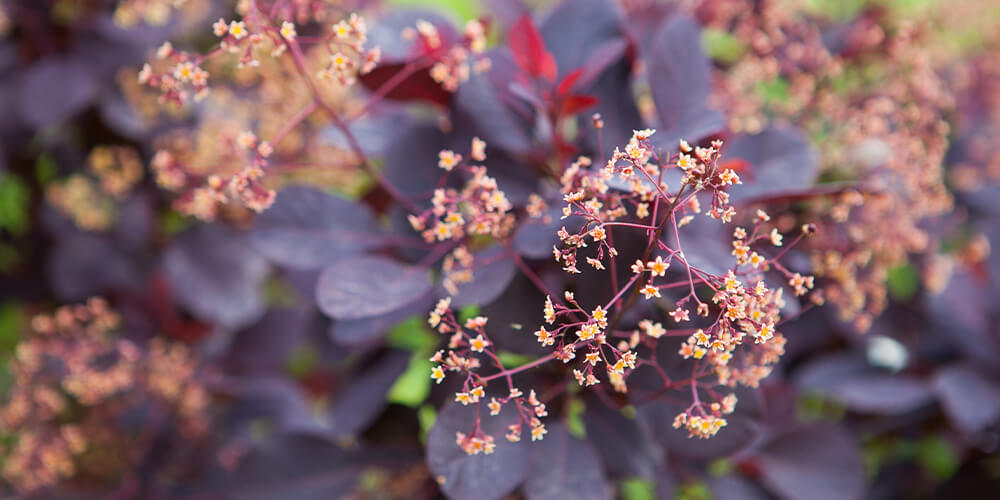
The smoke tree gets its name from it's wispy, fluffy blossoms that look like plumes of smoke. If you love rich purples and warm fall colour palettes, you'll go absolutely gaga over our Royal Purple smoke tree, which has reddish-purple blossoms and foliage to match! Once autumn rolls around, the leaves will actually turn a brighter cranberry red shade.
Make sure you leave plenty of space around your smoke tree when planting because they can reach up to 15 feet high and 12 feet wide! Regular pruning should help keep it a manageable size if you don't want it to get too large. Once it's established, it will appreciate it if you occasionally give it a thorough watering, especially in summer, during hot, dry spells.
Need some help getting your new shrubs in the ground? We're happy to offer planting services for those of you who are new to landscaping! To see more of our incredible selection of flowering shrubs you can grow here in Simcoe, take a look through our newly launched webstore, so you can order all the plants and supplies you need, right from the comfort of your own home.