
Spring Fertilizer: All the Facts You Need to Know
Now that gardening season is in full swing, you're probably thinking about when and how to apply fertilizer—or perhaps you haven't thought about it at all! Here's an overview of everything you need to know to keep all your landscape plants looking lush and healthy from spring until frost.
Is Spring a Good Time to Fertilize?
Yes! Spring is when your plants begin their big growth spurt for the year, and they're going to need lots of nutrients to help fuel this growth—that's a fact! The nutrients found in fertilizers are essential for plants to perform their basic functions, and if there isn't enough in the soil, plant growth will be lacking. Fertilizing through spring, summer, and early fall will keep plants consistently nourished, but you won't want to apply anything after fall, as this will disrupt your plants' growth cycles when they need to go dormant over winter.
Understanding NPK Ratios
The three numbers on the fertilizer bag represent the ratio of the three primary chemical nutrients your plants need: Nitrogen (N), Phosphorus (P), and Potassium (K).
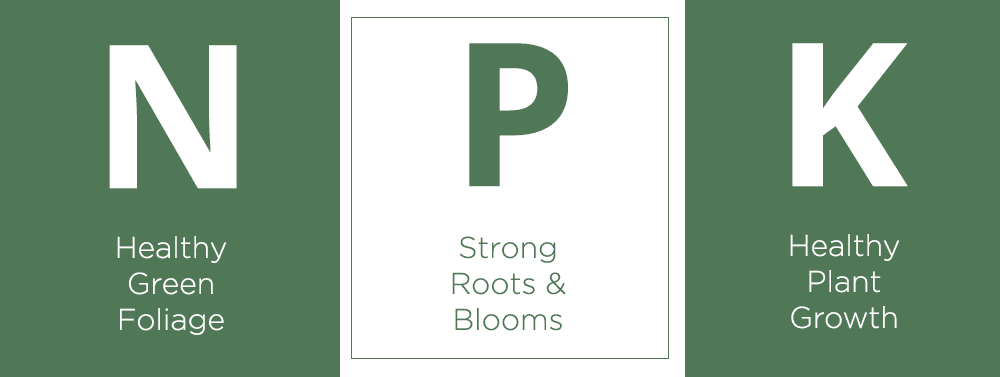
Nitrogen is necessary for the growth of healthy foliage. Phosphorus stimulates root growth and flower production, which in turn leads to fruit production. Potassium supports overall plant health and basic functions like nutrients and water uptake.
Not all formulas are the same, and many are for specific kinds of plants. You can use all-purpose fertilizers as a one-size-fits-all solution, as they have a balanced 10–10–10 NPK ratio, but using specially formulated products will yield the best results.
Since some plants have tons of foliage and no flowers, a high nitrogen formula is appropriate in those cases. However, if you give a high nitrogen formula with low phosphorus to a flowering plant, you'll get lots of leaves and barely any flowers; this is why it's essential to be choosy about which formula you use for your different plants.
What Fertilizers to Use in Spring
Here's a rundown of what needs to get fertilized in spring and the best types of formulas to use. Always follow the instructions on the package carefully! Over-fertilizing won't produce faster growth—it will just stress out your plants and make them grow faster than they should, resulting in weak, leggy growth. Over-fertilizing can also cause microbial imbalances in the soil, and too much synthetic phosphorus can contaminate groundwater, harming our aquatic ecology by causing algae blooms. Using an organic formula tends to be gentler on the soil, so you can seek an organic option if you'd like to play it safe.

Spring Lawn Fertilizer
Fertilizing in early spring with a "Weed and Feed" formula can help nourish your grass while preventing weeds from sprouting because it's mixed with a pre-emergent herbicide. However, it's too late to use a pre-emergent if it's already April or May. Instead, you can use a high nitrogen formula with a 3–1–2 or 4–1–2 NPK ratio. If you have a big lawn, you can use a broadcast spreader to make the application easy and even across the landscape.
Shrub and Tree Fertilizer
Formulas with an NPK ratio of 16-4-8, 12-4-8, or 12-6-6 are usually appropriate for trees and shrubs. However, there are many formulas available for certain types of trees and shrubs, such as:
- Azaleas and rhododendrons
- Citrus fruit trees
- Roses
Spread the fertilizer at a diameter equivalent to 1.5X the size of the crown. Remember to follow the package instructions to calculate how much to apply at one time! Try your best to avoid getting any granules on your shrub's foliage, as this can burn the leaves.

Perennial and Annual Fertilizer
Balanced all-purpose formulas are usually fine for your perennials and annuals, but you can also use something with slightly higher phosphorus to encourage more blooms. Just remember not to overdo it with the phosphorus! Granulated slow-release formulas will deliver a steady stream of nutrients to your flowers over a month or so, but if you want to give your plants an instant boost in spring, you can use a water-soluble formula that will go straight into the soil.

Vegetable Fertilizer
Use a formula that is safe for use on edible plants. If you want to grow an organic vegetable garden, then stick to using an organic fertilizer!
Eising Garden Centre has plenty of spring fertilizer for sale for all your plants, outdoors and indoors! Visit us soon—spring is almost over, and your plants need a boost so they can keep growing steadily throughout the rest of the year!


