
In this case, the plants Hens and Chicks, not the feathery friends.
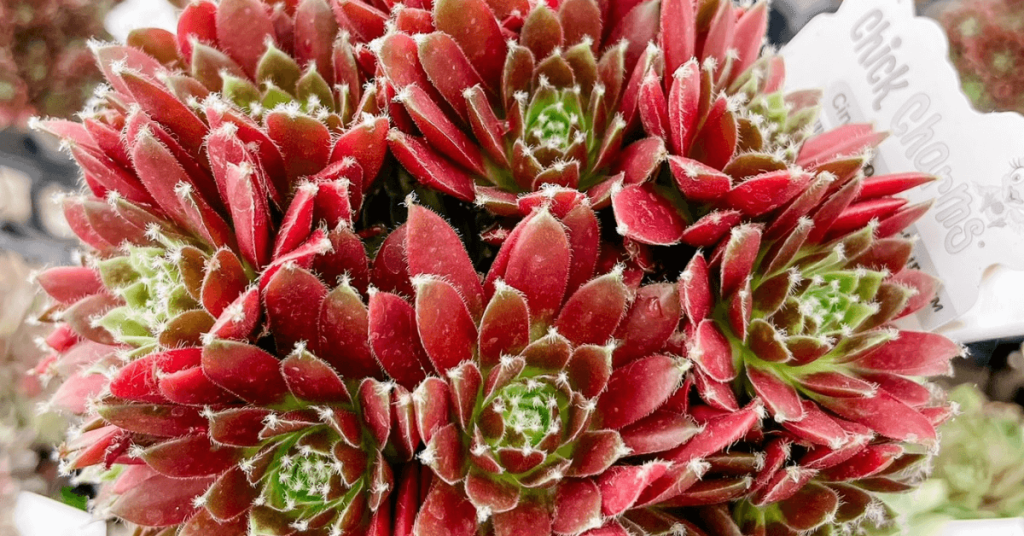
Sempervivum, also known as Hens and Chicks or Houseleek, are a group of succulents that are becoming very popular in Southern Ontario. Here’s why these cold hardy perennial plants are gaining attention.
Low-maintenance
Low-maintenance is the item on everyone’s checklist, right? Hens and Chicks are known for being no-fuss. Sempervivum require very little soil, fertilizer or water. They’re sun-loving, hardy, resilient, and drought-tolerant. When you don’t have a lot of time to garden, you’ll be grateful that your Hens and Chicks need minimal care once they become established.
Versatile, and Did We Mention Low-maintenance?
Sempervivum will grow in full sun to partial shade, and average to poor soil as long as they have good drainage. They will manage just fine in poor soil and harsh conditions like heat and cold! This makes Hens and Chicks the perfect candidate for that spot in the garden where nothing else wants to grow. The spot that’s too hot, or too windy, the soil is rocky or gritty and not ideal or it’s eroding, like on a slope.
These rugged warriors can be grown on rooftops, ledges, walls, in rock gardens, hanging baskets, troughs and containers. Just make sure there are drainage holes. Too much water is their only enemy and will result in their roots rotting.
Chick Charms
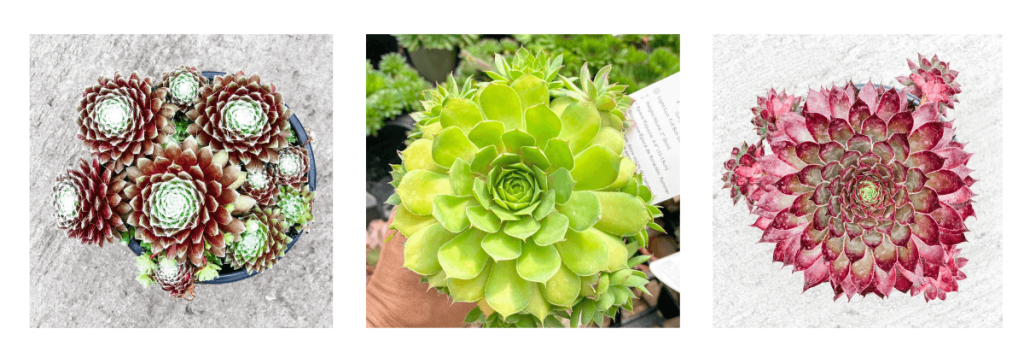
While most Hens and Chicks are low-growing, 8-15 cm tall, they will all spread 30 cm and more - as much as you like, really. This is because they produce small plants, known as “chicks” or offsets around the main plant. The “Chick Charms”. Chicks can also be transplanted to start a whole new plant.
Tough and Beautiful
As a ground cover, Sempervivum can add visual interest and contrast to a border of annuals or perennials.
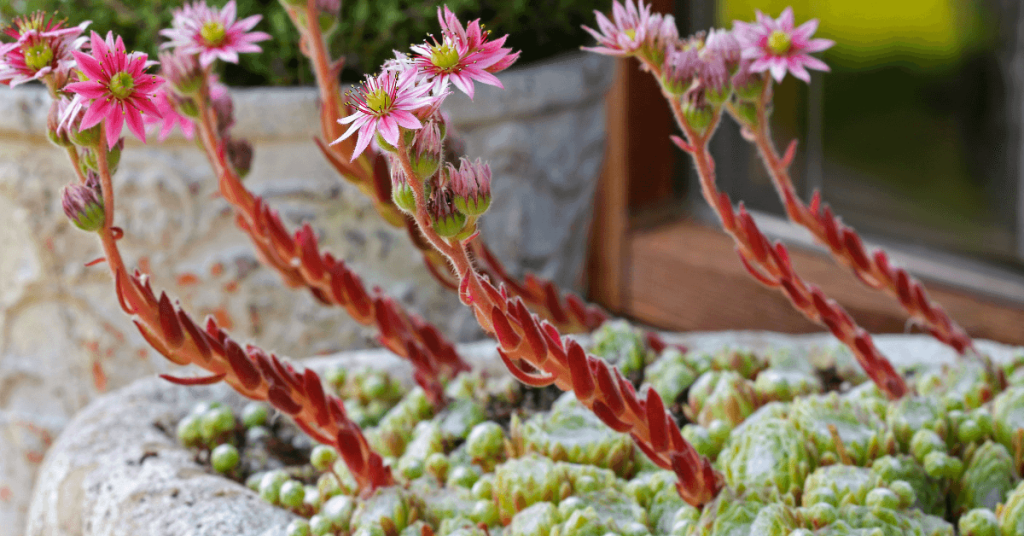
While they’re known for their pretty rosette-shaped clusters of foliage, you may not realize that Hens and Chicks also come in a variety of colours, and produce stunning blooms in summer.
Once a plant blooms, deadhead the flower and pull up the soft parent plant with it. The plant dies when it blooms, but new chicks will grow and replace it.
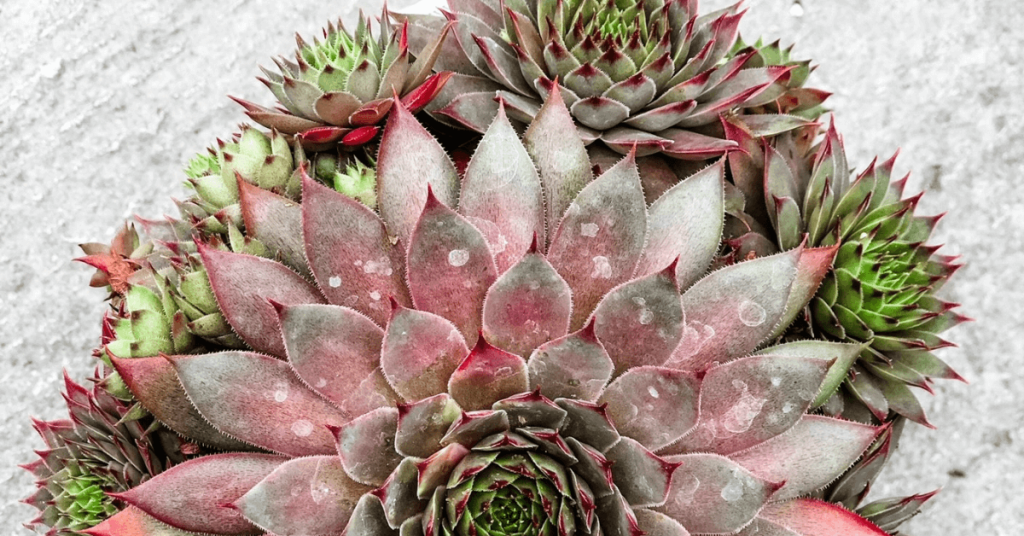
Hens and Chicks fleshy leaves make them less attractive to many garden pests and they are generally resistant to diseases. Tough plants for sure, and worthy of a spot in the garden. The next time you’re in Eising Garden Centre, we recommend that you peruse the Sempervivum section here in Simcoe and give these outstanding succulents a try!
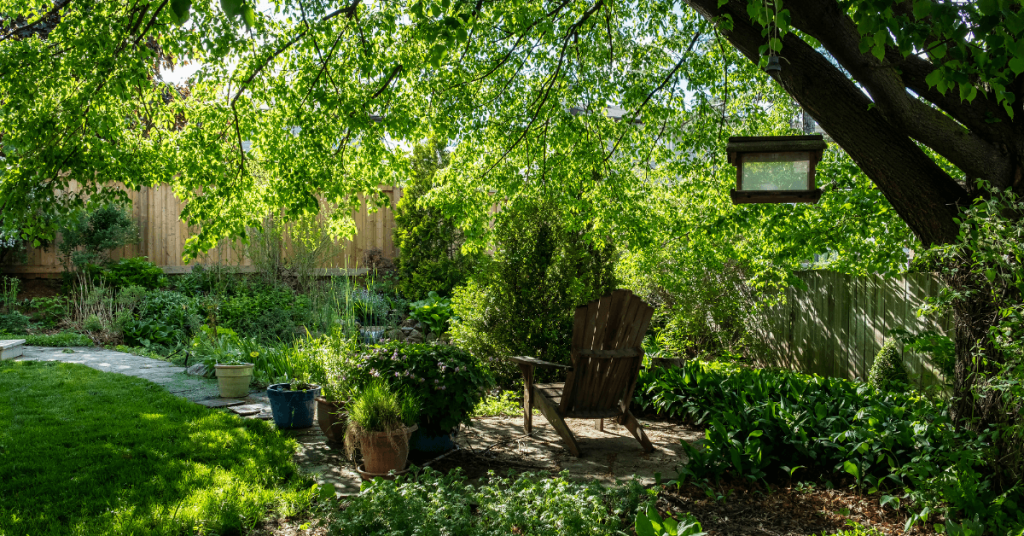
Ah, the sanctuary of a nice, cool shade garden on a hot summer day. Lush foliage comes to mind, and maybe a nap in a hammock. But what do you do when you have a shady spot in the garden that isn’t so lush and could use a boost? A planted container or two can be just the thing!
Here’s a scenario that can happen to any of us. A plant isn’t doing well and needs to be moved. Or maybe something just didn’t survive. Now what to do with that gap? The beauty of planting in pots is that you can move them around, but also create conditions for plants that you might not have in the garden. For example, one of the toughest places to grow anything is in dry shade - tree roots can compete for space and for moisture. That’s when planting in a container, or several is the way to go.
What is a Shade Garden?
In general, a shade garden is an area that gets less than six hours of sunlight in a day. When choosing plants, remember that some will tolerate shade better than others. When it comes to plants, shady areas are divided into three categories:
- Full shade - no direct sunlight, only reflected sunlight from surrounding areas
- Partial or Semi shade - in the sun for part of the day and shade for the rest
- Light shade - sunlight that is filtered, like under a tree with smaller leaves

Choosing Containers and Pots
While containers can be made out of a variety of materials like plastic, concrete, wood or fiberglass, the key is using a pot with at least one drainage hole.
Keep in mind that smaller pots will dry out more quickly. Larger pots retain moisture longer, but when they’re full of soil and plants they get heavy. Look for a Goldilocks pot that’s “just right”, or splurge on a Schwarzenegger-sized pot if you’re looking to build up those biceps!
Whatever pot size you choose, always use a growing medium that’s designed especially for containers. At Eising Garden Centre you’ll find potting mix which is light and airy, unlike garden soil, which will compact and retain too much moisture. If you’re using a big container, you may want to use a smaller, more shallow pot as an insert, or put natural mulch in the bottom before you add potting soil. Doing this will reduce the amount of soil used, and keep the container lighter as well.
Plant Selection
This is the fun part! While many plants do well in pots, here are just some of our favourite shade plants for containers:
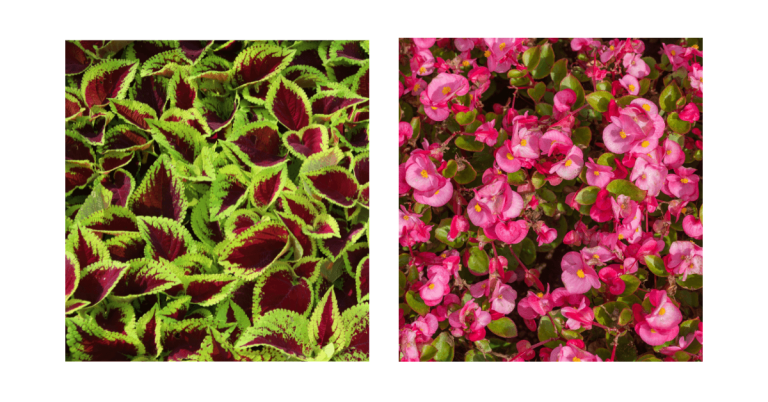
Coleus
Coleus is an annual that will grow in full shade and comes in a variety of very interesting leaf colours. This plant is known for its vibrant leaf colours, not its blooms.
Begonia
Begonias come in a wide variety of shapes and colours, making them a versatile annual for containers. Some varieties are happy in full shade, while others like light, or filtered shade. Most begonias like good drainage so their roots are not too wet.
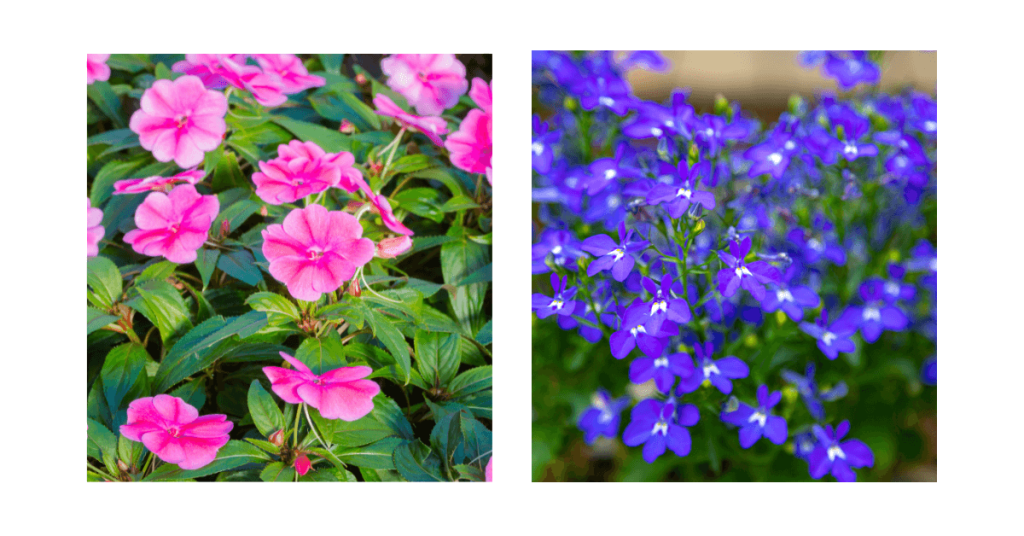
Impatiens
These annuals are popular for a reason! They come in a wide range of very brightly coloured flowers that do well in full shade.
Trailing Lobelia
The trailing type of Lobelia is an annual that grows well in shade. The masses of prolific blooms come in many pretty colours to mix and match with other plants.
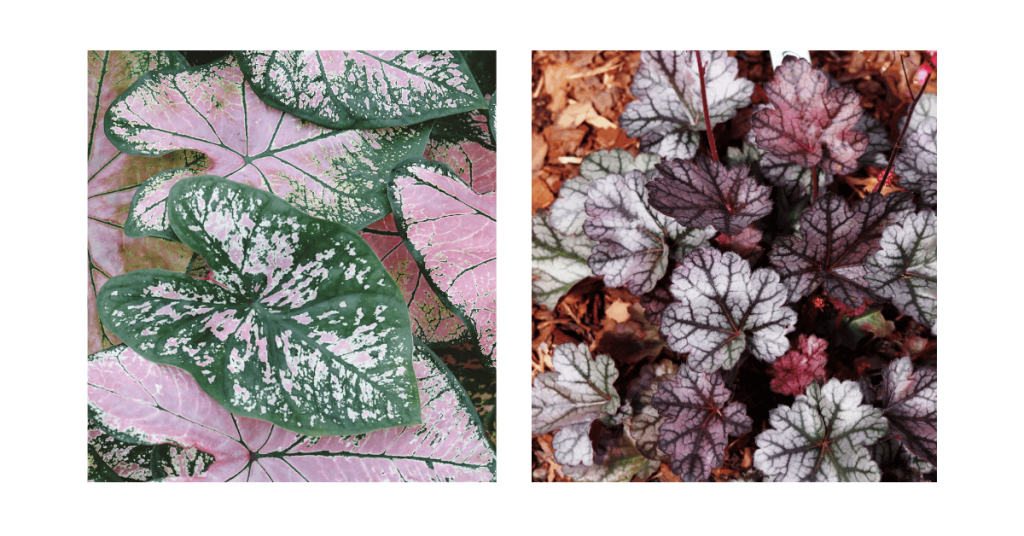
Caladium
A showy annual with vibrantly coloured leaves that will illuminate any shady area. Caladiums like partial to full shade but if you’re a pet owner be careful - this plant is toxic to cats and dogs.
Heuchera or Coral Bells
Coral Bells are perennials that also come in a wide variety of beautiful leaf colours. This plant will thrive in shade, but can also tolerate some sun and they are drought tolerant.
Hosta
Known for its lush foliage, this perennial comes in such a wide variety of sizes, colours, and sun tolerance, and is by far a favourite. Many people don’t think of it as a container plant but for all of the features mentioned, it makes a great choice as a potted plant.

Fertilizer
Like all plants in containers, check the moisture levels often and provide water and fertilizer throughout the growing season. This article contains more information on caring for annuals and perennials.
Design
While you can mix and match any plants for shade containers, this article about container design ideas for sun-loving annuals may inspire you!
As mentioned above, many plants will do very well in containers. It’s also fun to experiment with annuals and perennials you can’t necessarily grow in the garden, or for anyone with a patio or balcony. Don’t be afraid to mix annuals and perennials together in a container, or to use one statement plant. Some potted plants will need extra protection in the winter like perennials, small trees, and shrubs, but growing plants in containers is a great way to add a splash of colour, or include some bold foliage in tough-to-grow areas.
As simple or in-depth as you want to make it, a garden journal can be a trusted guidebook and useful tool for even the most simple garden.
If you are starting a garden, or adding to it, you probably have a plan - even if it’s all in your head! Many customers come into Eising Greenhouses with a plant list, or hand drawn diagram, or a design created by our in-house team. This makes plant selection so much easier! But what happens once the plants go into the ground? A garden journal helps us to keep track of what happens from season to season.
Garden Notebook, Diary, Journal or Planner
Call it whatever you like - we’re talking about any method that helps you plan, track and enjoy your garden!
Have you ever found yourself trying to remember what that plant was that did so well last year? What was the name of that tomato that the whole family loved? Or why your daisies just don’t look as good this year as they did last year? This is when a garden journal can be very handy!
You may already have a notebook and coloured pencils out, ready to start making notes and drawing! Or, you may be like me when I started journalling and thinking that a planner is just another dreaded task. Stick with us, because you can really make this as easy as you like!
If you already have a journal, one of the following suggestions may inspire you to add to it, or change things up. Like a garden, a journal evolves over time and provides a great record of more than just plants.
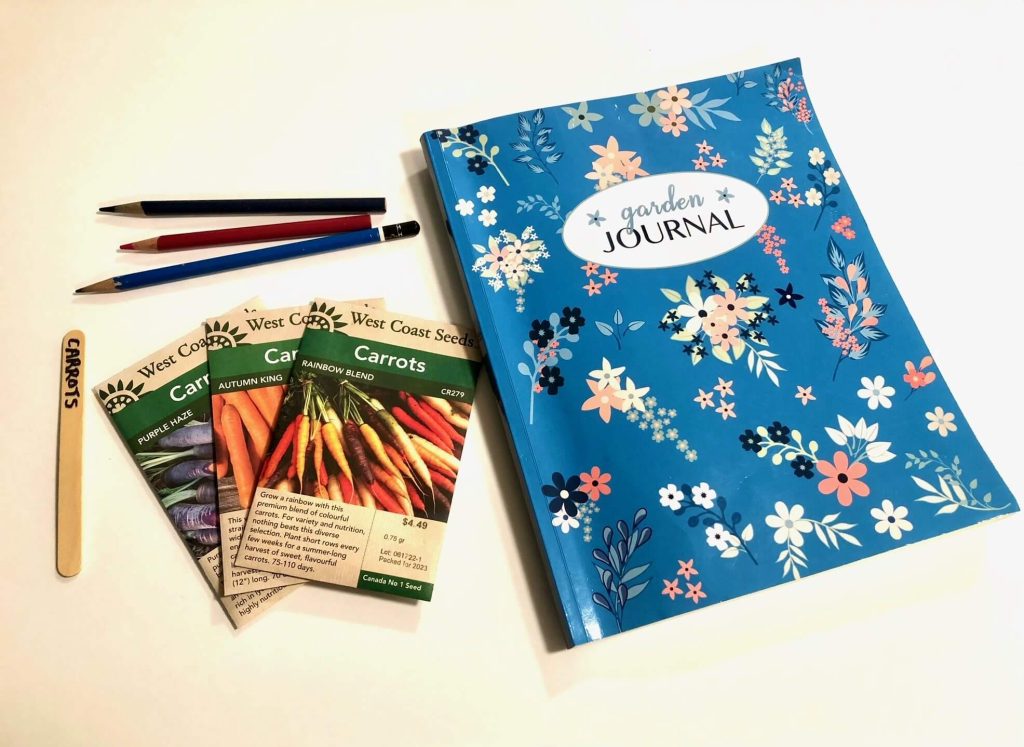

Getting Started is Easy!
If you would like lots of structure to help you get started, you can purchase journals online and in bookstores that have prompts and sections to fill in. Otherwise, just find a simple, lined notebook (I have one from the dollar store) or work with a notebook you already have.
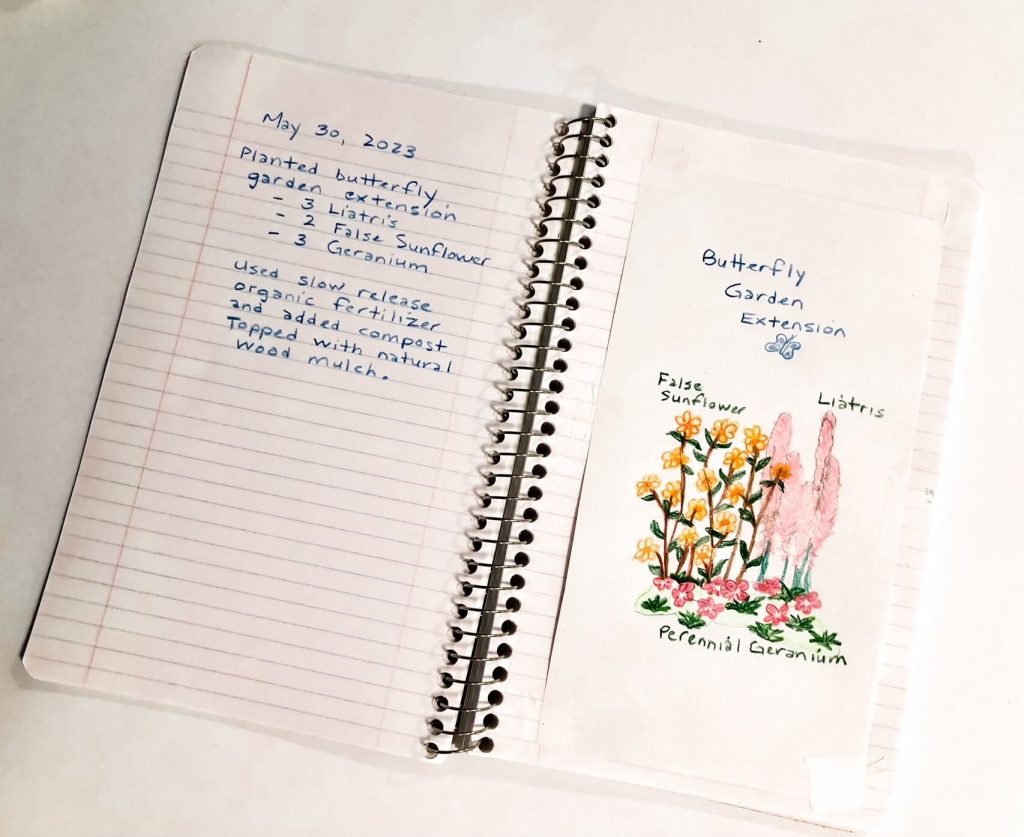
Start each entry with a date. What date will you need to do specific tasks? What date did you plant it? What date did it bloom? What date did you harvest the first tomatoes? Dating everything will be very useful over time, as you look back on what worked and what didn’t.
If you’ve already drawn up a list, or a plan, glue them to pages in your journal. If you have receipts, or plant tags, attach those to a page or two as well, or attach an envelope to stow them away.
Add notes to your entries like where plants came from (garden centre, friend), where you planted them (eg new bed beside the front porch), any special care you gave them (type of soil used or fertilizer)… any specifics that come to mind.
Details Can Always Be Added
Many of us create a plan, and what ends up happening in reality is a little or a lot different. Adding a labeled diagram of your garden area to your journal captures what’s planted and where. Why is that helpful? Here are a few examples to show why this is a great future reference… to remember which annual geranium was stellar in a specific spot last summer when you go to plant it again the following summer. Or, if you are rotating your vegetable crops you can track which vegetables were in specific areas of the garden. Or, which plant did deer find very tasty, leaving a bare spot on the edge of a bed?
Again, be sure to add dates to your entries because they do come in handy when you’re tracking things from year to year.
Pictures and Drawings
This is the next level of detail that can be added - or not!
Notebooks that are created to be used specifically as garden journals often include different types of pages - lined, dot grid, graph, and blank. These different formats allow for making lists, plotting out gardens, and drawing pictures or pasting in photos. If you’re enjoying tracking what’s in your garden, you may want to start with a journal for this purpose, or one that you can add sheets to so that you can draw or plot.
It can be very calming to sit in the garden on a nice day and draw in your journal. Or, take pictures during peak bloom times so that you can sit inside and draw on a rainy day or in the middle of winter.
Seasons may fly by quickly, but your journal is your memory book and trusty reminder of the joy of life in the garden.
If you have some space in your flower or vegetable garden, growing herbs is definitely worth it! Many are drought tolerant, do well in containers, require very little care, and can provide a bountiful harvest all summer long.
Buying herbs at the grocery store is often pricey. Growing them at home, using the tips below, helps to ensure a steady supply for a fraction of the price.
If you’re not accustomed to adding herbs to meals at home, buying a plant is a great way to experiment and see which ones you like. If you try Cilantro, for example, and don’t like it, place it in a nice pot and take it as a hostess gift the next time someone invites you to a barbeque. Especially if you’re coming over to our house, we love it!
Herb Growing Tips
- Like many other plants, there are perennial and annual herbs (annuals don’t survive an Ontario winter and need to be planted each year). Perennial or annual may determine where you plant your herbs in the garden.
- Most herbs are drought tolerant and enjoy full sun. The amount of water and sun can vary slightly, so it’s good to note watering and light needs for the herbs you’re growing.
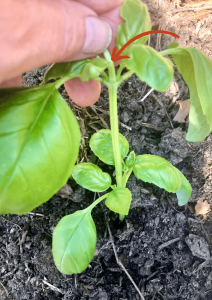
- The more you trim herbs, or “give them a haircut”, the more your plant will thrive. Start trimming them early - when they’re about 4 inches tall, and do it often! This will make your plants more sturdy and bushy.
- Regular pruning ensures that your herbs don’t flower! While this is the goal with many other plants, it’s not what you want with herbs. A plant will focus on producing flowers and seeds, and stop producing the leaves that you want to harvest for herbs!
Here’s a list of our favourite herbs to grow in Southern Ontario, and how to care for them.
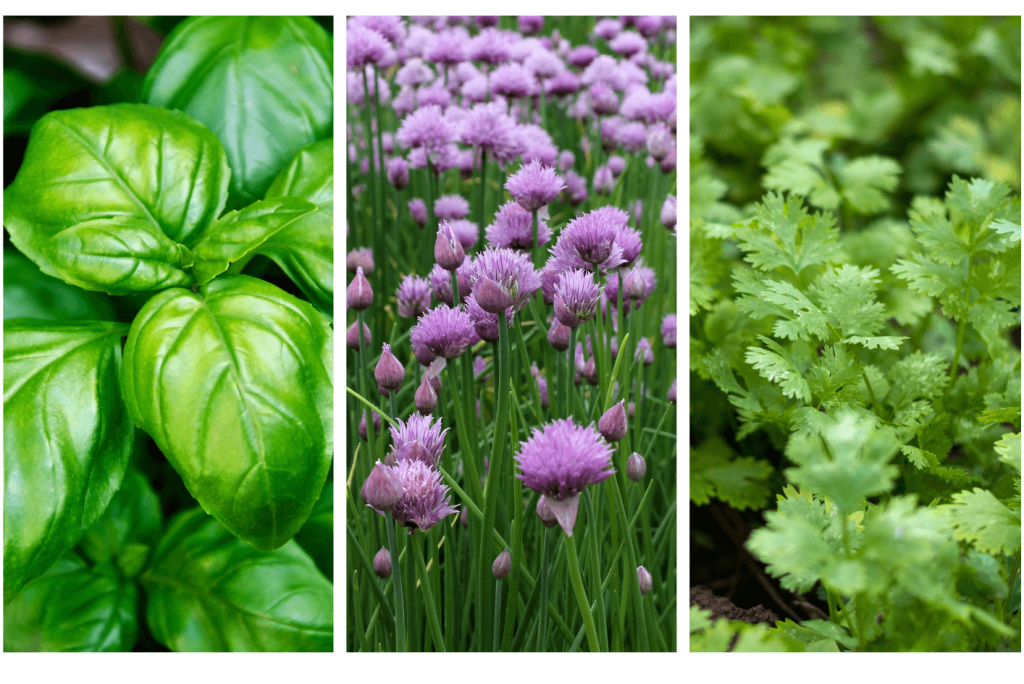
Basil - Annual
If you’ve planted tomatoes, it just makes sense to add a few basil plants! The tomatoes will love them, and so will you on your toasted tomato sandwiches. Basil loves full sun, and evenly moist soil.
Chives - Perennial
Chives are one herb that you may want to allow to flower. Its blossoms are great for flavouring vinegar, and the plant will still produce mildly onion-flavoured stems. Chives like full sun but will still grow in partial shade, and once established they only need watering during dry spells.
Cilantro - Annual
To some people with a very specific gene Cilantro tastes like soap! For everyone else, it’s one of the most delicious herbs and a taco wouldn’t be the same without it. Cilantro prefers part shade, but will tolerate full sun. It can be allowed to dry out, but it may flower prematurely if it gets too dry.
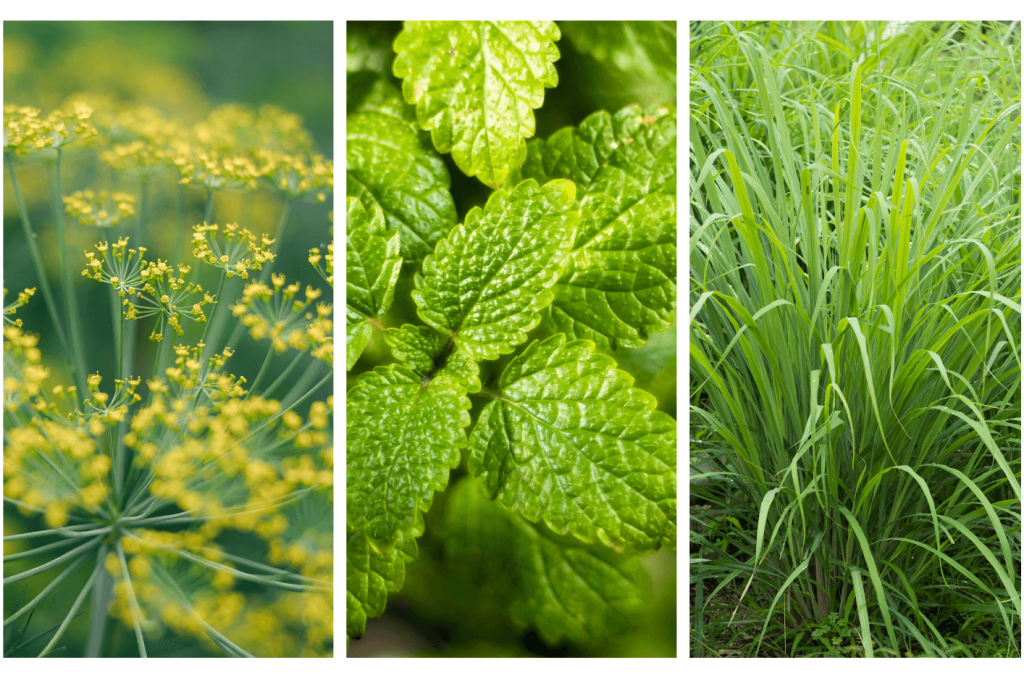
Dill - Annual
While Dill is considered an annual, many people in Ontario find that if you allow it to eventually go to seed, it will reseed and grow again the following season. No guarantees. But worth a try, right? Dill plants love full sun, and their roots just slightly moist.
Lemon Balm - Perennial
Fresh leaves can be used to make tea all summer long, or can be dried for winter use. But this versatile herb can be used for many things from pesto to cookies! Grow Lemon Balm in full sun to partial shade, and keep the soil moist for optimal growth.
Lemongrass - Annual
A staple in Thai cooking, Lemongrass is a great addition if you love to cook. Full sun and moist soil will keep this herb happy and producing lots of lemony stalks. You might want to try bringing it indoors for the winter as well.
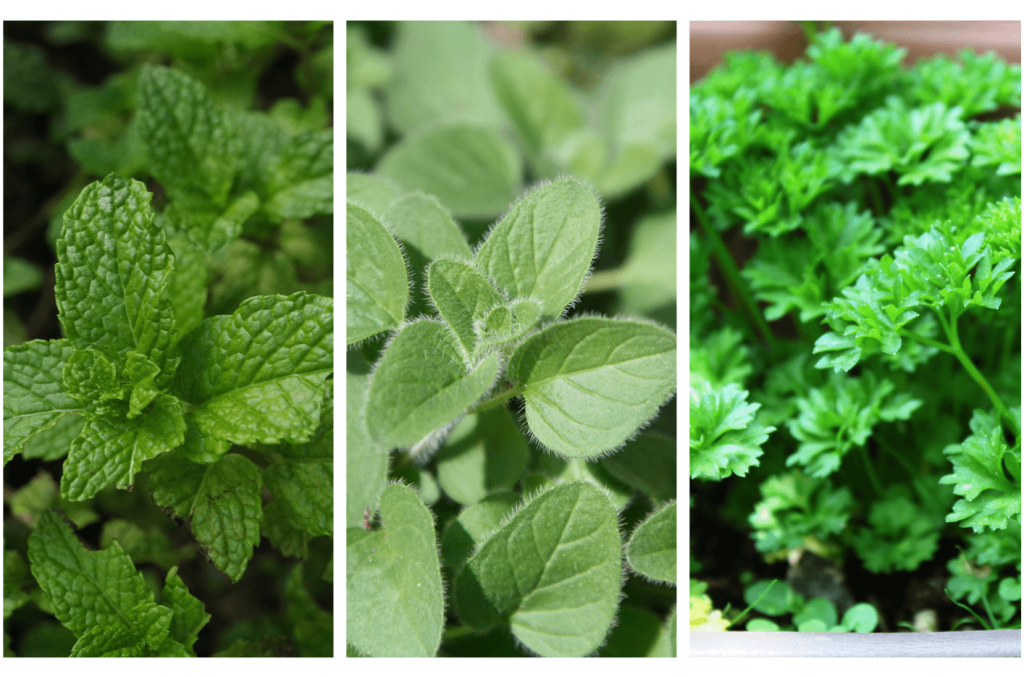
Mint - Perennial
This herb comes in so many variations that are just simply delicious - spearmint, peppermint, apple mint, chocolate mint, and more! But this is one plant you’ll want to keep in a pot, well away from garden soil. It’s also one to trim before it sets seeds or you will have a garden that’s full of mint! It can be invasive. It will thrive in full sun but will stand some shade, and it likes moist soil.
Oregano - Perennial
For obvious reasons, (tomato sauce) Oregano is a great addition to the garden. It will spread and reseed throughout the garden if you let it go to seed, but some people like this feature and use it as a groundcover or border for a perennial bed. Oregano likes full sun to partial shade and once it’s established it is very drought tolerant.
Parsley (flat and curly) - Annual
There was a time when every restaurant meal was adorned with a sprig of Parsley. It’s pretty. But it’s also an underrated culinary herb and can add wonderful flavour to soups and stews as well as other savoury dishes. Keep this plant moist and in full sun to part shade.

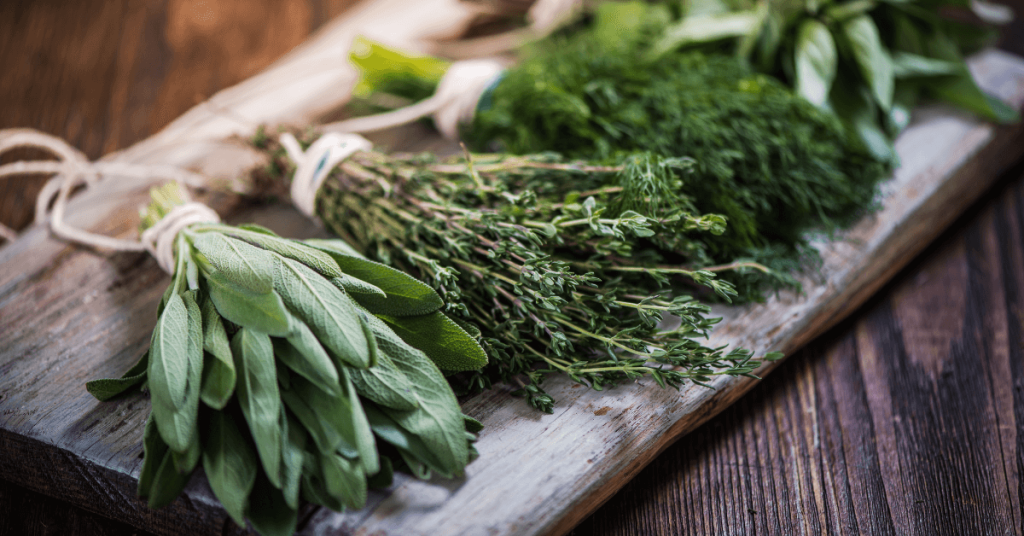
Rosemary - Annual
Is anyone else addicted to bread with olive oil, salt and Rosemary? It can’t just be us! This is another garden staple that loves full sun and slightly moist soil. It can also be brought indoors for the winter, but be sure to keep the soil from drying out completely.
Sage - Perennial
Perennial, with a caveat. In Ontario, it’s best to provide some winter protection for this plant if you want it to survive the winter. I’ve had reasonable success with bringing it indoors for the winter, or it can be treated as an annual. Sage likes full sun and moist soil but don’t overwater this one! It does love the heat of summer and will produce a nice big plant once temperatures heat up.
Thyme - Perennial
Thyme is just so good in so many things - vegetables, meats, soups, and of course stuffing! It’s easy to grow if it has well-drained soil and full sun. Once it’s established it is moderately drought tolerant and can be harvested from early Spring until Winter.
Like all herbs - don’t forget to give it frequent haircuts!
At Eising Garden Centre you’ll also find many more herbs to grow and enjoy. Do stop by and give them a try!
If dull days have you feeling a little down, a fresh, green, tropical plant might just be the tonic to inject some life into your living space and brighten things up.
Go Green
Spring flowers are beautiful, but the hero of Spring is the abundance of green. As everything comes back to life, it’s the colour that begins to envelop us, and it just makes the world look so much better again.
Adding greenery to your home can have that same overall effect! If you’re new to houseplants, there’s really something for everyone. There are tropical plants that can be very easy to grow and require very little attention. Plant care (how often they need water) and conditions (how much light they need) are two main factors to think about when choosing the best indoor plants for you.
Here are four beautiful houseplants to consider:
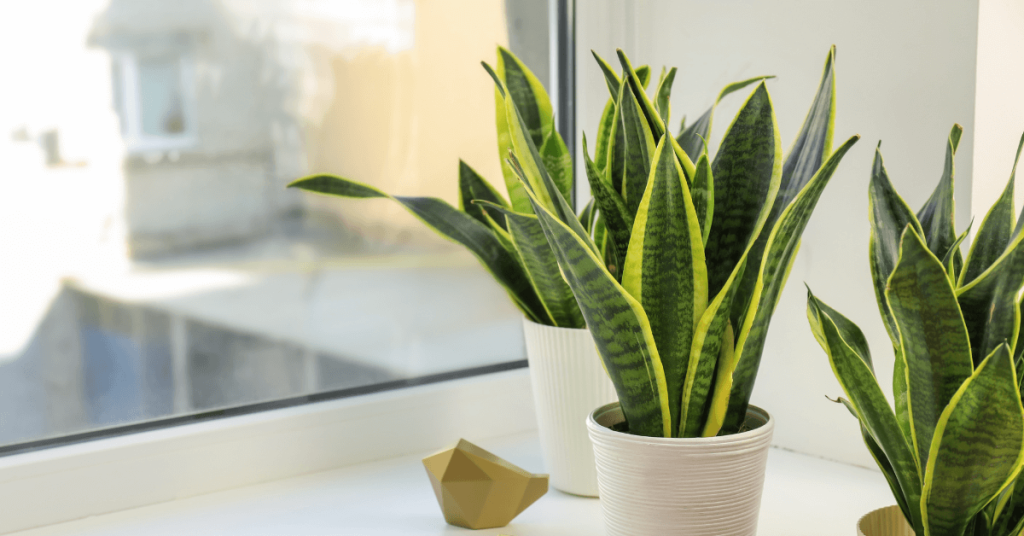
Snake Plant
Dracaena trifasciata or Snake Plant is a very hardy indoor plant, some say nearly indestructible. It will grow in almost any amount of light - dark to bright, so it can be placed virtually anywhere in your home. These tough plants require very little water - only water them if the soil feels dry. Overwatering may lead to root rot, so save your love and attention for something else, your Snake Plant just needs a little sip now and then.
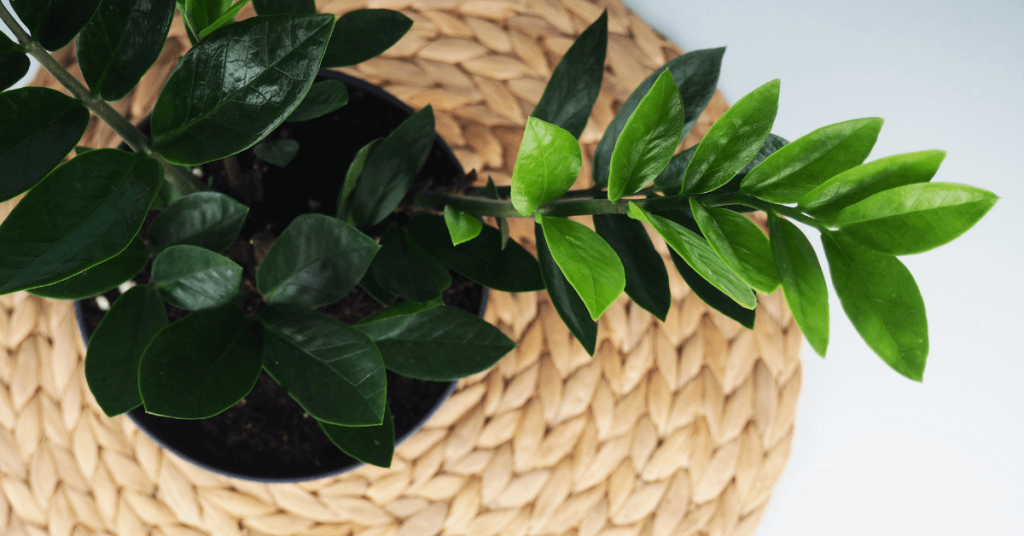
ZZ Plant
Wondering why the strange name? Technically its name is Zamioculcas zamiifolia…so let’s stick with ZZ! This is another easy to care for house plant. It likes bright, indirect light and some water every couple of weeks. Basically, a drink whenever the soil dries out. Not bad for a plant that looks like its shiny leaves have had a spa day.
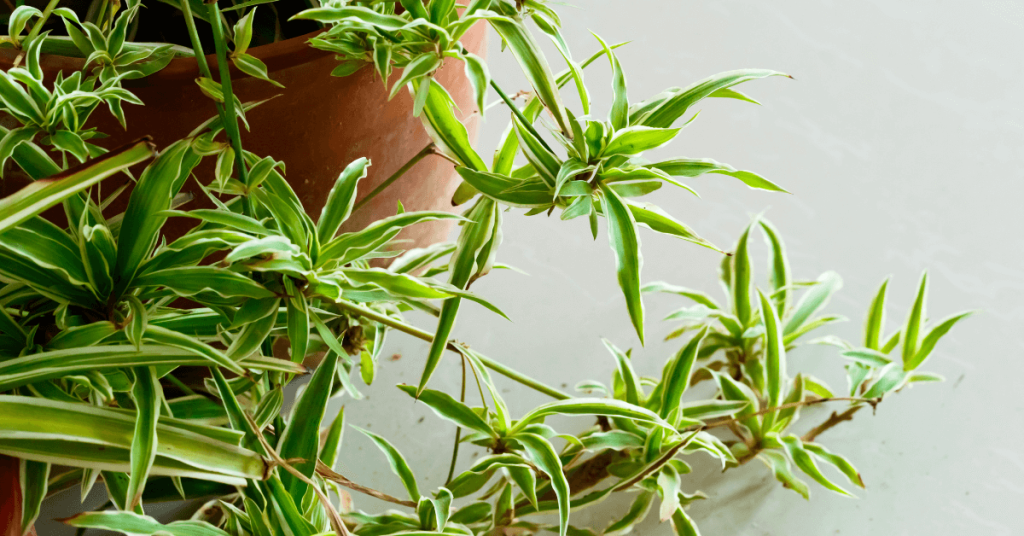
Spider Plant
Spider Plants are predominantly known for their graceful arching foliage, but they do send out a stem of small, star-shaped flowers fairly regularly on mature plants adding to the beauty of this popular house plant. Bright indirect light is where it thrives, and it does enjoy regular watering. Humidity can also help the Spider Plant stay healthy which makes it a great candidate for a bathroom with a shower or tub in it.

String of Pearls
Tiny, pea shaped leaves that look like pearls on a string make this a very unique houseplant. Unique may be a code word for: this one needs a little more attention. It’s best grown in a plant hanger or on a shelf where its trailing lengths of pearls are undisturbed. Morning light is best, not full light in the heat of the afternoon. During its growing season in Spring and Summer, keep the soil moist. It can be watered less in the winter. This is a plant that you can talk to each day while you give it a little drink, and it may become a very loyal friend. String of Hearts or other succulent, trailing vines are also plants to consider when you come in to shop and you’re liking the sound of this one.
When you do come into the store to see us, we can help with any other questions that you may have, like whether or not fertilizer is recommended and when to repot. Or, read this article on Tropical Plant Care.
When you pick out your new tropicals, we also have a great selection of decorative pots to place your new plants in to enhance your decor.
Eising Exotics
If you’re looking for a really special feature plant, or maybe to make your garden or pool area feel like you’ve been transported to a southern paradise, it’s time to pre-order larger palms and tropical plants! Shopping for these tropicals will surely make you feel like warm Summer breezes are just around the corner. Visit the Eising Exotics page now to view what’s available and place your pre-order.

The promise of Spring signals the season of revitalization, even for your wardrobe. Wouldn’t it be great to open your closet and find clothes that go together and that fit? Also, why is it that just when you find the perfect pair of black pants, there is never anything in the closet that seems to go with them?
Reorganizing your closet so that you can find what you need and know what is missing is easier than you might think. Even if you are already organized and can effortlessly pull an outfit together, this is always a great exercise to freshen things up. A revitalized closet just makes life easier! And organizing each year can be a quick, simple task that is quite enjoyable. Especially when you know there’s a payoff at the end of the job - getting something new to add to the mix!
These simple steps will help you see what items you need to update your closet. Then, when you come in to shop, you will know whether you need something with a burst of colour to freshen things up, like a colour block tee, or one of the great graphic tees at Sassyfras. Or maybe you bought a men’s dryweave shirt from us last year, and one just isn’t enough to use for sports, supper out, and that vacation in Spain. Once you follow this plan, you will know, and it will probably save you money.
If you set an afternoon aside, and do this with a friend - in person or on a video chat - time will fly by. Or, just put on some good music now and let’s get started.

1 - Make a Pile
First take everything out of your closet. Empty out drawers and all the things on the shelves above and below, including those birthday presents you meant to give out last year. Put it all on the bed or the floor, depending on the amount of space needed.
2 - Sort
Grab five boxes, bags or bins and label them as: Keep, Donate, Sell, Other and Trash.
As you pick up each article of clothing from the pile, decide which of the five containers it should go into. It can be a tough thing to do if you hate to part with old favourites. This is when you need that friend to support you and ask questions like “How often do you wear this? Is it still useful to you?” If you’re going it alone, and you’re not sure, just put it in the Other bin for now, along with those birthday gifts from last year.

3 - Clean
Don’t let this one scare you! It’s an empty closet, so it will go quickly. Give the closet a good vacuum. Wipe down poles, shelves, drawers and the floor. Maybe even add a quick coat of paint. Just make sure that it’s dry before continuing to the next step!
4 - Organize
Drawing from the Keep pile, start to put these items back into the closet in an organized way - pants in one section, blouses in another, etc. Keep colour in mind as you go so that you can organize items by colour as well. For example, keep all the blue blouses together.
If anything on the shelves was disorganized when you emptied the closet (sweaters, t-shirts, shoes), find containers to gather each of these items into and label them clearly. Even if it’s cardboard boxes with labels written in magic marker for now - you can always find a clear bin later and swap them out if you like.
Once everything that you know you want to keep is back in the closet, take another look in the Other bin. Where those items go may be more clear to you now. If not, put that box into the closet, except those birthday gifts - for heaven’s sake give those away. Or, hang these items up with the hangers facing backwards. If the hangers are still facing backwards in a year, or the Other box still has items in it, it’s time for those things to go!

5 - Remove
Now you’re ready to post the items you’re selling, or put the box in the car to take to a consignment store, along with the box of items that you’re donating.
Take the trash bag out to the curb, pull your shoulders back, and brush your hands together because you’ve done some great work! Doesn’t it feel good?! The final step is your sweet reward.
6 - Revitalize
While a sparkling clean and organized closet does feel good… nothing feels better than a new piece of clothing. It’s time to think about what’s next.
Take a look inside your beautiful closet, and see what you need. It should be so much easier to make a list of items that will revitalise your wardrobe now.
Bring that list with you on your next shopping trip! Of course, Sassyfras is stocked up with lots of great clothing, and ready to help you when Eising Garden Centre reopens on Thursday, March 2 for the 2023 season.
If you would like updates with everything that’s happening at Eising Garden Centre, this is the link to sign up for our fabulous newsletter.
We look forward to seeing you soon!
Sassyfras Hours
Beginning March 2, 2023
Monday - Saturday 10am-5pm
Eising Garden Centre
Spring Hours - Beginning March 2, 2023
Monday - Saturday 9am-5pm
Believe it or not, winter is the absolute best time to ponder, dream, and plan your garden and landscape design. Why? Spring is the optimal season to plant and transplant, and with a design in hand, we can hit the ground running once warmer temperatures arrive. Can you plant and transplant throughout the garden season? There are some exceptions, but for the most part the answer is yes. But why not get a head start, and take advantage of having plants established at the start of the growing season? Sure, we have designers sitting by the phone right now on these long, cold winter days but don’t just feel sorry for them - take advantage of the fact that it’s a great time to contact them! Contact details for Eising Garden Centre Landscape Design* are at the end of this post.
You may be asking why you should bother having someone else design your garden? One reason that I have learned the hard way is that it pays off in the long run. I’m probably not the only one who has planted flowers before putting in a patio or walkway, only to rip everything up because of construction, then re-plant all over again.
Besides saving you money on costly mistakes, here are a couple more things to consider:



1. Curb appeal and property value
When most people think of those two concepts, they think about preparing a home for selling. I’m not referring to that. Every day, when you arrive home from work, or errands, wouldn’t it be great to love the way your home and garden looks when you pull into the driveway? That’s curb appeal and property value for your own benefit! However, if you are planning to sell, investing a bit of money in sprucing up the yard definitely impacts the selling price.
2. Design for living
Because we have a few precious months to enjoy our outdoor spaces, landscaping allows you to make better use of the space available. What do you use your space for? What do you need to incorporate into your plan to include those activities? Will you need to install a patio, or create a garden, and where should you put them on the property? Maybe you need to create privacy with an evergreen hedge? Landscape design makes sense of all of it.
Maybe you’re interested in an opportunity to make your garden more environmentally friendly. For example, adding native plants, a birdhouse and birdbath. Perhaps you want to add shade trees to shelter birds, and decrease the need for air conditioning your house in the summer.

3. Structure and a plan are sexier than you think
Lastly, I want to tell you a personal story about my experience hiring a landscape designer. I’m a plant lover and I never considered design. I studied plants, and spent several years joyously collecting all kinds of perennials, shrubs, water and bog plants, and trees.
My garden was chaotic! But I loved the wild looking patchwork quilt of rare and unusual plants scattered within the confines of borders around my property. I nurtured each individual plant, and when I looked at my garden that’s what I saw, individual plants. Then I hired a landscaper to build a bigger pond for my growing collection of water and bog plants.
When the time came to build the pond, he moved my plants to make way for all of the construction. Once that was complete, he placed my plant material back following his design. My plants, the same plants I had before the project, looked completely different. There was harmony in the arrangement.
The overall effect was such an incredible improvement that I could not believe my eyes. It was a whole new garden, and proved the value of good garden design. Hint: it doesn’t involve buying a new, spectacular plant and plunking it into an empty spot, or digging another bed in some random location that gets sunlight. That was my AHA! moment.
Someone who understands plants AND design can take the things on your wish list and make them all come together in a way that just works.


*Eising Garden Centre Landscape Design
Contact Roman Bodnar to set up an appointment: by email here or call 519-428-4607.
Consultation Fee: $175 consultation fee per space (2023 pricing) - for example, the front yard would be considered one space.
What your consultation includes:
1) A knowledgeable staff member will meet with you at the site of the project for up to 1 hour.
2) Any questions and concerns that the customer has will be reviewed and helpful suggestions will be made to ensure a successful project.
3) A simple 3D visual landscape design will be made, to enable the customer to see the potential of their space.
4) A detailed list will be provided to exhibit the needs, amounts and prices of the materials.
5) A 10% discount will be made available on all plant material in the design within 90 days of the consultation purchase.
Our specialty is soft-scaping: plants, soil and mulch. If the design we create warrants it, we will also utilize some armour stone and other natural stone features. We can’t wait to show you the potential of your property! Don’t delay your planning any longer…contact Eising Garden Centre today.
Shrubs that flower in summer and fall make gorgeous accent plants for the landscape. We're so accustomed to seeing trees and shrubs blossom during spring, so it's a real treat to have all that vibrant colour and texture to enjoy throughout the later months of our growing season in Southern Ontario.
While many gardeners will insist that summer is too hot to plant shrubs, that simply isn't the case! It can still be done successfully if you follow the correct steps to prevent your plant from getting heat stress. If you wait until later in the evening on a cloudy day to transplant a shrub, then water it thoroughly after planting, it will have all night to adjust to its new habitat and will be hydrated—ready to soak up the summer sun the following morning.
Want to enhance the design and layout of your yard with some large, flowering shrubs? These late-season bloomers will bring a burst of colour and energy to the landscape, creating a fantastic setting for summer entertaining, hangouts on the patio, and picture-perfect photo ops.
Bluebeard
True blue is certainly the rarest colour to encounter in the plant world, so we can't help but get excited when we see flowering plants sporting this deep, cool hue. Our Beyond Midnight Bluebeard is totally on-trend—after all, Pantone named 'Classic Blue' as the 2020 Colour of the Year!
Bluebeard is a gorgeous flowering shrub that blooms from late summer to early fall, and its dark, glossy green foliage catches the sunlight beautifully. Plant it in full sun for best results, and prune it yearly in early spring, right at the first sign of new growth. Make sure its soil is well-draining because this shrub does not take kindly to soggy earth or stagnant water hanging around its roots.

Butterfly Bush
These pollinator-friendly shrubs have incredibly vivid flowers that attract butterflies, bees, and hummingbirds alike. Our Crown Jewels variety has some of the brightest purple petals we've ever seen, nestled in a mass of golden lime green foliage. Talk about a high-impact colour palette!
Butterfly bush is an incredibly hardy plant that's resistant to drought and tolerant of rocky soils. You'll have to water it regularly for the first few months after planting, but by year two, you'll be able to just leave it be, and the regular rainfall will be plenty enough to keep it hydrated.
Hydrangea Macrophylla
There's something so dreamy and beautiful about the lush clusters of flowers boasted by the hydrangea macrophylla—there's a reason why they're so popular for wedding bouquets! With so many different varieties and colours to choose from, you're bound to find a variety that suits your fancy.

We really love our Bloomstruck hydrangeas because their colour can shift from blue to pink, depending on the soil's pH levels. The blossoms last all summer long, but even after they fade, this shrub adds so much visual interest through the fall, because of its emerald green foliage transitions into a rich, warm burgundy colour.
Rose of Sharon
Rose of Sharon actually comes from the hibiscus family, and it grows in an upright form that can be trained into a tree shape. Like most hibiscus plants, Rose of Sharon's flowers are quite large and showy. Our Woodbridge variety has stunning blossoms in a rosy blush shade, with a ruby red centre. It loves the sun and can grow up to ten feet tall and six feet wide, so it makes an excellent option for privacy borders around the perimeter of your yard.

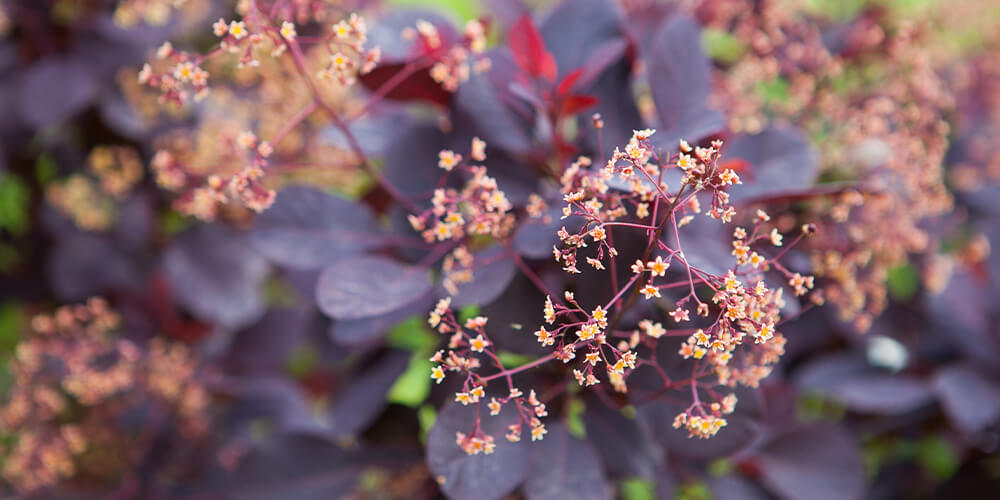
Smoke Tree
The smoke tree gets its name from it's wispy, fluffy blossoms that look like plumes of smoke. If you love rich purples and warm fall colour palettes, you'll go absolutely gaga over our Royal Purple smoke tree, which has reddish-purple blossoms and foliage to match! Once autumn rolls around, the leaves will actually turn a brighter cranberry red shade.
Make sure you leave plenty of space around your smoke tree when planting because they can reach up to 15 feet high and 12 feet wide! Regular pruning should help keep it a manageable size if you don't want it to get too large. Once it's established, it will appreciate it if you occasionally give it a thorough watering, especially in summer, during hot, dry spells.
Need some help getting your new shrubs in the ground? We're happy to offer planting services for those of you who are new to landscaping! To see more of our incredible selection of flowering shrubs you can grow here in Simcoe, take a look through our newly launched webstore, so you can order all the plants and supplies you need, right from the comfort of your own home.