
Earthy Autumn Tones and Textures
By Ava Green
Taking our cues from Mother Nature, this season's fall clothing leans into all the colours and textures we love to celebrate each autumn.
Brown Is Back!
Dare we say that brown is the new black?! Take a look at our newest shades, including gorgeous maroon undertones. Rich, deep and bold, brown is a colour that feels as cozy as the season itself.
If you’ve already built a capsule wardrobe, brown is one of the easiest colours to fold in for an instant, seasonally chic refresh.

The Autumn Palette
Our staff favourites this season are tops in a full palette of autumn shades. They’re the kind of pieces that make mixing and matching with what’s already in your closet effortless.


Sweater Weather
One of the best things about fall? Wearing a nice cozy sweater. As temperatures drop, a chunky knit wraps you up and keeps you warm, while looking fabulous, of course!
Fall Wardrobe Styling Tip
Do you love autumn shades but aren’t sure they suit your complexion? Wear them on the bottom instead of the top. You’ll still get the payoff of autumn colours while complementing your skin tone.
Not sure how to bring fall colours to your wardrobe? Come on in! Sassyfras is just inside the Eising Garden Centre entrance, on your right, and we’re always happy to help you find pieces that flatter and bring you joy.

Planting, Pruning, Pairing
By Ava Green
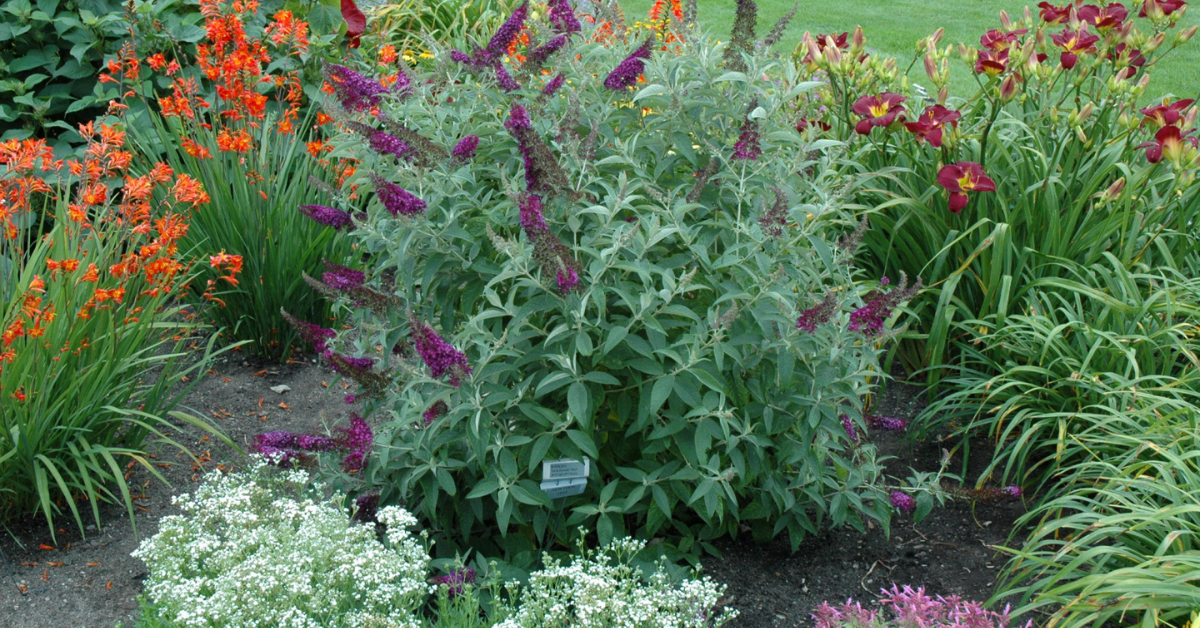
From its graceful, arching branches to the fragrant, lilac-shaped flower clusters that draw in a kaleidoscope of butterflies, bees and hummingbirds, Butterfly Bush (Buddleia davidii), also known as Summer Lilac, is a shrub worth including in your garden.
Landscape Value
Butterfly bushes bloom throughout the summer, with some varieties flowering into the fall, and offer a wide range of colours and intensities.
They look best planted en masse or as part of a tiered garden, paired with smaller perennials or shrubs in front of them. Evergreens make a great backdrop for perennials, and this is a plant that would be perfect punctuation in front of a cedar or yew. Since butterfly bushes are slow to get going in spring, tucking shorter, early-blooming plants in front of them helps hide that lag while everything else fills in.
As a bonus, Buddleia are deer and rabbit-resistant, making them a solid choice if critters are an ongoing issue in your garden.
Caring for Your Butterfly Bushes
Plant your Buddleia in full sun and well-drained soil. These shrubs want 8 hours of sun a day and don’t tolerate “wet feet”.
Here in Southern Ontario (hardiness Zone 6), the butterfly bush is a deciduous shrub that’s best treated like an herbaceous perennial: cut it back each spring, never in the fall, to keep it happy and blooming well.
Be patient in the spring, and wait for buds to start forming before you prune, then cut each stem back just above a big, healthy leaf bud. Since butterfly bushes flower on new growth, this yearly cutback is what drives a full season of blooms. In fall, deadhead spent blooms to remove seed heads (on varieties that produce them) and help keep the plant from spreading.
Plant in the spring or summer rather than fall, so your butterfly bush has as much time as possible to get established before cold weather arrives.
Great Variety!
Butterfly Bushes come in a range of heights and colours, so there’s likely a fit for almost any spot in your garden. A few examples:
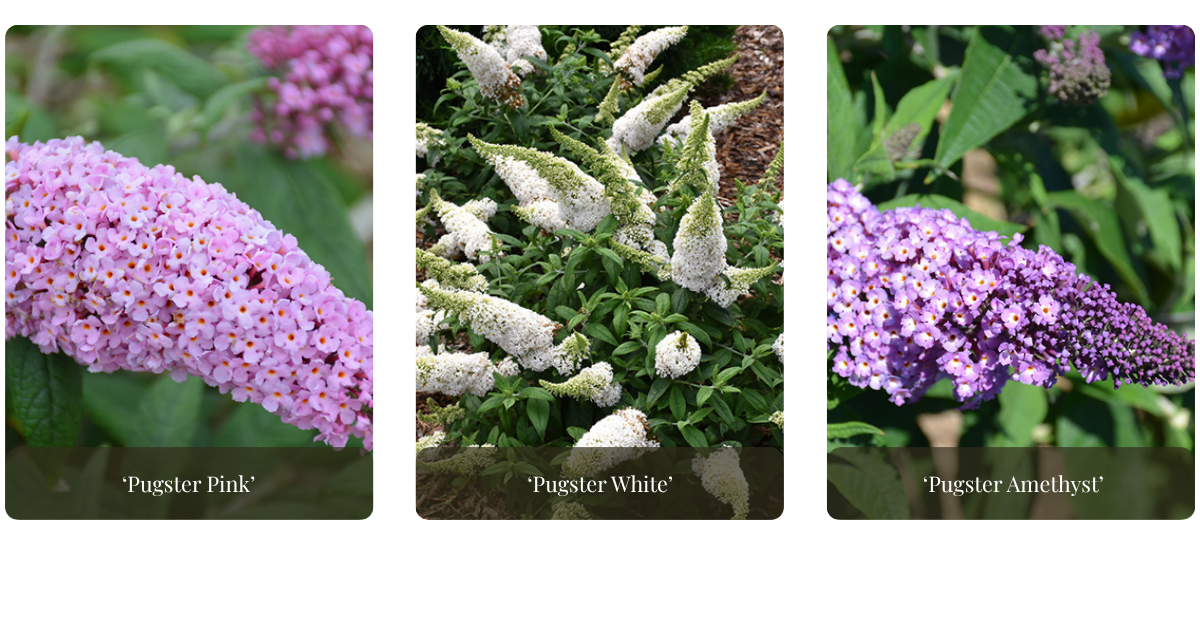
Dwarf: "Pugster" Series
A shorter, stalkier variety that still produces full-sized flowers in rich, saturated tones on new wood. Long-blooming plants; summer into fall.
Best for: Grouping behind spring-blooming ground covers and shorter perennials | Sun: Full sun | Mature size: 24 in. tall × 24 in. wide
Medium Height: “Miss” Series
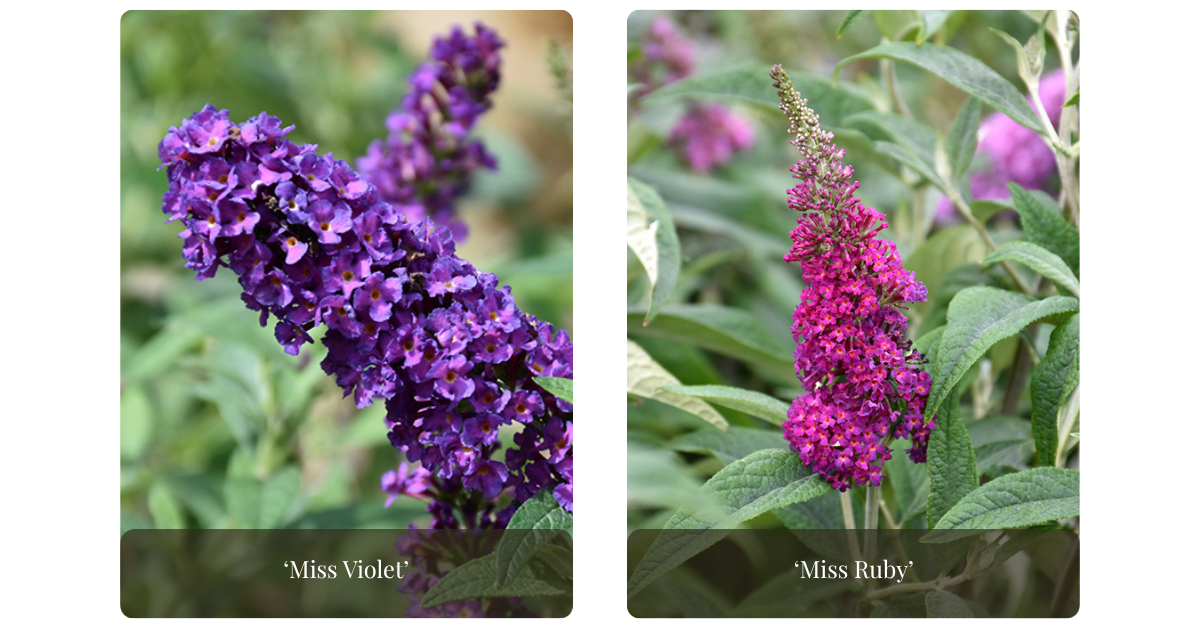
The “Miss” series offers medium-height varieties with a graceful habit and intensely coloured, fragrant, heat-tolerant blooms on new wood.
Best for: The middle of beds and borders, planted in groupings | Sun: Full sun | Mature size: 48-60 in. tall × 48-60 in. wide
Tall Varieties
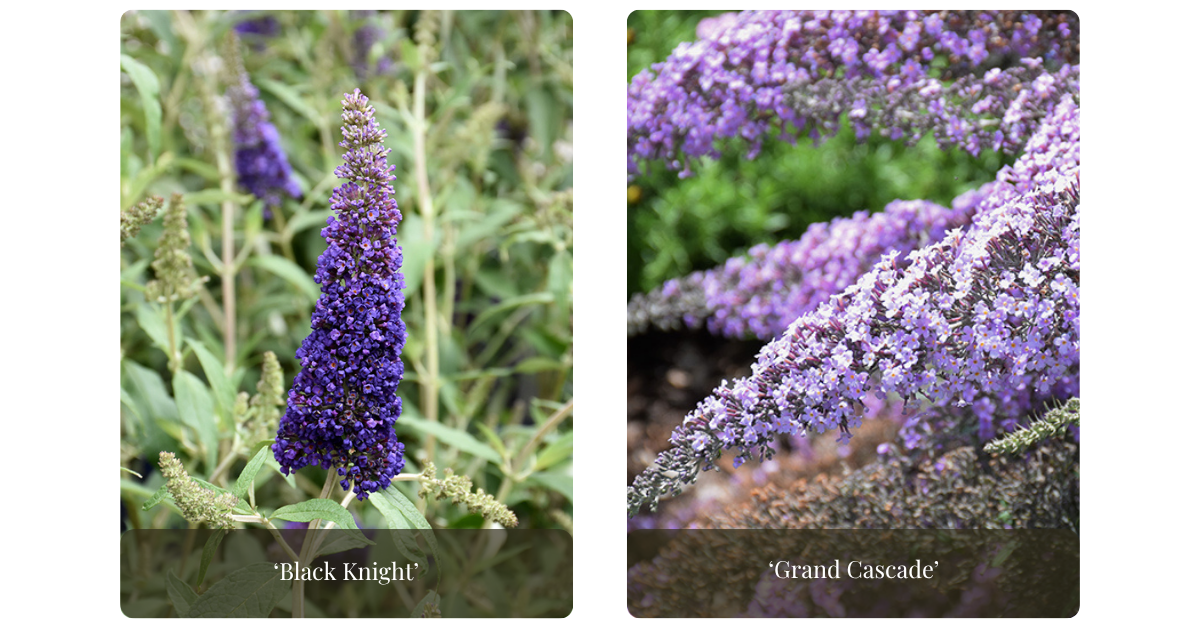
Vase-shaped and vigorous, with large, fragrant blooms, taller varieties of Buddleja davidii, such as ‘Black Knight’ or ‘Grand Cascade’, are absolute showstoppers in any garden.
Best for: Foundation plantings or the back of borders and beds | Sun: Full sun | Mature size: 6- 8 ft. tall × 4-8 ft. wide, depending on the variety
Hosts With The Most
Butterfly bushes will draw in bees, butterflies and hummingbirds; but every pollinator ultimately needs more than nectar. They also need places to lay eggs and support their young.
That's where host plants come in. Pairing your butterfly bush with plants like cherries, spicebush, Coneflower, Joe Pye Weed, Black-Eyed Susan, and New Jersey Tea provides pollinators with nectar diversity and places to reproduce. Some butterflies and moths will lay their eggs on a wide range of plants while others are far more particular. The Monarch butterfly is the best example: milkweed is the only plant that supports a Monarch caterpillar’s life cycle, so planting milkweed near your butterfly bush is essential if you want to support Monarchs specifically.
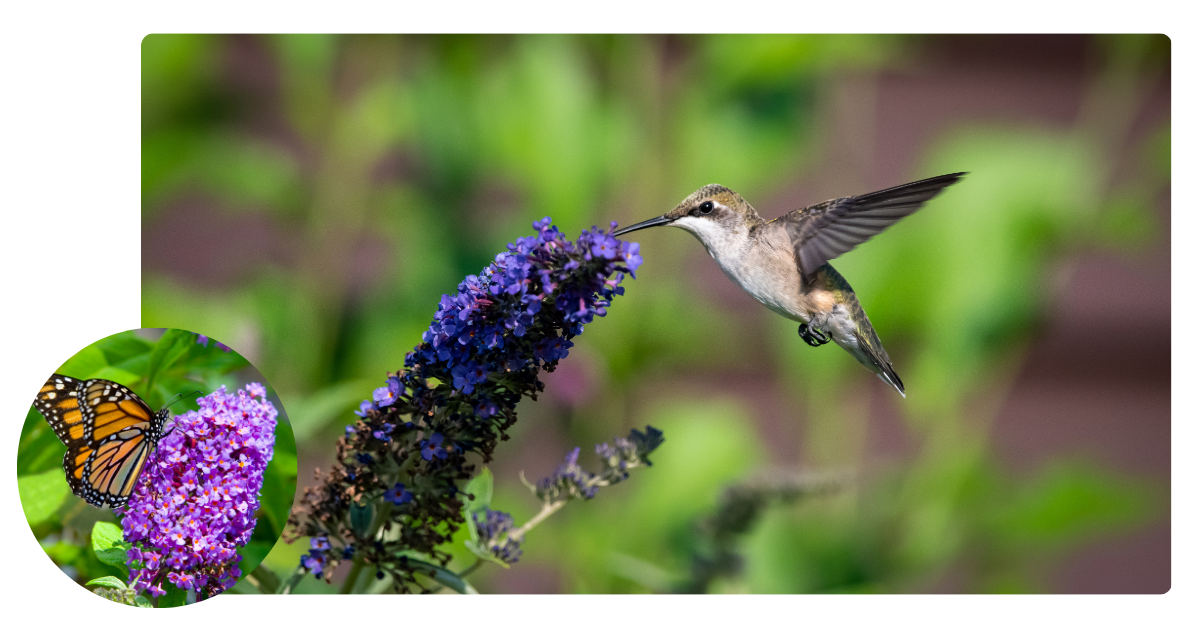
Figuring out which host plants suit which butterflies and moths takes a bit of research, but as with most things in the garden, diversity wins.
Come on in to Eising Garden Centre and look at the butterfly bushes in person; we’re here to help you find the right ones for your garden!
Other resources:
How to Keep Your Butterfly Bush Blooming: https://eising.ca/how-to-keep-your-butterfly-bush-blooming
5 Ontario native host plants for butterflies and moths:
Plants that support a butterfly lifecycle:
Host plants for butterflies:
Expert Picks You Can Plant Right Now
By Ava Green
Looking for a flowering shrub that delivers season after season? We asked our experts at Eising Garden Centre to share their top picks, the ones that customers and staff love most, and they delivered. Whether you’re looking for spring blooms, fall colour, wildlife and pollinator value, or a shrub to suit your space, there’s something on this list for every garden.
Fuji Cherry ‘Little Twist’, Prunus incisa ‘CarltonLT’
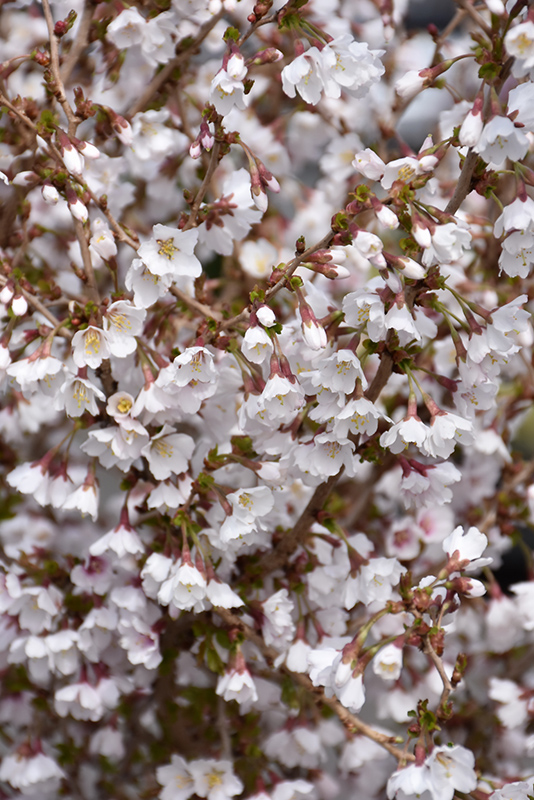
As an accent in a small garden, or planted in a grouping in a larger garden, this multi-stemmed shrub is a gem!
In early spring, crimson buds emerge before the leaves appear. Little Twist then produces clusters of lightly scented white, bell-shaped flowers with soft pink centres that grow along its stems, a stunning early-season display. It is a deciduous shrub, and leaves begin as green before shifting to coppery-bronze, then deepen to a rich burgundy in fall. Smooth, dark red bark adds interest in the winter once the leaves are gone.
This slow-growing, multi-stemmed shrub makes a striking feature in your garden.
Best for: Small gardens, accent planting, four-season interest. | Sun: Full sun | Mature size: 6 ft. tall × 6 ft. wide
Downy Serviceberry, Amelanchier canadensis
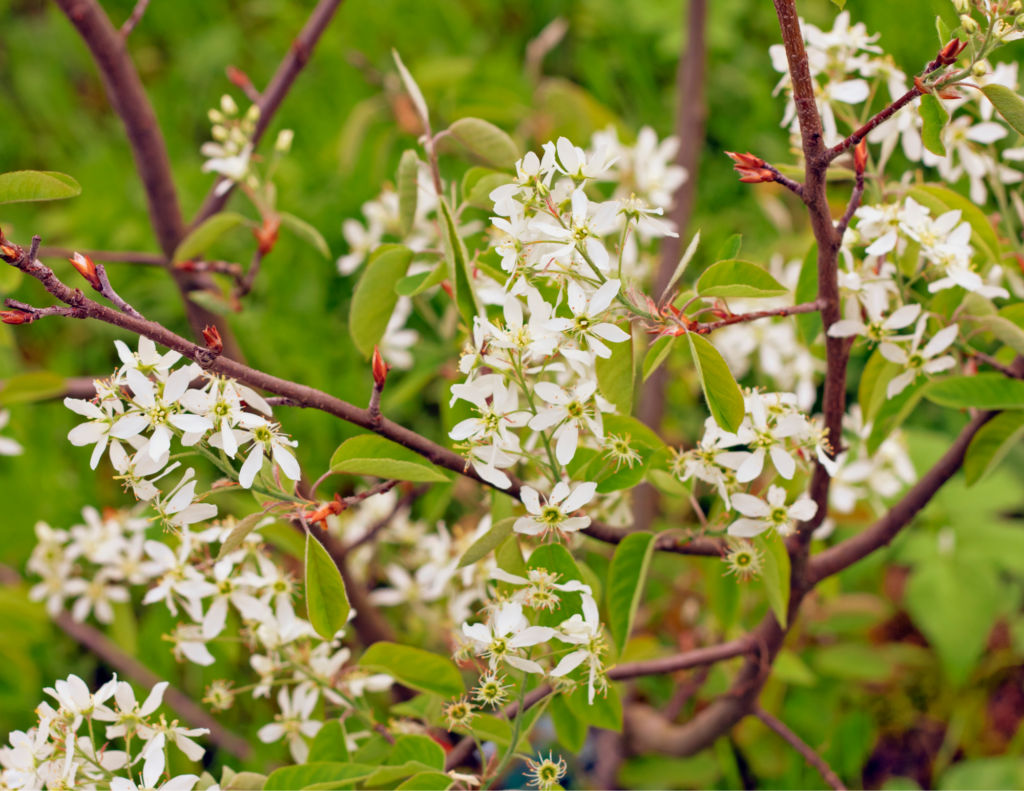
One of the most rewarding native shrubs you can plant, Downy Serviceberry earns its place in the garden from spring right through to fall. Showy clusters of fragrant white flowers in early spring, followed by small, sweet, edible purple-blue berries in early summer that are wonderful for making jam and an absolute favourite for birds. Come fall, the foliage puts on a spectacular show in shades of yellow, red, and orange.
As a bonus, choosing a native plant like Serviceberry supports local pollinators and wildlife, making it as ecologically valuable as it is beautiful. It works well as a specimen plant on it’s own, in a grouping or hedge, or naturalized in a larger landscape.
Best for: Wildlife gardens, naturalized areas, multi-season interest | Sun: Full sun to part shade | Mature size: 20 ft. tall × 10 ft. wide
Amur Privet, Ligustrum Amurense
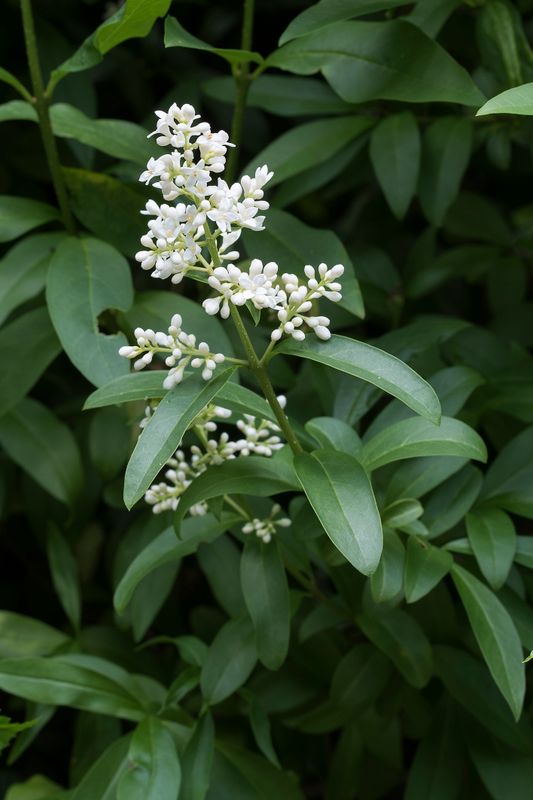
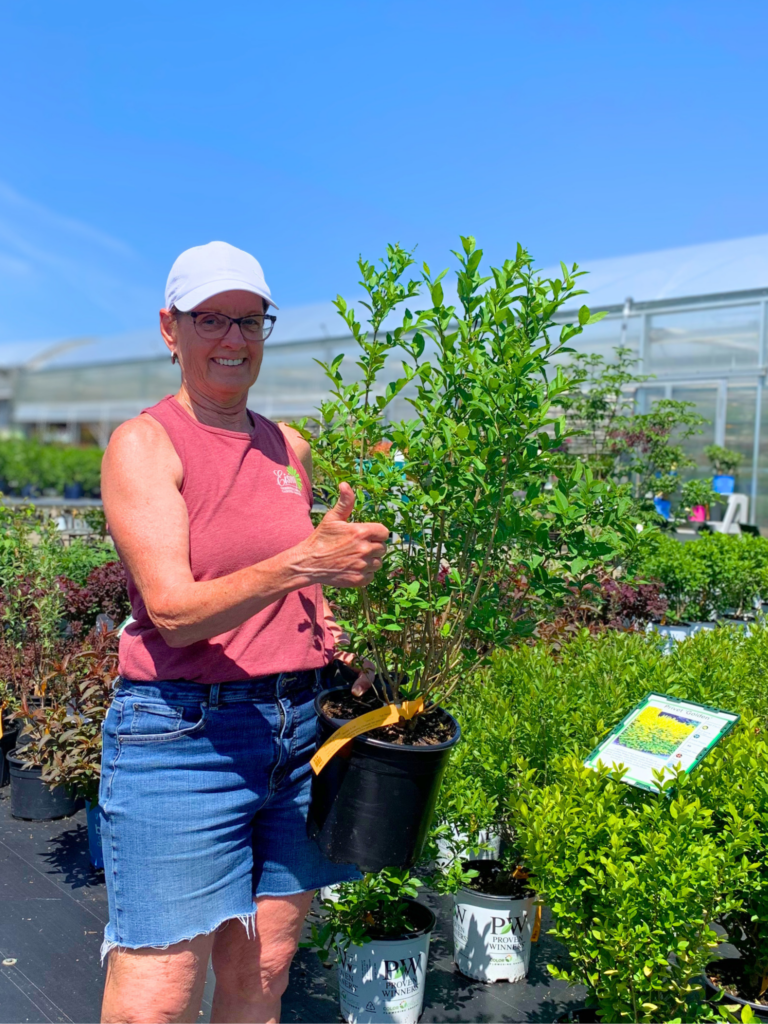
Amur Privet
When fast growth and privacy matter, Amur Privet is one of the best choices available. This dense, dark green shrub produces white flower panicles in late spring and small black berries in fall. It responds exceptionally well to pruning after it blooms, making it an ideal candidate for a formal or informal hedge. If you need to fill a space quickly and create structure in your garden, this is a reliable, low-maintenance option.
Best for: Hedging, screening, fast coverage | Sun: Full sun to part shade | Mature size: 12–15 ft. tall × 8–15 ft. wide
Viburnum ‘Fragrant Snowball’, Viburnum Opulus ‘Roseum’
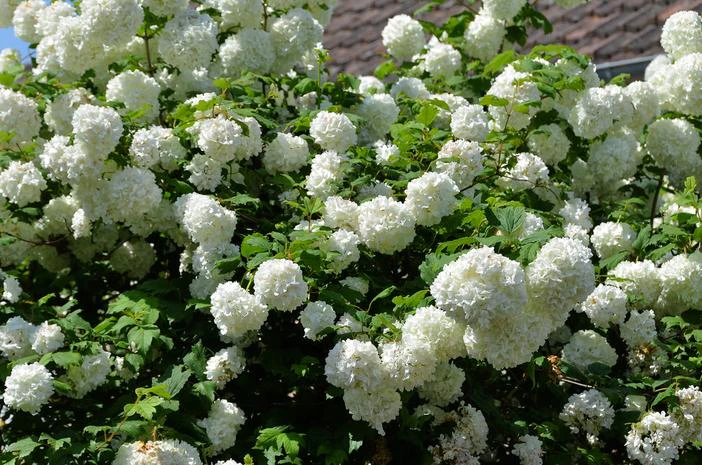
Few shrubs stop people in their tracks quite like Fragrant Snowball Viburnum in full bloom. Large, rounded clusters of sweetly scented white flowers cover the plant in spring, creating a display that’s hard to match. While it doesn’t produce fruit, it earns its place again in the fall when the foliage transitions to rich shades of purple.
Pruning after it blooms will help to keep it a manageable size and encourage healthy new growth. It’s also available as a standard, or tree form, which matures to a more compact 6 to 8 feet tall.
Sun or part shade are best for this deciduous shrub, a beautiful, solitary accent plant for the garden growing 12 feet high and 10 feet wide. As a standard, it is smaller, maturing at 6 to 8 feet tall and 5 to 6 feet wide.
Best for: Specimen planting, cottage gardens, fragrance | Sun: Full sun to part shade | Mature size: 12 ft. tall × 10 ft. wide (shrub); 6–8 ft. tall (standard)
Snowbelle Mockorange, Philadelphus ‘Snowbelle’
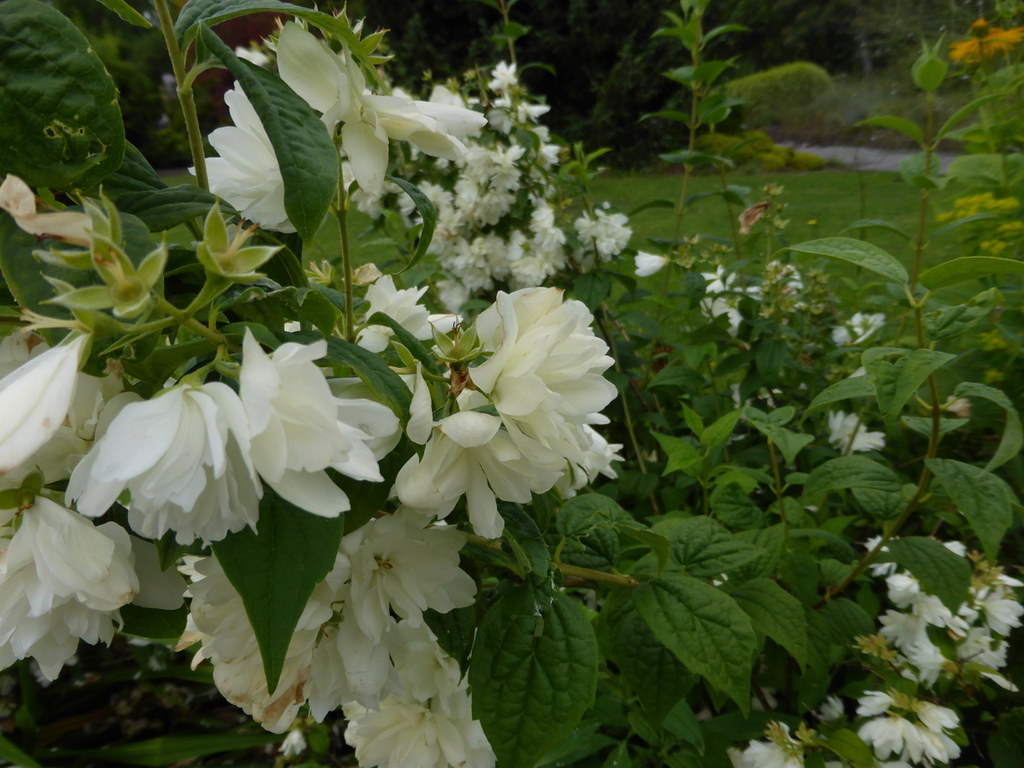
Don’t let its compact size fool you; when Snowbelle Mockorange blooms in early summer, it puts on a big show. This dense, mounded shrub is blanketed in sweetly fragrant double white blooms that are absolutely irresistible to bees and butterflies. Once the flowers fade, its rich, dark-green deciduous foliage makes it a lovely backdrop for other blooming plants in the border.
Growing just four feet tall and wide, it’s one of the best choices for smaller beds, borders and foundation plantings. It prefers full sun but handles part shade as well.
Best for: Small borders, foundation planting, fragrance | Sun: Full sun to part shade | Mature size: 4 ft. tall × 4 ft. wide
More Flowering Shrubs Worth Exploring
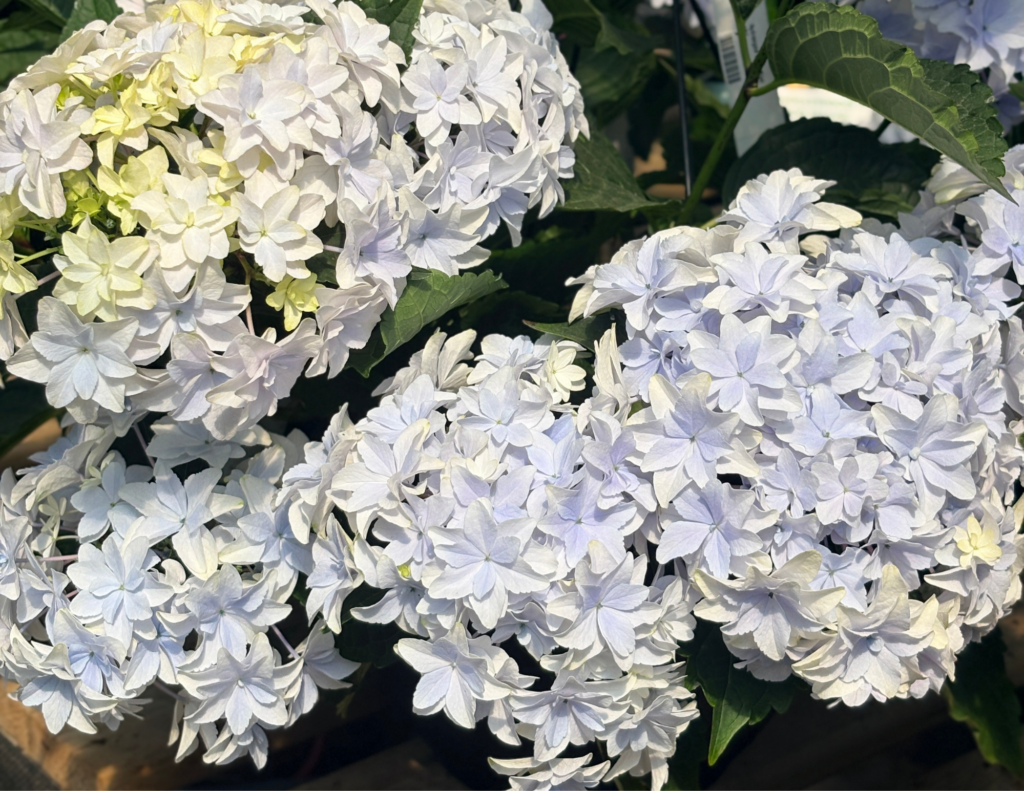
This is just the beginning! At Eising Garden Centre, we also carry a wonderful selection of Azalea, Eastern Redbud, Kwanzan Flowering Cherry, Hydrangea, Dogwood, Butterfly Bush, Beauty Bush, Lilac, Rose of Sharon, Forsythia, and Potentilla, to name a few.
The best way to find the right flowering shrub for your garden is to come in and see them in person, and right now is the perfect time to plant. Stop by and chat with Zach or Donna, who are always happy to help you find exactly what you’re looking for, based on your space, soil, and vision. We’re here to help you make the most of every corner of your garden!