
For tomato lovers, picking a warm, flavourful tomato right off the plant for a sandwich, burger, or salad is a sure sign of summer! I eagerly await the day the first fruit begins to turn red, knowing that I am a day or two away from the first of many toasted tomato sandwiches for the season!
By the end of June, your tomato plants should be in the ground or pot, staked, and well on their way to producing fruit. But how do you keep your plants healthy all summer so that you can maximize your investment? Here are a few tips to help keep your tomato sandwiches coming until frost!
Water
Water early in the morning and water deeply. For tomatoes, consistent moisture is best.
Keep the water on the ground, not on the foliage. This is important because damp foliage can lead to diseases like early blight, which can ultimately cause the entire plant to die. Mulching around the base of plants will reduce the amount of water that can splash up onto the leaves. A soaker hose or drip line is also a great way to ensure that water stays on the ground, rather than on the plant.
Pruning
Reducing the amount of foliage on a tomato plant is necessary for a couple of reasons: good air flow, which reduces the chance of powdery mildew forming, and less foliage means that the plant can send energy to growing fruit instead of lots of leaves.
Follow these easy steps when you prune your tomato plants:
- Before you begin, remember to follow the rule for pruning - no more than ⅓ of a plant should be removed at a time.
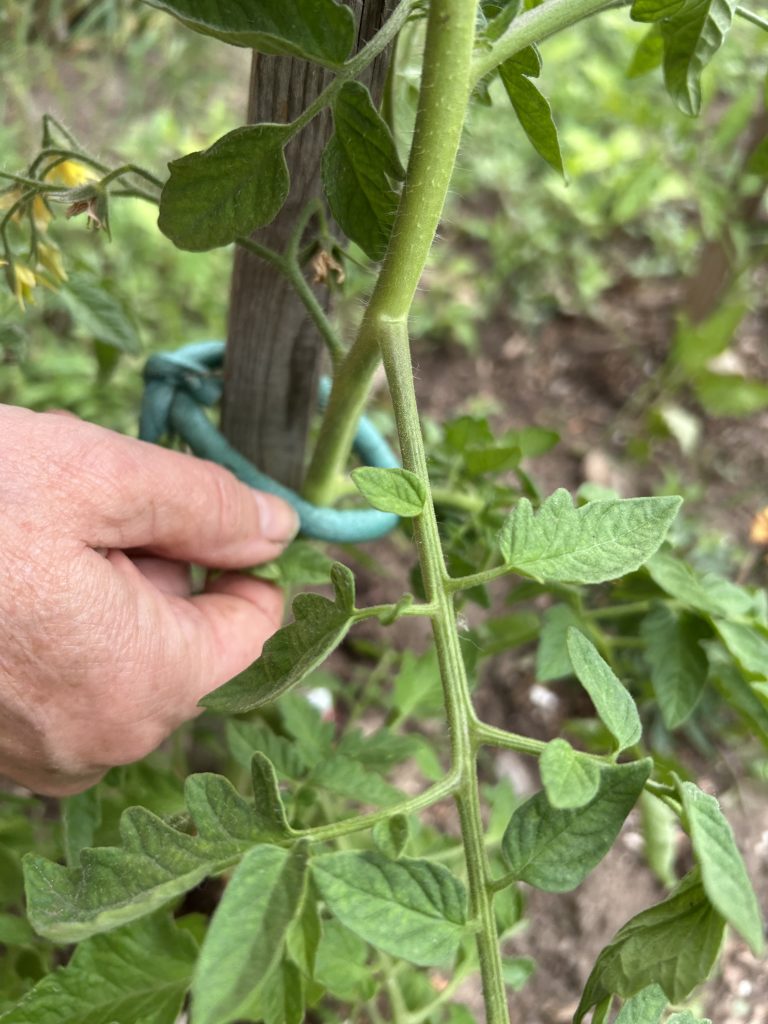
- Use clean scissors or pruning shears to cut the leaves off the bottom of the plant. Remove any leaves that are touching the ground. These are particularly susceptible to mildew formation.
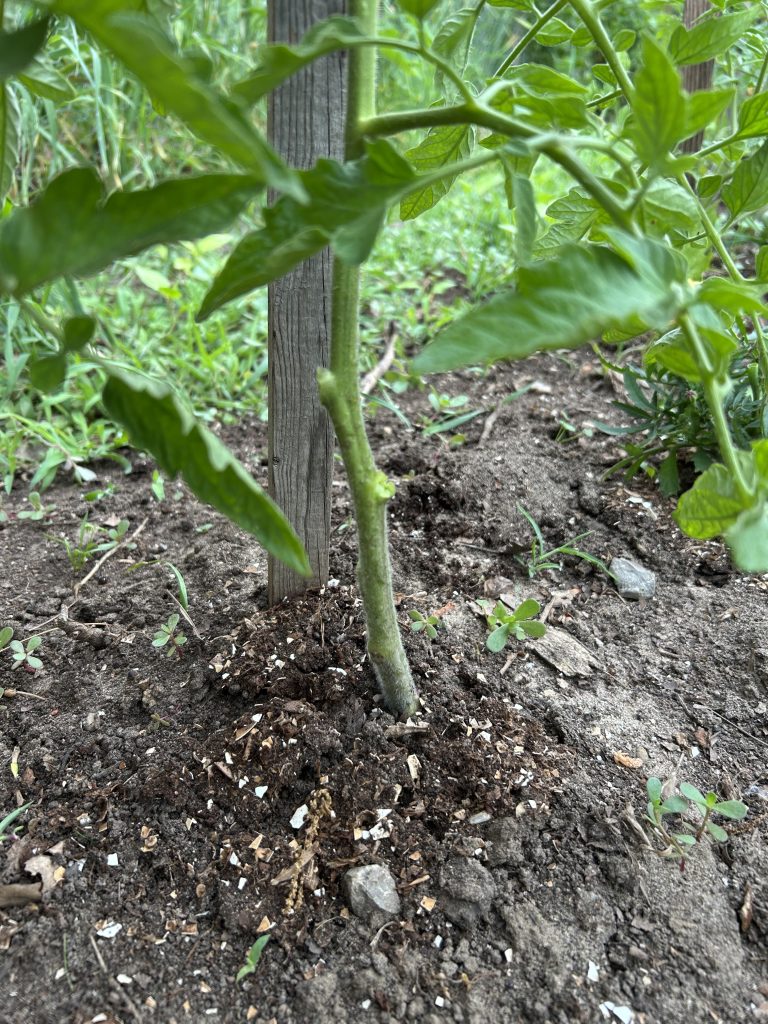
When fruit starts forming, remove the leaves from the bottom of the plant up to the first or lowest fruit.
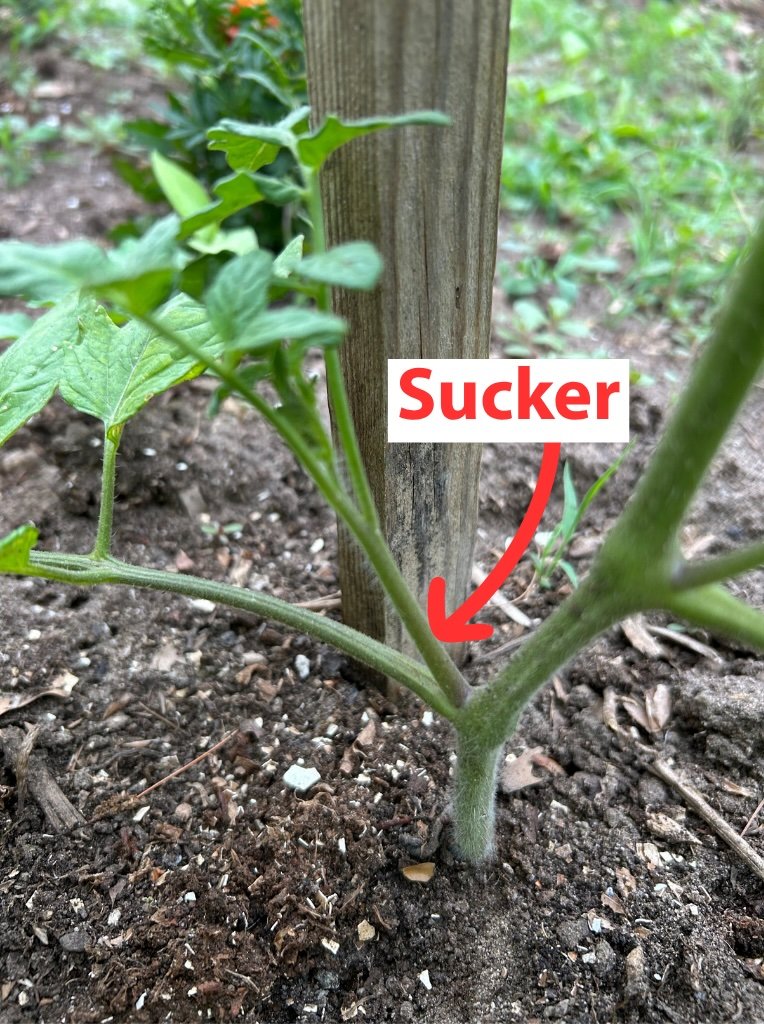
Remove suckers ongoingly. What are suckers? When you look at your tomato plant, you will see the main stem that comes up from the ground, and branches of leaves that come out of the main stem. As the plant grows, suckers begin to form in the “Y” between the main stem and a branch of leaves. Suckers won’t harm a plant; they just make it very unruly and reduce airflow.
If your tomatoes are indeterminate (growing into a tall vine), remove the top of the plant when frost is forecasted at the end of the season. Topping the plant allows energy to ripen the fruit that’s already set, rather than being used to continue growing the vine.
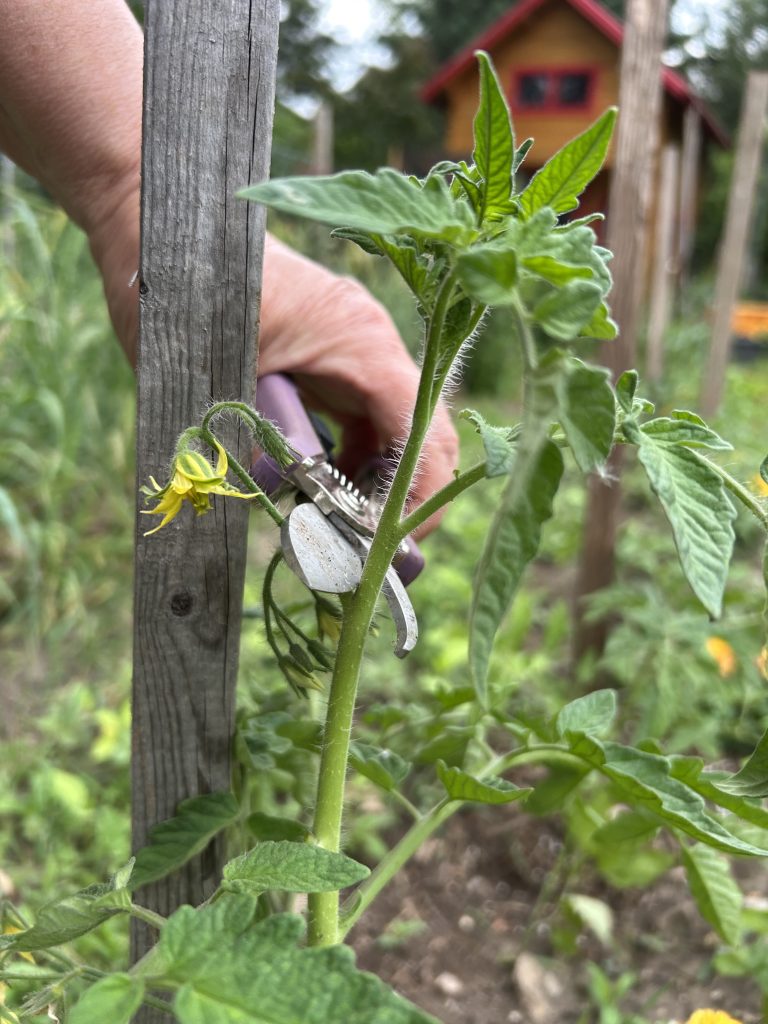
NOTE: Some gardeners like to leave suckers on determinate tomato plants as this can increase the yield.
TIP: Tomatoes ripen from the inside out. That means that by the time you see fruit beginning to flush on the outside, the inside is already ripe. If you have competition for tomatoes from pesky critters, or when there’s a chance of frost in the weather forecast, you can pick fruit that has just begun to turn colour and leave it on the kitchen counter to continue to ripen.
Fertilizer
Using organic material is one of the best ways to feed your crop. A good layer of compost, 1-2 inches, in the spring when you’re planting and again in the fall each year is one of the best ways to improve your soil structure in the garden, and it also adds lots of nutrition.
If you missed this step when planting your garden, you can always add a layer of compost around your plants or use other organic fertilizers, such as compost tea, seaweed, worm castings, or fish emulsion.
Alternatively, you can use a fertilizer that’s formulated especially for tomatoes - these usually have a ratio like 3-4-6 or 4-7-10. Follow label directions for amounts and err on the side of caution. Using less fertilizer is always better than using too much, as an excess can stress the plant and make it more prone to disease.
Following these simple steps for tomato care will help to ensure your plants stay healthy and producing fruit, but if you should have problems, here are some great resources to identify tomato issues:
- Ontario.ca: Bacterial diseases of tomato: bacterial spot, bacterial speck and bacterial canker
- Guelph.ca: Healthy Landscapes – Plant List Native and Drought-Tolerant Plants
The flavour of homegrown tomatoes is like nothing else, and tomatoes are pretty easy to grow in Southern Ontario. With all that classic, juicy flavour, it's so satisfying to serve your family beautiful and tasty tomatoes that you grew yourself. Some of the more unique varieties are surprisingly beautiful plants as well—especially when they're loaded with brightly-coloured fruit!
Here are some of our favourite tomato varieties for 2020!
Little Sicily is the perfect patio tomato, delivering lots of tomatoes with excellent flavour on a plant that stays under 2 feet tall!
Candyland Red is a currant tomato—slightly smaller than the cherry size. The sweet flavour of these dark red fruits can be enjoyed all season long.
Glamour is an early producing tomato, with large crack-resistant fruits. These are a delicious all-around tomato, great for sandwiches, salads, slicing, and canning.
Great White is a large, yellow-white tomato with a delicate tropical flavour and low acidity. These are the best when eaten immediately after harvesting! Great White is pleasant and mild, and perfect for folks who are sensitive to acidic foods.

Green Zebra is a green and yellow striped tomato with a tart and rich flavour. It's a little smaller than your average grocery store tomato. Let them ripen fully on the vine before picking to enjoy their full, balanced flavour.
Pineapple is a sizeable bright-yellow tomato known for its refreshing citrusy flavour. These are super sweet with lower acid levels than other yellow tomatoes. Pineapple tomatoes can weigh up to 1 pound each and are perfect for sandwiches!
Better Boy is the perfect classic red tomato. Its the perfect balance of tart and sweet, and it produces an amazing amount of fruit in one season. This excellent slicing tomato grows well almost anywhere.
Bush Beefsteak is the perfect beefsteak variety for patios. It delivers large and flavourful fruit early in the season, maturing in just 62 days. The plant stays much more compact than other beefsteak varieties.
Whatever variety of tomatoes you choose to grow, you can be sure they'll taste amazing. You'll be able to show off your delicious homegrown fruit in all sorts of meals—from salads to kebabs, soups to sauces, and burgers to sandwiches. All of these varieties are disease resistant and will grow well in Simcoe!

Tomatoes are pretty simple to care for, but there are a few basics to keep in mind. These garden favourites are heavy feeders, and they're also very thirsty. Because they grow so fast, they use up nutrients in the soil fast. Fertilize your tomatoes once a week to ensure they have the nutrients they need to produce the best possible flavour. During the summer, you may need to water your tomatoes daily, especially if they are in pots. Growing as fast and as large as they do, tomatoes use up water very quickly. Make sure they're watered consistently, without getting too dry in between, to prevent blossom end rot.
Ready to start growing tomatoes for your summer BBQs, picnics, and block parties? Stop by our Garden Centre; we've got many more delicious and beautiful varieties to choose from!