
By: Ava Green
One of the best things about living in southern Ontario is the beautiful show our deciduous trees and shrubs put on each fall.
Autumn is also the perfect time to plant trees, shrubs, and perennials. The sun is less intense, temperatures are slightly cooler, and with regular, deep watering, the plants are less prone to transplant shock, ensuring a successful planting.
As the leaves begin to change, they mark the arrival of autumn, a season full of colour and celebration. If fall is a special time of year for you, our staff have handpicked their favourite deciduous trees and shrubs with the most stunning seasonal displays. Here are their top recommendations.
Autumn Blaze Maple
Botanical Name: Acer x freemanii 'Jeffersred'
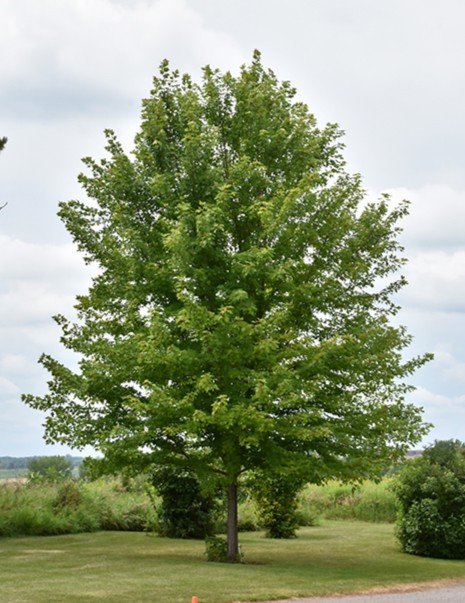
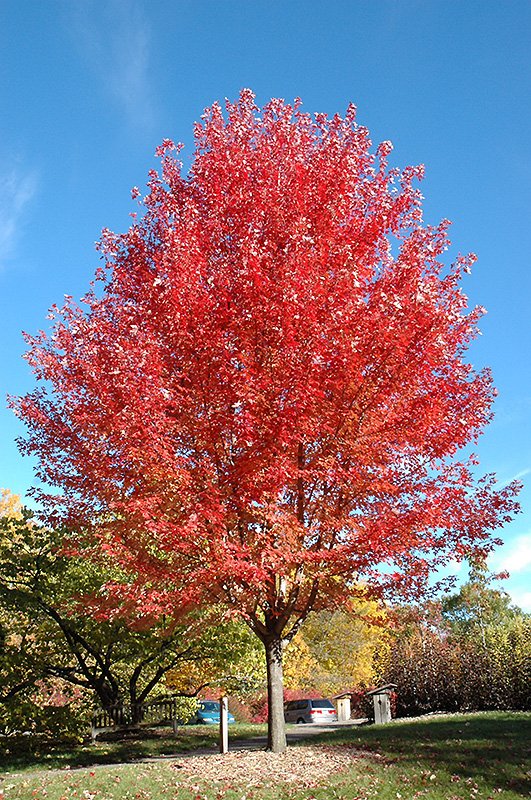
This tree is a cross between the fast-growing Silver Maple and the showy Red Maple - two very popular trees!
Autumn Blaze will provide a display of colour throughout autumn by starting earlier and lasting longer than most other trees. It’s large, with 5-inch leaves that begin by turning red at the top, then eventually shades of red and orange cascade down the length of the tree.
Even in the winter, this is a beautiful specimen because its shape is so symmetrical.
Seven-Son Flower
Botanical Name: Heptacodium miconioides
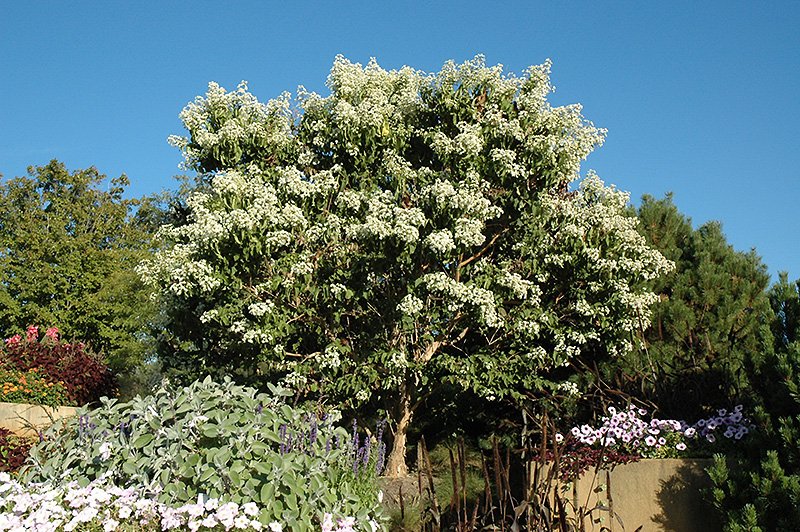
Considered a small tree or large shrub, Seven-Son Flower is popular for its year-round beauty!
Growing to a maximum of 6.1 metres (20 feet) tall and 3 metres (9.8 feet) wide, the leaves of this plant change from spring to summer, making it an interesting specimen plant in the garden.
The biggest attraction is the fragrant white blooms it produces late in summer, which are highly attractive to hummingbirds and other pollinators. As the blooms fall, they leave behind pink sepals, so it looks like it’s in bloom all over again!
Its unusual bark makes this tree beautiful year-round, but especially in the winter.
Washington Hawthorn
Botanical Name: Crataegus phaenopyrum
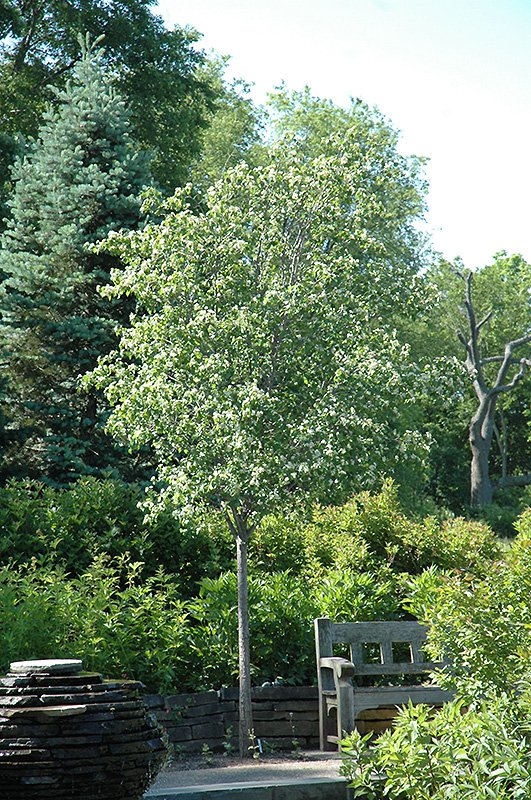
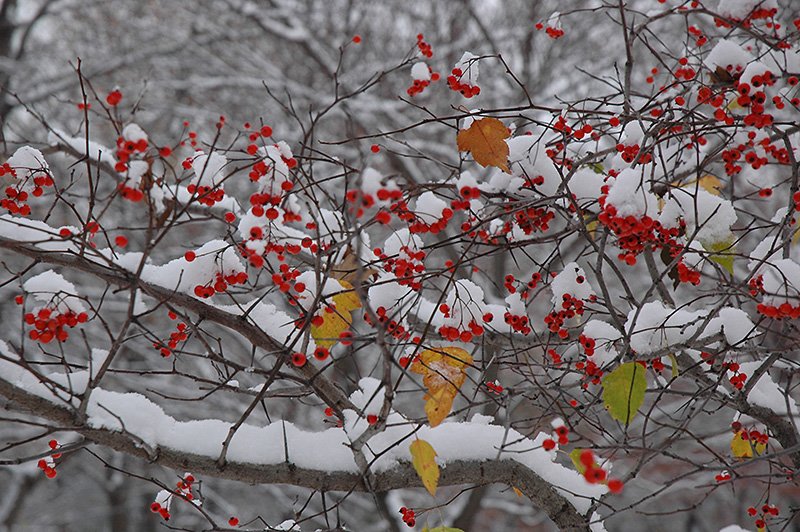
Leaves that turn vibrant shades of orange, purple or scarlet red in the fall are just part of the beauty of this small tree.
This is another specimen with year-round interest. In early spring, reddish-purple leaves emerge, which eventually turn dark green, followed by graceful white flowers. After its fall show, it produces bright red berries that last for most of the winter.
Maturing at 8 to 9 metres (25-30 feet) tall, Washington Hawthorn is also an important nectar plant for pollinators and provides food for birds in the winter.
Barberries
Botanical Name: Berberis thunbergii
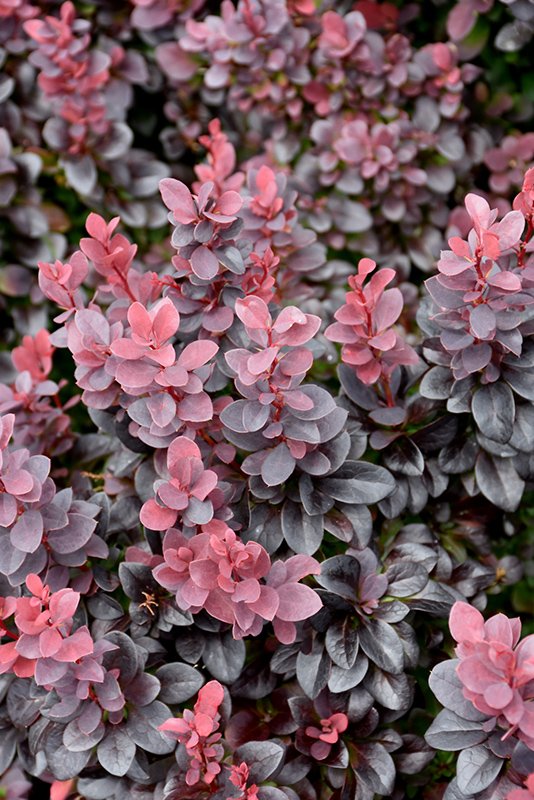
Concorde Japanese Barberry
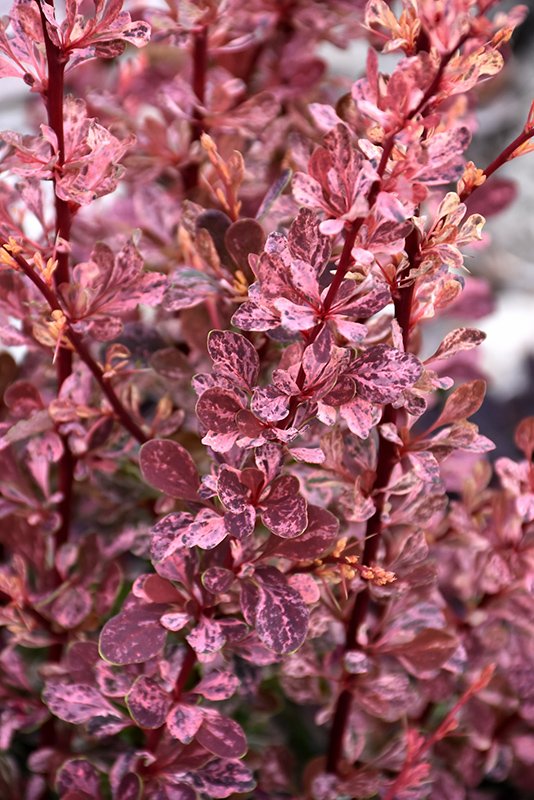
Rose Glow Japanese Barberry
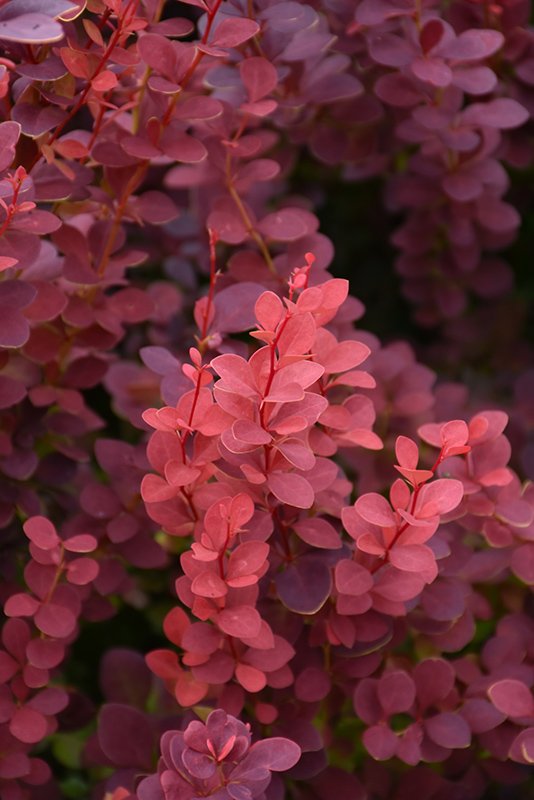
Ruby Carousel Japanese Barberry
Depending on the type of Barberry these deciduous shrubs can grow ½ to 3 metres (1-10 feet) tall and have varied shapes and features as well. For example:
- Barberry, Concorde (Berberis thunbergii 'Concorde')forms a nice globe when it's mature. Leaves start out red and gradually turn a deep, dark purple as they mature.
- Barberry, Ruby Carousel (Berberis thunbergii 'Bailone') is a compact variety with vibrant, ruby-red foliage.
- Barberry, Rose Glow (Berberis thunbergii 'Rose Glow') which matures to 1 to 1 ½ metres (3-5 feet) tall, starts out with a combination of green, white, and deep rose-red foliage in the spring. In the fall, it produces bright red berries that persist into winter.
Beautyberry, Pearl Glam
Botanical Name: Callicarpa 'NCCX2'
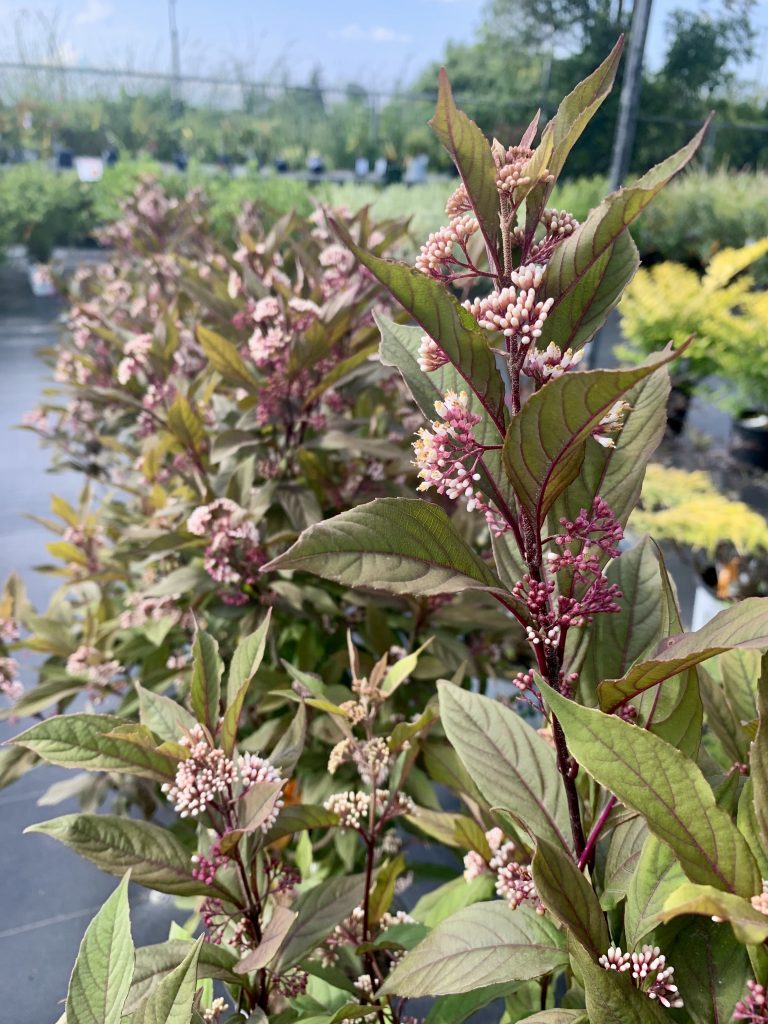
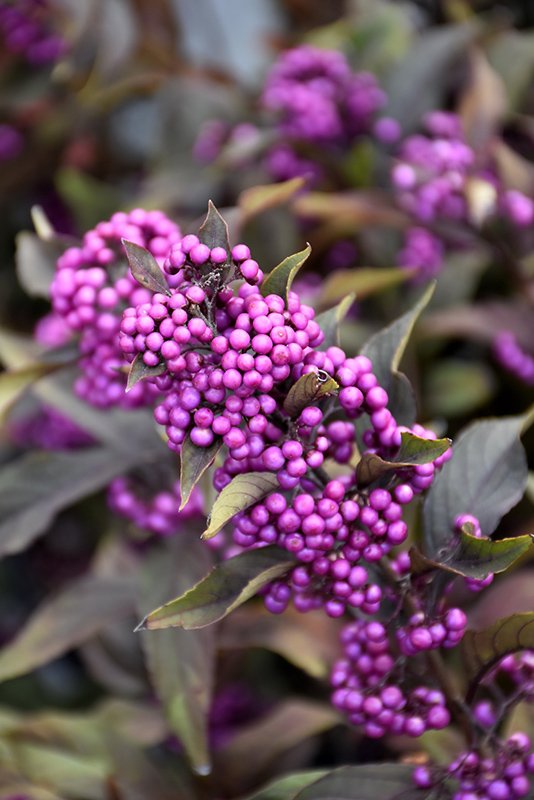
While many Beautyberry are showy in the fall, Pearl Glam is an upright, small shrub that has all-season interest. Its dark purple foliage emerges in the spring that lasts until frost.
In late summer it’s adorned with white flowers which attract butterflies and bees. After blooming it produces hundreds of beautiful violet-purple berries which last long after the leaves have fallen.
Crepe Myrtle, Cherry Mocha
Botanical Name: Lagerstroemia 'Cherry Mocha'
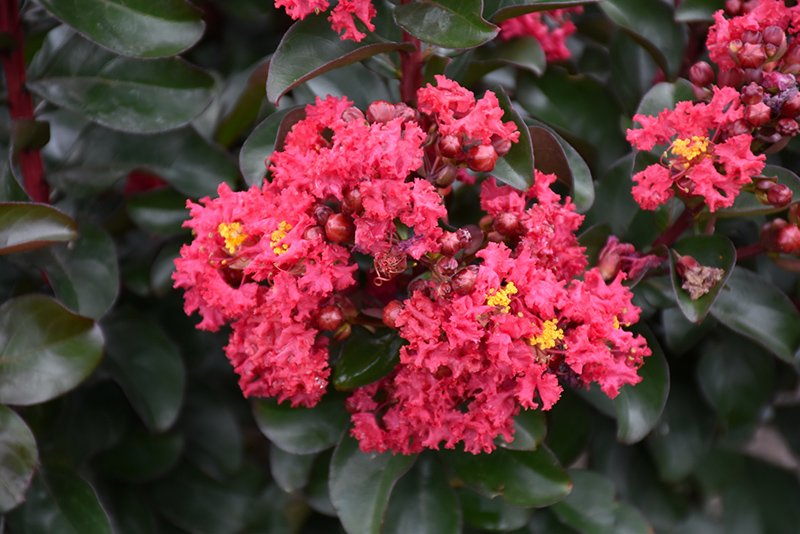
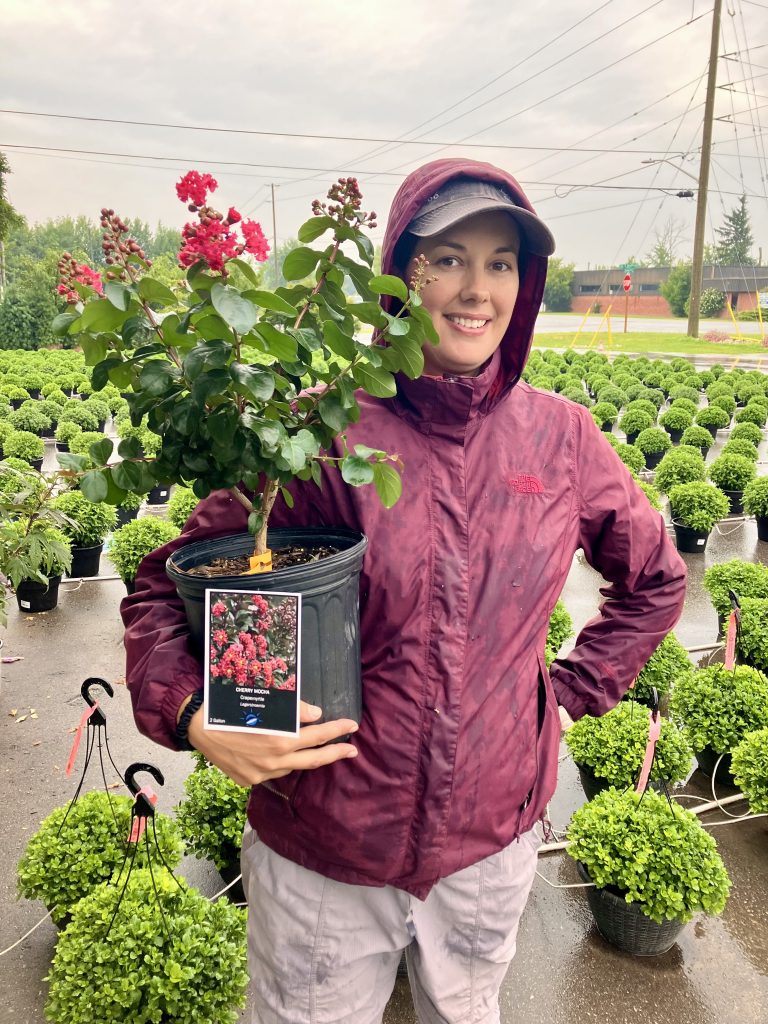
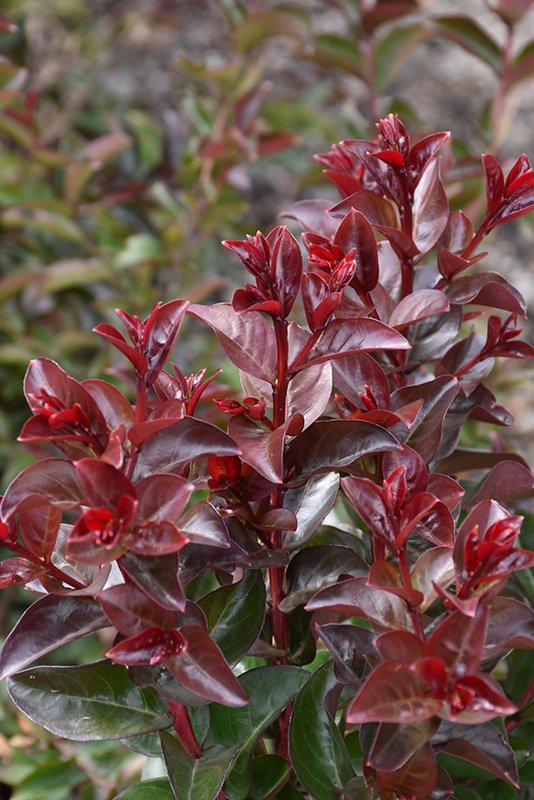
Another small ornamental deciduous shrub with an upright growing habit, Cherry Mocha Crepe Myrtle has decorative appeal in every season.
Burgundy coloured stems with semi-glossy burgundy leaves makes this plant stand out. To add to that, new growth at the tips starts out glossy, deep red. If that’s not enough, in late summer and early fall, the blooms on this cultivar are large, cherry-red flowers which stand out from the burgundy foliage. Its flowers late in the season provide important food for bees. After flowering, green seed pods provide extra interest.
Note: Have you ever wondered why leaves on trees and shrubs change each fall? Here’s a simple explanation. During the long, sunny days of summer, trees and shrubs produce plenty of chlorophyll - the food needed to keep the leaves green. In autumn, as the days grow shorter and temperatures are cooler, there is less chlorophyll produced and the plant breaks down residual chemicals on the surface of the leaves which produces shades of red, orange and yellow.
You’ll find more information in our handy Eisings online Plant Finder!
If you’ve been keeping up with the news, you’re probably well aware that bees have been falling on hard times lately. As their populations decline, our gardens suffer too, as we rely on pollinators to help our plants produce food. The good news is that we can make things easier on the bees by adding bee-friendly plants to our yards and gardens. Some flowers are like bee magnets, luring them in from far and wide with their bright colours, fragrant aromas and delicious nectar.
Bees aren’t the only pollinators you want to attract, however. As it turns out, butterflies and hummingbirds aren’t just lovely to look at— they can help out the pollination process as well! Check out our list of flowers that attract bees and other pollinators, for a lush garden full of beautiful winged wildlife here in Simcoe.
Flowers for Bees
Just like we have our own favourite go-to snacks we can’t say no to, bees have favourite flowers that they love to feast on. Adding these plants to your landscape will definitely generate some buzz… pun intended!

Monarda: The vibrant magenta flowerheads with peculiar spiky petals are wildly popular among bees, earning it the very appropriate nickname, “Bee Balm.” Not only does it look fabulous, but monarda smells pretty incredible too. The foliage has a strong orange-bergamot scent that attracts pollinators of all sorts.
Thyme: This fragrant, edible plant produces tiny flowers that bees seem to race for. Plus, you’re left with tons of delicious, savoury herbs to spice up poultry dishes, soups, roast veggies, and more!
Echinacea: Single-headed flowers in bright sunny colours tend to have much more pollen than double-headed flowers, like geraniums, so echinacea is one of the best flowers for attracting bees. Plus, their large size makes them easy to perch on.
Snapdragons: On a sunny afternoon, when bees are on the hunt for something to eat, snapdragons release 4X more fragrance. Not only does this bring in nearby bees, but the scent clings to them after they’ve left, so when they get back to the hive, all their bee hive-mates will start to crave some of that good stuff.
Flowers for Hummingbirds:
There’s something so thrilling about spotting a beautifully iridescent hummingbird flitting around your garden. These tiny busybodies help spread around pollen, but they’re particular about the kinds of flowers they like. Generally, they prefer tubular flowers that produce nectar, so they can insert their skinny beaks and take a sip. While there are many different varieties that they enjoy, their all-time favourite flowers are bright red. Foxglove, Columbine, Delphinium, and Salvia are a few nectar-producing flowers that are available in red, and are sure to bring all the birds to the yard.
You can also attract hummingbirds by hanging a hummingbird feeder full of pre-mixed sugary nectar. Try to avoid purchasing red-dyed nectar, and instead opt for a red-coloured feeder. The chemical dyes aren’t great for their system, and the red container should be just as appealing to them.

Best Plants for a Butterfly Garden:
Is there anything more picturesque than butterflies dancing around from flower to flower? A lovely bonus is that they also carry pollen on their wings, but at the very least, they’re a delight to look at. Here are a few sure-fire faves for butterflies:
Zinnia: Puffy, spherical blossoms add a little whimsy to your garden, and they bloom well into fall, so you can enjoy their rich colours well into the end of the gardening season. They’re particularly popular among Monarch butterflies, so you’ll likely be visited by some of these beauties if you add some zinnias to the garden.
Milkweed: This is another one that the monarchs can’t get enough of. Their caterpillar babies love it too, so planting a milkweed garden could end up creating the perfect breeding ground for these stunning orange butterflies.
Butterfly Bush: With a name like that, is it any surprise that butterflies love it so much? The cone-shaped clusters of petals come in all sorts of beautiful shades of purple, pink and red. Planting a mix of different colours together will result in a spectacular arrangement that looks like an explosion of colourful fireworks, sure to attract pollinators!
Extra Tips for a Pollinator Friendly Garden:
To attract pollinators to your yard with even greater success, keep these tips in mind:
- Avoid chemicals and pesticides. The common chemical treatment RoundUp is directly linked to the decimation of the bee population. Keep things safe and non-toxic by opting for more organic solutions to control pests and weeds.
- Don’t plant too many hybrid flowers. Hybrids tend to produce fewer seeds and less pollen, so they don’t have as much nourishment to provide for hungry pollinators.
- Plant native species. Familiar flowers that grow naturally in Simcoe are a trusted food source for birds and bees, and the best part is, they’re super low-maintenance and easy to care for.
- Keep your dandelions around. People often treat them like weeds, but the truth is, these sunny yellow flowers are a favourite food source for bees. Skip the hassle of pulling these fast-growing plants from the ground, and the bees will be very grateful!
Selecting the best colourful, aromatic, nectar-producing or pollen-heavy plants will attract pollinators like an ice cream truck attracts neighbourhood kids! They’re fun to watch, and they help maintain the natural processes of plant life, so it’s a win-win for everyone.