
Planting Asparagus
There’s something very exciting about planting a vegetable crop once and having it re-emerge every Spring. Asparagus may take a little patience at first, but once it’s established it will produce delicious spears for 15 to 25 years! If you’re thinking about growing some yourself, Early Spring is THE time to purchase some crowns and get them into the ground.
Choosing a Site
Choose a spot that is sunny, and has good drainage. Sandy loam soil or a raised bed are ideal. Asparagus do not like soggy soil or competition from weeds so pick your spot carefully.
Seeds vs Plants
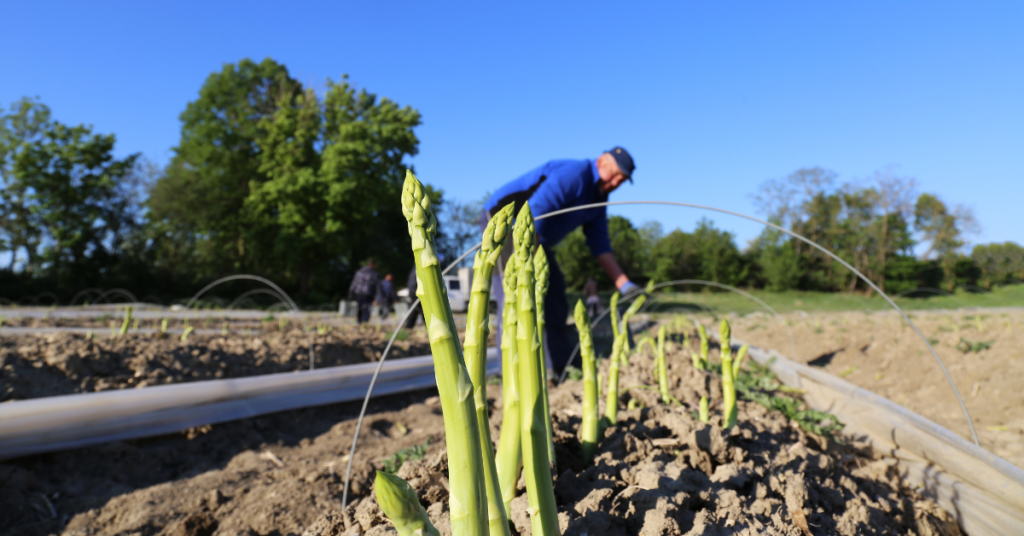
Asparagus can be grown from seed, bare root crowns or purchased as potted plants. While seed can be the least expensive route, buying asparagus crowns or plants that are 1 to 2 years old shaves time off the growing process. The end result is that you will be able to harvest spears sooner. At Eisings, we have several varieties of seeds, bare root crowns and potted plants to choose from in the early Spring, and all grow well in our area.

Planting
Early Spring (April-May), as soon as the ground is workable, is the best time to plant asparagus in Southern Ontario.
If you have purchased bare root asparagus crowns:
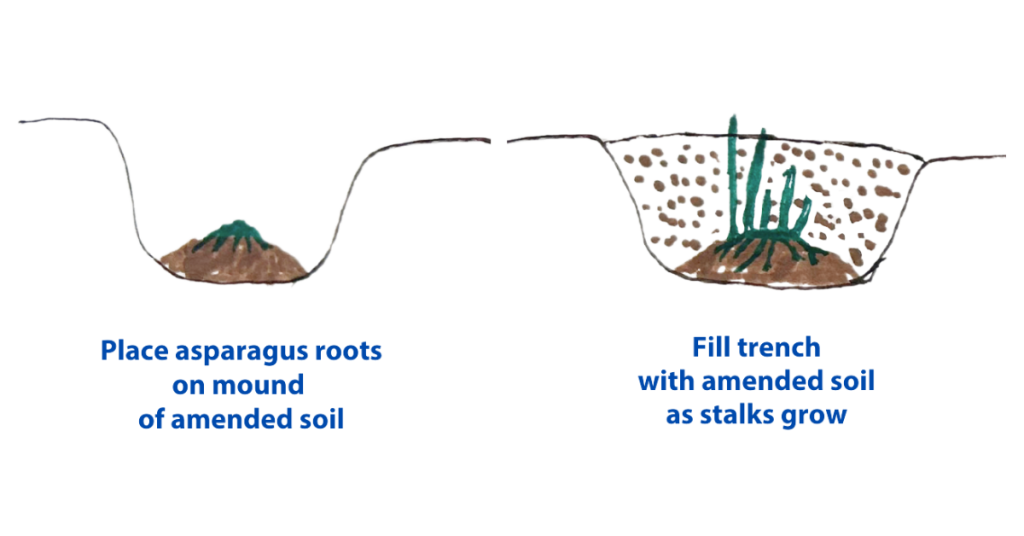
- Begin by digging a trench that is 8 to 12 inches deep and 12 inches wide.
- Mix lots of compost or well-rotted manure into the soil that has been removed for the trench. Adding bone meal to your soil will also help with root development.
- Soak crowns in water for 15 minutes
- Add a row of the amended soil that’s 2 inches deep to the centre of the trench, creating a small ridge or mound. Place the crowns on top of the mound, 12 to 18 inches apart.
- If you’re planting more than one row, the rows should be approximately 3 feet apart.
- Cover only the root crowns with soil (2 to 3 inches) but not the growing tip, then gradually fill the trench as the plants grow.
If you have purchased potted asparagus plants:
- Dig a hole that is the same depth and twice as wide as the soil in the pot. Gently remove the plant from the pot and place it into the hole. Fill in the remainder of the hole with soil that’s been amended with lots of compost or well-rotted manure. Gently press and firm the soil surrounding the plant to remove any air pockets around the roots. If you are planting multiple potted plants, follow the spacing guidelines above.
TIP: Planting Parsley between your rows of asparagus will help to keep pests away.
Mulch and Water
Immediately after planting, water your asparagus crop until the soil is consistently moist. Keeping the soil consistently moist (not wet) during the first two years will help your plants become established.
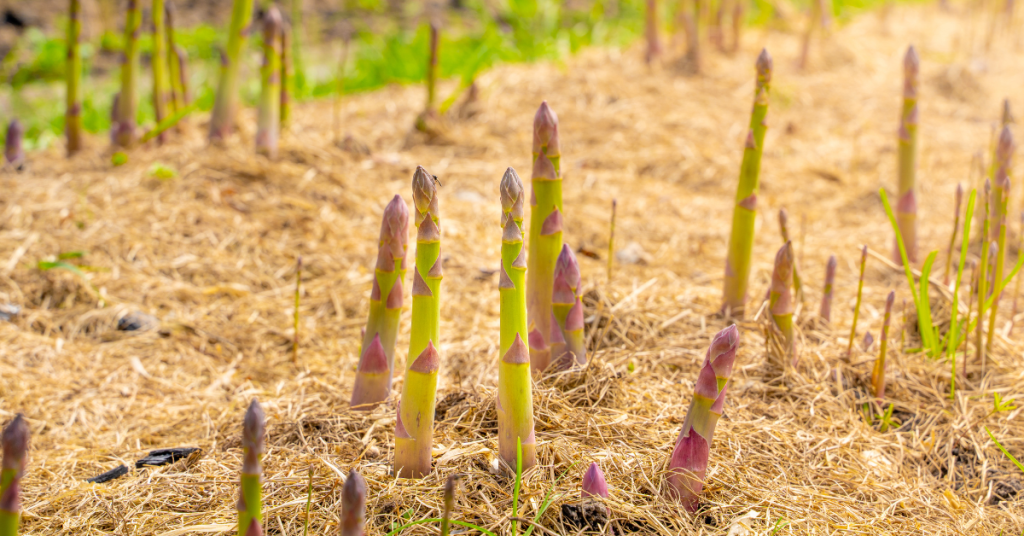
To help suppress weeds from growing in your asparagus patch, apply a thick layer of mulch using straw or leaves. This will also make it easier to pull any weeds that do grow, plus it will help to keep the soil consistently moist.
While asparagus are drought-tolerant, watering during a dry period will help to keep your plants strong and healthy.
Feeding
Fertilizing (5-10-5 or 10-20-10 or 10-10-10 for example) and top dressing with compost is a great way to feed your asparagus. Apply fertilizer or compost early in the spring and again after harvesting your crop. Keeping your asparagus well nourished will ensure a plentiful crop.
Harvest Timeline
It’s important to wait until your asparagus plants are established before you begin harvesting the spears.
For the first 1 - 2 years, don’t harvest your asparagus. Allow it to grow so that the plant feeds the roots. Being patient at this stage will pay off down the road.
When your plants have been in the ground for 3 years, lightly harvest asparagus spears for 3 to 4 weeks, then allow the plants to grow for the rest of the season. Leave very thin asparagus to continue growing.
After 4 years, harvest asparagus spears for 4 to 6 weeks. Following 6 weeks of harvesting, allow any thin shoots to grow into plants.
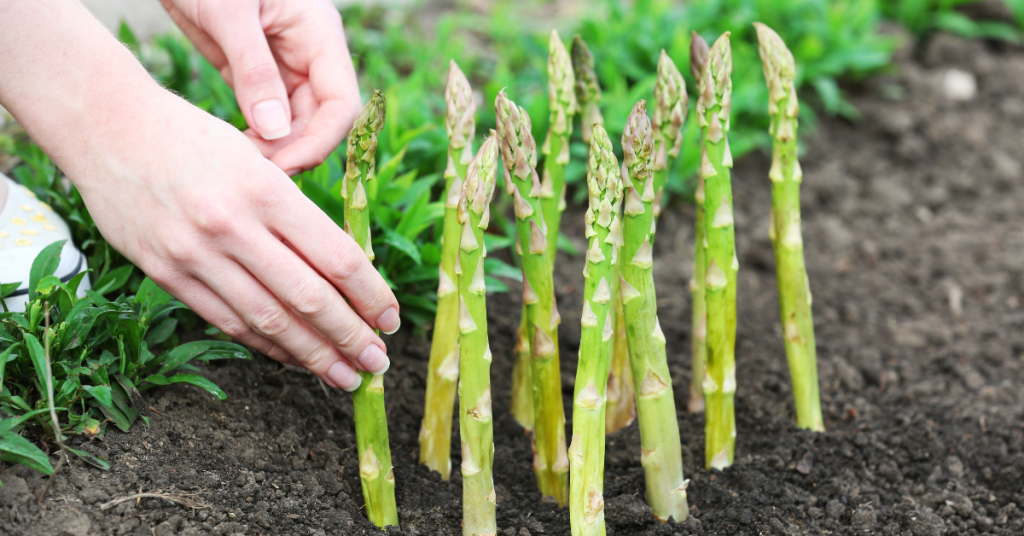
TIP: Harvest asparagus that have grown 6 to 8 inches tall (before the tips sprout) by cutting spears right at or just below ground level with a sharp knife. Asparagus cut this way will last longer. Place cut asparagus in a glass or jar with a little water to cover the base of the spears.
Letting some of your plants grow to maturity will also allow female plants to form seed heads (small, red berries that are attractive but toxic if ingested) and potentially re-seed, providing a steady supply of newer plants.
Once the plants turn brown late in the Fall, the stems can be cut to the ground and a fresh layer of mulch applied.
Investing a little time, and maintaining your asparagus garden will provide you with tasty spears every Spring! If you love asparagus, it’s one plant that’s worth a spot in the garden.
Articles you might like


