
5 Favourite Yellow Perennials
Staff Picks to Brighten Your Garden
By Ava Green
If I asked you to name a yellow perennial flower, you might immediately think of Black-eyed Susans. They’re definitely a perennial favourite!
The goal of this article is to introduce you to other yellow plants that we love and think you will too! These perennials come back reliably every year, and look sunny and gorgeous.
Some of these plants also come in other colours, but today we’re sharing yellow varieties.
Coreopsis
Also known as Tickseed, these versatile, native North American plants come in a wide range of yellow shades, from pale and subdued to bright and showy. They also come in various heights to suit a wide range of garden locations.
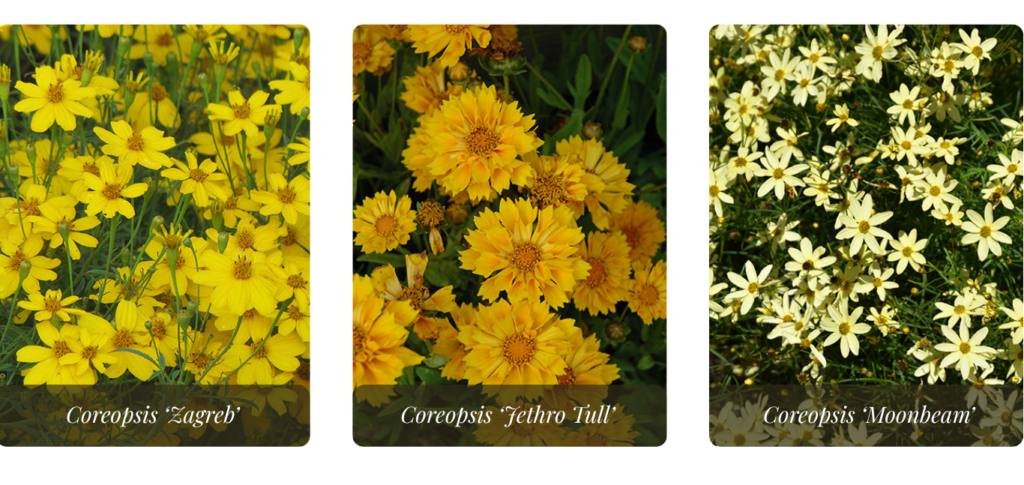
Best for: Well-drained, average soil. Coreopsis will become floppy or die in moist, fertile, or cool locations. They are tolerant of poor soil and drought | Sun: Full sun | Mature size: 1-2 ft. tall and wide; however, Tall Coreopsis can reach 5-9 ft. tall and 3-6 ft. wide
False Sunflower, Heliopsis helianthoides
False Sunflower checks a lot of wish-list boxes: radiant, long-blooming, heat-tolerant, loved by bees and butterflies, and an exceptionally hardy native perennial here in Zone 6 Southern Ontario. To keep these tall plants shorter, stronger and bushier, cut back new growth by half in May and divide them every three years so they don’t become too dense.
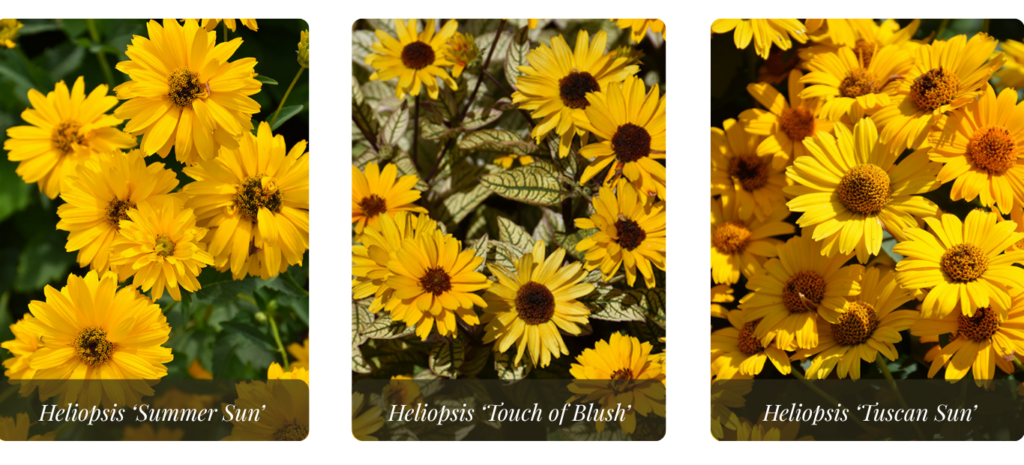
Best for: Moist, well-drained areas with lots of space to grow | Sun: Full sun, tolerates part shade | Mature size: 3-6 ft tall × 2-3 ft wide
Torch Flower, Kniphofia
Also known as Torch Lilies or Red Hot Poker, this unusual, striking plant is a stop-and-take-notice focal point in any border, providing weeks of continuous colour throughout summer. It’s also a magnet for plenty of pollinators.
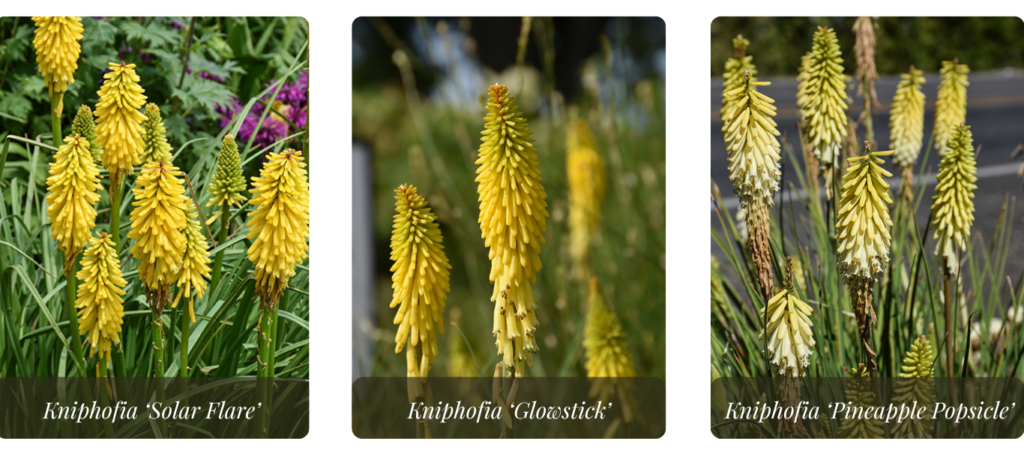
Best for: Areas with very good drainage, as wet soil can cause root rot | Sun: Full sun | Mature size: 3-3.5 ft. tall × 2-2.5 ft. wide
Hosta
Hostas provide season-long colour, with their sturdy foliage doing most of the work. While many varieties have green or blue-green leaves, some offer very pretty yellow foliage instead. Give them 2-4 hours of morning sun each day and an inch of water each week, and that bright yellow colour will stay vivid all season. Flowers are often the main selling point for perennials, but hosta foliage proves that structure, not just blooms, can be just as valuable in a garden.
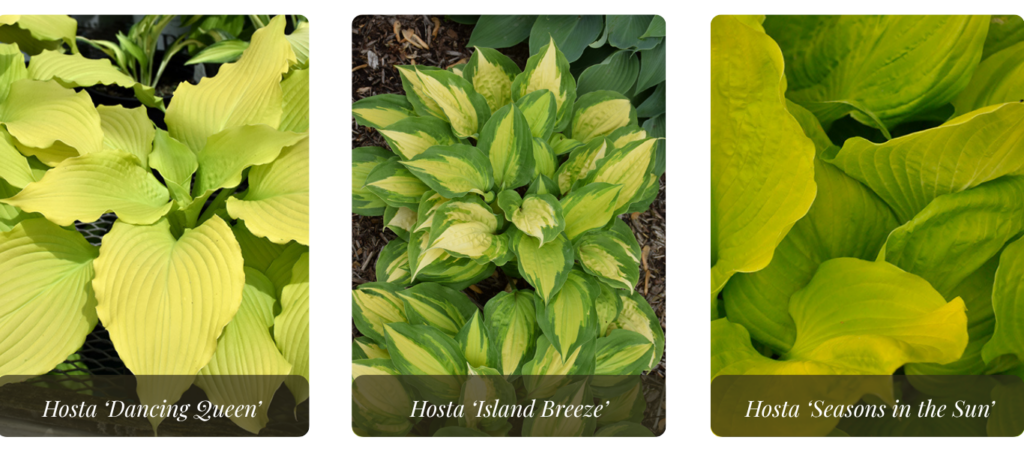
Best for: Areas with morning sun, which helps to intensify their colour | Sun: Part sun, preferably morning | Mature size: 6 in. to 3 ft. tall × 10 in. to 6 ft. wide depending on the variety (miniature cultivars stay toward the smaller end of that range)
Ligularia
Ligularia are unforgettable, with their large “tractor seat” leaves and tall spikes of candelabra-like flowers. They're a little more finicky about location, though; they need plenty of moisture and abundant morning sun, but must be protected from hot afternoon sun to truly thrive. Give them the right conditions, and this dramatic, bold plant will command all of the attention in your garden.
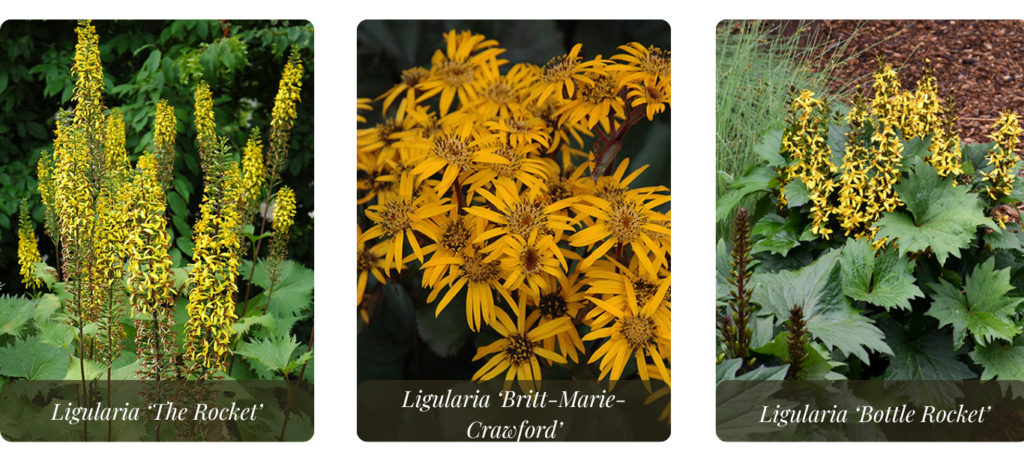
Best for: A woodland garden, rain garden, the edge of a pond or stream, in a swamp or bog where there is consistent moisture | Sun: Full sun where there is lots of moisture, otherwise Light or Partial shade with morning sun only | Mature size: 1-6 ft. tall × 1.5-4 ft. wide
More Yellow Perennials Worth Considering
Stop by Eising Garden Centre and chat with Mary or Donna; they’re always happy to help you find your favourite yellow perennials. Here are a more to check out:
Black-Eyed Susan (Rudbeckia), Stonecrop (Sedum ‘Yellow Brick Road’), Shasta Daisy (Leucanthemum ‘Banana Cream), Hardy Hibiscus (Hibiscus ‘French Vanilla’), Daylily (Hemerocallis ‘Hyperion’, ‘Happy Returns’, ‘Yellowstone’, ‘Going Bananas’ and ‘Stella D’oro’), Lenten Rose (Helleborus ‘Spanish Flare’, Coneflower (Echinacea ‘Yellow My Darling’), False Indigo (Baptisia ‘Lemon Meringue’ and ‘American Goldfinch’), Yarrow (Achillea ‘Firefly Sunshine’, ‘Moonshine’, ‘Coronation Gold’, and ‘Firefly Sunshine’), Cup Plant (Silphium perfoliatum), Hollyhock (Alcea), Helenium (‘Hay Day’, Dakota Gold’ and ‘Sombrero’, Itoh Peony (‘Yellow Emperor’, ‘Bartzella’, and ‘Garden Treasure’), Butterfly Weed (Asclepias tuberosa), Foxglove (Digitalis), Columbine (Yellow Queen), Eastern Prickly Pear Cactus (Opuntia cespitosa or Opuntia humifusa - native cactus), and Japanese Forest Grass (‘All Gold’).
That’s a lot of yellow, and as the saying goes: where yellow blooms, happiness follows!
Articles you might like

